Connect with us

%

New Antibiotic Rules In Spain Explained: Fewer Pills, Safer Use

Published

on

new-antibiotic-rules-in-spain-explained:-fewer-pills,-safer-use

Health authorities have identified this behaviour as a key driver of antibiotic resistance. Photo credit: PeopleImages/Shutterstock

Spain is set to overhaul how antibiotics are sold in pharmacies, with health authorities moving to eliminate large-format boxes, such as those containing 30 tablets, in favour of smaller packs tailored to specific treatments. The measure forms part of a national strategy to combat antimicrobial resistance, a growing public health threat linked to the misuse and overuse of antibiotics.

The reform, led by the Ministry of Health in coordination with the Spanish Agency for Medicines and Health Products (AEMPS), will require pharmaceutical companies to adjust packaging so that the number of pills more closely matches standard prescribed courses. This means patients will no longer routinely receive surplus tablets at the end of their treatment.

Reducing leftover antibiotics and improper use

The decision is rooted in a persistent problem: excess antibiotics remaining in households after treatment is completed. These leftover pills are often stored and later used without medical supervision, increasing the risk of inappropriate consumption. This includes taking antibiotics for viral infections, such as colds or flu, where they have no effect, or using them incorrectly for bacterial infections that require a different drug or dosage.

Health authorities have identified this behaviour as a key driver of antibiotic resistance. When antibiotics are taken unnecessarily or incorrectly, bacteria can adapt and become resistant, rendering standard treatments less effective or even useless. This can lead to infections that are harder to treat, require stronger medications, or result in longer hospital stays.

By ensuring that patients receive only the exact number of tablets needed for their prescribed course, the government aims to reduce the availability of leftover medication and discourage self-medication practices.

Aligning supply with medical need

Under the new system, antibiotic packaging will be redesigned to reflect typical treatment durations. For example, a standard seven-day course will be matched with a corresponding number of doses, rather than being supplied in larger, generic pack sizes. This approach is already used in some other European countries and is considered a practical step towards improving antibiotic stewardship.

Pharmacies will continue to dispense antibiotics only with a valid prescription, and doctors will retain full control over treatment decisions. The change does not affect access to medication but rather modifies how it is packaged and distributed.

Timeline for implementation

The transition to the new packaging system will not happen overnight. Authorities have indicated that the rollout will be gradual, allowing time for pharmaceutical manufacturers to adapt production lines and for existing stock to be phased out. The process is expected to take place over approximately 12 months, with full implementation anticipated by 2027.

During this period, both current and revised pack sizes may be available in pharmacies. Patients are advised to follow their doctor’s instructions carefully and to complete the full course of antibiotics as prescribed, regardless of packaging changes.

A broader public health strategy

This initiative is part of Spain’s wider efforts to address antimicrobial resistance, which is recognised by the World Health Organisation as one of the top global health threats. In Spain alone, resistant infections are estimated to cause thousands of deaths each year, placing significant strain on the healthcare system.

Public awareness campaigns have already highlighted the importance of using antibiotics responsibly, including not sharing medication, not saving unused pills, and not requesting antibiotics for viral illnesses. The packaging reform reinforces these messages by removing one of the main sources of misuse: excess supply.

What residents should expect

For residents in Spain, the most noticeable change will be at the pharmacy counter. Instead of receiving a standard box that may contain more tablets than needed, patients will be given a pack that matches their prescribed treatment more precisely. This is intended to simplify adherence to the prescribed regimen and reduce confusion about how long to continue taking the medication.

Ultimately, the goal is to preserve the effectiveness of antibiotics for future generations. By limiting unnecessary exposure and ensuring correct usage, health authorities hope to slow the spread of resistant bacteria and maintain the reliability of treatments that remain essential to modern medicine.

%

EU Pet Passports Are No Longer Valid For Entry Into The EU By A Non-EU Resident

Published

on

By

eu-pet-passports-are-no-longer-valid-for-entry-into-the-eu-by-a-non-eu-resident

We have never left a pet behind. Credit: camfrae / Shutterstock

It has been publicly announced by APHA (Animal & Plant Health Agency) that UK residents can no longer use their pet’s EU Passport for entry into any EU country.

This came into effect on 22nd April 2026.

You can still use your EU Passport to travel back into the UK if you are currently in Spain or France but this will be the final time.

In future you will have to obtain an Animal Health Certificate (AHC) from your Vet for each trip.

The AHC is only valid for 6 calendar months for 1 return journey. This has just been extended from 4 months. You must still make sure you don’t overstay your 90 days unless you have obtained a Visa for work. You still need to provide us with your 3 supporting documents, consent, your passport and your travel itinerary.

Don’t discard your EU Pet Passport, the rabies is still valid and can be transferred to the AHC: We need to see this in order to complete the forms.

In our experience, most UK Vets are unable to interpret the meaning of travel if using a licensed transporter and many Vets still don’t provide the service at all. We have encountered many problems and have been left to resolve all these issues hours away from the port and spending hours on the phone whilst pets are with the Vet. We have never left a pet behind and climbed mountains to ensure this has never happened.

We want to help you. We realise this is going to be very daunting for many and we can’t afford to have any clerical mistakes on the day of collection.

ProPaws is now able to offer you and your pets a fully inclusive service, taking all the stress and hassle away, ensuring you continue to enjoy your holidays in Spain and France.

We have collaborated with Dr. Christoph Reichman MRCVS, an expert in the veterinary field and AHC’s, and his practice in Ashford, Kent.

Our service includes :

  • The completion of the preliminary forms by Tracey.
  • Geoff will collect your pet/s on the usual departure day.
  • All pets will have an appointment with Dr Chris at his practice in Kent.
  • Dr Chris will examine your pets and issue the AHC.
  • Geoff then makes his way to Dover with everything in order and according to the law.

Our fee for the AHC service 

  • £190 for 1 pet
  • £240 for 2 pets
  • £290 for 3 pets

You can of course do this yourselves. We know many of you are IT savvy and have wonderful relationships with your vets. With the demand for AHC’s being at the highest we need to make sure nothing is rushed or left to the last minute and everything is correct. We cannot afford any mistakes or putting the other pets at risk of seizure at the port.

www.propawsets.com

propawsets@gmail.com

+34 711 07 13 47

Continue Reading

%

Horror In Modena As Car Rams Into Pedestrians On Busy Italian Street

Published

on

horror-in-modena-as-car-rams-into-pedestrians-on-busy-italian-street

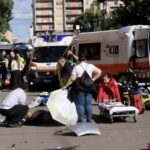
Aftermath of attack in Modena. Credit: Visgrad X

A 31-year-old driver ploughed a Citroën C3 into crowds on Via Emilia in central Modena on Saturday, May 16, striking at least ten people before smashing into a shop front. Police have confirmed seven individuals suffered injuries, with four in serious condition and one woman losing both legs in the violent episode. People pursued the suspect on foot after he abandoned his car and attempted to stab a passer-by who tried to stop him.

High-speed impact shocks local residents

People in the area saw the car accelerate rapidly towards the pavement in a pedestrian zone. Witnesses recalled the vehicle reaching speeds estimated at 80 kilometres per hour, sending victims flying and sparking immediate panic. The driver, originally from Seriate near Bergamo and with Tunisian roots, continued his path until the collision with the shopfront. He then fled the scene on foot through the historic centre, raising fear levels among bystanders.

Citizens help with quick arrests

Several locals joined forces to chase and restrain the man until police arrived. Modena mayor Massimo Mezzetti publicly thanked those who intervened, thanking them for their bravery during the chaotic moments. Officers from the Carabinieri, state police, and Guardia di Finanza responded rapidly, cordoning off the street with red and white tape while emergency teams treated the wounded on site. Paramedics transported victims to regional hospitals, including Maggiore in Bologna.

Background of suspect under scrutiny

Investigators question the detained man, who sustained injuries in the crash himself, at a local station. Records show he holds Italian citizenship, possesses no prior criminal history, and drove the small hatchback. Police continue to examine all possible explanations for the event, ranging from a traffic accident to deliberate action, without confirming any precise motive so far.

Community reacts to tragic events

Mezzetti described the episode as deeply disturbing and called for full clarity on what occurred. Emergency services maintained a strong presence in the area for hours afterwards to manage the scene and gather evidence. This incident has left residents in the northern Italian city shaken, with questions lingering about safety in popular urban zones.

Medical updates indicate varying degrees of harm among those struck, including a cyclist caught in the initial impact. Local media outlets report ongoing efforts to reconstruct the sequence using CCTV and statements from those present.

Wider questions arise from Modena events

Italian authorities focus on piecing together timelines from multiple sources to understand the full picture. The episode draws attention to risks in crowded city streets and the role of rapid public response in such crises. As details develop, Modena officials stress support for affected families while ensuring thorough probes proceed.

Continue Reading

%

Cartagena Celebrates Family Day With Community Activities And Family Support Initiatives

Published

on

cartagena-celebrates-family-day-with-community-activities-and-family-support-initiatives

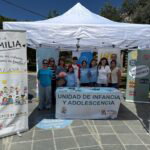
Cartagena Family Day promotes community, support programmes, and work-life balance. Photo Credit: Cartagena City Hall

Cartagena held a major celebration on Saturday, May 16, in Los Juncos Park, with their Family Day workshop. The activity was a chance for children, young people, parents, and grandparents to get together and enjoy a variety of leisure activities, fostering both participation, healthy activity, and coexistence among neighbours.

A celebration that brought young people, parents, and grandparents together in Los Juncos Park

During the Family Day celebration, attendees enjoyed a mobile disco, a family photobooth, a car circuit, games, and workshops, including for makeup, canvas-painting, and badge-making. The initiative was also aimed at helping families through various programmes and resources. The Cartagena City Council had set up an information tent to make resources available for children, adolescents, and families. 

One of the main focuses of the day was to continue promoting the need for policies to help families and facilitate a work-life balance, with measures that improve well-being in the municipality and help families financially.

Aid to families: How Cartagena helps struggling parents with financial aid and free programmes

Additionally, it was noted that Cartagena has more than 1,000 available free slots in municipal nursery schools, helping families save more than €500,000 a year and making it easier for parents to balance their work and family life.

The Cartagena City Council, during the event, also informed attendees of the direct maternity aid promoted by the city’s officials, as well as the family respite programmes, and the home help and care programmes for those dependent on it.

Social groups participate in the event

During the event, a variety of social entities and groups that work in favour of child protection, inclusion, and family support participated. It was a day that fostered inclusion and connecting as a community, as well as promoting work-life balance, equal opportunities for all, and support for struggling households in the municipality.

Continue Reading

Trending

Copyright © 2017 Spanish Property & News