
Bad Bunny
Luis Rafael Sánchez: ‘Republicans Can’t Stand The Idea Of Puerto Rico Becoming A US State’

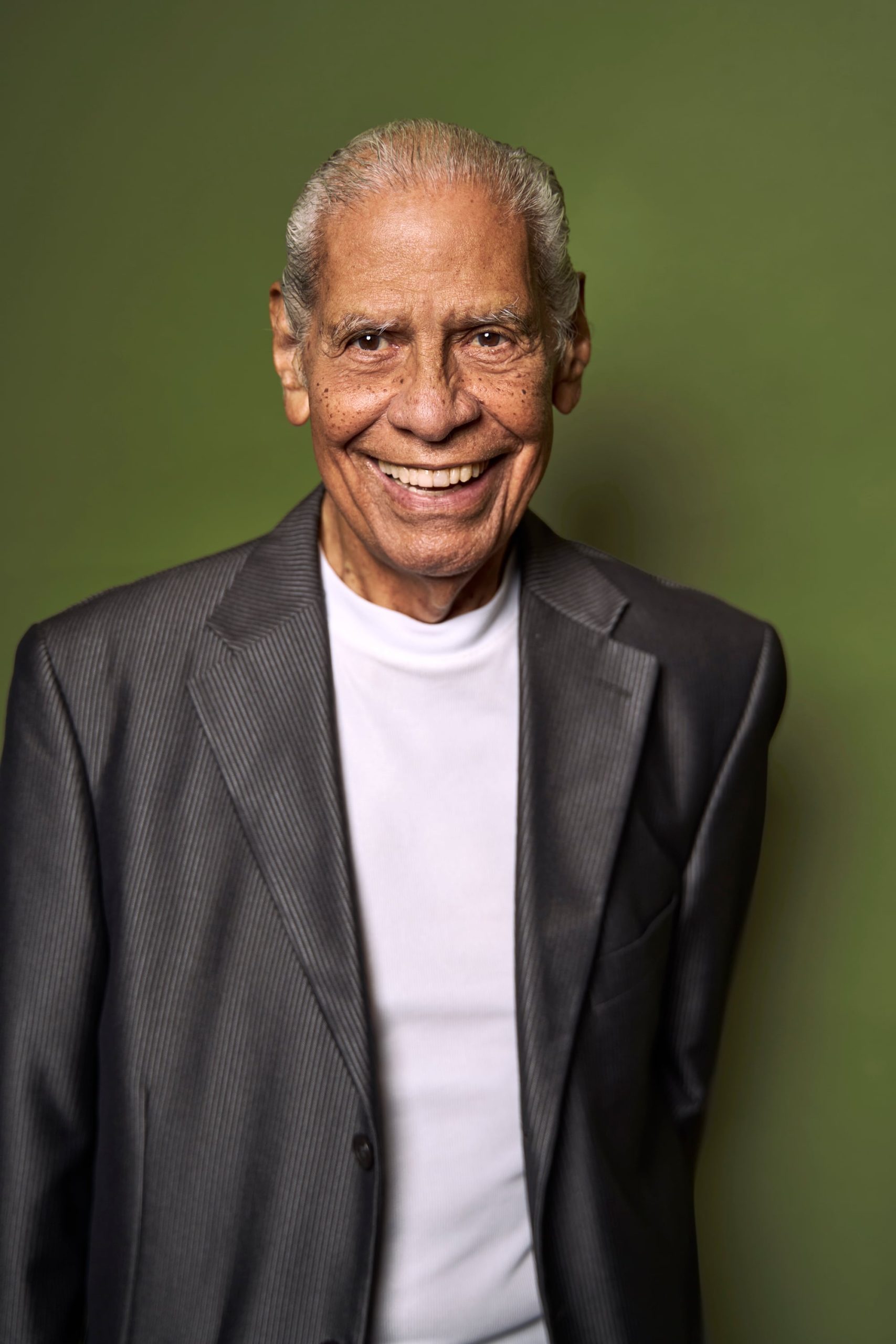
April 23, World Book Day. A morning of brilliant Caribbean sunshine in Old San Juan, Puerto Rico, and across the island. Luis Rafael Sánchez, 89, the most important living writer in Puerto Rico, who will turn 90 next November, suggests beginning the conversation — later to continue on the cozy terrace‑balcony of his home — at a discreet and elegant restaurant, where everything seems to pause when the staff catch sight of “Wico,” the affectionate nickname by which the writer is known on the island.
With admiration and affection, some shake his hand, others embrace him — everyone calls him maestro. No matter how small the gesture from those attending to him, the writer responds with generous tips. Wrapped in dim light, the scene evokes a sequence from The Godfather, but without any hint of menace.
The immediate reason for the interview is the release of a commemorative edition marking the 50th anniversary of his most emblematic novel, La guaracha del Macho Camacho. At the time of the meeting, there is only a single copy available, which the author contemplates in satisfied silence as it is handed to him.
A playwright, essayist, and novelist, Luis Rafael Sánchez is, like Cervantes in Spain, James Joyce in Ireland, or Gabriel García Márquez in Colombia, a writer whose work embodies the spirit of his nation.
Everything he has written — whether non-fiction (No llores por nosotros, Puerto Rico / Don’t Cry for Us, Puerto Rico), short stories (En cuerpo de camisa / In Shirt Sleeves), novels (La importancia de llamarse Daniel Santos / The Importance of Being Daniel Santos), and especially his groundbreaking and powerful theatrical work (La pasión según Antígona Pérez / The Passion of Antígona Pérez) — is a joyful celebration of puertorriqueñidad (Puerto Rican identity), a word that, at his request, was incorporated into the Royal Spanish Academy’s dictionary in 2016.
He has lived in several cities. In San Juan, he began as a radio drama actor, but his career was cut short when, with the arrival of television, he was denied any leading man roles because he was mixed-race. He pursued doctoral studies in Madrid, received scholarships that enabled him to live in Rio de Janeiro and Berlin, and in New York — a city that “captivated” him — he completed a master’s degree, took classes at the Actor’s Studio, met James Baldwin, staged plays and musicals, and held a university chair as a distinguished writer.

At different points in his work, he has forcefully denounced racism and homophobia. In Escribir en puertorriqueño (Writing in Puerto Rican), a valuable anthology of his writings, one piece stands out in particular: Bad Bunny sí, written before the singer achieved the level of visibility he enjoys today.
Praised in glowing terms by Mario Vargas Llosa, Carlos Fuentes, Gabriel García Márquez, and Alfredo Bryce Echenique, among others, Luis Rafael Sánchez’s work draws simultaneously on the legacy of Cervantes, the great tradition of the Latin American novel, the theater of Tennessee Williams and Valle‑Inclán, the language of radio dramas, and the classics of bolero and other forms of popular music.
A defender, through Spanish, of the linguistic, racial, and cultural hybridity that defines caribeñidad (Caribbean identity) — one of the key concepts in his vocabulary — it is no exaggeration to say that the language of Cervantes owes him a great debt.
Question: Can you talk about your origins?
Answer. I’m a mulatto from a housing project, which is what they call the houses assigned to low-income families here. My mother was a seamstress and my father a baker, so I bear two stigmas: race and class. Even today, racial prejudice in Puerto Rico is still very noticeable, but I’ve always been proud to come from a poor background and to be mulatto because it’s something that has given me strength and the tools to create and survive.
Q. Last year saw the publication of one of your most striking books, Piel sospechosa (Suspicious Skin), in which you examine the issue of racism from multiple angles.
A. This is a collection of some 30 texts, written between 1973 and today, in which I address the ignominy of racism, which I consider one of the most serious problems on our continent, a world of different races that still struggle to respect one another. I dedicate the book to my uncle, Evaristo Lois Pagán, a Black man of usted and tenga [formal terms used to show respect] as we say here, an extraordinary, respectable, and respected man, an imposing Black man who always wore a suit, tie, waistcoat, and watch chain, and who rose to hold important positions of civic responsibility.

Q. Would you say that Puerto Rican literature has always been ignored in both Spain and Latin America?
A. We have great writers, like Eugenio María de Hostos, René Marqués, and Luis Palés Matos, but they aren’t recognized enough outside of Latin America. One example that particularly pains me is that when discussing great Latin American poets, Alfonsina Storni, Juana de Ibarbourou, Gabriela Mistral, and others who deserve it are always mentioned, but no one remembers Julia de Burgos, who is an immense figure. I believe all of this is related in some way to the fact that we have been colonized, and as a consequence, some people think we are incapable of greatness, whether literary, artistic, or economic. We are denied the possibility of one day becoming a republic, as if we were lacking something intellectually, morally, or spiritually.
Q. Is Puerto Rico a nation or a colony?
A. Puerto Rico is unfortunately a colony, but within that colony are all the constituent elements that encompass the concept of a nation. Puerto Rican identity is lived with fervor and enthusiasm.

Q. What is your position regarding independence?
A. The ideological question has been at a standstill for a long time, due to the presence of several successive pro-statehood governments. We’ve already had three elections in which the pro-independence party I always vote for comes in third or fourth place. An ominous question mark hangs over us. It pains me to see that statehood is gaining more and more supporters every day, but that doesn’t mean the fight is lost. One of the reasons I don’t believe we’ll become part of the United States tomorrow is that Republicans can’t stand the idea of Puerto Rico becoming a state of the American nation. In other words, ironically, right now, the Republicans’ contempt for who we are is what’s saving us.
Q. How does that affect the issue of Spanish?
A. The language issue has been a major uphill battle for years, but some things are undeniable. In Puerto Rico, we speak Spanish, we write in Spanish, and it will always be that way. We have never produced a great writer in English. Those who support the idea of Puerto Rico becoming the 51st state of the Union are bothered when I say this. According to them, we are a bilingual country, but that’s nothing more than a vulgar political maneuver. Puerto Ricans have never needed to speak English. To live my life, I have never needed English, nor do I think anyone here needs it. Our literature is in Spanish. Our best press is in Spanish. Our daily life is in Spanish.
Q. In one of your most insightful works, Sones del Caribe (Sounds of the Caribbean), you explore the idea of Caribbean identity.
A. We are a Caribbean country with a large, often denied, Black presence, yet Blackness and mixed-race identity are the hallmarks of Caribbean identity. In the book, I discuss the four mother countries of this sea: Spain, England, the Netherlands, and France. We are part of an archipelago that also includes islands where Spanish is not spoken, such as Saint Thomas, Saint Lucia, Martinique, and many others. The Caribbean has produced great writers in French, like Aimé Césaire and Édouard Glissant, and in English, like Derek Walcott and Naipaul. In Spanish, there is a veritable plethora of writers who wield the language with complete freedom, such as Alejo Carpentier, Severo Sarduy, Cabrera Infante, Reinaldo Arenas, Pedro Mir, and so many more.

Q. What does it mean to write in Puerto Rican?
A. Writing in the Spanish of Puerto Rico. Just as there is Argentine Spanish, Colombian Spanish, Mexican Spanish, or Spanish from Spain, there is Puerto Rican Spanish, which is the one I speak and write in. There are many prejudices about it. When I was studying at the Complutense University in Madrid, a renowned professor congratulated me on how good my Spanish was, and I respectfully asked him what language he thought I was speaking, how could I not speak my own language well? The same thing happened to me on the street. When the owner of the boarding house where I lived in Madrid heard me speak, she was amazed because I didn’t drop my consonants, and I told her, “Ma’am, in the Caribbean we don’t drop our consonants.” This prejudice affects literature. There are those who maintain that we are ruining Spanish, and conversely, many times, when one of my books is reviewed, I am congratulated for my good use of Spanish, as if it were an anomaly, when what I do is write in the living language spoken by my people.
Q. This year marks the 50th anniversary of the publication of your most emblematic work, La guaracha del Macho Camacho, an oracular novel that is a grand celebration of Puerto Rican language.
A. I wrote it with great freedom, with great joy. I will be forever grateful to Mario Vargas Llosa for being the driving force behind it. Mario was here teaching a course as a visiting professor, and I got to know him quite well. One day, he told me that he had been asked in Lima to coordinate the issue of a magazine dedicated to Puerto Rico. He needed some fiction, which he didn’t have. I had published a book of short stories that had received very good reviews, En cuerpo de camisa. In it was a story titled La guaracha del Macho Camacho y otros sones calenturientos [Macho Camacho’s Guaracha and Other Feverish Tunes]. When Mario read it, he told me: “There’s a novel here.”
Q. Alongside the music, the novel’s central protagonist is language itself — a festive, uninhibited, and transgressive language that embraces every form of expression.
A. Some time ago, I gave a lecture titled “Toward a Poetics of the Vulgar,” which is a vindication of the way ordinary people express themselves. I was always concerned by the fact that some people here have established that a swear word disqualifies you. When I gave that lecture, I remember a colleague, now deceased, telling me, horrified, that it was the first time he’d ever heard so many indecent words at the university. But the language I use, without restraint, is the language people use on the street; it’s pure Puerto Rican, and that’s also the language of La Guaracha del Macho Camacho.

Q. In the novel, as in all your work, there is a constant interplay between the Puerto Rican oracular voice and the legacy of the classics. Many of your texts seamlessly incorporate phrases from the great tradition of Spanish‑language literature, from both Latin America and Spain
A. I’ve just finished proofreading El libro de los elogios [The Book of Praises], a collection of three essays: Elogio de la radionovela [In Praise of the Radio Drama], Elogio del sexo oral [In Praise of Oral Sex], and Elogio del ocio y el negocio [In Praise of Leisure and Business]. It was originally going to be titled Vida, nada me debes [Life, You Owe Me Nothing], after the line in Amado Nervo’s poem: “Life, you owe me nothing. / Life, we are at peace.”
The title Elogio del sexo oral suggests something else, but it’s about verbal pleasure, the joy of the oracular, the celebration of language as desire. The book is mindful of both Cervantes’ legacy and the formidable influence radio dramas had on me. Alongside Cervantes, the first, the very first of our language, I place a whole series of mediocre radio dramas with ridiculous titles like El derecho de nacer [The Right to Be Born], Los que no deben nacer [Those Who Should Not Be Born], and El precio de una vida [The Price of a Life], because that’s what truly nourished me as a child and ended up influencing my writing style. As a child, there was only one radio at home, and we would sit down at 6 p.m. every afternoon. My father, my mother, my sister, and my grandmother would all listen to the Palmolive radio drama. I was in seventh grade, 12 or 13 years old, and I fervently read an adapted version of Don Quixote, so my imagination was forged, nourished by Cervantes’s work as well as by the unspeakable models of mediocrity that those radio dramas represented.
Q. Do you remember the first thing you wrote?
A. When I was a freshman in college, my Spanish teacher told me she saw talent in me as a writer and encouraged me to enter a contest, which I won with a story titled El trapito [The Valet], which was a tribute to the Puerto Rican flag.
Q. You keep a close eye on what’s happening with younger generations. What’s going on with younger Puerto Rican writers?
A. The last article I wrote is titled País mío, país nuestro [My Country, Our Country]. In it, I discuss what I consider a true boom in young Puerto Rican literature, something that is happening right now. At this moment, I feel there is a real explosion of young talent in our literature. I pay tribute to 10 examples, and these are just a sample. It’s time for people beyond our borders to pay attention to what’s happening here.
Q. These days, it’s impossible not to talk about Bad Bunny. In an anthology of your writings, Escribir en puertorriqueño, there is an article titled Bad Bunny, sí.
A. It was published in 2023, but I had already written about him quite some time before, when he was just starting to gain traction. In some way, I sensed he was going to grow.
Q. What does Bad Bunny mean as a symbol?
A. What happens at one of his concerts transcends the artistic; it’s a sociological, political, even patriotic phenomenon, a defense of the country and the language. In Bad Bunny, Puerto Rico has found a symbol of affirmation. People show up to all his events waving the Puerto Rican flag. They receive him like a national hero. What he does goes beyond music. The music is bait, a lure.
Q. The language he uses in his songs often fits what you once called a “poetics of the vulgar,” for example when he uses terms like perrear. What is perreo?
A. A dance style that mimics the movements dogs make during sex. Bad Bunny says, “Perrea, perrea,” joyfully incorporating the term into his vocabulary.
Q. Is there an element of political rebellion in all this?
A. People associate reggaeton with disorder, daring, boldness, the sexual freedom to which we are all entitled, and the idea that decency shouldn’t be measured solely by sexual behavior. It’s about liberating all that vocabulary.
Q. Will Puerto Rico ever be independent?
A. It’s a difficult and uncomfortable question. I think it’s fine that you asked it, but I don’t know how to answer it.
Sign up for our weekly newsletter to get more English-language news coverage from EL PAÍS USA Edition










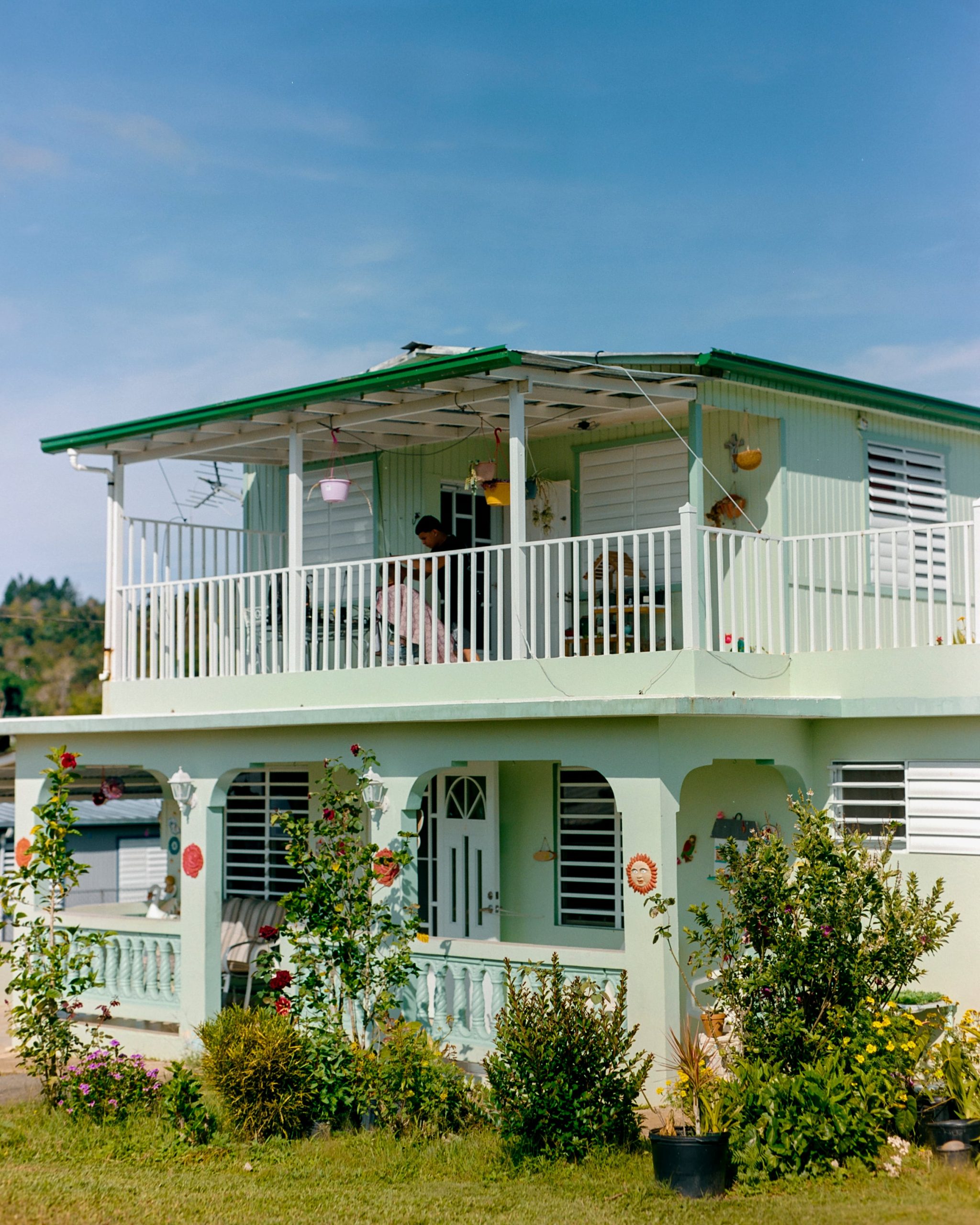
It’s not a house: it’s a casita. The diminutive of casa — Spanish for “house” — is important. Not because it minimizes or diminishes what it describes, but because it implies affection, intimacy, and family. In the Caribbean, diminutives have the ability to smooth over complex topics.

In these parts, you don’t ask for a favor: you ask for un favorcito, a little favor. You don’t boast about having a huge sailboat (even if it really is): you simply have a tiny boat. And you don’t go out for a meal; instead, you grab a little something, even if you’re referring to a banquet. So, when the complete stage setup for Bad Bunny’s concert residency — titled No me quiero ir de aquí (“I don’t want to leave this place”) — was unveiled last summer in San Juan, Puerto Rico, it was only natural that everyone started calling it la casita, or “the little house.”
It’s true that its dimensions support the nickname: it’s about 42 feet wide and 42 feet deep, with an 11-foot ceiling. The model is as wide as the real house that inspired it, but less deep.
However, that affectionate diminutive has much more to do with the emotional and historical weight of the structure than with its appearance.
The casita first appeared in the short film (directed by Arí Maniel Cruz and Bad Bunny) that accompanied the release of the album titled Debí Tirar Más Fotos (2025). It stars filmmaker and actor Jacobo Morales — a key figure in Puerto Rican culture — and tells a story about the near future, in which the displacement currently taking place on the island is evident. The Puerto Rico depicted is one in which there are no Puerto Ricans, something that a certain political force today desperately longs for.
The original house was found by designer and art director Mayna Magruder Ortiz in the municipality of Humacao, in the southeast of the island. It was initially intended for the film, but later on, Bad Bunny’s team decided to incorporate a replica of the house into the world tour’s stage design instead. The creative process behind this decision — like almost everything that the singer’s inner circle works on — is a closely guarded secret. This isn’t only to maintain the element of surprise, but also to avoid pushing viewers and listeners toward a specific interpretation. The team also typically requires collaborators to sign confidentiality clauses in their contracts, which is why neither of the two creators of the set piece — Magruder and Rafael Pérez Rodríguez, in charge of construction and logistics — can give interviews.
When asked for comment, the artist’s team explains: “The casita is Bad Bunny’s intellectual creation, open to everyone’s interpretation through his short film.”

During Bad Bunny’s concert residency — which ran from July to September 2025 — the casita sparked all sorts of conversations. First, its location and the visual obstruction it created for part of the audience caused discomfort; then people debated its role as the setting for the concert’s second act, which followed a first part that took place in a rural setting, with native trees, traditional instruments, flamboyant costumes, and typical island dances.
At the beginning of each show, perreo and le lo lai — reggaeton and jíbaro music — merge as interchangeable expressions of the same emotional register, whether festive, melancholic, or defiant. Then, inside the casita, came what most consider the best part of the show: the selection of classic perreo tracks — or, more precisely, the most sexual, the most explicit, the most down and dirty. In other words, when Bad Bunny stepped into the casita, everyone knew it was time to perrear for real. The third act returns to the original stage, now centered on salsa and the full orchestra.

Months later, the casita began touring the globe on the artist’s world tour. For instance, it was installed on the stage of the Super Bowl LX halftime show this past January. And, wherever it’s set up, it’s met with the same reaction: everyone wants to go inside.
Those lucky enough to receive a coveted invitation can enter the little model house to dance on its balconies and experience the concert from that perspective (it fits about 30 people inside, while the roof can hold 20). There, they can feel like they’re at one of those classic parties in Puerto Rico, the kind of celebration that’s usually advertised as a small gathering of family and close friends, but ends up filling the entire road with more strangers than acquaintances. Still, in that moment, everyone feels like family.
While the focus is on the casita, the guests are — so to speak — family, while the rest of the concertgoers effectively become friends of friends, distant cousins, or neighbors who show up at the party somewhat uninvited, but end up dancing in the middle of it all, helping out in the kitchen, and watching the night go by in a rocking chair on the balcony. The little set piece thus manages to convey the intimacy of a house party within the massive scale of a concert that brings thousands of people together in a stadium.

One of the surprises of each concert night has been discovering who will be in the casita. Figures such as Ricky Martin, Kylian Mbappé, LeBron James, Lionel Messi, Penélope Cruz, Javier Bardem, Salma Hayek, Pedro Pascal, Karol G, Cardi B, Young Miko, Jessica Alba, Alix Earle, Diego Boneta, Belinda, Austin Butler, Loreto Peralta, Bárbara de Regil, Ana de la Reguera, J Balvin, Natanael Cano, RaiNao, Eladio Carrión, Félix Tito Trinidad, Miguel Cotto and José Piculín Ortiz — among others — have all been in the set piece, in addition to a long list of influencers and key figures in popular culture.
As they dance around — and as the show moves in and out of the structure — guests can see artwork by Puerto Rican artists like Lorenzo Homar and Alexis Díaz, sit on the sofa to watch one of the screens installed inside, order a drink in the kitchen (which doubles as a bar), or wander around the area where the DJ is playing music. Outside, there are lots of plants, typical of the island’s home gardens. At times, Bad Bunny comes and goes, dances with the crowd, sits and sings in the balcony chair, and climbs onto the roof and walks across it (something much appreciated by concert-goers whose view was obstructed by the prop house). He jokes around with the concert’s key character — Concho the toad — about how he’s gotten a little carried away with his “little party,” which has now become a massive bash.
At the peak of the concert, the audience is invited not only into the intimacy of the space — “I invite you to my casita,” the singer declares — but also into the liberating, transgressive energy of dancing with complete abandon. Whether one comes back up from that level of intensity is another matter.

However, the love affair with the little house was put to the test on September 17 of last year. That was when a lawsuit was filed against the artist and several production companies by the owner of the original house that inspired the casita: 84-year-old Román Carrasco Delgado. The grounds for the lawsuit were unjust enrichment and breach of contract, with Carrasco Delgado seeking damages. It was alleged that the project’s scope was never explained to him and that his signature didn’t reflect his clear understanding of the terms of the contract, which he signed for the use of the property as the central setting for the short film. Meanwhile, the production company maintains that the process for reaching an agreement regarding the use of the property was transparent.
After an attempt at an out-of-court settlement failed, Carrasco Delgado continues to seek $5 million in damages for harm to his economic interests and an additional $1 million for emotional distress, since — according to the legal filing — his daily life has been disrupted by the constant flow of curious visitors who come to look at his property.

The casita — built as an artistic project — not only represents something essential in Caribbean architecture. It has also awakened collective memory, while revealing the power that architecture has to open urgent social conversations. For many from the region, the casita doesn’t simply resemble the one where they grew up, where they went to visit their relatives in the countryside, or where they went to live in a new development: it’s also a symbol of hope. An entire generation thought that they could improve their lives through concrete, only to crash against the reality of a government unable to sustain those promises. In the end, the concrete turned out to be nothing more than cardboard.
The original structure behind this style of house was built by adapting the floor plan of a home in Levittown, one of the first housing developments inaugurated in Puerto Rico. This suburb would become the place that thousands of Puerto Ricans would return to, after years of migration to the mainland United States. It’s also a symbolic place for the working class, who believed in the worn-out project of an unincorporated territory. They either left the countryside for the city, or brought the city’s aesthetic back to rural life.
The casita is one of those universal metaphors for a homeland, but rendered in its most intimate form and through a Caribbean lens: bright colors, open balconies, Miami‑style jalousie windows for the climate and for keeping secrets. Above all, it is an invitation to what a house has meant in Latin America — a place where doormats say mi casa es su casa, and mean it.






E

E

Spain’s Nightlife Terraces Face Stricter Regulation As Cities Consider Mandatory Noise Sensors


-

 Competiciones3 weeks ago
E
-
blackout April 20252 weeks ago
Insurance company Mapfre decides to pay out €14 million compensation for 2025 blackout
-
Costa del Sol4 weeks ago
Why home care is the new gold standard for living well in Spain
-
 Foreign demand2 weeks ago
Who Bought Where In The Second Half Of 2025?
-

 America3 weeks ago
E
-
Animal protection law4 weeks ago
Spain moves to redefine legal pets as draft law raises wider welfare concerns
-

 New Developments3 weeks ago
Luxury Villas For Sale, Estepona – ProjectL1
-
 Holiday rentals3 weeks ago
Why Removing Tourist Lets Isn’t Fixing Spain’s Rental Shortage