Connect with us

%

Torremolinos Reopens Popular Los Alamos Beach

Published

on

torremolinos-reopens-popular-los-alamos-beach

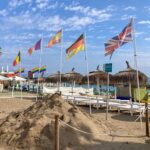
Los Alamos beach open for business again. Credit: Vitalii Biliak – Shutterstock

Holidaymakers and local residents can once again swim safely at a favourite destination. The local council in Torremolinos has confirmed optimal conditions at Los Alamos beach in Torremolinos on Friday, May 22, following detailed laboratory analysis.

Water quality returns to excellent levels

Authorities lifted the temporary swimming ban after recent samples showed microbiological parameters fully compliant with current regulations. Tests conducted by Andalucian regional services verified safe conditions across the entire beach area.

The council had acted immediately when problems first appeared. Heavy rainfall caused the Guadalhorce River to rise, leading to breaks in several sewage pipes along the Malaga coastline, especially in the council jurisdiction of Malaga city. This incident prompted precautionary restrictions to protect public health while investigations continued.

Continuous monitoring ensures safety

Council teams in Torremolinos maintained regular checks throughout the closure period. Coordination with regional authorities allowed for continuous updates based on scientific data. Results now indicate complete normalisation. All tested indicators sit comfortably within permitted limits, ending weeks of restricted access for beachgoers.

Commitment to coastal standards remains strong

Town hall representatives pledged ongoing collaboration with the Junta de Andalucia and other bodies. Joint efforts focus on protecting environmental quality and upholding high sanitary standards across Torremolinos beaches. Regular communication about water conditions will keep the public informed of any developments.

This episode goes to show effective local response to environmental challenges on the Malaga coast. Many holidaymakers had awaited news of reopening with anticipation, particularly as the summer season approaches. Los Alamos beach ranks among popular spots for families and water sports enthusiasts drawn to its wide sands and convenient facilities.

Bigger implications extend to tourism recovery in the region. Quick resolution of such incidents preserves the area’s reputation for clean seas and reliable services. Continued vigilance by authorities helps maintain trust in coastal destinations popular with British travellers seeking reliable sunshine escapes.

%

Spain’s Nightlife Terraces Face Stricter Regulation As Cities Consider Mandatory Noise Sensors

Published

on

spain’s-nightlife-terraces-face-stricter-regulation-as-cities-consider-mandatory-noise-sensors

Complaints tend to increase during warmer months when terrace use intensifies and windows remain open. Photo credit: Alex Segre/Shutterstock

Spain is moving towards stricter control of noise in outdoor hospitality spaces, with proposals and existing municipal rules that may include real-time monitoring of sound levels using sensors on bar and restaurant terraces in certain areas. The changes are not being introduced as a single nationwide law. Instead, they fall under Spain’s established system of municipal and regional environmental regulation, meaning each city council decides how and when to apply stricter noise controls.

The most common framework used across Spain is the designation of acoustically saturated zones, areas where repeated noise complaints and measured sound levels exceed permitted thresholds. In these zones, authorities can restrict terrace capacity, reduce opening hours, limit new licences, or increase enforcement measures.

Cities already applying or expanding strict noise controls

Several major Spanish cities already operate or are developing tighter systems for controlling terrace noise, although the use of sensors is not uniformly mandated.

In Madrid, the city’s noise control system includes Zonas de Protección Acústica Especial (ZPAE), where terraces face reduced hours, stricter licensing conditions, and stronger enforcement. These zones are used in high-density districts where residential complaints are frequent.

In Barcelona, the city has long applied some of the strictest terrace regulations in Spain. Certain neighbourhoods, including parts of the city centre such as Ciutat Vella, Gràcia and L’Eixample, have previously seen earlier closing times, reduced terrace capacity, and enforcement based on sound measurements, including the use of monitoring data to justify restrictions.

In Valencia, local authorities have introduced pilot schemes exploring “smart terrace” concepts in some districts. These include acoustic monitoring tools and environmental adjustments designed to reduce noise impact in busy nightlife areas.

In the Balearic Islands (notably Palma de Mallorca), strict noise enforcement is already well established due to heavy tourism pressure. Regulations in entertainment zones often include tight limits on outdoor noise, operating hours, and licensing conditions.

In Málaga, municipal regulations have also been tightened in central and coastal districts where tourism and residential areas overlap, with restrictions on terraces and enforcement linked to noise complaints and measured thresholds.

These cities do not operate under a single shared system. Instead, they apply similar principles independently based on local demand, tourism intensity and residential pressure.

Why noise is a persistent issue in Spanish cities

Noise from terraces remains one of the most common urban complaints in Spain’s major cities, particularly in high-tourism and nightlife districts. Residents in these areas often report that the issue is not limited to individual incidents, but rather a continuous background level of sound during evening and night-time hours. This includes conversations from outdoor seating, movement of furniture, delivery activity, and general street congestion.

Complaints tend to increase during warmer months when terrace use intensifies and windows remain open. In densely populated districts, sound can travel easily between streets and residential buildings, contributing to ongoing disputes between residents and hospitality venues. Local authorities already use a range of enforcement tools, including inspections, fines, and acoustic measurements, to manage these conflicts. However, enforcement often depends on location-specific rules rather than a uniform national standard.

What the measures mean for residents

For people living in central or tourist-heavy districts, stricter controls are intended to improve consistency in how noise limits are enforced.

Residents’ associations in affected areas argue that current systems often rely on complaints rather than continuous monitoring. Where noise limits are exceeded, enforcement can vary depending on timing and available inspection resources.

More structured monitoring in some cities is intended to provide clearer evidence of breaches and reduce reliance on subjective reporting. This is particularly relevant in districts where hospitality activity is concentrated in narrow streets and mixed-use buildings.

What it means for bars, restaurants and tourists

For hospitality businesses, terraces are a major part of revenue, particularly in cities where outdoor dining is central to local culture and tourism. Any tightening of rules can affect seating capacity, opening hours, and compliance costs. Operators may face additional administrative requirements depending on the municipality, especially in areas designated as acoustically saturated zones. However, most cities continue to prioritise maintaining terrace activity while managing its impact on nearby residents.

For tourists, changes are likely to be gradual rather than immediately noticeable. Spain’s terrace culture remains a key part of its hospitality identity, and outdoor dining is not expected to be reduced nationwide. In some districts, visitors may experience more regulated environments, including earlier closing times or quieter seating areas. In others, especially outside high-density zones, there may be little visible change.

No nationwide uniform system

Despite the attention around noise sensors and stricter terrace controls, Spain does not currently have a unified national policy requiring all municipalities to adopt the same system. Instead, regulation remains fragmented. Cities such as Madrid, Barcelona, Valencia, Palma de Mallorca and Málaga apply their own rules based on local conditions, legal frameworks and environmental assessments.

The overall direction is consistent: increased attention to managing terrace noise in densely populated or tourist-heavy areas. However, the tools used, including whether sensors are deployed, remain entirely dependent on local government decisions rather than national legislation.

Continue Reading

%

Spain Helps Children Call Home Without Phones

Published

on

spain-helps-children-call-home-without-phones

Some shops in Spain now allow children without smartphones to call parents for free. Credit : Littlekidmoment, Shutterstock

A few years ago, giving a child a smartphone started feeling almost unavoidable in Spain. Parents worried about school runs, after school activities, buses running late or children needing help while out with friends. Eventually many gave in and bought phones earlier than they really wanted to.

Now things seem to be shifting a bit.

In several parts of Spain, local shops are starting to offer children something surprisingly simple instead. If they need help, they can walk in and ask to call home for free.

No app.

No account.

No smartphone needed.

The idea is already being introduced in Navarra, Catalonia and Boadilla del Monte near Madrid through networks of participating businesses displaying stickers in shop windows so children know they can ask for help if necessary.

And honestly, part of the reason people are reacting so positively to it is because it feels practical in a very normal everyday way.

A child misses the bus after football practice. Somebody forgets keys. Plans change unexpectedly after school. Instead of carrying a smartphone connected permanently to social media and messaging apps, they can simply ask to make a quick call.

For many families, that sounds like a reasonable compromise.

Parents want children reachable without giving them full internet access

The debate around smartphones and children has become much bigger in Spain recently.

A lot of parents are no longer comfortable with how young children are when they first start using social media or spending hours online.

Some schools have tightened phone rules. Parent groups regularly discuss screen addiction, online bullying and children spending less time offline.

At the same time though, many mothers and fathers admit they still feel anxious about not being able to contact their children easily.

That is exactly the gap these shop networks are trying to fill.

The businesses involved are not acting as childcare centres or supervision points. Their role is limited to allowing occasional calls home if a child genuinely needs one.

In Navarra, the initiative is known as ‘Llama a casa’, meaning ‘Call home’.

It is being promoted by the association Adolescencia Libre de Móviles en Navarra together with the Official College of Pharmacists of Navarra.

According to organisers, more than 285 places have already joined including pharmacies, cafés, sports centres, academies and other local businesses.

Catalonia has launched a similar campaign called “Fes un truc” starting in Lleida, where commercial associations reportedly requested thousands of stickers for participating shops shortly after the project was announced.

Boadilla del Monte has also introduced its own version called “Comercio Amigo” through a local family support programme.

The idea feels familiar to many adults in Spain

Part of the reason the initiative resonates with people is because it reminds many adults of how things worked before smartphones became constant companions.

Children used to knock on a neighbour’s door if something happened.

Or ask to use a shop phone, or call parents from a café.

Several parents commenting online about the initiative said they feel pressure nowadays to buy phones earlier than they would actually like because they are afraid children will otherwise be unreachable.

Others say they deliberately delayed smartphones but struggled with practical situations once children started becoming more independent.

That is why the idea is spreading attention far beyond the towns where it currently exists. Because it taps into something many families are quietly wrestling with already.

How do you give children freedom without handing over permanent internet access at such a young age?

According to Spain’s National Statistics Institute, nearly 68 per cent of children aged between 10 and 15 used mobile phones in 2025.

However, the percentage among younger children dropped slightly compared with the previous year. That small drop may not sound huge, but many parents see it as a sign attitudes are beginning to change.

Not necessarily against technology itself. More against the idea that smartphones have become the automatic solution for every situation involving children.

Of course, not everyone agrees on where the balance should be.

Some parents still feel safer knowing children always carry phones. Others wonder whether these shop networks can realistically expand enough to become useful everywhere. But what is clear is that more families in Spain are starting to ask the same question.

Whether children really need smartphones as early as everyone assumed they did.

Continue Reading

%

Over 40,000 March On Moncloa As Madrid Protesters Demand Sánchez Resignation

Published

on

over-40,000-march-on-moncloa-as-madrid-protesters-demand-sanchez-resignation

Tensions increased during the final stage of the protest when police units blocked access routes leading towards Moncloa. Photo credit: Sauce Reques/Shutterstock

Tens of thousands of demonstrators gathered in Madrid this Saturday May 23, calling for the resignation of Spanish Prime Minister Pedro Sánchez, with police later blocking attempts by protesters to reach the Moncloa Palace complex (where the prime minister resides) via the A-6 motorway. The protest, organised by the civic platform Sociedad Civil Española under the slogan “Sánchez, dimisión ya”, began at Plaza de Colón before moving through central Madrid towards the Moncloa area. Organisers claimed attendance reached 80,000 people, while the Government Delegation in Madrid estimated the turnout at approximately 40,000.

Participants carried Spanish flags and banners accusing the government of corruption and demanding early elections. Chants directed at Sánchez and members of his administration continued throughout the route, although the demonstration remained largely peaceful during most of the day. The march caused disruption across several parts of the capital, with increased police presence around key government buildings and traffic restrictions imposed along parts of the route. Large crowds gathered throughout the afternoon as demonstrators continued towards the western side of the city near Moncloa.

Investigations Increase Pressure on Government

The rally took place amid continuing political controversy surrounding several judicial investigations linked to figures connected to the ruling Socialist Party. Particular attention has focused on former prime minister José Luis Rodríguez Zapatero after Spain’s National Court opened an investigation related to the Plus Ultra airline bailout case. Zapatero has denied wrongdoing. At the same time, scrutiny has continued over investigations involving Sánchez’s wife, Begoña Gómez, and other current and former political figures associated with the Socialist Party.

Sánchez has repeatedly rejected accusations against his government and political allies, describing the investigations affecting his family and associates as attempts to destabilise his administration through political and judicial pressure. Earlier this week, the prime minister publicly defended Zapatero and called for respect for the principle of presumed innocence during ongoing legal proceedings. The government has also accused opposition parties of encouraging political tension through repeated public demonstrations and criticism of ongoing judicial cases. Ministers within Sánchez’s coalition argued that legal investigations should proceed independently without being used to influence public opinion before any court rulings have been reached.

Opposition Figures Join Demonstration

Several opposition politicians attended the protest, including representatives from the conservative People’s Party and the right-wing Vox party. Vox leader Santiago Abascal joined supporters during the march, while senior figures from the People’s Party also participated. However, party leader Alberto Núñez Feijóo did not attend because he was participating in a regional party event outside Madrid.

Demonstrators gathered in significant numbers around the Arco de Moncloa area as the march approached its scheduled conclusion. Some protesters attempted to continue towards the prime minister’s official residence despite police restrictions already in place around the government complex.

Many protesters accused the government of failing to provide sufficient transparency regarding investigations connected to political figures. Others called for a general election before the end of the current parliamentary term. Placards carried during the demonstration included slogans demanding accountability from senior members of the government and criticism of recent political decisions made by Sánchez’s administration.

Police Prevent Protesters Reaching Moncloa

Tensions increased during the final stage of the protest when police units blocked access routes leading towards Moncloa and prevented demonstrators from advancing along the A-6 motorway. Footage from the scene showed officers forming cordons across the road while some protesters pushed against barriers and shouted towards police lines. According to reports from the scene, at least seven police officers sustained injuries during the disturbances and three people were arrested.

Police vehicles and riot units were deployed around the perimeter of the Moncloa complex as officers attempted to prevent further confrontations. Some demonstrators remained in the area for several hours after the main protest had officially concluded. Spanish authorities later restored access to the motorway after dispersing the remaining crowds gathered near the police cordon. Traffic disruption in the area continued during part of the afternoon while officers maintained security around the government complex.

Demonstration Reflects Political Polarisation

Saturday’s protest was one of the largest anti-government demonstrations held in Madrid this year and reflected continuing political division in Spain ahead of the next general election, currently scheduled for 2027. Opposition groups have accused Sánchez of weakening democratic institutions and failing to respond adequately to allegations involving individuals connected to his political circle.

The prime minister has denied those accusations and insisted he will remain in office until the end of the parliamentary term. The demonstration follows several years of recurring protests against Sánchez’s administration, including large rallies in 2023 linked to the government’s Catalan amnesty law. Those protests also resulted in attempts by demonstrators to gather near Moncloa and temporary disruption along the A-6 route into Madrid.

Continue Reading

Trending

Copyright © 2017 Spanish Property & News