Connect with us

%

The Best Places To Escape Spain’s Expected Summer Heatwaves In 2026

Published

on

the-best-places-to-escape-spain’s-expected-summer-heatwaves-in-2026

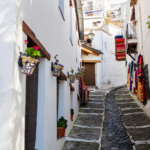
Villages including Trevélez, Pampaneira, Bubión and Capileira sit at high elevations. Photo credit: estudioluismatias/Shutterstock

As Spain approaches the summer months, travellers planning for 2026 are increasingly considering destinations that typically remain more comfortable during the hottest period of the year, particularly July and August. Inland and southern regions can experience prolonged heatwaves, which makes geography and altitude key factors when choosing where to visit.

Rather than avoiding Spain altogether, many visitors are opting for areas shaped by Atlantic weather systems or higher elevations, where temperatures tend to remain more moderate and evenings are cooler.

Northern Spain Offers the Most Consistent Relief from Heat

Spain’s northern coastline remains the most reliable option for avoiding extreme summer temperatures. The Atlantic influence helps keep daytime highs lower and reduces the intensity of heat spikes common further south and inland.

Galicia, in the far north-west, is one of the clearest examples. Its coastal inlets, green landscapes and maritime climate result in milder summer conditions than most of the country. Cities such as Santiago de Compostela and the Rías Baixas coastline attract visitors seeking outdoor travel without sustained high heat.

Asturias follows a similar pattern, with a combination of coastline and mountainous terrain helping to moderate summer temperatures. Cities such as Oviedo and coastal areas like Gijón allow for beach access without the intense conditions often experienced in southern Spain.

The Basque Country Combines Coastal Climate and Urban Tourism

The Basque Country continues to attract visitors looking for a balance between city tourism and more manageable summer weather.

Bilbao offers museums, riverside architecture and food markets, while nearby San Sebastián remains one of Spain’s most popular urban beach destinations. The region’s Atlantic climate keeps temperatures generally lower than central Spain, although humidity can occasionally increase during warmer periods.

Sea breezes along the coastline often make outdoor activity more comfortable than in inland cities during the hottest part of the day.

Mountain Regions Provide Cooler Inland Alternatives

For travellers who prefer inland tourism, altitude remains one of the most effective ways to reduce exposure to extreme heat. The Pyrenees, stretching along the border with France, offer cooler daytime conditions during summer due to their elevation. Hiking routes, lakes and mountain villages provide alternatives to hotter lowland destinations.

Closer to Madrid, the Sierra de Guadarrama also serves as a popular escape during warm periods, with temperatures often dropping noticeably in the evenings compared with the capital.

La Alpujarra Offers Cooler Conditions in Southern Spain

While Andalucía is often associated with extreme summer heat, the Alpujarra region in Granada province benefits from its position on the southern slopes of the Sierra Nevada.

Villages including Trevélez, Pampaneira, Bubión and Capileira sit at high elevations, helping moderate daytime temperatures compared with lower-altitude cities such as Granada, Cordoba and Sevilla. Trevélez, at more than 1,400 metres above sea level, is among the highest villages in Spain.

The region has become increasingly popular for travellers seeking cooler nights, hiking routes and rural accommodation without leaving southern Spain.

Cadiz Province Benefits From Atlantic Airflow

Cadiz province offers another alternative for travellers looking to avoid the most intense summer conditions in Andalucia.

Located on Spain’s Atlantic coast, the province benefits from sea breezes that help reduce the severity of heat compared with inland areas. Cities and towns such as Cadiz city, El Puerto de Santa María and Sanlúcar de Barrameda generally experience more moderate conditions than Sevilla or Cordoba.

Tarifa, positioned at the southernmost point of mainland Europe, is strongly influenced by Atlantic winds. Although summer temperatures can still be high, airflow often makes conditions feel less oppressive than in more enclosed inland regions.

Mediterranean Destinations Require More Careful Planning

The Mediterranean coast remains one of Spain’s most visited summer regions, although temperatures can become intense during heatwaves. Barcelona continues to attract large visitor numbers, but many travellers increasingly plan sightseeing for mornings or evenings during hotter periods.

Coastal breezes help moderate temperatures near the waterfront, although inland districts can still become very warm. Further south, parts of Valencia and Murcia frequently experience higher summer temperatures, particularly away from the coastline.

Summer 2026 Travel Patterns Continue to Shift

As Spain approaches the peak summer travel season, attention is once again turning to heat conditions expected across much of the country during July and August. Long-range seasonal forecasts from European climate monitoring agencies indicate that above-average temperatures are likely across large parts of southern and western Spain.

In recent years, prolonged heatwaves have increasingly affected inland and southern parts of the country, particularly Andalucia, Extremadura and central Spain. Cities such as Sevilla, Cordoba and Madrid regularly record temperatures above 35C during peak summer periods, with occasional spikes exceeding 40C during major heat events. As a result, travellers planning holidays in 2026 are increasingly considering destinations shaped by Atlantic weather systems, higher altitudes or stronger coastal airflow.

Many visitors are adapting by selecting destinations where geography, altitude and coastal airflow help reduce exposure to prolonged extreme heat.

Continue Reading

%

Barcelona Pauses New 24 Hour Supermarkets

Published

on

barcelona-pauses-new-24-hour-supermarkets

Barcelona has paused new licences for 24 hour supermarkets across much of the city. Credit : Steve Lovegrove, Shutterstock

Picking up snacks, drinks or basic groceries at midnight has become completely normal in Barcelona.

For years, small 24 hour supermarkets seemed to appear everywhere. Some stayed open all night in busy tourist areas while others quietly became part of everyday life for locals coming home late from work, bars or long shifts.

Now the city wants to slow things down.

Barcelona City Council has temporarily stopped granting new licences for 24 hour supermarkets and self service grocery shops across much of the city while officials work on new rules for the sector.

The suspension is already in force and will remain for at least a year.

And honestly, reactions have been exactly what you would expect in Barcelona right now.

Some residents are relieved, others are frustrated.

Because depending on where you live, these shops are either useful neighbourhood businesses or part of the reason certain areas never feel quiet anymore.

The move mainly affects smaller supermarkets and convenience stores under 300 square metres that until now were able to operate with very extended opening hours.

According to the council, the rapid growth of these businesses has increasingly created tensions in residential neighbourhoods, especially in areas heavily affected by tourism and nightlife.

Residents complained about noise, crowds and constant activity late at night

The issue for many neighbours was never really about people buying milk at 1am.

It was everything happening around the shops afterwards.

Groups standing outside drinking.People talking loudly under apartment windows.Constant movement in streets that used to calm down much earlier at night.

In some neighbourhoods, residents say the atmosphere changed completely over the last few years as more late night businesses opened nearby.

And because Barcelona is already dealing with huge debates around tourism pressure and quality of life, the frustration around 24 hour supermarkets slowly became part of a much bigger conversation.

The city says there are currently around 1,300 supermarkets and self service shops operating under this kind of model across Barcelona.

Officials argue the pause on new licences will give the council time to prepare a broader urban plan deciding where these businesses should be allowed and under what conditions.

The suspension also covers permits linked to opening or expanding these types of premises.

Not every district is affected in exactly the same way though.

Ciutat Vella and Sant Martí were excluded because both already have more recent regulations dealing with this type of commercial activity.

Barcelona has already been carrying out inspections on late night shops

At the same time, the council confirmed it will continue inspection campaigns targeting businesses operating around the clock.

And the figures released by the city suggest authorities have already been monitoring the situation very closely.

During the current municipal term, Barcelona carried out 14 multi inspection operations across different neighbourhoods.

More than 230 premises were inspected.

According to the council, authorities detected breaches involving hygiene regulations, urban planning rules and operating conditions.

The operations also led to dozens of temporary closures, hundreds of restoration orders and financial penalties.

City officials insist the objective is not to attack local commerce itself.

Instead, they say the aim is to stop certain residential areas becoming overwhelmed by a commercial model linked increasingly to late night activity and tourism pressure.

Still, not everybody agrees with the approach.

Some people feel Barcelona is gradually becoming too restrictive and too hostile towards businesses that simply respond to customer demand.

Others argue these shops provide practical services for workers, tourists and residents whose schedules do not fit neatly into traditional opening hours.

The debate says a lot about how Barcelona is changing

The argument around 24 hour supermarkets probably would not have attracted so much attention a few years ago.But Barcelona feels different lately.

Almost every discussion about the city eventually circles back to the same themes.

  • Tourism.
  • Housing pressure.
  • Noise.
  • Nightlife.

And what kind of city residents actually want Barcelona to become.

That is partly why something as ordinary as a late night convenience store suddenly turns into a political issue.

For some people, these shops represent convenience and modern city life. For others, they symbolise a city that feels increasingly overcrowded and exhausting during peak tourist periods.

And honestly, both sides probably have a point.

Most people enjoy having somewhere open late when they genuinely need it. Most people also want to sleep at night.

The challenge for Barcelona now is figuring out where the balance sits. Because the city clearly does not want late night supermarkets disappearing completely.

But it also does not seem willing to let them continue spreading everywhere without tighter control. And for now at least, anybody hoping to open a new 24 hour supermarket in Barcelona is going to have to wait.

Continue Reading

%

Thousands Of Red Rose Petals Fall From Rome Pantheon Dome

Published

on

thousands-of-red-rose-petals-fall-from-rome-pantheon-dome

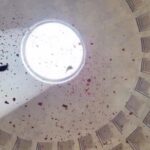
Millions of rose petals fall from Pantheon roof. Credit: @KriderJackie X

Crowds gathered inside the historic Pantheon in Rome on Sunday, May 24 as thousands of red petals drifted down from the iconic dome during the annual Pentecost celebration.

This striking ritual draws faithful visitors, tourists, and pilgrims from many nations to witness the event that marks the descent of the Holy Spirit in Christian tradition. Petals released through the oculus created a memorable visual display high above the assembled people.

Today is the feast of Pentecost.

On this day, in Rome, there is a tradition of fluttering red rose petals down through the oculus of the Pantheon, symbolising the Holy Spirit’s descent to Earth. pic.twitter.com/90kx3d0KLB

— Massimo (@Rainmaker1973) May 24, 2026

Red petals carry deep biblical symbolism

Participants connect the falling flowers directly to the tongues of fire described in the Acts of the Apostles. Red colour choices reflect that fiery imagery from the biblical account of Pentecost.

Choirs performed the classic Veni Sancte Spiritus hymn, often called the Golden Sequence, as petals continued their slow descent. Music filled the vast interior space while light streamed through the opening more than 40 metres above. Many attendees captured photos and videos that quickly spread across social media platforms.

Visitors could see how the building’s ancient engineering adds power to the moment. Petals travel a long distance from the dome’s central opening before reaching the floor below. This architectural feature makes the Pantheon one of the most recognisable sites for this particular observance in Italy.

Ancient origins meet Christian observance

Construction of the Pantheon dates back to ancient Roman times when it served as a temple for multiple gods. Conversion to a Christian church occurred in the seventh century, specifically around 607 AD, under the name Santa Maria dei Martiri.

Historians trace this petal custom to that period of transition from pagan worship to Christian practice. The tradition continues without interruption each year on the seventh Sunday after Easter.

Organisers coordinate the release carefully to coincide with the main Pentecost Mass. Attendees fill the space well before midday to find good viewing positions. Families, solo travellers, and religious groups all participate in the shared experience.

Global interest grows in this Roman event

Local authorities work with church officials to manage crowds safely during the ceremony. Security measures guarantee smooth flow while preserving the solemn atmosphere.

🚨 The real masterminds and backstage geniuses behind the rose petals falling from the Pantheon’s oculus on Pentecost Sunday?

The Rome firefighters!

Italy at its finest 🇮🇹🔥 https://t.co/NwMYvJPujG pic.twitter.com/jaTjYY9UBr

— Mambo Italiano (@mamboitaliano__) May 24, 2026

The event highlights centuries of continuous use for worship in the same building. From its original dedication to Roman deities to its current role in Catholic liturgy, the Pantheon bridges different eras.

Rome maintains its status as a key destination for those seeking meaningful cultural and spiritual experiences. The Pantheon petal ritual forms an important part of the city’s religious calendar and attracts attention from around the world each Pentecost.

Continue Reading

%

Court Date That Has Pedro Sánchez Terrified

Published

on

court-date-that-has-pedro-sanchez-terrified

Zapatero and Sánchez together in 2022. Credit: PSOE FB

On June 2, former Prime Minister José Luis Zapatero will walk into the Audiencia Nacional and face a judge, and what he says could bring down the government of Pedro Sánchez.

Ex Spanish PM José Luis Zapatero’s awaited declaration before Judge José Luis Calama at the Audiencia Nacional now casts a massive shadow over Spanish politics.

Tuesday, June 2 at 9am will see the former prime minister appear as an ‘investigado’ in the Plus Ultra influence-peddling probe. This single court date intensifies pressure on the current government at a moment when stability already looks fragile.

Coalition partners are quietly distancing themselves from Sánchez as the hearing nears. Sumar has voiced demands for stricter rules on former leaders while ERC and other former allies show doubts publicly over recent developments.

Observers are wondering whether this erosion of support adds fresh instability to an already highly fragile parliamentary situation.

Internal critics within PSOE are beginning to sharpen their attacks on Sánchez. Regional barons, especially after poor results in the Andalucia election, question the national strategy the prime minister is following and call for some sort of renewal to avoid further defeats as 2027 brings both general and local elections.

Growing discontent in key partnerships is behind talk of an exhausted cycle that requires big decisions on leadership and timing.

Evidence against Zapatero

Zapatero faces no formal charges so far, yet investigators have gathered material that raises serious questions ahead of his 2 June appearance. For the detailed evidence uncovered so far, including intercepted communications, financial flows and the May 19 raids, readers can refer to our earlier report on the historic corruption probe: Ex-PM of Spain José Luis Zapatero faces historic corruption probe over airline bailout millions.

Unpopular steps taken by the Sánchez administration

Several decisions and failures have damaged public confidence in recent months and masses have again displayed their calls for Sánchez to step down from his position in government:

  • Repeated inability to pass a fresh national budget has forced reliance on extensions of prior spending plans and last-minute deals.
  • Loss of stable parliamentary support after Catalan party Junts withdrew backing in late 2025 leaves key decrees vulnerable to defeat.
  • Ongoing probes into family members and close allies fuel perceptions of conflicts of interest at the highest levels.
  • Electoral setbacks in multiple regions leave PSOE struggling to maintain momentum ahead of future votes.
  • Mass regularisation of undocumented migrants currently living illegally in Spain.

Questions now revolve around Sánchez’s own position. Many wonder whether the combination of the Zapatero court date, partner distancing and internal PSOE criticism will finally push him towards resignation or even early elections. With the legislature due to run until 2027, any move would represent a major turning point.

Spanish politics enters a period of heightened uncertainty as June 2 approaches. Developments from that hearing could reshape the coming weeks in ways few predicted even a month ago. For more background on the growing calls for Sánchez to step down and recent protests, see our previous coverage here and here.

Continue Reading

Trending

Copyright © 2017 Spanish Property & News