Connect with us

%

Fuengirola And Other Costa Del Sol Charities Could Get Government Funding From Malaga

Published

on

fuengirola-and-other-costa-del-sol-charities-could-get-government-funding-from-malaga

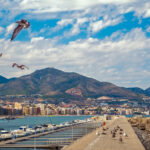
Fuengirola and the Costa del Sol. Credit: Roberto Sorin – Shutterstock

Fuengirola council is encouraging local social entities, such as charities, towards new provincial grant applications this year with active promotion of a major funding programme. Francisco Jose Martin, provincial deputy for the third sector and Fuengirola councillor, presented details of this opportunity to strengthen community support networks across the area.

Eligibility criteria explained

Organisations qualify when they run projects in towns with fewer than 20,000 residents. Groups based in larger towns such as Fuengirola meet requirements if they prove part of their work happens in smaller provincial locations. This rule opens doors for many entities, such as charities, that operate across multiple sites in the province.

Funding streams on offer

Projects focused on social intervention and action can receive up to €20,000 each to deliver initiatives that assist vulnerable groups in daily life. A separate stream provides €370,000 overall for material improvements with associations able to request up to €18,000 for equipment purchases or up to €40,000 for vehicle acquisition or adaptation to support social activities. Total available funding reaches €1,696,000 and doubles the amount from the previous edition to create broader possibilities for continued community work.

Benefits for social organisations

Local charities achieve greater capacity to address needs among disadvantaged populations when they obtain these resources. Vehicles adapted for transport could allow easier delivery of services to remote or less populated zones, while new equipment could improve efficiency in areas such as care provision or educational programmes. Many entities develop stronger operational foundations through this support and extend their reach to more beneficiaries throughout the province.

Deadline and submission process details

Entities should complete submissions exclusively online via the Diputacion de Malaga electronic headquarters at sede.malaga.es. Access means you have to have the official digital certificate of representation for the applying organisation. Forms became available from May 19 and carry on until June 1. Full bases appear in the provincial official bulletin with further guidance in the dedicated Diputación cooperation section. Charities ought to prepare documentation carefully to avoid last-minute issues and contact convocationtercersector@malaga.es for any clarification needed on requirements.

Similar initiatives by neighbouring councils

The Velez Malaga council has informed local associations about the same opportunity through public announcements and social media channels. Mijas and Benalmadena councils have shared information with third-sector groups to maximise participation in this provincial call. Estepona council also encourages relevant organisations to submit applications where their activities are in line with the criteria for smaller locations.

Charities should act quickly ahead of the June deadline to prepare complete documentation. This expanded budget compared with previous years creates expanded possibilities for social work across the province and helps organisations maintain essential services for those who rely on them most.

%

New EU Rule Prepares Cars For Alcohol Tests

Published

on

new-eu-rule-prepares-cars-for-alcohol-tests

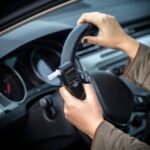
New EU rules will require all new cars to be prepared for alcohol interlock systems from 2026. Credit : HenadziPechan, Shutterstock

Drivers buying a new car in Europe from July 2026 may notice something changing behind the scenes.

Every newly registered vehicle sold across the European Union will have to come ready for an alcohol interlock device to be installed.

The rule is already creating confusion online because many people believe it means all drivers will need to blow into a breathalyser before starting their car.

That is not actually what the law says.

Drivers will not automatically be forced to take alcohol tests every time they use the vehicle. What becomes mandatory is the built in preparation inside the car itself, allowing an alcohol interlock system to be connected quickly if required in the future.

Still, the change says a lot about where European road safety rules are heading. Cars are becoming increasingly packed with monitoring systems, alerts and automated safety technology and this is another step in that direction.

What will actually change in cars from July 2026

The important detail is that the EU is requiring a standardised interface for something called an Alcolock system.

In simple terms, manufacturers must make sure new vehicles leave the factory technically ready for an alcohol breath test device to be installed later without expensive modifications.

The actual device works similarly to a police breathalyser. The driver blows into it before starting the engine.

If alcohol levels are above the legal limit, the car stays immobilised.

The technology already exists and is not new. It has been used for years in parts of the transport industry and in certain court ordered driving cases involving repeat drink driving offenders.

The difference now is that Brussels wants all newly registered cars across the EU prepared for the possibility of wider use later on.

That means the connection system and installation capability must already exist inside the vehicle from the moment it leaves the factory.

For many drivers, the system will probably remain invisible unless national authorities or courts ever require the device itself to be activated. But safety experts believe making installation easier could increase future use significantly.

According to road safety estimates linked to the proposal, alcohol interlock systems may help reduce fatal crashes linked to drink driving by a considerable margin. And despite years of awareness campaigns, alcohol remains a major factor in serious road accidents across Europe.

Modern cars in Europe are already watching drivers more closely

For many motorists, this latest rule feels like part of a much bigger shift already happening inside newer vehicles.

Cars sold in Europe today already contain far more automated systems than they did only a few years ago.

Some drivers barely notice them while others find them impossible to ignore.

Speed warning systems are one example. Many newer cars now alert drivers when they exceed local speed limits using GPS data and traffic sign recognition cameras.

Lane assistance technology has also become increasingly common, with some vehicles gently correcting steering if the driver drifts unintentionally.

Then there are fatigue and distraction alerts.

Some systems monitor driving behaviour looking for signs of tiredness. Others react if drivers stop paying attention to the road for too long.

New cars are also required to include Event Data Recorders, often compared to black boxes on aircraft. These store technical information before and after collisions to help investigators understand what happened during an accident.

Emergency braking alerts are also now becoming standard on many models. During sudden heavy braking, rear lights flash rapidly to warn vehicles behind.

Taken separately, each system may seem relatively minor.

Together though, they show how quickly driving in Europe is becoming more technology driven.

Why the EU is introducing these changes

The broader goal behind all of this is the EU’s long term road safety plan known as ‘Vision Zero‘.

Brussels wants to cut road deaths and serious injuries dramatically over the coming decades and eventually move towards almost zero road fatalities by 2050.

That ambition is shaping more and more vehicle regulations every year. And honestly, the pace of change has surprised many drivers.

Not long ago, debates around car technology focused mostly on electric vehicles or touchscreen dashboards.

Now conversations increasingly revolve around monitoring systems, automated assistance and driver behaviour controls.

Supporters argue the technology saves lives and reduces human error on the road.

Critics worry modern cars are becoming overly intrusive and increasingly dependent on digital systems that many motorists never asked for in the first place.

The July 2026 deadline matters because it marks the point where newly registered vehicles that do not meet the updated safety requirements will no longer be able to enter the EU market.

For most drivers, the alcohol interlock preparation rule will probably change very little day to day.

They may never even see the system. But it reflects something bigger happening across Europe’s car industry.

Vehicles are slowly becoming less mechanical and far more connected to software, monitoring tools and automated safety controls than many people ever expected.

Continue Reading

%

Experts Warn ”medicanes” Could Soon Become A Regular Weather Phenomenon In Spain

Published

on

experts-warn-”medicanes”-could-soon-become-a-regular-weather-phenomenon-in-spain

Meteorologists note that the greatest risk from medicanes is often not wind strength alone. Photo credit: BEST-BACKGROUNDS/shutterstock

Meteorologists and climate researchers are warning that hurricane-like storms in the Mediterranean may become more common as sea temperatures continue to increase. The systems, known as “medicanes”, are Mediterranean cyclones that can develop some characteristics associated with tropical storms, including spiral cloud structures, heavy rainfall, strong winds and an eye-like centre. Experts stress, however, that they are not the same as Atlantic hurricanes.

The discussion follows recent meteorological analysis examining how rising sea temperatures could affect weather systems across southern Europe. Scientists studying the Mediterranean climate say warmer waters can provide additional heat and moisture for storm development, creating conditions more favourable to medicane formation than in previous decades.

According to climate data cited by meteorological researchers, parts of the Mediterranean Sea have recorded temperatures above seasonal averages in recent years.

What a medicane is and how it forms

Researchers have also identified long-term warming patterns in the basin, with sea surface temperatures increasing steadily over recent decades.

The term “medicane” combines the words Mediterranean and hurricane. These systems form over the Mediterranean Sea and can develop features resembling tropical cyclones, although they are usually smaller and weaker than hurricanes seen in the Atlantic Ocean.

Meteorologists explain that medicanes often begin as low-pressure systems before acquiring tropical characteristics over warm water. They can produce intense rainfall, strong winds and dangerous sea conditions, particularly near coastal areas.

Mediterranean conditions differ from Atlantic hurricanes

Unlike Atlantic hurricanes, which usually develop over large expanses of tropical ocean water, Mediterranean systems form within a much smaller basin surrounded by land. Atmospheric conditions in the region are also different, limiting the development of full-scale tropical hurricanes.

Scientists say that while the Mediterranean is capable of producing storms with hurricane-like features, the region does not typically generate cyclones matching the scale or duration of major Atlantic storms.

Researchers studying Mediterranean climate conditions say warmer sea temperatures may increase the amount of energy available to developing storm systems. Warm water contributes heat and moisture to the atmosphere, which can strengthen rainfall and wind activity.

Rising sea temperatures linked to stronger storms

According to meteorological analysis published by Meteored, Mediterranean waters warmed by around 0.4C per decade between 1990 and 2020. Some areas of the sea have also recorded temperatures significantly above average during recent summers. 

Meteorologist Pedro de la Fuente said some recent Mediterranean storms have shown organised structures similar to tropical cyclones, including warm cores and spiral cloud formations. He noted that these systems remain different from Atlantic hurricanes but can still generate severe weather conditions.

Researchers continue to examine whether climate change could influence how frequently these storms form or how intense they become. Current studies focus on changes in sea temperature, rainfall patterns and atmospheric circulation across the Mediterranean basin.

Previous storms have caused severe flooding

Several Mediterranean storm systems in recent years have caused flooding and wind damage across southern Europe and North Africa. Storm Daniel in 2023 is among the most widely cited examples, bringing severe flooding to parts of Libya after crossing the Mediterranean.

Scientists studying extreme rainfall events have found links between unusually warm Mediterranean waters and heavy precipitation episodes affecting coastal regions. Warmer seas can increase evaporation and atmospheric moisture, contributing to more intense rainfall when storm systems develop.

Meteorologists also note that the greatest risk from medicanes is often not wind strength alone, but flooding caused by prolonged rainfall and storm surges in coastal areas.

What it could mean for southern Europe

Countries bordering the Mediterranean, including Spain, Italy and Greece, are considered among the areas most exposed to these weather systems. Coastal regions can experience flooding, strong winds and disruption to transport during severe storms.

Weather agencies continue to monitor sea temperatures and atmospheric conditions, particularly during late summer and autumn, when medicanes are more likely to develop. Researchers say these storms remain relatively uncommon, but conditions in the Mediterranean are being studied closely as sea temperatures continue to rise.

Scientists emphasise that the Mediterranean is still very different from tropical hurricane regions such as the Atlantic or Caribbean. However, meteorologists say the basin is increasingly capable of producing storms with some tropical characteristics under favourable conditions.

Continue Reading

%

Mazarron To Host Panorama Orchestra’s Spectacular Free Time Tour Show

Published

on

mazarron-to-host-panorama-orchestra’s-spectacular-free-time-tour-show

Mazarron hosts free Panorama Orchestra show with music and lights Photo Credit: panorama_oficial / Instagram

The charming coastal municipality of Mazarron is preparing to welcome one of the most spectacular blowout music performances of the year, with the Panorama Orchestra. During this incredible show, the talented and renowned Panorama Orchestra will arrive with its “Time Tour 2026,” in a show that combines live music, lights, choreography, and an impressive technical production that will light the town up with rhythm, entertainment, and sound.

A spectacular open-air show to light Mazarron up with music and energy

The event is set to take place on Sunday, May 31, in the Plaza del Convento in Mazarron, at 9:00pm, blending a spectacular musical performance with the unbeatable ambience of Mazarron in the evening. Not only this, the show will be completely free to attend, meaning any and everyone can take part and enjoy the spectacle.

One of the biggest draws of the event will be a light show, which will turn the show into a jaw-dropping outdoor experience, right in the heart of one of the Costa Calida’s most desirable coastal towns. 

Who are the Panorama Orchestra? Renowned performers, all the way from Galicia

The Panorama Orchestra is a band originally from Galicia that performs through the autonomous community and other regions of Spain, including the Region of Murcia. With more than 36 years of experience, the orchestra is renowned across the country for their skills in performing and stage presence, as well as the incredible technical level of their productions.

In addition to the Mazarron show, the Panorama Orchestra already made waves in Murcia with a show in Santomera. The band, during this tour, is also performing in hotspots including Madrid, A Coruña, and Valladolid.

“The Panorama 2026 Time Tour doesn’t slow the rhythm: Epic nights, full energy, and a show that isn’t explained … it’s experienced,” states the Panorama Orchestra’s official Instagram caption about the tour.

Continue Reading

Trending

Copyright © 2017 Spanish Property & News