
ElPais
Photographer Of The Year Winner Citlali Fabián: ‘Photography Can Be Incredibly Powerful As A Tool For Rediscovering Yourself’

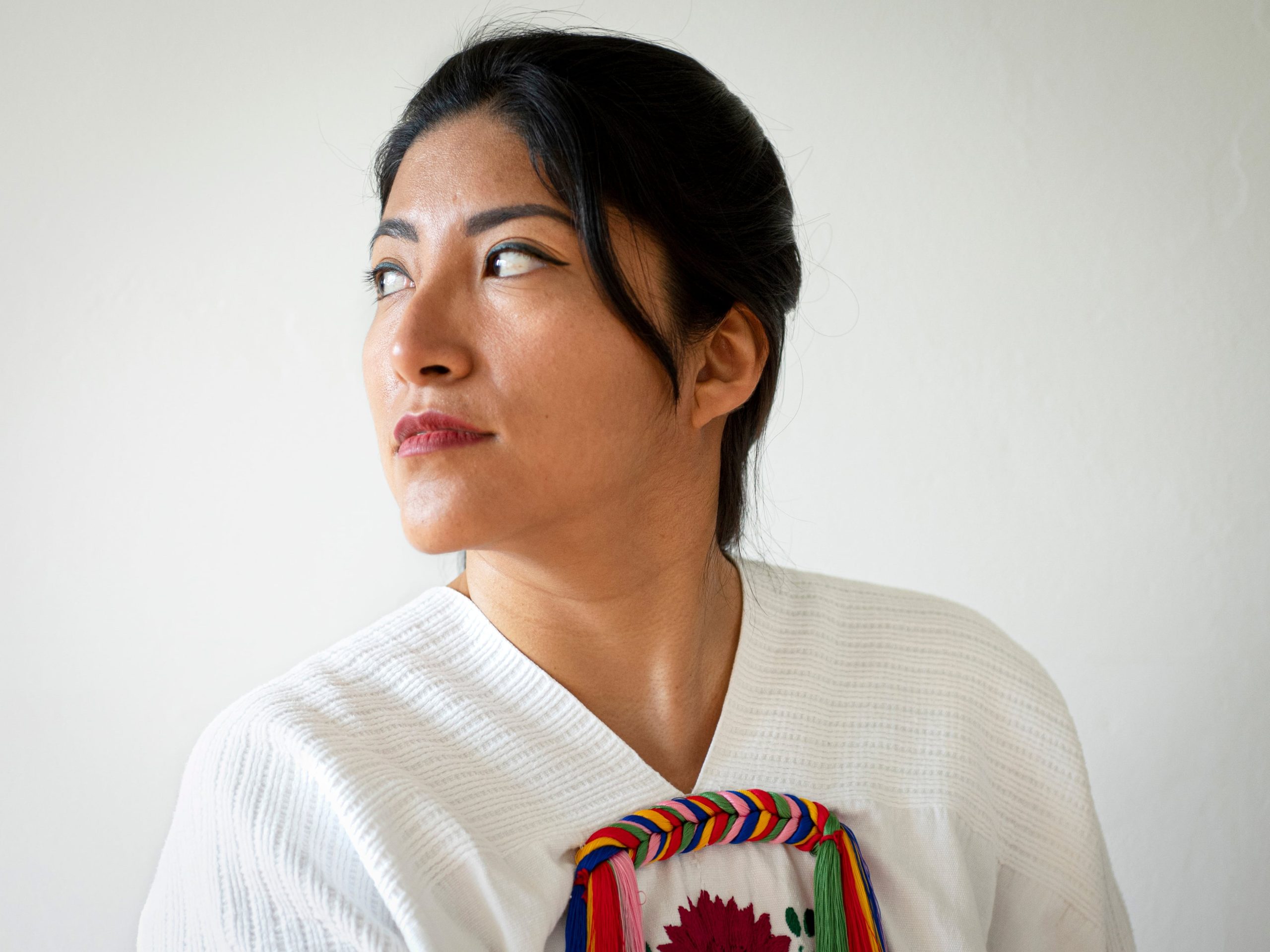
In each photograph by 37-year-old Citlali Fabián, you can find the story of an encounter, as well as an attempt to portray memory with dignity. For her series Bilha, Stories of My Sisters, the artist — who hails from the Yalateca Indigenous community in the Mexican state of Oaxaca — was named Photographer of the Year at the 2026 Sony World Photography Awards, run by the World Photography Organization. This is one of the most prestigious recognitions in her field.
Eight photographic portraits — taken and manipulated by the artist — strengthen the legacy of activists in Oaxaca who defend water, territory, linguistic diversity, women’s rights, native corn varieties and local cinema.
Fabián has been a fellow with the Magnum Foundation, as well as a National Geographic Society explorer. She’s also part of the Women Photograph and Indigenous Photograph collectives. In 2018, her series Mestiza was selected as one of the 13 favorite photo stories by The New York Times and, in 2023, she was invited by World Press Photo to serve as a regional judge.
She now lives in London in the U.K., and describes herself as a photographer from the Yalalteca community and as a first-generation migrant. She grew up in Oaxaca City: there, she remembers receiving the rolls of film that arrived at her father’s shop to be developed. “The connection with the people and the understanding that they were collecting memories marked me in a way that I can’t separate from my life,” she says in an interview with EL PAÍS.
Later, she studied photography and won a scholarship to visit the George Eastman Museum — the oldest museum dedicated to photography — in Rochester, New York. There, she recognized her community in photographs taken by Lola Álvarez Bravo and Mariana Yanpolski, prominent 20th-century Mexican photographers.
“It was inspiring to find so many photographs of Oaxaca in an archive and to think that my grandparents had been to those places,” she says.
Among captions like “unnamed” or “a place known as Sierra Norte,” she encountered descriptions far removed from what was familiar to her. “It was very powerful to see my grandmothers in portraits and to find people whose names were no longer known. That gave me the motivation to continue taking my photographs,” Fabián recalls.
Image as ritual
At a time when cameras have become part of everyday life, the Indigenous artist evokes the memory of her grandmother and transforms photography into a ritual.
“For me, photography — and the ritual of being photographed — are connected to understanding the practice as an extension of memory. My grandmother saw photography as a very special moment: if I told her I wanted to take her picture, she would go and do her hair and get ready. She only had one photograph of her mother, and it’s the only memory she has of her. I began to understand how photography can be a moment to reconnect with memory; it can be incredibly powerful as a tool for rediscovering yourself.”
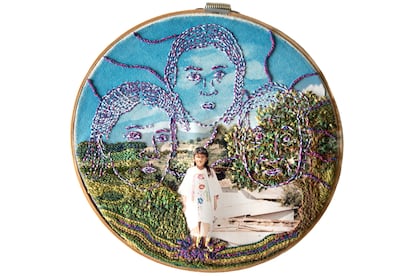
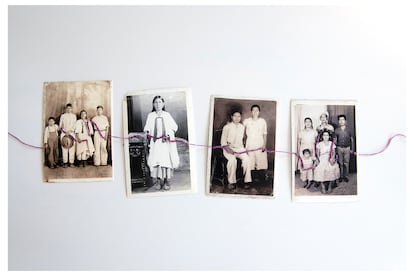
In Fabián’s work, the ritual goes beyond the moment of pressing the shutter. It’s in the cotton thread that runs through a series of black-and-white photographs of her ancestors, in the image of herself as a child, printed on fabric inside a hoop that holds her embroidered memory of the Sierra Norte of Oaxaca; and in a seed sprouting from her navel, captured in wet‑plate collodion (a photographic technique) in her series Ben’n Yalhalhj – I’m from Yalálag – Soy de Yalálag.
Her work involves reconnecting with her territory. It’s rooted in physical spaces, but also in the extended relationships of a family tree and a migrant community. “In the region I come from, photography wasn’t accessible until recently. Being able to preserve a memory in this way is a privilege. How do you honor that privilege? Not necessarily with the camera, but with the image.”
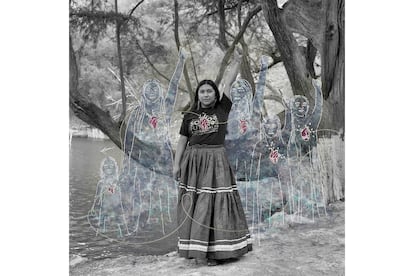
Just as the materiality of an image is important, so is the individual and collective process behind each of her photographs.
Fabián explains it this way: “I see how my context impacts the way in which I create. With the colonizing and patriarchal history of photography, our perspectives and ways of creating are more necessary than ever, especially in the world we live in, where we encounter so many narratives that erase identity. Like war coverage in Palestine, for example: many media outlets continue to perpetuate the colonizing gaze of turning a human being into the ‘other,’ someone without an identity.”
Collectivizing the process
With her camera in hand, Fabián proposes something different. And, with the award-winning series Bilha, Stories of My Sisters, she demonstrates the possibility of practicing photography through a shared process, keeping collective memory in mind.
“In this series, the photographic act took a back seat,” she explains. “By the time we began each session, we had already had coffee, we had talked for at least two hours, and I could understand the spaces they liked for their portraits. That’s what made the difference: the photo was important, but the connection we could achieve and my interest in their stories were even more so.”
More than a description of her creative process, Fabián speaks of a methodology in progress and an artistic and political proposition. “I seek to find a world in which the person portrayed can feel included in the decision-making process around the photograph in which they’re being represented,” she says.
This process doesn’t end with the photo shoot, but continues with the review and selection of images for the series. “As a photographer, I might have preferred other images visually, but the important thing about this gesture is to honor their decision. If you don’t feel comfortable with what I believe is the best photo, then it isn’t the best. And that must be respected,” she clarifies.
For her, it’s a matter of representation and creative responsibility. “As creators from the Global South, we have that responsibility. Not only to our own communities, but to the communities of the Global South that have never been represented with dignity — in ways that allow us to find ourselves in the images. I hope that, when people see my images, they can find a space where they can say, ‘Yes, that’s me.’”
Fabián celebrates her professional recognition as a shared achievement with the people who participated in her series. She also celebrates that, through each image, their stories can travel farther into the world. But her greatest dream is to give the series the material form of a book and bring it back to each of her communities, so that children can see themselves represented — to look at the photographs and say, “yes, that’s us.”
Sign up for our weekly newsletter to get more English-language news coverage from EL PAÍS USA Edition







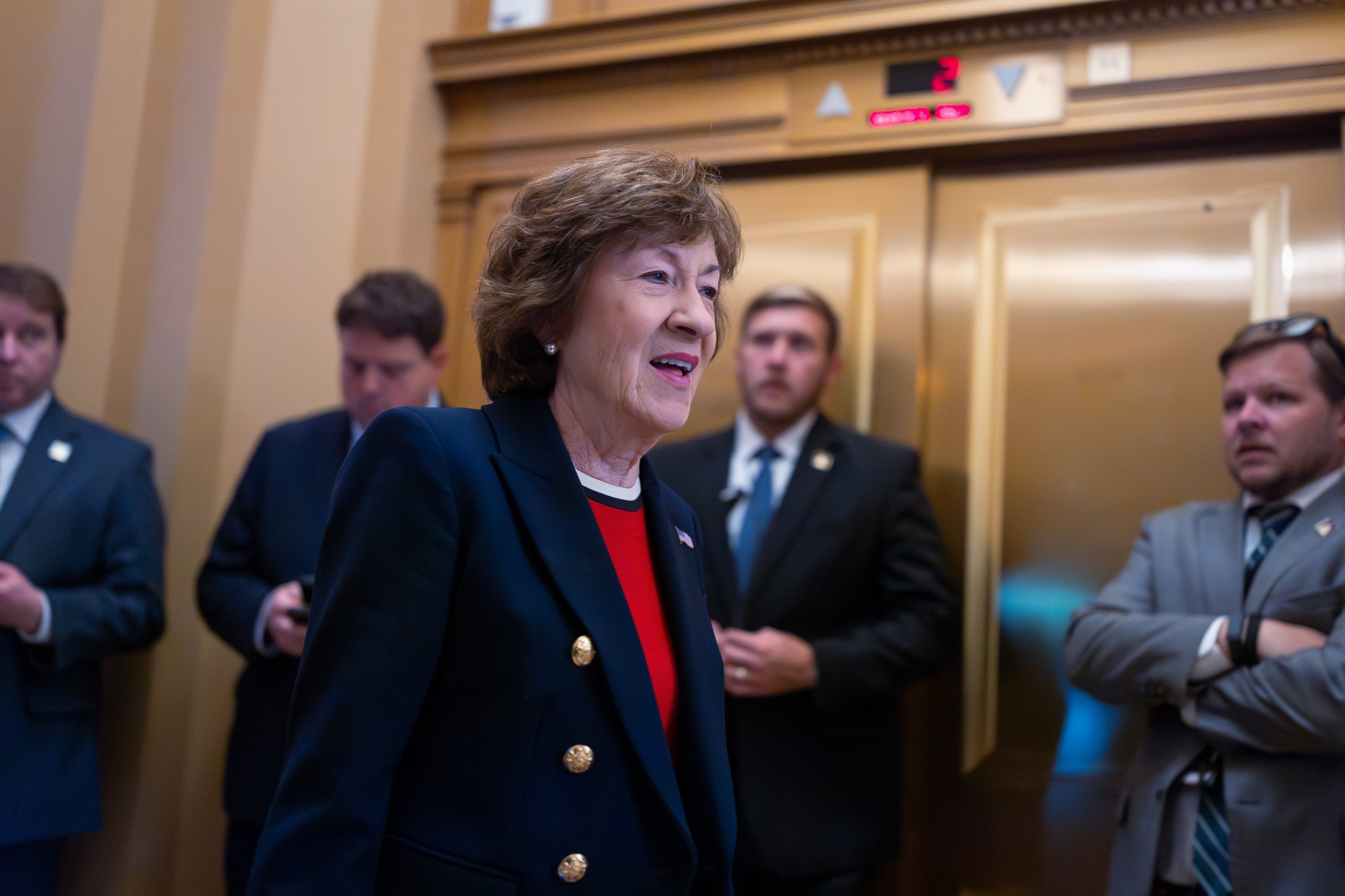

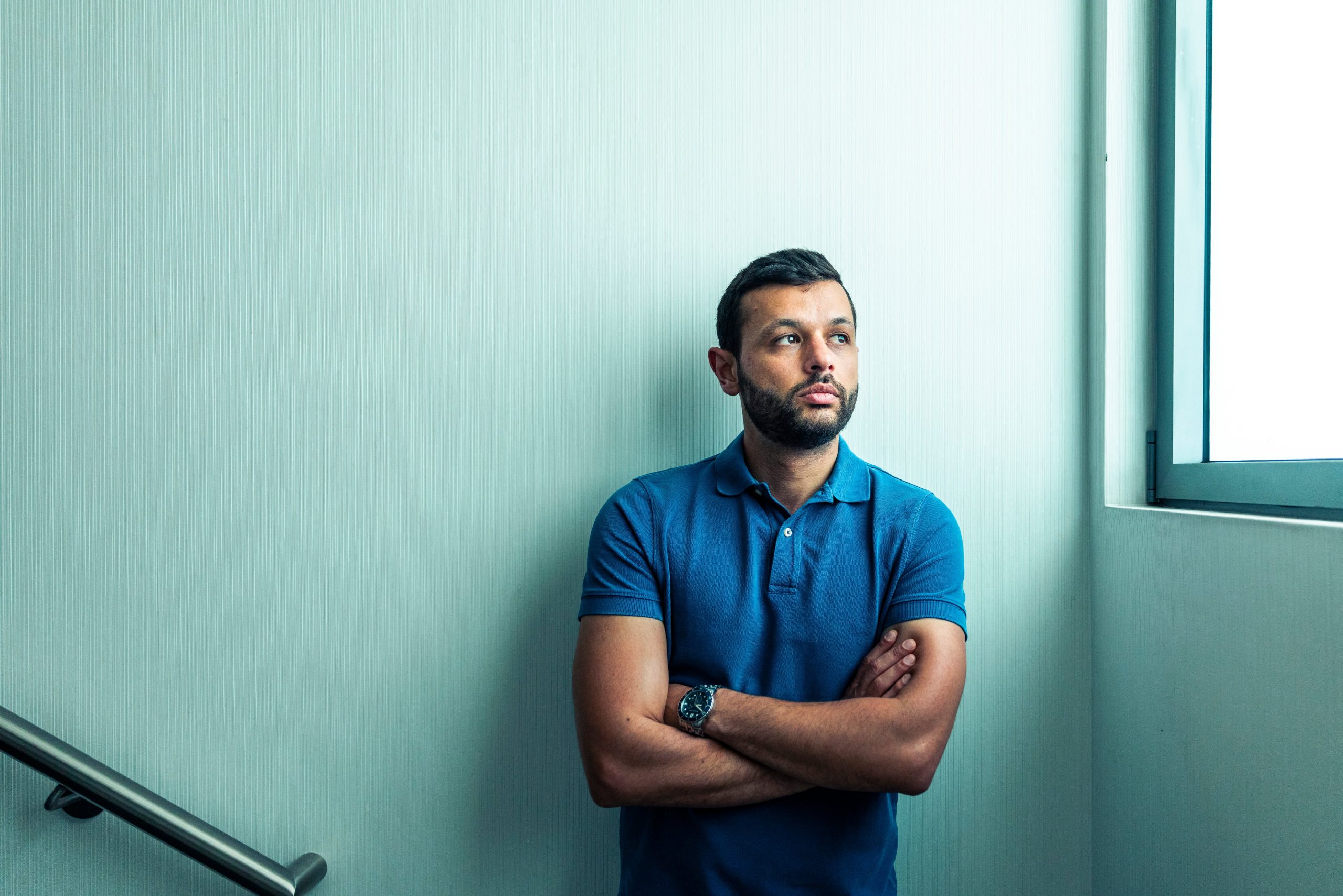
Arab Barghouti (Jerusalem, 35) says that “at the end of the day” he does not think of Marwan Barghouti as a politician, nor as the Palestinian leader of the Second Intifada (2000–2005), who was sentenced by Israel to five life terms in a trial full of irregularities 24 years ago. He thinks of himself as the son who wants his father “to come home.”
Marwan Barghouti (Kobar, 66) is the only Palestinian leader who commands consensus, even among Hamas fundamentalists. That “unified leadership,” his son argues, is “the reason” he believes Israel refuses to release the man known as “the Palestinian Mandela” (Nelson Mandela himself drew parallels between their experiences).
Arab Barghouti spoke with EL PAÍS on June 3 in Madrid. Among other events, in the Spanish capital he met with representatives from all parliamentary groups in Congress except those from the conservative PP, far-right Vox, and pro-independence Junts per Catalunya, as part of the “Free Marwan” campaign to call for his father’s release.
Question. Like you, many Palestinians grew up with parents in prison. What does the imprisonment of Palestinians represent for Israel?
Answer. It is collective punishment and an instrument of the occupation used to silence, oppress, and de-legitimize the Palestinian people’s right to self-defense. Over the past 58 years, more than 800,000 Palestinians have been imprisoned, one-third of them under administrative detention [without charges or trial], which is unlawful under international law. It affects every Palestinian family. As my mother [lawyer Fadwa Barghouti] noted, after October 7, 2023 [the day of the Hamas attacks and the start of the Israeli offensive in Gaza], mass incarceration has become a continuation of the genocide.
Q. You have denounced several assaults on your father in prison. How is he now?
A. His lawyer saw him a few weeks ago and said he was assaulted again at the end of April and also on May 12. Those attacks continue because Israel knows what my father represents. We are facing a deranged prison system that has killed more than 100 Palestinian political prisoners [since October 7, 2023]. That shows how desperate they are, because they fear a man behind bars, whom they lock in a cell and prevent from receiving medical treatment or [sufficient] food. My father has lost more than 10 kilos and has been held in solitary confinement for more than two and a half years, but he remains positive and very strong mentally.
Q. When Israel’s national security minister, Itamar Ben-Gvir, threatened your father on camera, you said that was the representation of the Palestinian struggle. Why?
A. Because there you had a bully, a fascist like Ben-Gvir, who tried to humiliate my father in front of the whole world just to show off. He is a convicted terrorist even in Israel. He is also a perfect reflection of what Israel is today. To me it makes no sense that world leaders do not speak out against Ben-Gvir and the horrific treatment he gives Palestinian political prisoners. That he is allowed to do whatever he wants demonstrates the state of the international community. My father, with his weakened body, represents the Palestinian people. When the Palestinian people starve, he starves; when a Palestinian is attacked, he is attacked. He is someone who embodies the Palestinian history and struggle.
Q. Israel has repeatedly refused to free him, most recently when Hamas demanded his release as part of the October ceasefire in Gaza.
A. My father supports coexistence and a political solution in Palestine. And that is why he remains in prison. In the past 15 years, Israel has released more than 800 Palestinians serving life sentences like his, in cases that, according to them, were more complicated than my father’s. Israel does not want peace with the Palestinians; it wants one of two options. The first is the ethnic cleansing of the Palestinian people, which occurs every day: in Gaza, where they already control more than 60% [of the territory] and where they have killed dozens, if not hundreds, of people; and in the West Bank, where settler terrorism has expelled 40,000 Palestinians. The second option is perpetual apartheid. They do not want a two-state solution or peace. That is why they refuse to release a unifying Palestinian leader who believes in international law, in coexistence and in peace, but who will never renounce the Palestinians’ right to achieve freedom, self-determination, and independence.
Q. How do you explain that Hamas, an Islamist faction, respects your father, who is a leader of the secular Fatah [the main PLO movement]?
A. My father was brave regarding the peace process, but also regarding the Palestinians’ right to defend themselves. He advocated for peace in the 1990s and met with Israelis in Tel Aviv, in Europe, in Palestine and elsewhere. He later understood that the Israelis had not committed to the Oslo Accords nor to the Palestinian people’s right to their own state. That was when he decided to tell the people what to do as a member of parliament during the Second Intifada. From then on, he became the face of that uprising. He is also a highly educated man who taught hundreds of Palestinian prisoners who, upon release, became ambassadors of his political vision and spread his message. Above all, he is a unifying figure.
Q. Does your father still see a two-state solution as possible?
A. My father understands that the Israelis are undermining that solution by building more and more illegal settlements and stealing more Palestinian land. But at the same time, he does not insist on the final form of the two-state solution. Our goal is freedom, dignity, and independence, whatever the ultimate shape of the solution may be.
Q. In 2015, Marwan Barghouti wrote that Israel used negotiations “to advance its colonial project.” Is that prophecy coming true?
A. My father understands what we’re up against, especially now that we’re dealing with an Israeli government as terrible as any we’ve ever seen before. However, the idea that peace in the Middle East can be achieved without addressing the Palestinian question is a myth. There will be no peace or stability in the Middle East without an answer to the Palestinian question. And I hope the international community understands that the only way to confront the Israeli regime, its apartheid, occupation, and war crimes is by sanctioning and isolating it.
Q. That is not the trend the EU is showing by maintaining its association agreement with Israel.
A. Some EU leaders are complicit in the shedding of our blood and the killing of our children, as are leaders of other countries, but we must focus on the future because we owe it to Palestinian children. I am here to build bridges with the EU, with all countries. Even with the governments of the United Kingdom and the United States.
Q. What role does the Palestinian Authority (PA) play in the current political paralysis?
A. I belong to a generation that is very critical of the PA for its inability to protect the Palestinian people, but what I blame them most for is not holding elections when political renewal is essential in Palestine. Right now we welcome all the measures President Mahmoud Abbas is taking, such as the local elections two months ago or the internal Fatah central committee vote a month ago, in which my father was re-elected with the highest number of votes among the candidates. We hope elections are held for the PLO’s Palestinian National Council, which would act as the parliament we do not have, making the whole system dysfunctional. We also trust that general elections will take place, which are essential for the Palestinian Authority to recover its legitimacy and indispensable to achieve political unity between Gaza, the West Bank, and East Jerusalem.
Sign up for our weekly newsletter to get more English-language news coverage from EL PAÍS USA Edition

Six people were stabbed at Penn Station, New York’s main intercity rail hub and its busiest station. The attack occurred on Sunday after 7.00 p.m. local time (1.00 a.m. CEST) between 33rd Street and Seventh Avenue, the New York Fire Department told local media. The incident comes as the city is on a high security alert ahead of a planned presidential visit on Monday by U.S. President Donald Trump, Game 3 of the NBA Finals, and the start of the FIFA World Cup.
Five of the six victims were taken to Bellevue Hospital. One suffered serious injuries, two sustained moderate injuries, and the remaining two were lightly injured. The sixth victim was admitted to NewYork-Presbyterian Hospital, the city’s emergency services said.
The suspect was arrested by police at the scene, but authorities have not released his identity or confirmed a possible motive. City comptroller Mark Levin suggested the assailant may have been experiencing a mental health crisis, and said the incident raises questions about the city’s psychiatric health network. The investigation, however, remains open.
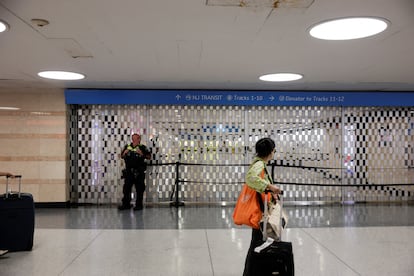
The incident came hours after the official watch party for Game 3 of the NBA Finals at Madison Square Garden, scheduled for Monday, was canceled. The game will pit the New York Knicks against the San Antonio Spurs. Officials said the cancellation was due to increased security measures related to the expected attendance of Trump and New York City Mayor Zohran Mamdani. “My heart is with everyone who was injured, their loved ones, and all those shaken by this unacceptable violence,” the mayor wrote on social media. “I’m wishing each of the victims a full and speedy recovery,” he added.
I’ve been briefed on the horrific stabbing at Penn Station. Based on the information available right now, six people were stabbed and the alleged perpetrator is in custody following a swift response from the Amtrak Police Department.
My heart is with everyone who was injured,…
— Mayor Zohran Kwame Mamdani (@NYCMayor) June 8, 2026
New York City Police Commissioner Jessica S. Tisch had recently warned about the huge workload facing the force, not only because of the decisive phase of the NBA Finals but also because of the imminent arrival of the FIFA World Cup.
Matches in the tournament, which kick off on June 13 in neighboring New Jersey, will make New York the base of operations for thousands of international fans.
Security at the World Cup in the United States regained international prominence this weekend after reports that nine people were wounded in a shooting near England’s national team base in Kansas City on Saturday.
Sign up for our weekly newsletter to get more English-language news coverage from EL PAÍS USA Edition

WATCH: Kim Kardashian steals F1 Monaco GP winner Antonelli

Los “doce Sucios”: Estos Son Los Grandes Bancos Que Disparan La Financiación Del Sector Fósil Espoleados Por Donald Trump

España Goza En Su Escala En México


-
 Argentina2 weeks ago
Trump Receives Flávio Bolsonaro In The Oval Office Three Weeks After Lula
-
 Uncategorized1 week ago
Montoya vs Brundle BEEF, Newey
-
 %2 weeks ago
Tourist Begs Police Not To Fine Her After Swimming In The Trevi Fountain During Heatwave
-

 Anthropic2 weeks ago
The IPOs Of SpaceX, OpenAI And Anthropic Threaten To Drive Wall Street To Bubble-Like Levels
-

 Foreign demand1 week ago
German Demand For Spanish Property Cools After A Strong Run
-

 %1 week ago
The Rising Cost Of Finding Love
-
 %1 week ago
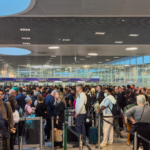
Major Strike In Portugal To Cause Widespread Disruption To Air And Rail Travel
-

 New Developments1 week ago
Luxury Villas For Sale, Estepona – ProjectL1