Connect with us

%

Fireworks Exploding In Spain As World Cup 2026 Begins

Published

on

fireworks-exploding-in-spain-as-world-cup-2026-begins

Expect loud bangs. Credit: Visit Valencia

Sitting at home and working quietly on the computer, and then the madness begins. Neighbours in southern Spain have started lighting fireworks at unusual hours, even though local bylaws forbid their use. Why? Another fiesta we expats didn’t remember? Are they celebrating the end of the academic year and the beginning of the school holidays? No. The FIFA World Cup has just kicked off with its opening ceremony at the historic Estadio Azteca.

Spain supporters feel the excitement and want to celebrate every goal and victory. Yet the sudden bangs and flashes catch people off guard in many places, especially in quiet villages.

World Cup excitement ramps up street celebrations

Spain’s first matches will draw big crowds to bars and homes across the country. Fans will celebrate with flags, songs and, in some places, untimely and rarely appropriate fireworks. Past tournaments showed similar scenes when the Spanish team did well. This time the pattern repeats itself early because the tournament starts in June. Villages will see small groups setting off rockets before, during and after matches, often without permission or the right safety measures.

Rules broken in many areas

Local councils across Andalucia and other regions already ban or restrict fireworks outside organised events. Police issue fines, yet enforcement stays patchy, as this is almost a cultural tradition. Individuals light bangers in the streets, fields and near homes anyway. Some argue culture allows it during big football moments. Others simply ignore the rules because they believe no one will stop them. And, most of the time, they are right. Reports from residents confirm the practice is spreading quickly, and will do even more once Spain takes to the pitch.

Noise disturbs expats on the coast

British residents living on the Costa del Sol and similar areas are already complaining about frequent fireworks at festivals. World Cup matches add extra nights of disruption. Loud explosions wake people at midnight or later. Some expats describe anxiety from the unpredictable bangs. Those with hearing issues or young children feel the stress most of all.

Pets and wildlife suffer

Dogs shake, bark or hide under furniture when the unexpected fireworks begin. Cats run away or refuse to eat for days. Vets in coastal towns see more stressed animals during peak football periods and during local fiestas. Birds nesting nearby tend to fly off in panic and sometimes abandon nests. Smaller wildlife such as hedgehogs and bats face a similar fright. The noise travels far in open countryside, affecting areas well beyond the village centre.

What to expect after Spain games

Spain’s group matches and any knockout games will likely bring fresh waves of celebrations. Fans will gather in squares and streets to watch on big screens. Once the final whistle blows, some turn to fireworks to celebrate wins. Losses may produce noisy displays, but tension still hangs around. Expats should prepare for several nights of noise around each Spain fixture.

Check local council websites for any temporary restrictions or exceptions during the tournament. Close windows and curtains early on match nights. Keep pets indoors with familiar blankets and music to mask sounds. Speak to neighbours calmly if displays seem excessive.

The World Cup brings joy for many, yet the extra fireworks create real problems for some residents, animals and the local environment.

%

Robotaxis In Spain, Who Pays The Price?

Published

on

robotaxis-in-spain,-who-pays-the-price?

Robotaxis could soon be driving on Spanish roads Credit: Shutterstock, The Global Guy

As if driving in Spain wasn’t chaotic enough, self-driving robotaxis could soon be hitting the streets. robotaxis are expected to begin operating across the country by the end of 2026 as Uber, which will invest an additional €430 million in the self-driving service, recently approved its first robotaxis in the Community of Madrid.

The arrival of autonomous vehicles is being promoted as a step towards a more efficient, technology-driven transport system. Companies involved in the sector argue that robotaxis could reduce operating costs, improve vehicle utilisation, and offer passengers lower fares. However, the financial impact of replacing human drivers with automated systems could be significant, particularly in a country where taxi and private hire services provide income for tens of thousands of workers.

The problem with robotaxis

In the United States, autonomous vehicles are already up and running. Alphabet-owned Waymo has quickly become the leading robotaxi company in the US, but its rollout has not been without issues.

Passengers have shared accounts of taxis driving erratically, running red lights, and stopping on train tracks and in the middle of busy intersections. In one incident, a robotaxi responded to police sirens by speeding off, leaving passengers bewildered in the backseat. As a result, thousands of vehicles have been recalled, and several lawsuits are pending.

One seemingly overlooked flaw is that robotaxis can’t close their own door. To fix this inconvenience, companies are paying food delivery drivers to close the doors for them. One driver was reportedly paid €9.74, while another was offered up to €20 to do so.

How robotaxis could affect Spain’s economy

But while delivery drivers are getting paid to close doors, what about taxi drivers? Driving is one of the largest employment categories in many counties, with a relatively low barrier of entry. As of March 2026, 62,406 taxi licences and 24,764 VTC licenses were registered in Spain.

Many taxi operators are small business owners who spend their earnings within their communities, from vehicle maintenance and insurance to restaurants, housing, and local services. A shift towards large technology companies controlling transport fleets could redirect a significant share of that money away from local economies.

At the same time, robotaxis may create new opportunities in areas such as fleet management, software development, vehicle maintenance, and autonomous technology services. The challenge for Spain will be ensuring that the benefits of automation are distributed while limiting disruption for workers whose livelihoods depend on driving.

Madrid’s autonomous taxi future and the cost of innovation

European regulators are increasingly looking at ways to support autonomous vehicle development while maintaining safety standards. Companies such as Uber and its autonomous partners are preparing launches in Madrid, following trials and regulatory progress across Europe.

For passengers, robotaxis could eventually mean cheaper journeys and greater availability, especially during busy periods when traditional taxis are in high demand. However, lower prices may come at the cost of reducing one of the most accessible employment routes in the transport sector.

The question facing Spain is not simply whether robotaxis can drive safely, but whether the economic model behind them can work for everyone. As autonomous vehicles move closer to becoming part of everyday life, policymakers will need to consider how innovation, employment, and local economies can coexist.

Continue Reading

%

22-Hour Flights Are Coming In 2027 As Airbus Begins Testing Ultra-Long-Range Jet

Published

on

22-hour-flights-are-coming-in-2027-as-airbus-begins-testing-ultra-long-range-jet

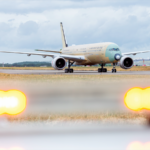
the A350-1000ULR is expected to change long-haul travel patterns. Photo credit: Airbus SAS 2026

Airbus has begun flight testing of its A350-1000ULR, a new ultra-long-range variant developed for Qantas’ Project Sunrise programme, marking a key step towards the introduction of what is expected to become the longest-range commercial passenger aircraft in service.

The aircraft completed its maiden test flight in Toulouse, France, on June 2, where it remained airborne for just under four hours while testing core systems and performance parameters. According to Airbus, the flight forms part of a wider certification campaign that will run for several months before the aircraft is cleared for commercial use. The programme is focused on validating modifications designed to significantly extend range compared with the standard A350-1000.

Designed for ultra-long-haul operations up to 22 hours

The A350-1000ULR is being developed to operate flights of up to around 22 hours, with a range of approximately 10,000 nautical miles. This is made possible through structural and fuel system modifications, including an additional rear centre fuel tank that increases fuel capacity and extends endurance by around 1,000 nautical miles compared with the baseline model.

Airbus states the aircraft is intended for non-stop services between Australia’s east coast and major global hubs such as London and New York. These routes fall within the Project Sunrise concept, which aims to remove stopovers on some of the world’s longest commercial journeys.

What the aircraft is, and is not

Despite some claims circulating in media headlines, the A350-1000ULR is not capable of flying around the world without refuelling. Its maximum range remains well below the roughly 40,000-kilometre circumference of the Earth.

Instead, its design focus is on ultra-long intercontinental sectors rather than global circumnavigation. Airbus has emphasised endurance, fuel efficiency and operational reliability over record-setting continuous global distance.

The aircraft remains in the testing and certification phase, and commercial service is expected only after completion of flight trials and regulatory approval. Current industry expectations place initial deliveries for Project Sunrise aircraft in 2027. The aircraft is expected to become operational for passengers in 2027, with first deliveries likely around April 2027 and entry into commercial service expected from mid to late 2027, depending on certification and airline readiness.

Development linked to Qantas Project Sunrise

The aircraft is being developed specifically for Qantas, which has ordered a fleet of A350-1000ULRs for its Project Sunrise operations. The airline plans to use the aircraft on direct services between Australia and Europe or North America once certification is complete.

The test aircraft is the first of a series expected to undergo extensive evaluation, including systems testing, fuel management validation, and long-duration flight simulations. Airbus engineers are also assessing cabin systems designed for extended flight times, including environmental controls and passenger comfort features.

Impact on passengers and tourists

For travellers, the introduction of the A350-1000ULR is expected to change long-haul travel patterns rather than increase overall capacity. The most immediate impact will be on passengers travelling between Australia and Europe or the United States, who may eventually be able to fly directly without stopovers.

This could reduce total journey times by several hours compared with current one-stop routes through the Middle East or Asia. However, the flights will also require careful scheduling due to their length, which is close to a full day in the air.

Tourists are unlikely to see immediate changes, as the aircraft is still undergoing testing and will not enter service until certification is complete and airline schedules are confirmed. When operational, fares are expected to reflect the premium nature of ultra-long-haul operations, particularly in the early phase of deployment.

Comfort and operational considerations

Aircraft designed for flights of this duration place additional emphasis on cabin environment and passenger wellbeing. Airbus and Qantas have indicated that the aircraft will include design adjustments intended to support comfort during extended time in the air, including seating configurations and environmental systems tailored for long-duration travel.

From an operational perspective, airlines will also need to manage crew rotation, fuel efficiency, and route planning in ways that differ from conventional long-haul services. These factors may influence ticket pricing, availability, and frequency of flights in the early years of operation.

Outlook for commercial introduction

The A350-1000ULR remains in the certification phase, with flight testing continuing through 2026. Entry into service is expected in 2027, although timelines may be subject to regulatory approval and final delivery schedules.

Once operational, the aircraft is expected to enable a small number of ultra-long-haul routes that remove stopovers entirely, reshaping travel options for passengers on specific intercontinental journeys. However, industry sources indicate that these services will initially be limited, as airlines evaluate demand and operational performance.

For tourists, the key change will be convenience on select long-distance routes rather than a broad shift in global air travel. The aircraft’s introduction represents a targeted development in aviation capability rather than a wholesale transformation of short- or medium-haul travel markets.

Continue Reading

%

Fake Bank And Delivery Scam Texts Will Keep Hitting Phones In Spain This Summer

Published

on

fake-bank-and-delivery-scam-texts-will-keep-hitting-phones-in-spain-this-summer

A familiar-looking text can be all it takes for fraudsters to trick phone users into clicking. Credit: Tete_escape / Shutterstock

Fake bank and delivery scam texts will continue hitting phones across Spain this summer after the government delayed new anti fraud protections until September.

Millions of people in Spain receive suspicious text messages every year, often pretending to come from banks, parcel companies, tax offices or public services. Some are obvious scams. Others are convincing enough to catch people off guard during everyday situations like waiting for a delivery or checking a bank account.

SMS scam
A standard fraudulent text message, received from a ‘supposed’ national bank.
Credit: Harry Dennis

The delayed system was supposed to block fraudulent messages using fake sender names pretending to come from trusted companies, banks and public bodies, making it harder for scammers to impersonate trusted organisations.

Why Spain delayed the new scam text protections until September

However, the start of the blocking obligation, which had been due to take effect on Sunday June 7, has now been delayed until Tuesday September 15, 2026, following changes published in the Boletin Oficial del Estado (BOE), Spain’s official state gazette.

That means scam messages using false or misleading sender names could remain a risk throughout the summer, at a time when people are regularly receiving texts about banking, parcel deliveries, medical appointments, travel bookings and official paperwork.

How Spain plans to stop fake bank and parcel scam texts

The rules focus on what Spain calls message “aliases”. These are the sender names that appear on a text message instead of a normal phone number, including names that may look like a bank, courier firm, public administration or private company.

Under the system, companies and public bodies using aliases must register them with tSpain’s National Commission on Markets and Competition (CNMC). Once the blocking rules take effect, operators involved in transmitting these messages will be required to block messages using aliases that are not in the official register, or that are sent through providers not authorised for that registered alias.

In simple terms, the system is designed to make it harder for fraudsters to send texts that appear to come from a trusted source.

Why Spain could remain exposed to scam tests all summer

The delay does not mean the anti-fraud plan has been scrapped. Instead, the official documents point to practical problems in getting the system ready.

The CNMC said more than 75,000 alias registration requests had been submitted in the first two months of the system, including both individual requests and bulk uploads from providers handling large volumes of sender names.

Operators also reported difficulties linked to digital certificates, especially for some companies or organisations outside the European Union that do not have an establishment or economic activity in Spain.

There were also concerns about the complexity of bulk registrations, the time needed to validate large volumes of aliases, and the risk that legitimate messages could be blocked if registration was not completed in time.

How to protect yourself from scam texts while the new system is delayed.

The change affects operators, messaging providers, companies and public administrations that send messages using aliases. Ordinary phone users do not need to change anything on their devices.

However, until the new blocks are in place, people should continue treating unexpected messages with caution, especially texts asking for payments, bank details, passwords, delivery fees, tax information or urgent identity checks.

Messages that appear to come from a known organisation should still be checked through official apps, secure websites or customer service numbers listed on the company’s own website, rather than through links included in the message.

Why a familiar sender name still cannot be trusted.

The delay gives operators and providers more time to adapt their systems, register aliases and test access to the official database before the blocking obligation starts, ensuring its functionality, efficiency and accuracy.

If the timetable holds, the new blocking system should begin on Tuesday September 15, 2026. Until then, the safest approach for consumers remains: do not trust a text message just because the sender name looks familiar.

Continue Reading

Trending

Copyright © 2017 Spanish Property & News