
Keir Starmer
El Alcalde De Mánchester Gana Las Elecciones Que Le Permitirán Impulsar El Reemplazo De Starmer Al Frente Del Reino Unido








Belfast
Violence Erupts Against Immigrants In Belfast Following Attempted Beheading: ‘Burning Families Out Of Their Homes Is Nothing Less Than Disgusting Cowardice’
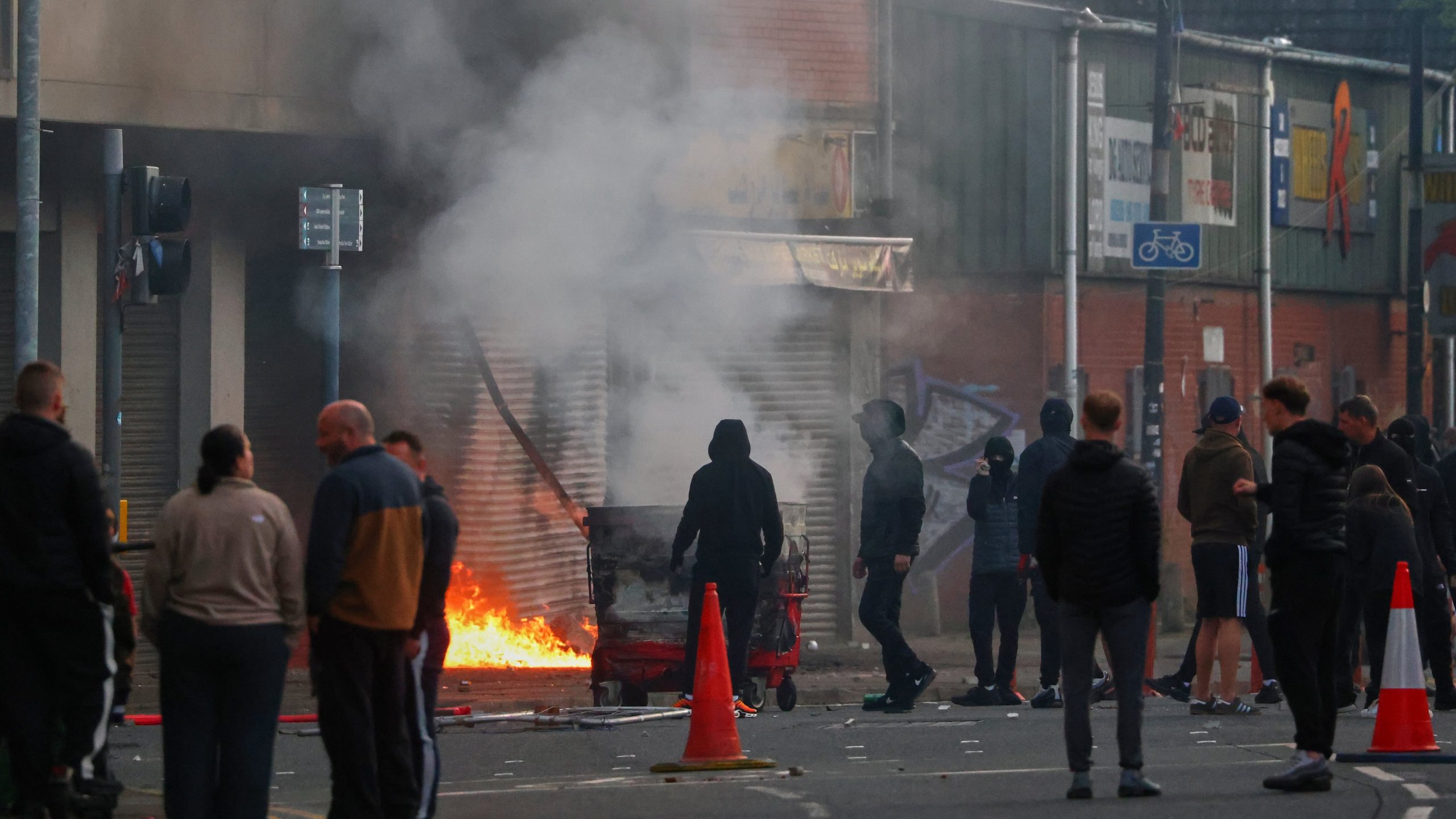
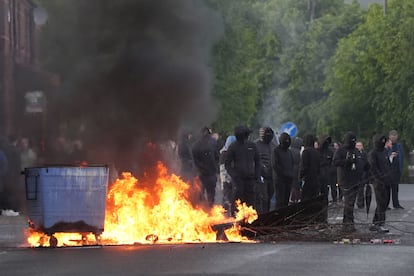
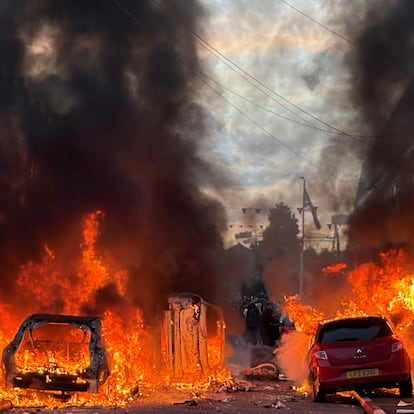
Political and religious leaders in Northern Ireland saw early Wednesday morning — with the embers of a long night of violence in Belfast and other parts of the region still smoldering — that their calls for calm had fallen on deaf ears. Cars, buses, phone booths, and trash cans set ablaze. Homes where immigrants — or simply people from ethnic minorities — were believed to live, completely engulfed in flames after violent groups targeted them as places that needed to be “liberated.”
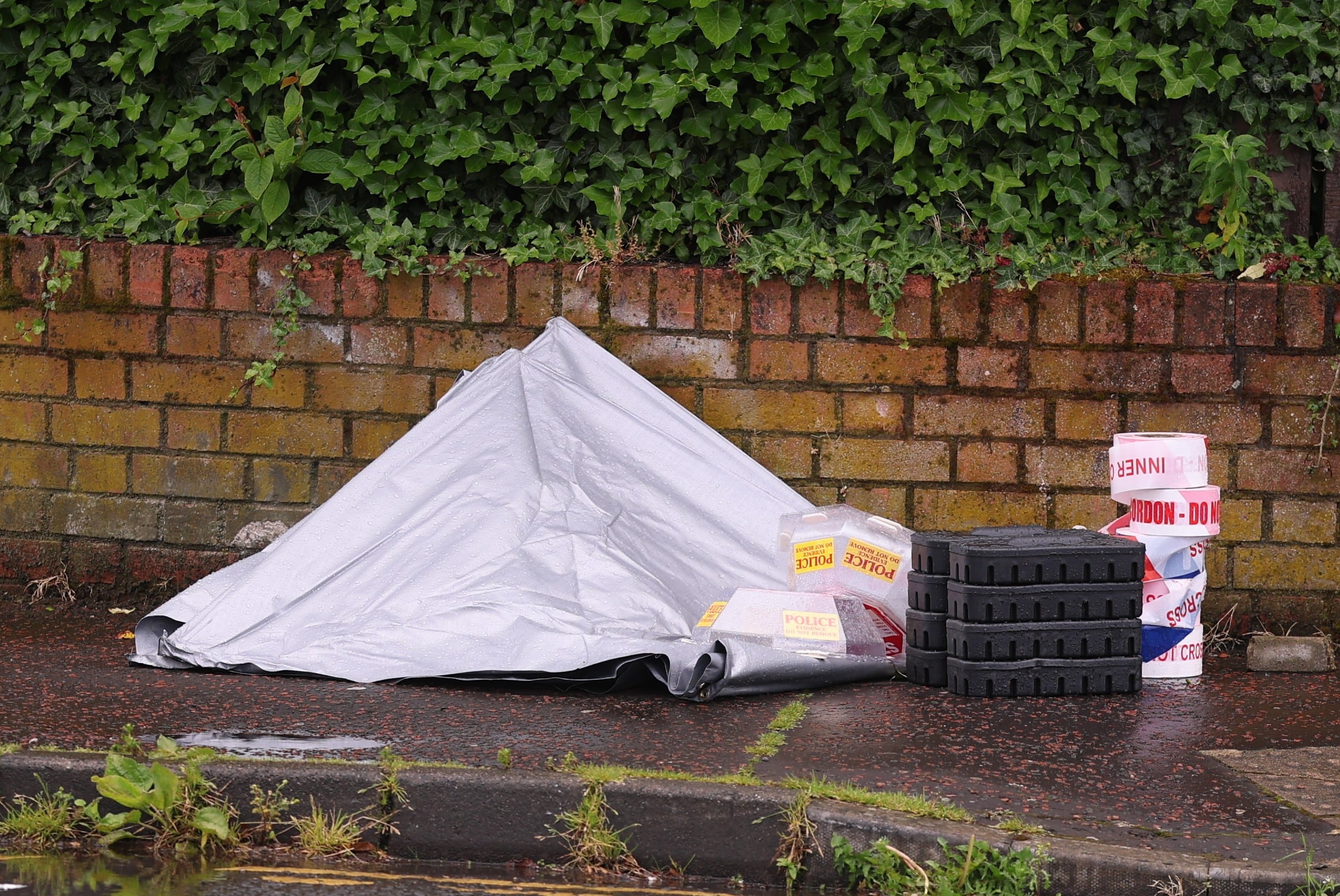
The spark had been ignited by an attack on Monday night: a 30-year-old man of Sudanese origin attempted to decapitate a neighbor in north Belfast with a kitchen knife. The victim, in his 40s, has lost an eye and remains in the hospital in serious condition, with injuries to his face, neck, and back.
The attacker, who had flown from Sudan to Paris, then to Dublin, and from there traveled by bus to Belfast, where he arrived in February 2023, held a five-year temporary visa as an asylum seeker, granted by the British Home Office.
Formally charged with attempted murder, he appeared Wednesday morning before a Belfast court, where he was indicted and his identity, Hadi Alodid, was finally revealed. Stephen Ogilvy, the victim, is a radiology technician with the National Health Service. The judge ordered Alodid to be remanded in custody until he next appears in court on July 8.
The outbreak of violence against immigrants that followed the attack has so far left five people injured: three civilians and two police officers. About 100 people are also under investigation for their involvement in the riots, according to Chief Constable of the Police Service of Northern Ireland Jon Boutcher, who spoke at a press conference.
At the same press conference, Secretary of State for Northern Ireland Hilary Benn attributed the incidents to “masked thugs.” “Nothing can justify the violence we saw last night on the streets of Northern Ireland,” he said. The organizers of the protests, far from “protecting” local communities as they claim, are “doing exactly the opposite,” he emphasized.
The family of the victim called for calm in a statement, highlighting the valuable contribution of immigrants to British society. In the statement, released through MP Phillip Brett, they thanked the passersby who helped their relative at the time of the attack: “Your quick actions absolutely saved his life, and we will never forget what you did for him in that moment,” it states. They then urged those who are outraged by what happened not to resort to violence, and defended the role of immigrants in society.
“We want to make it absolutely clear that overnight unrest is not welcome, and peaceful protest is the only way forward,” reads the statement. “We have many migrants who make a deeply valuable contribution to our country, including in our healthcare system and hospitality sector and we depend on them to make our country work. We do not want this terrible tragedy to be used to divide people or fuel hostility.”
“Groups of masked men burning families out of their homes is nothing less than disgusting cowardice,” Northern Ireland’s First Minister Michelle O’Neill of the republican party Sinn Féin denounced in frustration on Tuesday night. “This has nothing to do with community. This is outright thuggery.”
O’Neill had appeared earlier that day on the central steps of Stormont Palace, the seat of the Northern Ireland Assembly, accompanied by Deputy First Minister Emma Little-Pengelly of the unionist and Protestant DUP party, and Chief Constable Boutcher.
All of them urged citizens to remain calm. And, above all, not to be swept up by the call to violence from “people who know nothing about Northern Ireland, and who use social media and its toxic nature to incite people to do things they don’t want to do,” Boutcher noted. “Any concerns regarding immigration must be discussed through political channels,” he insisted.
By then, social media had already been flooded with the video, recorded by witnesses on Monday, showing the attempted beheading and the reaction of a group of passersby who rushed to stop the attacker before the police arrived. Politicians and institutions in Northern Ireland and the rest of the United Kingdom have praised the heroism of these individuals, and have sought to contrast it with the vandalism they feared would soon erupt — as indeed it did.
“There is no justification for the violence and disorder that we saw threatening our communities, nor for those who encouraged it, online or elsewhere,” British Prime Minister Keir Starmer wrote on X. “It is clear that people were targeted last night because of their background and I will not tolerate it,” he added.
American tech mogul Elon Musk used his account on the social media platform X, which he owns and on which he has over 240 million followers, to incite the protest, reporting on the locations the far-right had chosen across Northern Ireland and the United Kingdom to gather.
Tommy Robinson, the most prominent leader of these extremist groups, called for a nationwide mobilization. Nigel Farage of Reform UK and Rupert Lowe of Restore Britain (the two rival factions of the same populist, anti-immigration movement) agreed in blaming the immigration laws of previous governments for the chaos they themselves were inciting.
Northern Ireland is no stranger to sporadic outbreaks of violence that often coincide with the arrival of summer — days with longer daylight hours and groups of young men ready to set the streets ablaze. Moreover, for three decades the country suffered the violence of the Troubles, the sectarian conflict that pitted Catholics, Protestants, and paramilitary forces against one another. And in 2016 came the Brexit referendum and its consequence, the Northern Ireland Protocol, which the unionist community viewed as a betrayal by London that left them even more isolated.
In recent years, it has been irregular immigration and the arrival of asylum seekers — whom the most vulnerable and impoverished citizens view as scapegoats for their own hardships — that have stirred up unrest in the streets. And this despite the fact that refugee numbers are negligible: there are currently 2,379 in Northern Ireland, representing 0.1% of the population, according to the Law Centre Northern Ireland.
In June 2025, the alleged rape of a minor in Ballymena by two teenagers of Romanian origin — who were later found not guilty and acquitted — triggered an outbreak of violence that resulted in dozens of arrests and injured police officers. Now it is the savage attack by the man arrested in Belfast that has reignited the fuse.
“There is no place on our streets for this violence, with families and businesses attacked, cars and buses set on fire, and parts of our community in flames,” denounced John Finucane, the Sinn Féin MP representing the Belfast North constituency, where the attempted beheading had taken place.
“No one has the right to spread fear, terrorize innocent families, or bring savage and illegal disorder to our streets,” he added.
Several neighborhoods in Belfast woke up on Wednesday to a scene of war, as politicians and authorities try to explain the reasons behind the city’s latest outbreak of violence.
Sign up for our weekly newsletter to get more English-language news coverage from EL PAÍS USA Edition

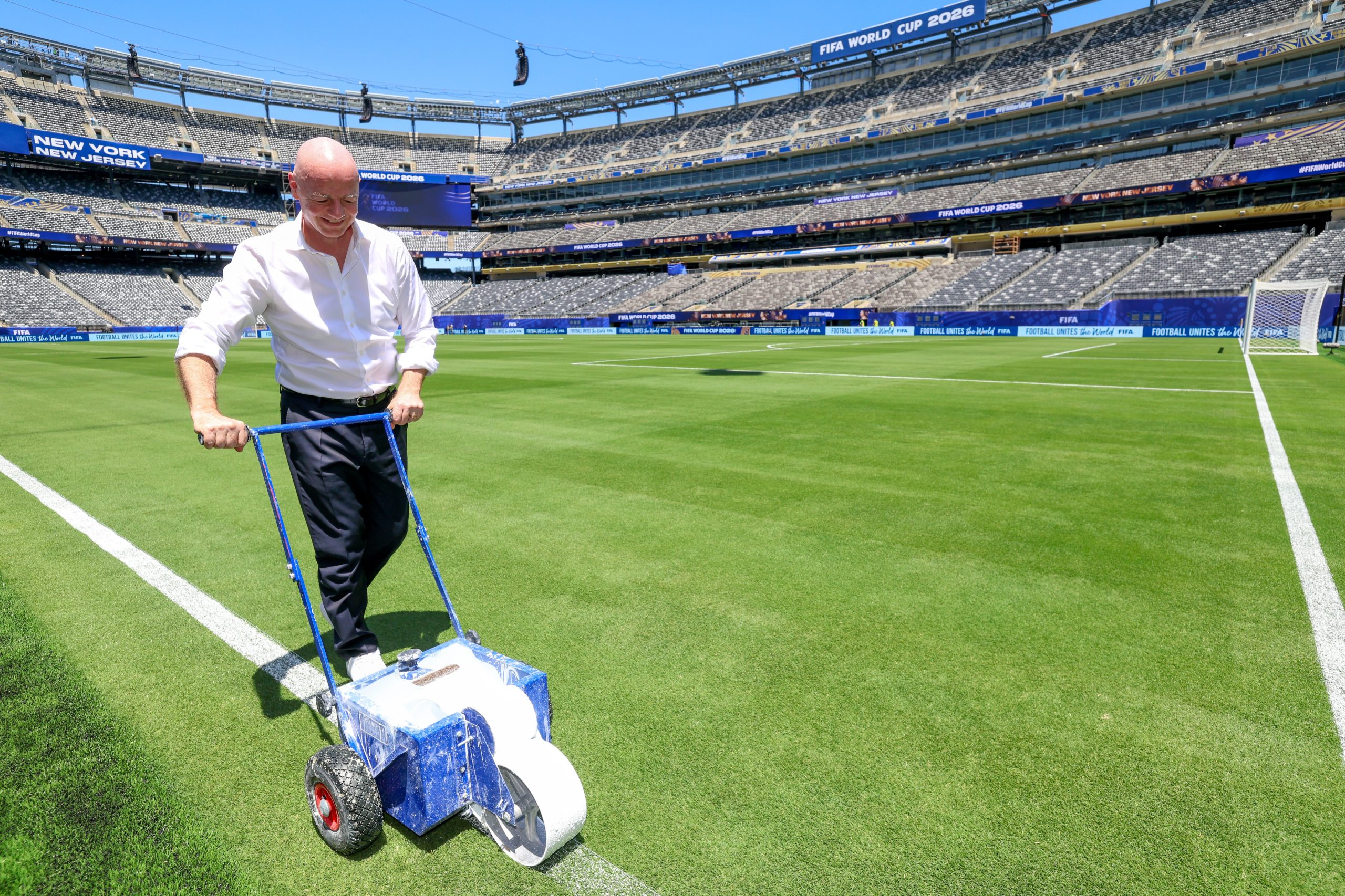
The largest FIFA World Cup in history kicks off on Thursday, June 11, at the Estadio Azteca. The opening match between Mexico and South Africa will be the starting gun for a tournament also hosted by Canada and largely staged in the United States, where 78 of the 104 matches will be played, including the final on July 19. FIFA president Gianni Infantino said last May at the United Nations headquarters in New York, an organization founded in 1945 to prevent armed conflict, that “the eyes of the world will be focused on North America.” “We spend so much time in discussing what divides us, but actually we realize that when we put people together, what happens is that there are many more things that unite us than the things that divide us,” he added. The World Cup, however, will be co-hosted in a country that just over 100 days ago launched a war against Iran, alongside Israel, without any United Nations endorsement, that has an open diplomatic dispute with another co-host, Mexico, and whose anti-immigration policies — policies that frighten many fans — on Monday denied entry to Somali referee Omar Artan, one of the 52 match officials assigned to the tournament.
The most commercialized World Cup in history, with 104 matches instead of 64 and 48 teams instead of the previous 32, is also marked by excessive ticket prices. Consultancy AceOdds estimates that for two fans to attend all of Spain’s matches, for example, they would need to spend at least $61,000, of which tickets for games would represent 50%. FIFA’s dynamic pricing system, similar to those used by apps like Uber or Cabify to raise fares during periods of high demand, has driven costs to unprecedented levels, with tickets topping $30,000. Only 10% of tickets are reserved for the basic stands, which have a fixed price of around $70. The rest fall under the so‑called — and criticized by many fans and supporters’ associations —dynamic pricing system across the tournament’s 16 venues, none of which is a newly built stadium.
These excesses have not affected only match tickets. FIFA, which keeps a large share of revenues from food and drink concessions at stadiums, did not even want to allow fans to bring in an empty bottle to fill at water fountains despite the high temperatures expected during the World Cup. Criticism was so fierce — from Toronto mayor Olivia Chow to New York mayor Zohran Mamdani and even UK prime minister Keir Starmer — that the organization led by Infantino had to backtrack last week and allow fans to bring sealed, disposable soft plastic water bottles with a capacity of up to 590 milliliters.
Hotel, flight and transport prices have also sparked protests. For example, fares to MetLife Stadium in New Jersey — which will host eight matches, including the final — on NJ Transit, the state’s public transport network, will cost $105 when the usual fare is $12.90. FIFA did not provide funding and local authorities chose to raise fares to offset the expense to the public coffers of moving tens of thousands of fans.
Complaints about prices have been joined by the consequences of Donald Trump’s anti-immigration policies, with controversial action by U.S. Immigration and Customs Enforcement (ICE) at the forefront. It was not only that authorities threatened to carry out raids around stadiums to detain those without proper documentation — prompting over 100 civil organizations to demonstrate in recent weeks to denounce the “serious human rights violations” occurring in the country — but customs restrictions struck at the heart of the World Cup on Monday. Artan, who would have become Somalia’s first World Cup official after being named CAF’s best referee for 2025, was “declared inadmissible due to issues in the background check process” when he landed in Miami and was denied entry.
Somalia is on the list of countries whose citizens are barred from traveling to the United States, a list that also includes Iran. The Iranian national team, which plays two group matches in Los Angeles and another in Seattle, has chosen to base itself in the Mexican city of Tijuana to spend the minimum possible time on U.S. soil. The Trump government, which on February 28 launched the Epic Fury offensive against the Islamic Republic together with Israel, has also banned the entry of 15 of the 70 members of the Asian country’s delegation.
Against that backdrop, FIFA — whose president maintains an exceptional relationship with Trump — intends on the back of this World Cup to make significant inroads into the United States, a market of 350 million people. If — in exchange for hosting the 1994 World Cup — the world governing body finally persuaded the U.S. to create a national league, MLS, it now hopes soccer will at last approach the popularity of basketball, baseball, ice hockey, or the NFL, which have larger fan bases and are much more embedded in U.S. culture. To that end, it has nearly six weeks ahead of it with a tournament that is expected to be the most-watched in history, the one that generates the most revenue from television rights, and the one that will allocate the most money to the clubs that have released their international players — FIFA announced that it will distribute $355 million, 70% more than in 2022, among the teams with players in the tournament — to national teams. On Thursday, the World Cup of records, opulence, and excess kicks off.
Sign up for our weekly newsletter to get more English-language news coverage from EL PAÍS USA Edition
Inmigración irregular
Un Hombre Intenta Decapitar A Otro En El Norte De Belfast Antes De Ser Detenido

Inside The Most LUXURIOUS Apartment Building In Spain!
Stockholm’s culinary genius launches Beach Club Astoria on Marbella’s shore
Patients left waiting in pain as Andalucía doctors’ strike cancels 60,000 medical procedures a day

Peru’s Roberto Sánchez And Keiko Fujimori Urge Caution As Vote Count Continues In Very Tight Presidential Election
Marbella releases full beach rules for Noche de San Juan bonfires in 2026
Inside Spain: How Drinking Is Becoming An Old Man’s Game


-
 Alberto Fujimori2 weeks ago
Peru’s Roberto Sánchez And Keiko Fujimori Urge Caution As Vote Count Continues In Very Tight Presidential Election
-
Costa del Sol2 weeks ago
Marbella releases full beach rules for Noche de San Juan bonfires in 2026
-
Latest2 weeks ago
Inside Spain: How Drinking Is Becoming An Old Man’s Game
-
America1 week ago
El Pentágono, Evacuado Por Una Falsa Alarma Ante La Sospecha De Un “incidente Con Materiales Peligrosos”
-

 America2 weeks ago
Trump Planta E Insulta A Una Entrevistadora En Televisión Por Llevarle La Contraria
-
Coastal erosion1 week ago
Mallorca launches new plan to save its beaches as coastal erosion threatens popular resorts
-
Almeria2 weeks ago
Balerma ranks as Spain’s most exposed location to tsunami from Averroes fault
-
 Uncategorized2 weeks ago
Every Monaco Grand Prix winner in F1 history: The definitive guide to a unique race