
air con
The air-con number people in Spain get wrong when trying to cool a room faster

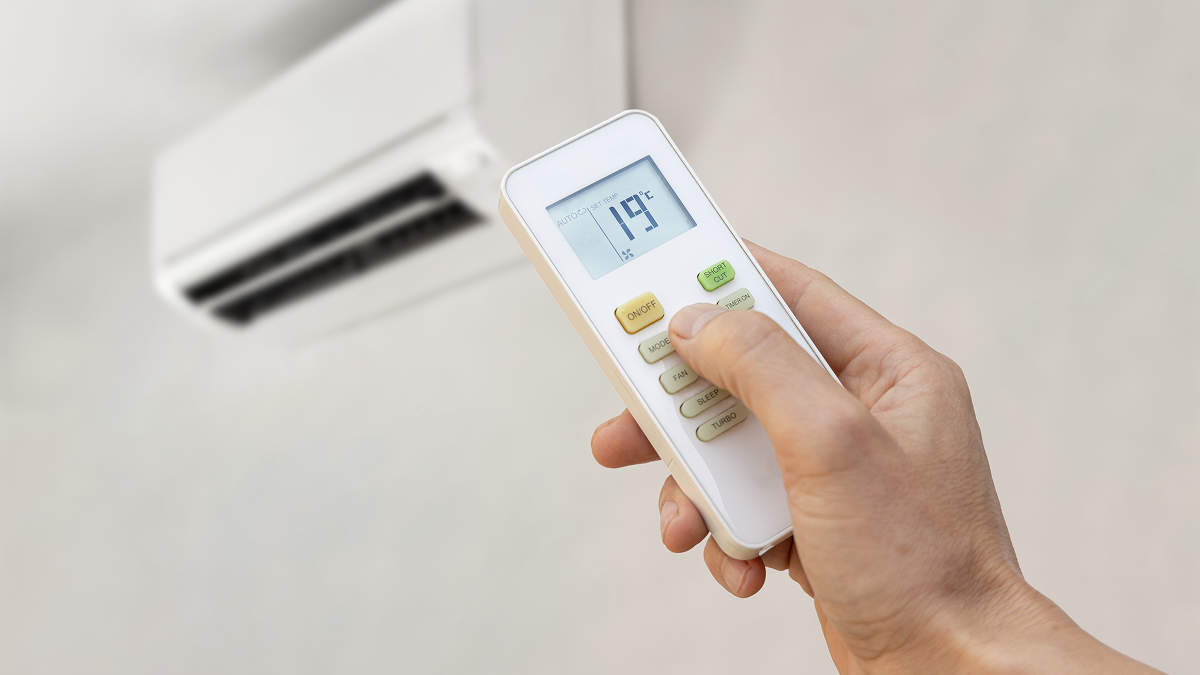
Setting your air-con to lower temperatures doesn’t mean faster cooling times. Credit: Juan Roballo / Shutterstock
Walking into a hot home and pushing the air conditioning down to 19°C feels like the fastest route to relief. However, Spain’s energy agency says it does not cool the room more quickly, while a setting closer to 24-26°C can provide comfort without making the unit chase an unnecessarily low temperature for hours.
Why setting air conditioning to 19°C does not cool a Spanish home faster
After walking indoors from the Spanish summer heat, there is an understandable temptation to grab the air-conditioning remote and immediately lower it to 19°C, 18°C or even less. It feels logical. The lower the number, the colder the air and the sooner the room should become comfortable. But the number on the remote is not an accelerator, it is the target temperature the machine is being asked to reach.
Spain’s Institute for Energy Diversification and Saving, known as the IDAE, specifically advises against setting the thermostat lower than normal in an attempt to cool a home more quickly. According to the public energy agency, doing so will not make the house cool faster and can instead lead to over cooling and unnecessary electricity use.
If a room is sitting at 30°C, the air conditioner will begin working towards the selected target. Changing that target from 25°C to 19°C does not suddenly turn the air coming from the unit into a much colder blast. It mainly tells the system to continue cooling for longer.
What temperature range balances comfort with electricity use?
There is no single perfect temperature for every person or property. Humidity, clothing, air movement, insulation and activity levels can of course affect how warm or cool a room feels. However, Spanish energy and consumer guidance provides a useful range.
The IDAE says 26°C or above can be sufficient to keep a home comfortable when residents wear suitable summer clothing. Spain’s Organisation of Consumers and Users, known as the OCU, recommends setting domestic air conditioning between 24°C and 26°C.
That may initially sound high to people accustomed to setting the remote at 20°C. But the aim is not to recreate a British spring day indoors, it’s to make the home comfortably cooler than the street without forcing the appliance to reach a temperature it may struggle to maintain during the hottest part of the afternoon. A setting of 24°C or 25°C can therefore be a reasonable starting point, with small adjustments depending on the room and the people inside.
How one degree can change the cost of cooling a home
The difference between 19°C and 25°C may look small on an air-con remote-control screen, but it can become significan when the unit is running for several hours each day. The IDAE estimates that changing a climate-control setting by one degree can alter energy use by approximately 7 per cent. The OCU uses an estimate of around 10 per cent additional air-conditioning consumption for every degree the thermostat is lowered. Actual costs can depend on the unit, electricity tariff, insulation, room size and outside temperature.
This doesn’t mean every household will save the same amount by moving the setting upwards. But it does mean that putting the unit at 19°C for the day could significantly alter someone’s electricity bill.
For newer air-conditioning units, repeatedly switching the system on and off may use more electricity than allowing it to maintain a steady temperature. Once the room reaches the chosen setting, the unit slows down and uses less power. Turning it off and restarting it later forces the system to work harder to cool the room again.
Closing blinds can do work the air conditioner would otherwise have to do
The thermostat number is only part of the equation. Sunlight pouring through exposed windows can continue heating the room while the air conditioner tries to cool it. The IDAE recommends closing blinds, curtains or awnings before direct sunlight heats the property, then ventilating at night or early in the morning when outside temperatures are lower. It also advises cleaning air-conditioning filters regularly, since maintenance helps the system operate efficiently.
A fan can also make a higher air-conditioning setting feel more comfortable. The agency says moving air can create the sensation of a temperature reduction of between 3°C and 5°C while using relatively little electricity.
Saving electricity shouldn’t mean allowing a home to become unsafe for the sake of a few euros
Keeping the thermostat slightly higher can reduce unnecessary consumption, but the advice isn’t a reason to avoid cooling a dangerously hot property. With various heatwaves hitting the peninsula and many deaths being recorded due to the excessive temperatures, Spain’s Health Ministry warns that extreme heat can cause tiredness and loss of sleep, aggravate existing illnesses and increase emergency hospital admissions. Older people, young children, people with chronic conditions and those living alone can face greater risks.
During severe heat, maintaining a safe indoor environment takes priority over reaching an exact energy-saving number. Most households can begin at around 24°C to 26°C, keep doors and windows closed while the unit is on, block direct sunlight and give the room time to cool.





Bystanders and paramedics save 77-year-old swimmer after cardiac arrest on Murcia beach
Murcia expands nasal flu vaccine to include children up to 11
The Costa Blanca town throwing a four-day festival with a World Cup finale watch party

Última Hora Del Terremoto En Venezuela, En Directo | Exteriores Eleva A 9 La Cifra De Españoles Fallecidos En El Doble Terremoto De Venezuela
Spain’s driving licence delays spark anger as learner drivers face months-long waits
Spain tourists renting cars this summer warned over deposits, damage and hidden fees


-
 America2 weeks ago
Última Hora Del Terremoto En Venezuela, En Directo | Exteriores Eleva A 9 La Cifra De Españoles Fallecidos En El Doble Terremoto De Venezuela
-
driving license2 weeks ago
Spain’s driving licence delays spark anger as learner drivers face months-long waits
-
car hire2 weeks ago
Spain tourists renting cars this summer warned over deposits, damage and hidden fees
-

 Uncategorized2 weeks ago
When is the next F1 race? British Grand Prix schedule and details for 2026
-

 Antoni Gaudi1 week ago
Los Aficionados Al Ciclismo En Barcelona: “Que Venga El Tour De Francia Es Como Ir Al Mundial De Fútbol”
-
Calahonda2 weeks ago
Lorry snags power cable on A-7 in Mijas, creating danger for drivers and residents
-
Latest2 weeks ago
More Than 1,300 Excess Deaths Recorded In Europe Heatwave: WHO
-
kamik2 weeks ago
Granada ring road horror: Wrong-way driver video goes viral