Connect with us

%

Spain’s Road Rules Are Changing

Published

on

spain’s-road-rules-are-changing

Spain’s updated traffic rules will introduce new measures to improve safety for pedestrians and cyclists from 1 October 2026. Credit : daily_creativity, Euro Weekly News

If you drive in Spain, there are new road rules coming into force on 1 October 2026 that could affect your daily journeys. The changes are designed to make urban streets safer, particularly for pedestrians and cyclists, but they also introduce new responsibilities for motorists and professional drivers.

From traffic lights to overtaking cyclists and seat belt requirements, several long standing rules are being updated. While many of the changes are aimed at improving safety rather than introducing tougher penalties, failing to follow the new regulations could still lead to fines.

Here’s what will change and why it matters.

Spain updates traffic rules to make city streets safer

The Spanish government has approved a reform of the General Traffic Regulations (Reglamento General de Circulación), introducing a new section dedicated entirely to driving in urban areas.

Cities have changed dramatically over the past decade, with more bicycles, electric scooters and pedestrians sharing the same streets. The updated rules are intended to reduce conflicts between different road users and create clearer priorities at junctions and crossings.

One of the biggest changes concerns traffic lights at pedestrian crossings.

From 1 October, flashing amber lights for vehicles will no longer be allowed to operate at the same time as a green signal for pedestrians at the same crossing.

Although the previous arrangement was legal in certain situations, it often caused uncertainty. Drivers could interpret the flashing amber light as permission to continue with caution, while pedestrians assumed they had clear priority because their signal was green.

The new rule removes that overlap entirely, making crossings easier to understand for everyone.

For pedestrians, the change should make crossing the road more predictable. For drivers, it means paying closer attention to updated traffic light sequences in towns and cities across Spain.

Drivers will have new responsibilities around cyclists

Cyclists are also given greater protection under the revised regulations.

The new rules state that cyclists should ride in the centre of their lane whenever appropriate, rather than staying close to the kerb as many currently do.

For motorists, that position must now be respected.

Drivers will also be required to maintain at least five metres of separation from a cyclist travelling ahead in the same lane. The measure is intended to discourage drivers from following bicycles too closely, particularly on busy urban streets where cyclists may need extra room to avoid parked cars, potholes or opening vehicle doors.

Another change could surprise some motorists.

On single lane urban roads with speed limits of 30km/h or less, local councils will be able to authorise cyclists to travel in both directions, even on streets that normally operate as one way systems.

This will only apply where the appropriate road signs are installed, so drivers should pay close attention to new signage introduced by their local authority.

The reform reflects a broader effort to encourage cycling while making interactions between cyclists and motorists more predictable.

Seat belt rules change for professional drivers

Another important change affects professional drivers who work in towns and cities.

Until now, certain professional drivers were exempt from wearing a seat belt while driving in urban areas under specific circumstances.

From 1 October 2026, that exemption will largely disappear.

Professional drivers will be expected to wear their seat belt in the same way as other motorists. Only a small number of exceptions will remain, including cases supported by certified medical reasons and certain reversing or parking manoeuvres.

The government believes the change reflects modern vehicle safety standards and removes an exception that no longer aligns with current road safety policy.

Some new requirements will not apply until 2027

Although the main reforms take effect on 1 October 2026, not every measure will begin immediately.

The government has allowed extra time for manufacturers, retailers and public authorities to prepare for two additional changes.

From 1 October 2027, personal mobility vehicles, including electric scooters covered by the regulation, will be required to have built in lighting.

The same date will also mark the introduction of a stricter rule for moped helmets. Riders will need to wear approved helmets, replacing the current requirement for helmets that are simply certified.

The staggered timetable is intended to give manufacturers and users enough time to adapt before the new technical requirements become mandatory.

For anyone living or driving in Spain, these changes are worth knowing before they take effect. Whether you drive every day, cycle to work or simply cross busy streets on foot, the updated regulations are designed to make urban roads clearer and safer for everyone. Spending a few minutes familiarising yourself with the new rules now could help you avoid confusion and unnecessary fines once they come into force in October.

%

Search For Missing Neighbour Ends With Bizarre Underground Rubbish Bin Rescue

Published

on

search-for-missing-neighbour-ends-with-bizarre-underground-rubbish-bin-rescue

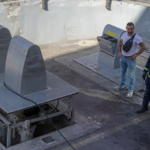
what had started as a two-minute mission to rescue a set of keys became an unexpected prison. Photo credit: Policía Arganda del Rey on Facebook

We’ve all done it, dropped our keys somewhere awkward, stared at them for a moment and wondered whether it’s worth trying to get them back. For one man in Madrid, that split-second decision turned into a 45-minute ordeal inside an underground rubbish container, complete with desperate cries for help and a rescue by firefighters. It sounds like something from a comedy sketch, but for the man involved it was anything but funny at the time.

The incident happened in Arganda del Rey, on the outskirts of Madrid, after the man accidentally dropped his house keys into an underground rubbish container. Rather than accepting defeat and arranging a replacement set, he decided to climb inside to retrieve them. It seemed like a quick solution, unfortunately, it wasn’t.

A simple plan that quickly went wrong

After climbing into the container, the man managed to get inside but soon discovered there was one major problem. The safety system designed to stop people falling into the underground bin also made it almost impossible for him to climb back out. Suddenly, what had started as a two-minute mission to rescue a set of keys became an unexpected prison.

For around 45 minutes, , unable to free himself. Realising nobody knew where he was, he began shouting: “Please, help!” It was a plea that fortunately didn’t go unheard.

His cries for help attracted attention

A nearby neighbour, identified as Gustavo, heard someone shouting from the street and initially struggled to work out where the voice was coming from. It wasn’t every day someone called for help from inside a rubbish container.

After locating the trapped man, Gustavo contacted the emergency services and stayed nearby to reassure him while firefighters made their way to the scene. As more neighbours realised what had happened, a small crowd gathered around the container, hoping the rescue would be straightforward.

Firefighters came to the rescue

Getting the man out wasn’t as simple as opening a lid, the underground waste containers use a counterweighted mechanism designed to make them safe and secure, meaning firefighters had to lift part of the system before they could reach him.

After around three-quarters of an hour trapped inside, the man was finally pulled to safety. Witnesses said he emerged covered in sweat, visibly shaken, with cuts to his hands after repeatedly trying to climb back out and an unpleasant odour that could make cats cry. Neighbours quickly handed him water while he recovered from the ordeal. Fortunately, despite the uncomfortable experience, he did not suffer any serious injuries.

An embarrassing story with a happy ending

Looking back, it’s easy to imagine the man wishing he’d simply called a locksmith. Replacing a set of keys is rarely cheap, but it’s probably preferable to spending 45 minutes inside a rubbish container waiting for firefighters to arrive.

The incident has attracted plenty of attention because it’s exactly the kind of situation many people can imagine themselves getting into. Faced with the choice between losing something valuable and trying to retrieve it, plenty of us might think, “I’ll just be a second.” Sometimes, however, those “quick jobs” have a habit of lasting much longer than expected.

A reminder to think twice

While the story has raised a few smiles, it also carries an important message. Underground rubbish containers are designed with safety features that prevent people from easily entering or falling inside. Those same features can make it extremely difficult to get back out without assistance.

Trying to recover dropped belongings may seem harmless, but climbing into these containers can quickly become dangerous, particularly in hot weather or if nobody knows where you are. This time, the man’s calls for help were heard by someone passing nearby. Had the street been quieter, the outcome could have been very different.

So, the next time your keys, phone or wallet disappear somewhere awkward, it might be worth taking a moment before climbing in after them. After all, a call to a locksmith is probably less memorable than becoming the neighbourhood’s most unexpected rescue story.

Continue Reading

%

Bystanders And Paramedics Save 77-Year-Old Swimmer After Cardiac Arrest On Murcia Beach

Published

on

bystanders-and-paramedics-save-77-year-old-swimmer-after-cardiac-arrest-on-murcia-beach

Bystanders and emergency services resuscitate a 77-year-old on Murcia beach. Photo Credit: Aguilas Department of Tourism

Murcia emergency services once again helped save the day for a beachgoer, this time in the shining municipality of Aguilas. A 77-year-old bather on the beach of La Cola, next to Calabardina, was successfully resuscitated after suffering a cardiorespiratory arrest, giving bystanders and loved ones a scare.

Heroic rescue on the shore: Bystanders help to save a swimmer’s life

The incident occurred on Friday, July 10 at approximately 1:53pm, when the 1-1-2 Emergency Coordination Centre of the Region of Murcia received several calls alerting them to the incident. The man had been swimming in the water, but several heroic bystanders on the beach noticed he was unconscious. They pulled him to shore and immediately began resuscitation efforts before official emergency services arrived and took over the operation.

Emergency services rush to the scene

Local police officers from Aguilas, Civil Protection volunteers and an ambulance from the 061 Emergency and Health Services Management were dispatched to the scene. Medical staff, once they arrived, continued with resuscitation efforts and managed to recover the patient from cardiorespiratory arrest. The beachgoer was then transferred via ambulance to the nearby Rafael Méndez Hospital in Lorca for further treatment and medical examination.

The crucial role of bystander intervention on a beach with no lifeguards

The Emergency Coordination Centre of the Region of Murcia has highlighted that the beach where the incident happened does not have a lifeguard station, meaning that the quick thinking and intervention of the model bystanders until the emergency teams arrived was imperative for the rescue of the man.

Essential summer beach safety tips for swimmers

This dramatic rescue serves as a reminder of the vital role public awareness and quick action play in beach safety, especially on beaches that don’t have immediate lifeguard services available. Aguilas is one of Spain’s most popular destinations for beachgoing, but as the summer season peaks, emergency services continue to urge beachgoers to remain vigilant, swim in designated areas whenever possible, and never hesitate to call 1-1-2 at the first sign of trouble.

It is also important to stay well hydrated during peak summer months, make sure you are not getting into the water under dangerous conditions (including during high tide and stormy weather), avoid swimming alone, and always make sure a loved one or close friend knows your whereabouts.

Continue Reading

%

The Air-Con Number People In Spain Get Wrong When Trying To Cool A Room Faster

Published

on

the-air-con-number-people-in-spain-get-wrong-when-trying-to-cool-a-room-faster

Setting your air-con to lower temperatures doesn’t mean faster cooling times. Credit: Juan Roballo / Shutterstock

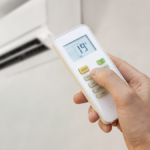
Walking into a hot home and pushing the air conditioning down to 19°C feels like the fastest route to relief. However, Spain’s energy agency says it does not cool the room more quickly, while a setting closer to 24-26°C can provide comfort without making the unit chase an unnecessarily low temperature for hours.

Why setting air conditioning to 19°C does not cool a Spanish home faster

After walking indoors from the Spanish summer heat, there is an understandable temptation to grab the air-conditioning remote and immediately lower it to 19°C, 18°C or even less. It feels logical. The lower the number, the colder the air and the sooner the room should become comfortable. But the number on the remote is not an accelerator, it is the target temperature the machine is being asked to reach.  

Spain’s Institute for Energy Diversification and Saving, known as the IDAE, specifically advises against setting the thermostat lower than normal in an attempt to cool a home more quickly. According to the public energy agency, doing so will not make the house cool faster and can instead lead to over cooling and unnecessary electricity use.

If a room is sitting at 30°C, the air conditioner will begin working towards the selected target. Changing that target from 25°C to 19°C does not suddenly turn the air coming from the unit into a much colder blast. It mainly tells the system to continue cooling for longer.

What temperature range balances comfort with electricity use?

There is no single perfect temperature for every person or property. Humidity, clothing, air movement, insulation and activity levels can of course affect how warm or cool a room feels. However, Spanish energy and consumer guidance provides a useful range.

The IDAE says 26°C or above can be sufficient to keep a home comfortable when residents wear suitable summer clothing. Spain’s Organisation of Consumers and Users, known as the OCU, recommends setting domestic air conditioning between 24°C and 26°C.

That may initially sound high to people accustomed to setting the remote at 20°C. But the aim is not to recreate a British spring day indoors, it’s to make the home comfortably cooler than the street without forcing the appliance to reach a temperature it may struggle to maintain during the hottest part of the afternoon. A setting of 24°C or 25°C can therefore be a reasonable starting point, with small adjustments depending on the room and the people inside.

How one degree can change the cost of cooling a home

The difference between 19°C and 25°C may look small on an air-con remote-control screen, but it can become significan when the unit is running for several hours each day. The IDAE estimates that changing a climate-control setting by one degree can alter energy use by approximately 7 per cent. The OCU uses an estimate of around 10 per cent additional air-conditioning consumption for every degree the thermostat is lowered. Actual costs can depend on the unit, electricity tariff, insulation, room size and outside temperature.

This doesn’t mean every household will save the same amount by moving the setting upwards. But it does mean that putting the unit at 19°C for the day could significantly alter someone’s electricity bill.

For newer air-conditioning units, repeatedly switching the system on and off may use more electricity than allowing it to maintain a steady temperature. Once the room reaches the chosen setting, the unit slows down and uses less power. Turning it off and restarting it later forces the system to work harder to cool the room again.

Closing blinds can do work the air conditioner would otherwise have to do

The thermostat number is only part of the equation. Sunlight pouring through exposed windows can continue heating the room while the air conditioner tries to cool it. The IDAE recommends closing blinds, curtains or awnings before direct sunlight heats the property, then ventilating at night or early in the morning when outside temperatures are lower. It also advises cleaning air-conditioning filters regularly, since maintenance helps the system operate efficiently.

A fan can also make a higher air-conditioning setting feel more comfortable. The agency says moving air can create the sensation of a temperature reduction of between 3°C and 5°C while using relatively little electricity. 

Saving electricity shouldn’t mean allowing a home to become unsafe for the sake of a few euros

Keeping the thermostat slightly higher can reduce unnecessary consumption, but the advice isn’t a reason to avoid cooling a dangerously hot property. With various heatwaves hitting the peninsula and many deaths being recorded due to the excessive temperatures, Spain’s Health Ministry warns that extreme heat can cause tiredness and loss of sleep, aggravate existing illnesses and increase emergency hospital admissions. Older people, young children, people with chronic conditions and those living alone can face greater risks. 

During severe heat, maintaining a safe indoor environment takes priority over reaching an exact energy-saving number. Most households can begin at around 24°C to 26°C, keep doors and windows closed while the unit is on, block direct sunlight and give the room time to cool. 

Continue Reading
Advertisement
Advertisement

Spanish Real Estate Agents

Tags

Trending

Copyright © 2017 Spanish Property & News