
Ceuta
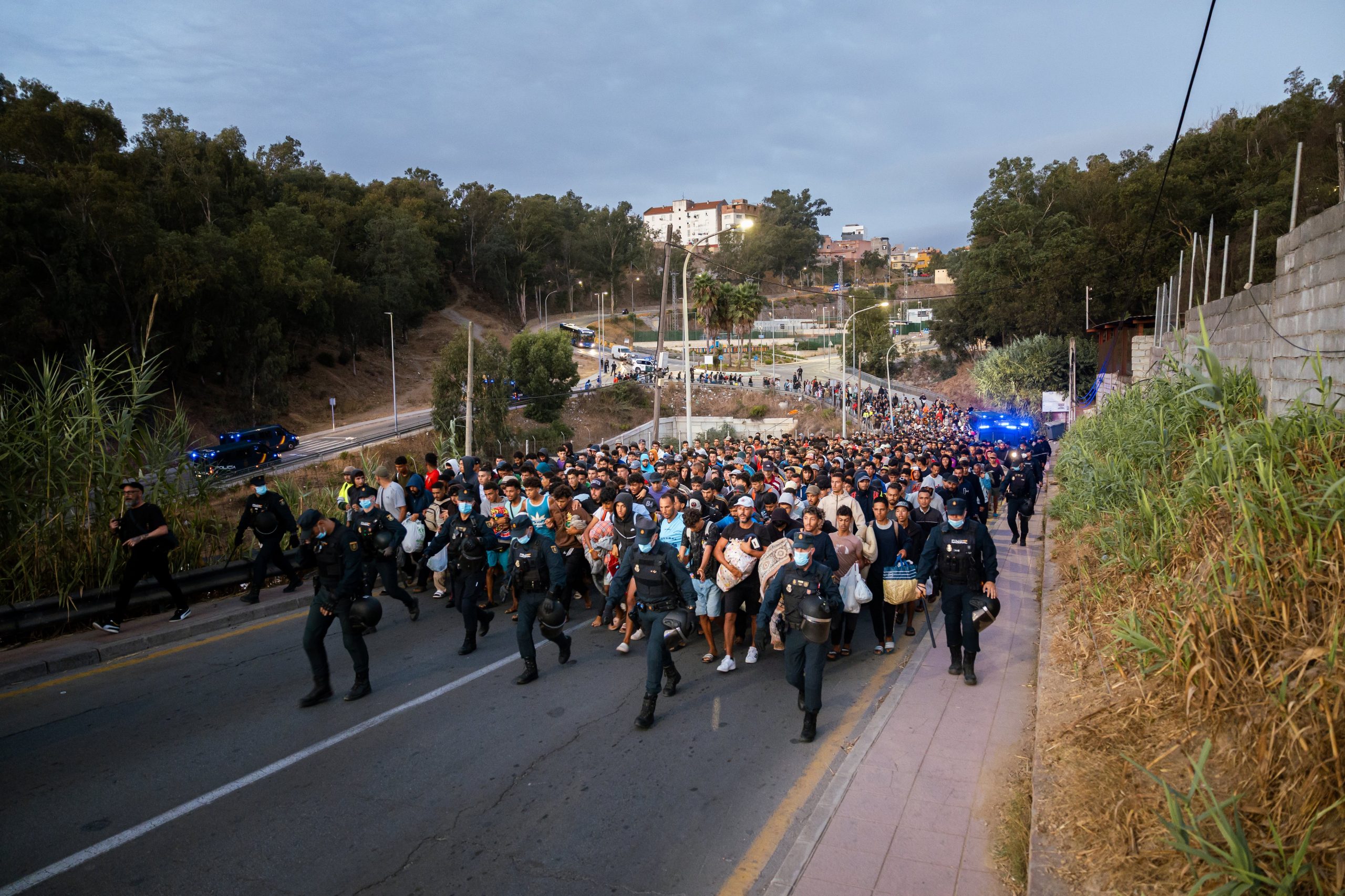
La Policía Traslada A Más De 800 Migrantes A Una Nueva Instalación: “¿Nos Llevan A Marruecos?”











Catalunya
Political Round-Up: Ceuta Crisis Deepens, The Left Gears Up For 2027 Elections And Catalunya’s National Day Ends In Unrest

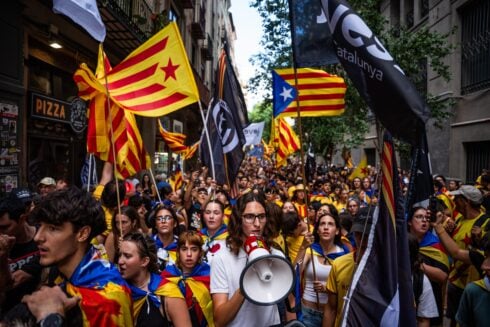
 SPAIN’S week brings fresh controversy over the Ceuta crisis, preparations for the 2027 election and arrests during Catalunya’s La Diada protests


A grim trend returns: 2025 was a year marked by the highest number of armed conflicts in the world since 1946 — 65 in total, which left a quarter of a million people dead — and 2026 is on track to break every record, according to the Oslo Peace Research Institute. The self-satisfied, even lyrical tone about that pleasant fiction known as the Pax Americana is crumbling.
The “apocalyptic urgency” of fascists a century ago has been replaced by the current “revolutionary urgency” of the post-fascists, according to intellectual Ivan Krastev: ethno‑nationalist far-right movements are rising rapidly across the West, notably in Europe, with center-right parties standing aside, the center-left absent from the field, and migration and technology acting as levers of resentment.
That leaves cannibalistic, stormy, violent geopolitics. Starting with the U.S., guarantor of the security architecture since the world wars. Washington today is one of the main agitators on the global stage, and has played a decisive role in shattering the old rule that borders are not redrawn by force.
Along with the Middle East, Europe is the region of the world most affected by this new world disorder. The direct consequence of the end of the U.S. security umbrella on the old continent is a greater degree of vulnerability in Europe, which is entering “a new era in which it will have to spend much more on defense and security,” analyst Robert D. Kaplan told this newspaper.
The European Union, in short, is late to the game. It is holding a weak hand. And most importantly, threats from neighbors are increasing, testing how far they can go without NATO reprisals.
The continent watches in disbelief as an escalation driven by the Union’s intrinsic weakness — and above all by that ambiguous message about the future of the U.S. military shield on European soil — unfolds. United by the symbols of its terrible past, the same EU that rose from the memory of Auschwitz’s crematoria and that has been a success story of stability and prosperity for decades is fulfilling the prophecies of historians like Tony Judt, who predicted it would remain forever mortgaged to that past.
Each generation is obliged to study history to avoid repeating it: for now, today’s generation of Europeans is witnessing a bloody war up close in Ukraine and a surge of hybrid attacks emerging in all directions, from the militarized borders of Finland and Sweden to the breakwaters of Ceuta and Melilla, from incidents in the Baltic states and eastern partners to disruptions at airports in Belgium and Germany orchestrated by Russia. Problems don’t come only from abroad: internal tensions are increasingly evident, with the EU unable to move from rhetoric to action on European defense, and an electoral cycle opening that will test the strength of the far right in eastern Germany and Scandinavia, in Poland and Italy, in Spain and, above all, in France.
Awaiting what happens in France, which is almost make-or-break for the European project, the atmosphere in the United States is for now poisoned — almost civil war–like — on the eve of the midterm elections. Russia is afflicted by an extremely virulent post‑imperial nostalgia. Even China, on the path to becoming the next hegemon, faces deep economic and demographic problems and is beginning to flirt with expansionism in the South China Sea and possibly toward Taiwan. In this tangled modernity the only clear thing is that the post–World War II global order is unraveling, and in that implosion Europe is playing a leading role, as a scapegoat victim, threatened on all sides.
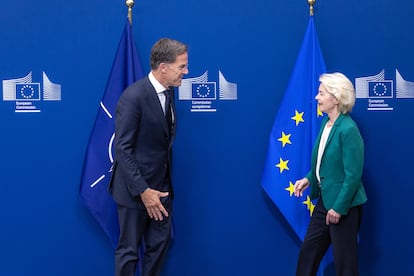
On the southern flank, Morocco — backed by Trumpism and Israel — has taken advantage of the disorder to carry out a hybrid attack on Ceuta, using more than 70,000 migrants as weapons: the EU has responded with disunity and a troubling lack of solidarity to that migratory challenge, which can bring out the worst in every country for electoral calculations. On the eastern flank, the wars in Gaza and Iran have exposed old taboos, revealing the inability of several European partners — and of their leaders, starting with Ursula von der Leyen — to criticize Israel in any meaningful way; Europe has been excluded from negotiation tables and has been harmed by extraordinary stress in the energy market, especially gas.
Further east, China is targeting European industry with excess production capacity combined with all manner of subsidies and state aid: that is another war, more commercial and economic, but the wallet has its own dynamics. In the west, Trump threatens Greenland and, more seriously, hints at leaving Europe without historic U.S. security guarantees — something Washington has made explicit in several official documents and that has emboldened some neighbors: Morocco to the south, and Turkey, looking toward the Western Balkans, Syria, and the Eurasian neighborhood.
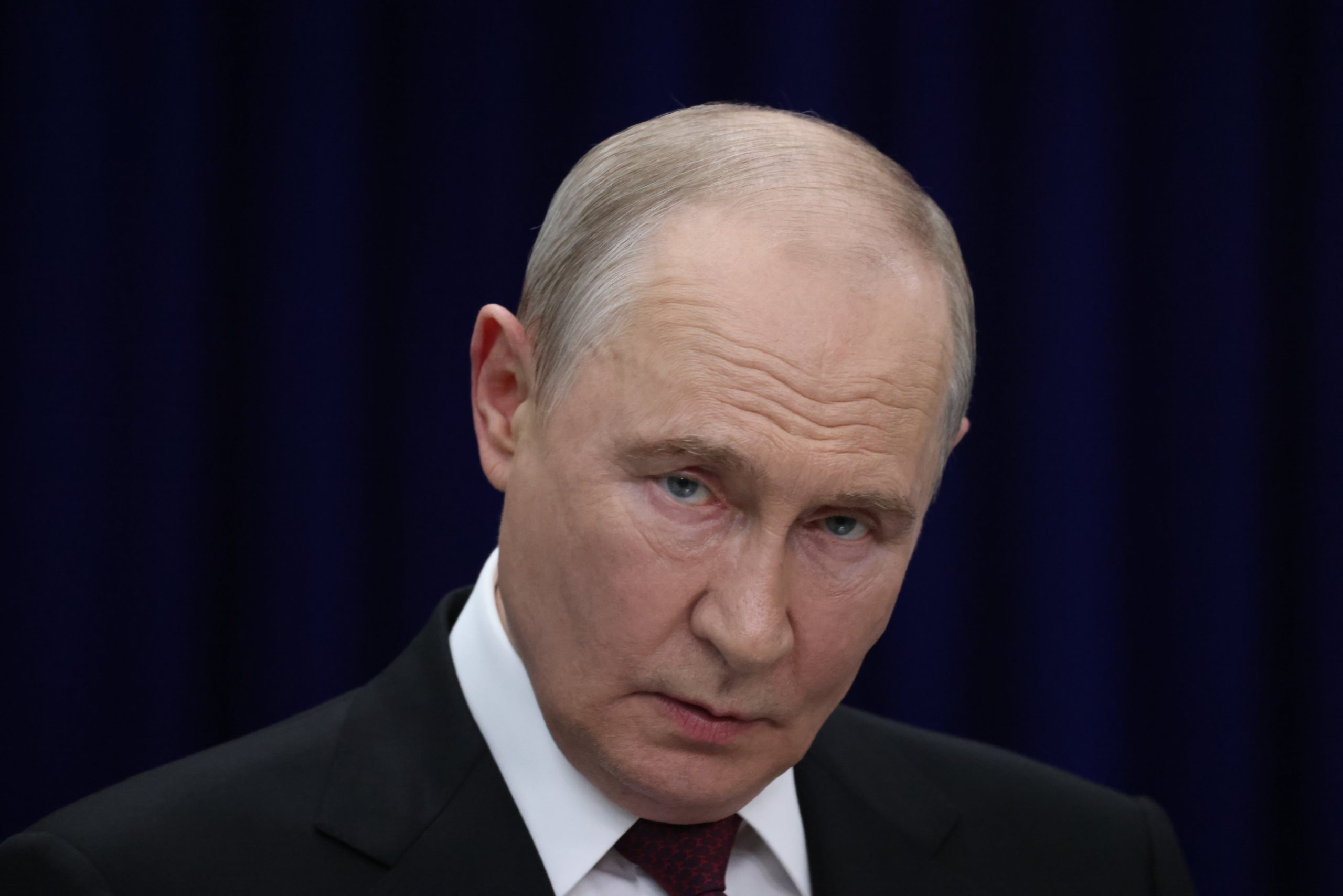
Washington’s disinterest in European defense goes back a long way: Barack Obama and Joe Biden already had their eyes on the Pacific. The consequences are profound, especially on the Russian flank: Putin is by far the main headache. He is waging a war on European soil, in Ukraine, now entering its fifth year. Putin’s frustration — having achieved few gains in recent months, with dwindling domestic support and a shaky economy — points to four escalation paths.
One is conventional war: allied intelligence reports assume an even harsher offensive this autumn, although Kyiv is defending well and striking back at Russian ports, airports and refineries. Two: use of tactical nuclear weapons, unlikely given China’s stern warnings. Three: an attack on NATO territory, also unlikely despite Baltic and eastern fears, given the prospect of a NATO response. The fourth path is hybrid war: attacks on critical infrastructure, sabotage of submarine cables, power plants (including nuclear facilities) and more. That has been a reality since 2022, even earlier. But it has intensified in recent weeks.
“Putin is testing the degree of unity among the allies, the firmness and restraint of Europeans in their response; Russia wants to know to what extent the end of the U.S. security umbrella is a fact,” a European source says. “Until it is clear where, how, and when the United States will defend its allies, and where, how and when it will not, we are likely to keep seeing that array of hybrid attacks, from electoral interference to cyberattacks and infrastructure sabotage,” adds Luis Simón of the Spanish Elcano Royal Institute.
The crescendo is overwhelming, with half a dozen messages telegraphed by Putin in the last month. One: Moscow has tried to blow up railway lines in Poland. Two: it has forced Finland to seek Sweden’s help to protect an increasingly dangerous border. Three: it forced Romania to destroy a naval drone headed for an oil platform. Four: it led Slovakia to foil an incendiary attack on an arms factory. Five: Danish intelligence announced it has indications that Moscow wants to target its defense companies.
And the final flourish: Russia carried out a failed drone attack with explosive-laden drones at Leipzig airport in Germany — Europe’s leading power and one of NATO’s strongest allies. The drones, which targeted a Ukrainian cargo plane, did not detonate. Yet Berlin reacted with extreme toughness; sources within the Atlantic Alliance agree that episode was a serious escalation. After Leipzig, a plot emerged to place incendiary devices on DHL planes, aimed at a German defense company, and two power substations were sabotaged.
The Leipzig drone incident raises a couple of questions aimed at Brussels, home of the European institutions and NATO. What will Donald J. Trump actually do about Europe’s defense? And what are Vladimir V. Putin’s plans?
The answer in Brussels is reassuring: “Germany’s reaction to the drone in Leipzig was impeccable. It took the time to study the attacks, and when it had proof, it blamed Russia in the strongest terms and took reprisals. The allies’ closed ranks, including the United States (although without naming Russia in Washington’s case), have been complete. If Putin was looking for fissures, he did not find them.” “The Leipzig attack is the pinnacle of that escalation, but after such a robust response one can expect Putin to have understood the message,” argue diplomatic sources, who trust that the recent visit to Moscow by John Ratcliffe, the CIA director, made things even clearer.
Brussels, in short, maintains a measured tone. However, outside the institutions, analysts’ responses are unsettling: “Wars are not inevitable, but the threat of a catastrophic conflict is closer than at any time in decades,” historian Margaret MacMillan wrote. Javier Solana, former head of the Atlantic Alliance, adds that one should expect “restraint” from the allies. “But if Putin keeps playing with fire and in one of those hybrid attacks there is bloodshed, we will have a problem,” he warns.
Michael Ignatieff, writer and former Canadian politician, uses a Lenin reference as a metaphor for Russian temptations: “Lenin is said to have insisted on probing with the bayonet until something solid was found. For weeks Russia has been probing with the bayonet — in Leipzig, in the Baltics, and even near Spain, with spy ships in the Atlantic and the Mediterranean. And it will not stop until it finds something solid: first a diplomatic response, as we saw in Germany; then perhaps something stronger. Europe can only count on itself for its defense, something unprecedented since 1945, although if the escalation intensifies we will see what Trump does.”
Ignatieff is calling on Brussels to accelerate and even leaves a message for Spain: “We face a new world, with Russia humiliated in Ukraine, the U.S. failing in Iran, an autocrat in charge of Russia and Trump in the White House. European partners must wake up. And Spain, in particular, must stop thinking the danger is far away and that the problem belongs to others.”
Among geopolitics experts there is broad consensus: the old order is wobbling and the new one has not yet settled; in that interregnum morbid symptoms appear; for now nothing is irreparably broken. But among experts on armed conflicts and hybrid threats — who are increasingly busy — alarms are sounding at full volume. This newspaper contacted some of the most renowned: Lawrence Freedman, professor of war studies at King’s College London and author of Strategy, points out that Putin’s hybrid attacks “are signs of desperation and Russian weakness.” “But it is difficult to craft a proportionate response: Europe must combine containment with firmness toward the allies, provide full information to the public and keep arming Ukraine,” Freedman adds.
Keir Giles, a Chatham House analyst and author of Who Will Defend Europe?, distrusts that catch‑all label “hybrid threats” and explains that Putin has stepped up several rungs from that term “toward outright state terrorism.” He adds that other neighboring countries, like Morocco, are also testing European unity and defensive capabilities. “Putin will continue escalating and other countries will join the threats if the allies do not deliver responses strong enough to have deterrent power,” he says. Moreover, the current scenario has an uncertain horizon: Andrei Soldatov of the Centre for European Policy Analysis urges the EU to prepare “for a prolonged and intense hybrid war.”
From across the Atlantic come even sterner voices. Benjamin Schmitt, a security analyst at the University of Pennsylvania, says Russia “is not engaged in a vague, murky or hybrid conflict against the West: it is waging a war against Europe. The European Union, however, is not aware that it is at war and without its historic ally, the U.S.: Europe must wake up.” Dan Hamilton, a former senior State Department official in Washington, closes with three points.
One: “We should not ask how the conflict in Ukraine will end, but how it will continue; Russia is a revanchist power and will remain so.”
Two: “The United States will not completely withdraw its security guarantees in Europe, but it is being ambiguous to push the EU to spend more on defense and to get the EU to back Washington more with China, with the Pacific theater at a critical point.”
And three: “What happened in Ceuta or Leipzig are not hybrid threats alone; this is an era of disruption in which everything is being weaponized — from the economy to migration, technology, resources, and elections.”
During the Cold War, Europe, the United States and Russia knew where the front was. Today the front is a fuzzy concept; it can be anywhere: in the weapons supply chain to Ukraine; in the Straits of Gibraltar and Hormuz; at the airport of a German city; at a French or Belgian nuclear plant; in a Warsaw or London shopping mall.
Often, however, the front line materializes in Europe, which, amid so many threats, is passing through one of those foundational moments when history’s hinges creak and are repositioned. This is one of those rare moments in which “what once seemed impossible” — 30 years ago a common currency; today the last taboo, a common defense — “becomes inevitable,” Krastev argues.
Sign up for our weekly newsletter to get more English-language news coverage from EL PAÍS USA Edition

La Policía Traslada A Más De 800 Migrantes A Una Nueva Instalación: “¿Nos Llevan A Marruecos?”

F1 on US TV: How to watch the Spanish Grand Prix this weekend live and FREE

While Prices Rise Across Spain, This Bar Still Charges Just €1.50 For A Coffee


-
Costa Blanca North2 weeks ago
Everything you need to know about the final weekend of Benidorm Pride
-
Latest2 weeks ago
Four Migrants Arrested In Ceuta For Throwing Stones At Spanish Soldiers
-
bissan wealth management2 weeks ago
Wealth management for Americans in Spain
-
 bomberos2 weeks ago
Una Mujer Y Su Hija De Nueve Años Mueren En Un Incendio En Teruel
-
Costa del Sol2 weeks ago
Marbella puts Ranchon Cubano back on the beach: Eco campaigners want it stopped
-

 Uncategorized1 week ago
Max Verstappen works with new race engineer at Italian Grand Prix
-

 Asesinatos2 weeks ago
Prisión Sin Fianza Para La Mujer Que Apuñaló Mortalmente A Un Hombre En Un Bar De Valencia
-
Costa del Sol2 weeks ago
Fuengirola starts €49m Los Boliches megapark as demolition begins