
ElPais
English-Speaking, Texan And From Vulnerable Backgrounds: The Americans Still Accessing Abortion Thanks To Mexican Feminists


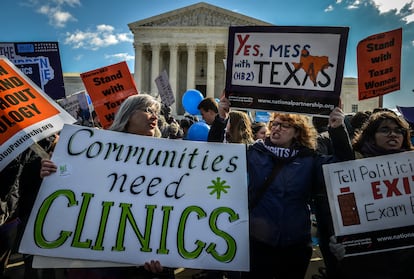
The year 2023 was pivotal for understanding the effects of abortion restrictions in the United States. A year earlier, in June 2022, the U.S. Supreme Court issued the decision known as Dobbs v. Jackson Women’s Health Organization (JWHO), which overturned the abortion-rights protection established by a previous ruling from 1973: Roe v. Wade. Since then, thousands of American women have ended pregnancies with help from Mexican feminist collectives. Several recent studies put a face to those seeking abortions: a large share come from states such as Texas, where abortion is banned, and live in neighborhoods with high levels of poverty.
These findings emerged from research by several women. Facing a surge in restrictions, Alexandra Wollum, a public health expert and researcher at the Ibis Reproductive Health institute, contacted Verónica Cruz Castro, director of Centro Las Libres, and Sandra Cardona Alanís, founder of the Red Necesito Abortar MX network, with whom she has collaborated for years on scientific studies of sexual and reproductive health. Together they designed a study to try to answer the question: who are the Americans seeking help from feminist collectives in Mexico to access abortion?
Their findings reinforce warnings about what would happen once abortion rights were restricted: the most marginalized women ended up being the most affected. The vast majority of people who sought help from these collectives live in states where abortion is banned. Abortion in places where it is prohibited is often a feasible option only for those who can afford it. For those who cannot buy the medications or travel to a state where abortion is legal, Mexican collectives are an alternative.
Likewise, many women began crossing the border into Mexico to access this health service. Some were even received by Alanís at her abortion clinic in the city of Monterrey, Nuevo León.
By the time they compiled their report, Castro and her colleagues at Centro Las Libres, a feminist organization based in Guanajuato, already had more than 20 years of experience helping women end pregnancies in Mexico — with or without government approval. Since September 2021, they have also been supporting self-managed abortions for women who sought them from Texas.
They did so soon after the conservative U.S. state published a law restricting access to abortion if a physician could detect a fetal heartbeat, claiming this was an indicator the pregnancy could be carried to term successfully — a myth debunked by studies showing, for example, that fetuses with anencephaly, in which the brain or skull do not fully develop, can exhibit cardiac activity despite being nonviable.
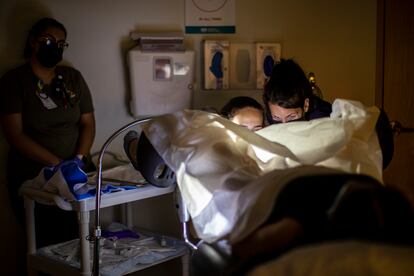
On the other hand, another study explains that the human heart is not fully formed until around the 20th week of pregnancy, so the cardiac activity detectable from the sixth week is not comparable to the heartbeat of a fully formed heart.
The consequence was that many women lost access to this right overnight, including those with conditions that made carrying a pregnancy to term unsafe.
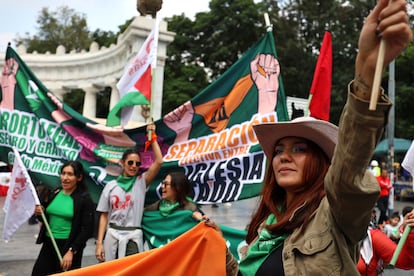
Thus, Las Libres and Red Necesito Abortar MX began providing information and accompaniment for women to end pregnancies at home, sending misoprostol and mifepristone free of charge — two medications used for the process.
After Roe v. Wade was overturned, Castro and Alanís recall how requests for accompaniment increased significantly and began arriving from several states that quickly enacted restrictions and bans on abortion access. In 2023 alone, they received at least 2,850 requests, which they analyzed in the study conducted with Wollum. To do so, they designed a set of questions that, based on the collectives’ experience, people would be willing to answer and established secure channels to communicate with them.
They found that 82% of help requests came from states with complete abortion bans, such as Texas. Using zip code information, they were also able to identify that the rate of people requesting help increased in areas with higher poverty, lower insurance coverage, and a larger share of Spanish speakers. However, to the surprise of the organizers, most of the people who contacted them were English speakers.
In areas where only 5% of the population lives below the poverty line, the rate of requests for accompaniment to Mexican collectives was 0.35 per 100,000 women. In areas where up to 17% live in poverty, the rate rose to 1.63. The overall average in the study was 2.44 women per 100,000.
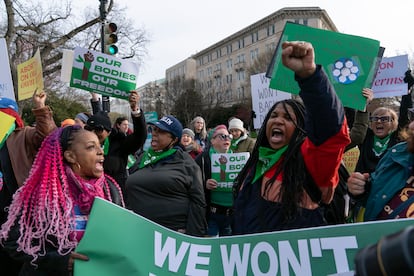
The findings of this study help reinforce the evidence regarding the already known effects of abortion restrictions. According to Wollum, “support groups are truly helping to bridge a gap in access to abortion for people in the U.S. who, at this time, face the greatest obstacles to receiving care, including cost, distance, and language barriers.”
The specialist is one of a long list of scientists who, from their own work, have contributed research to understand the consequences of abortion restrictions and how to make care safer. In just the past four months, the journal Obstetrics and Gynecology has published at least three studies on the subject. Tuyet Mai Hoang, a social work specialist focused on sexual and reproductive health, authored one of them.
Hoang, who did not participate in Wollum’s study, says one of its chief strengths is the collaboration between activists on the Mexican side and U.S.-based scientists, each an expert in their field. “It’s important that activists, researchers, patients, and other stakeholders take part in the research process and the generation of scientific evidence to inform laws,” she says.
Hoang also recently published a study to better understand the experiences of people who traveled from restrictive states to others where abortion is legal, such as Illinois, where she works. One of her main conclusions is that a key motivation for making that trip is trust. “They don’t travel only to receive abortion care. And not only because abortion is unavailable or banned in their state, but because they sought medical care that, for them, felt safe, reliable, respectful, and nonjudgmental,” the researcher explains.
Anna Fiastro, a public health expert, concurs. Her research reached a similar conclusion, describing how women who travel to obtain misoprostol and mifepristone do so because they distrust remote medicine options. That distrust is fueled by lack of information and fear of possible legal consequences.
For Alanís, activism has shown that collective action can fill the gaps left by governments. Castro adds that the studies conducted in collaboration with Ibis have helped her understand how that idea has spread from Mexican collectives into the United States. She welcomes how the women who have accessed accompanied abortions have even formed their own community networks across the border. That will be the subject of Castro’s future research. However, given the daily criminalization feminists face, she does not think now is the best time to pursue it.
Sign up for our weekly newsletter to get more English-language news coverage from EL PAÍS USA Edition







Binance
Trump’s Broken Promise On Crypto: A Gold Mine For His Empire, Multimillion-Dollar Losses For Investors


Benjamin Netanyahu
The Suffocation Of Israeli Filmmakers: ‘Critical Culture Is Now Regarded As An Act Of Treason’

In September 2025, the film that won the most awards at the Ophir Awards, Israel’s equivalent of Spain’s Goyas, was The Sea, which tells the story of a Palestinian boy who sneaks past checkpoints to try to reach Tel Aviv and see the Mediterranean for the first time. The film does not delve into the daily squalor and violence of the Israeli occupation, but it provoked the ire of Culture Minister Miki Zohar at the time, who said he would not allow a “group of extremist left‑wing thugs” to take over the film sector.
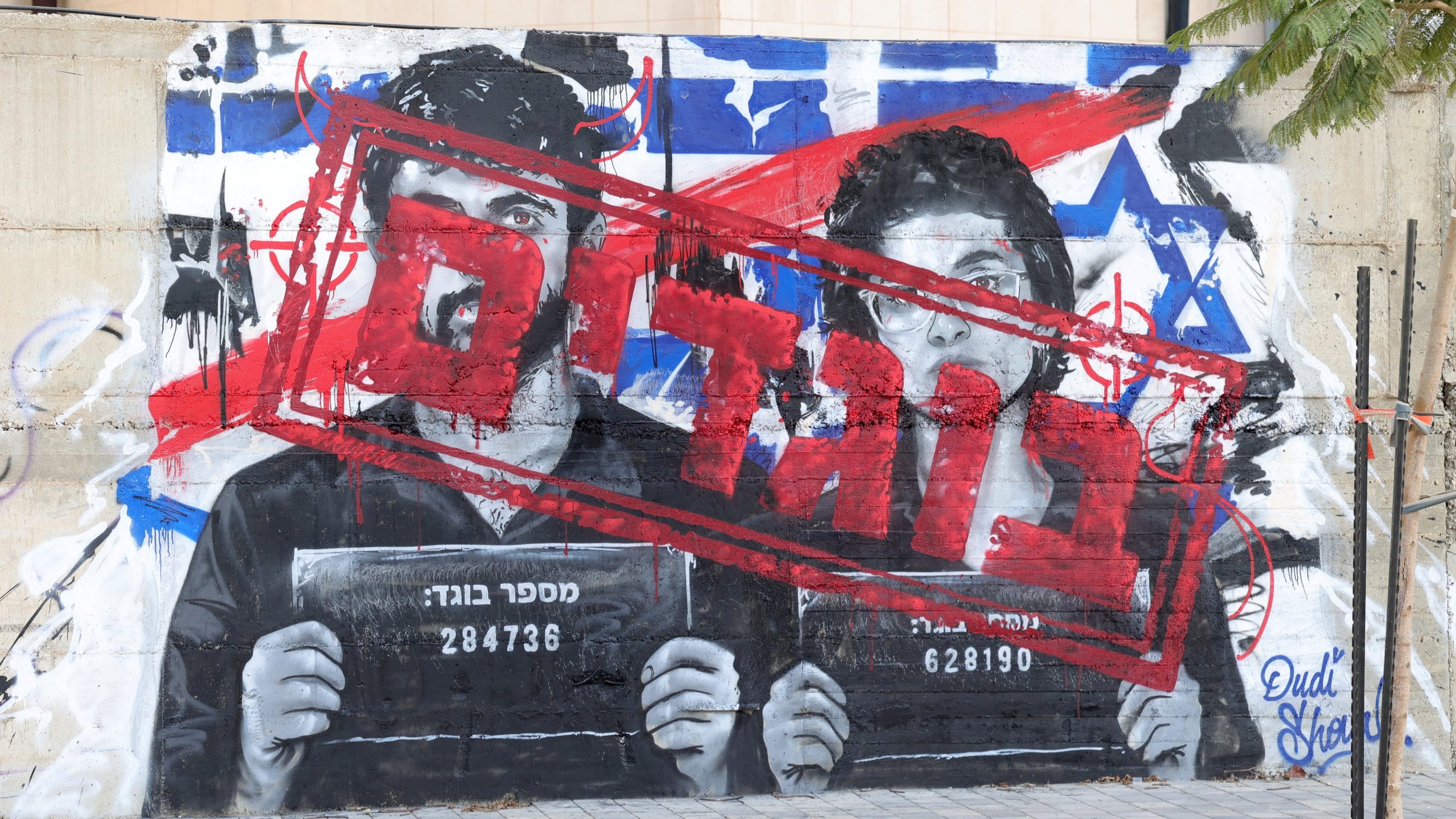
A year later, Zohar is calling for the revocation of the citizenship of Yuval Abraham and Rachel Szor, directors of the film NAZA, which won awards in Venice and is screening at the San Sebastián Film Festival (September 18-26). He called them traitors. On Israel’s streets and on social media, anger toward the two filmmakers has gone even further. “We’ve had hard years, but this is the first time I’ve witnessed attacks of such cruelty on social media and even in some media outlets. People are calling for them to be hanged, for them to be killed. It’s incredible,” Uri Rosenwaks, a filmmaker and former director of the Israeli forum for documentary directors, told this newspaper. “The problem is that Israeli society lives in a huge bubble of denial about what is happening in Gaza. And this film has burst that bubble.”
The filmmakers interviewed for this report describe a gradual strangulation over the past 10 years, sheltered by increasingly extremist governments and an unabashed radicalism that has clearly intensified since the start of Israel’s offensive on the Gaza Strip in 2023, following the attacks by the Palestinian Islamist movement Hamas.
They all live in an environment of lack of funding, canceled screenings, rejection by festivals, scorn from the authorities, and insults and threats on social media. “It seems we have reached the point where critical culture is regarded as an act of treason and is becoming dangerous for those who create it,” laments Shai Carmeli‑Pollak, director of The Sea.
More than 200 Israeli filmmakers signed a statement last week in solidarity with Abraham and Szor. NAZA collects testimony from more than 20 soldiers and intelligence officers who detail the tools used to relentlessly bombard Gaza and the sense of revenge that has permeated the offensive. The film attacks the army head‑on — a kind of sacred cow in Israel, where it is seen as a model of morality.

“This is a true collective psychosis,” Carmeli‑Pollak sums up. “It seems the fact that the film received such a prolonged ovation bothers local audiences more than the disturbing facts the story exposes. It’s deeply disheartening and terrifying.”
The 25‑minute ovation NAZA received in Venice might lead one to think that it is still possible in Israel to make films critical of the current government and that culture, in all its forms, remains an effective channel for denouncing the occupation of Palestinian territories, the massacre in Gaza, or the army’s abuses.
But the reality is that NAZA is a film that has not received a cent from public coffers, has not been released in Israel, and it seems clear that, for now, no Israeli theater would risk screening it. It is not even certain that its directors will be able to return home in the medium term. “Before, only people from the radical right allowed themselves to attack a film like this, which, moreover, they hadn’t seen. But now the criticism comes from everywhere: academics, more moderate figures… It has been brutal,” Rosenwaks says.
The biggest fear among these artists is what will happen if Prime Minister Benjamin Netanyahu remains in power after the legislative elections at the end of October. “One can oppose Netanyahu and critique him openly, but attacking the army or speaking about Palestinians’ rights has become very risky. Not only for our careers, but for our physical safety,” says Noam Sheizaf, co‑director with Idit Avrahami of H2: The Occupation Lab, a film about the Palestinian city of Hebron, presented as a microcosm of the occupation.
At the same time, Israeli artists — not only filmmakers but also writers, dancers, intellectuals, and historians — are received with suspicion abroad or directly face boycotts. “We Israelis have become toxic people. Our presence at a conference, a film festival, or a book fair can create problems,” Rosenwaks details. “And if Netanyahu is re‑elected we won’t be able to cope. There will be a mass emigration, because the last few years have already been a challenge.”
Self‑censorship
In Israel, film directors do not receive funds directly from the Ministry of Culture. Each year, the government provides about 130 million shekels (roughly $42 million) to film funds — independent non‑profit entities — that decide which films to finance according to certain criteria. “There are no guidelines about the political or ideological content of the films they back, but repeated attacks by the authorities on critical films have undoubtedly created a deterrent effect,” admits Nirit Anderman, a film‑specialist journalist at Haaretz. In other words, organizations that receive public money have understood that financing a film critical of government policies toward the Palestinians will not be well-regarded and could exclude them from the list of cultural entities that receive those funds.
That is why self‑censorship is a reality among artists, although few admit it openly. “Obviously, if a filmmaker is torn between making a family drama or a scathing political satire, he or she will choose the former because he or she knows that the chances of securing funding will be greater,” Anderman says.
After the success of The Sea at the Ophir Awards in 2025, the culture minister threatened to stop funding those awards, although he has not succeeded in doing so. He also announced the creation of other government‑backed awards, which were held in December and distributed substantial prizes, and proposed new rules for public funding of Israeli cinema that are still being refined. For example, that awards won at foreign festivals would not count toward eligibility for funds, or that a specific funding line be created for films about the heroism of Israeli soldiers.
The minister, Miki Zohar, has long had critical filmmakers in his sights and said, for example, that the Oscar‑winning documentary No Other Land, co‑directed precisely by Abraham and Szor, was “an act of sabotage” against the State of Israel. On September 9, at the most recent Ophir Awards, the big winner was Tell Me Everything, a family drama set in the 1980s that has homophobia and AIDS as its backdrop, followed by Where To, which deals with relations between Israelis and Palestinians but is set in Berlin, far from the harsh daily reality of the occupied territories.
“In my case, after the minister’s attacks, some people criticized the film, but others were curious and went to see it. Also, there were screenings canceled due to opposition from local residents,” says Carmeli‑Pollak, director of The Sea, who secured difficult funding thanks to support from the Israeli Film Fund, an independent non‑profit, and a Palestinian production company.
In 2022, Sheizaf and Avrahami, the directors of the film about Hebron, also saw several screenings canceled and the film go almost unnoticed in Israel. “As an Israeli documentary filmmaker, I make films for the people of my country, so they can see and understand. I’m a journalist, and I believe in this work,” Sheizaf adds, explaining that since it was a co-production with France Télévisions, there were screenings abroad. “We were very happy about that because we believe the world has a role to play in ending the occupation.”
Along the same lines, Avi Mograbi, director of The First 54 Years. An Abbreviated Manual for Military Occupation, explains that “everyone” rejected his film in Israel in 2022, months before the Hamas attacks. “The television channels that used to show my films, the festivals, the cultural institutions where I was once well received… all of them,” he says. “Sometimes being ignored is more painful than being criticized.”
Sign up for our weekly newsletter to get more English-language news coverage from EL PAÍS USA Edition
Donald Trump
Operation Save The Yen: Japan Partially Turns Off The Cheap Money Tap, With A Little Help From Its ‘American Friend’


TELL US: Who’s To Blame For Spain’s Housing Crisis?

Trump’s Broken Promise On Crypto: A Gold Mine For His Empire, Multimillion-Dollar Losses For Investors

Red Bull F1 chief shares important Isack Hadjar injury update after Baku return


-
 Alex Saab2 weeks ago
Maduro Ally Alex Saab Pleads Guilty In US Money-Laundering Case
-

 New Developments2 weeks ago
How To Get A Tourist Rental Licence In Andalusia (Spain) – Step-By-Step Guide 2025
-

 %2 weeks ago
Benahavis Wildfire Stabilised: 300 Hectares Burnt
-

 Uncategorized2 weeks ago
‘Lewis will never trust Charles again’ – F1 journalist issues shocking Ferrari statement – GPFans.com
-

 Arganzuela1 week ago
Detenido Un Hombre Por La Muerte De Una Mujer De 47 Años En El Distrito De Arganzuela De Madrid
-
 Coaching2 weeks ago
Svend Brinkmann, Psychologist: ‘If You Place Conditions On Forgiveness, Love Or Freedom, You Have Already Destroyed Them’
-
Best airlines1 week ago
Spanish airline Vueling named Europe’s best low-cost carrier for 2026
-
Latest2 weeks ago
Italy And Spain Extend Tit-For-Tat Border Checks In Wake Of Migrant Rush