Connect with us

%

Border Treaty In Gibraltar Rescheduled, Residents Gain Preparation Time

Published

on

border-treaty-in-gibraltar-rescheduled,-residents-gain-preparation-time

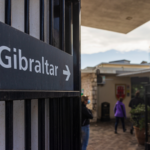
Under the agreement, physical barriers at the land border with La Línea de la Concepción will be removed. Photo credit: Framalicious/Shutterstock

Gibraltar’s government has reacted positively to the announcement that the provisional application of a long‑negotiated treaty between the European Union and the United Kingdom, which includes dismantling the frontier barrier known as la Verja between Gibraltar and Spain, will now begin on July 15, three months later than originally anticipated. 

The Council of the European Union’s Committee of Permanent Representatives (Coreper) confirmed on April 1 that it has approved the text of the agreement and the decisions necessary for its signature and provisional application, with formal adoption to follow once legal and linguistic reviews are completed. 

Gibraltar’s chief minister, Fabian Picardo, described the revised timetable as “a very positive development” that provides “certainty and additional time to prepare” for the changes it will bring. He said the delay gives both companies and residents clearer expectations about when the new arrangements will take effect and allows more time to adjust to new procedures embedded in the treaty. 

Agreement changes border operations

The treaty, reached after several years of negotiations, updates the post‑Brexit relationship between the EU and the UK with respect to Gibraltar, a British Overseas Territory located on the southern tip of the Iberian Peninsula. It sets out a framework for aligning Gibraltar’s border controls with Schengen Area rules applied by the EU, effectively integrating the Rock into parts of Europe’s border regime while preserving the UK’s overall sovereignty. 

Under the agreement, physical barriers at the land border with La Línea de la Concepción will be removed as formal frontier checks are replaced by Schengen‑style procedures. National police from Spain will conduct passport and biometric checks at Gibraltar’s airport and seaport on behalf of the Schengen area, and the new system will apply consistently for people and goods. 

The existing European Entry/Exit System (EES), a digital border‑management programme being introduced across the Schengen zone from April 10, will not be applied to Gibraltar’s residents during the interim period, Gibraltar authorities confirmed, avoiding a scenario in which two different border regimes collide. 

Delay linked to procedural requirements

The original plan had envisioned provisional application of the treaty by April 10 to coincide with the rollout of the EES and prevent disruption at the border. That date was widely seen as a key milestone after years of negotiation and uncertainty over Gibraltar’s status. 

However, the provisional start has now been postponed to  July 15 because the treaty text still requires final legal and linguistic checks, including translation into all official EU languages. The Lisbon‑based legal services of the Council must complete these reviews before the agreement can be formally signed and enter into provisional effect. 

The unanimous backing by the 27 member states of the EU for the provisional application was confirmed at the Coreper meeting, sending a strong political signal of support even though administrative steps remain. 

Local and regional reactions

Gibraltar’s authorities have emphasised that the new schedule offers clarity at a time when both residents and local businesses need it most. The delay, they say, removes an element of uncertainty about how border operations will work once Schengen‑aligned procedures are introduced. 

Regional officials in Campo de Gibraltar, the Spanish area adjacent to the border, have also noted the significance of setting a clear date. The agreement’s implementation affects tens of thousands of daily cross‑border commuters and local economic interactions, and a defined timeline is seen as essential for planning purposes. 

Despite broad approval, the new timetable will require adjustments by the Spanish government’s Ministry of the Interior, which is analysing whether the postponed date affects the activation of Schengen access facilities at Gibraltar’s land frontier. Officials have indicated that they will review operational plans in the context of the postponement. 

Next steps ahead of July

Although the treaty’s provisional application is now scheduled for mid‑July, both sides still must complete formalities before it can take effect. This includes ratification processes, translations of the treaty into all EU languages and further administrative preparations across border control infrastructures. 

In the meantime, Gibraltar’s government and EU institutions continue to communicate about implementation details, with an emphasis on avoiding disruption to cross‑border movement and ensuring that residents and businesses are prepared for the transition

%

Spain Airport Delays After New EU System

Published

on

spain-airport-delays-after-new-eu-system

Travellers face long queues at passport control following new EU entry system rollout Credit : Nigel J. Harris, Shutterstock

Travellers flying to and from Spain are being told to allow extra time at the airport after the EU’s new Entry Exit System went live and immediately led to long queues, delays and missed flights. The system, which became fully operational on 10 April 2026, replaces passport stamping for non EU visitors with digital checks, and the first days have already shown how much longer border control can now take.

For many passengers, especially those travelling from the UK, the change is being felt straight away. What used to be a quick check at the border is now a slower process, and at busy times, the queues are building up fast.

Why the new EES checks are slowing things down at airports

The Entry Exit System is designed to modernise border control, but in practice, it adds a few extra steps that quickly make a difference when thousands of people are arriving at once.

Instead of a simple passport stamp, travellers may now need to go through passport scanning, facial recognition and fingerprint registration, particularly on their first trip under the new system.

On paper, each step only takes a short time. In reality, when every passenger has to go through it, delays start to build. Reports from the first days mention queues stretching for hours in some airports, with some travellers missing their flights as a result.

Airports and airline groups have already raised concerns, warning that the system is putting pressure on border control at the worst possible time, as travel numbers begin to rise again.

What has changed for UK travellers heading to Spain

Since Brexit, British travellers are no longer treated as EU citizens when entering Spain or other Schengen countries. That means they are now fully subject to these new checks.

For anyone travelling for the first time since the system went live, the process may take longer than expected. Passengers could be asked to provide a facial image, fingerprints and passport details before being allowed through.

Once registered, future trips should be quicker, but for now, the first experience is where most delays are happening.

The system also automatically records entry and exit dates, helping authorities track how long visitors stay in the Schengen area. This replaces the old passport stamp and makes it easier to enforce the 90 day limit.

For travellers, it means there is less room for mistakes, and border checks are more detailed than before.

Queues, missed flights and growing pressure on airports

The early days of the rollout have not gone unnoticed. Airport groups across Europe have warned that the system is already causing disruption, with some passengers facing long waits at border control.

The problem is not limited to one country. Reports suggest delays at several Schengen entry points, including airports serving Spain, where large numbers of British tourists pass through.

With the  summer season approaching, there are concerns that the situation could get worse if nothing changes.

Some airport organisations have called for more flexibility in how the system is applied, especially during peak travel times, to prevent queues from becoming unmanageable.

What travellers should do before flying to Spain now

For now, the safest approach is to plan ahead and give yourself more time than usual.

If you are travelling to Spain from the UK, it is a good idea to arrive at the airport earlier than you normally would, especially if your flight is during a busy period.

Checking your airline’s guidance before you travel can also help, as some airlines are already advising passengers to adjust their arrival times.

If possible, avoid tight connections. A delay at border control could leave very little time to catch a connecting flight.

It is also worth making sure your passport is valid and that you are familiar with the Schengen rules, including how long you are allowed to stay.

Will things improve as the system settles in

Officials expect the situation to improve over time. Once travellers have completed their initial registration, future crossings should be quicker, as their data will already be stored in the system.

Even so, the first days have shown that the transition will take time. Airports will need to adapt, and travellers will need to adjust their expectations.

For now, anyone flying to Spain should be prepared for a different experience at the border. It may not stay this way forever, but at the moment, the new system is already changing how people move through Europe.

Continue Reading

%

How Baleària Became Spain’s Lifeline To The Balearics

Published

on

how-balearia-became-spain’s-lifeline-to-the-balearics

Ferry entering Denia port. Credit Balearia

One name in coastal travel that should never be taken for granted is one that has had remarkable success and become firmly held as an essential of many people in Spain. From being a smallscale ferry carrier with just three ships, to today with almost 40, the name has, for Spain, become as synonymous with ferry travel as Renfe is with rail and Iberia is with flights. Baleària.

Baleària is operating today not only as Spain’s most dominant ferry operator but also as a lifeline to populations of the Balearics including many expats, influencing their choices of where to choose to live and invest and also creating thriving economies on either side of their crossings.

All this has been thanks to a daring vision, a relentless pursuit of innovation and strategic expansion since its foundation more than a quarter of a century ago. Record 2025 results delivered €801 million in turnover together with 6.5 million passengers and 1.6 million vehicles carried.

Founding in 1998 after predecessor collapse

Adolfo Utor established Baleària in June 1998 after the collapse of predecessor Flebasa. He is still at the helm today. Operations began modestly with just three ships serving initial routes from Denia to Ibiza and Palma de Mallorca. Determination among the founding team of around 126 staff quickly turned early challenges into solid customer relationships and steady regional growth. Initial transport volumes remained modest, with the first full-year turnover in 1999 reaching only around €27 million.

Although, founder Adolfo Utor does not describe himself as a daring or a venture capitalist: he prefers “prudent”. In an interview in 2023, he gave the apt allegory of the stories of James Joyce’s Ulysses, or The Odyssey, long journeys full of doubt, mulling, questioning, and only then taking the right decision.

Fleet growth and strategic acquisitions

Continuous investment introduced never-before-seen high-speed ferries that cut crossing times dramatically for passengers and vehicles. Later additions embraced the more eco-friendly natural gas propulsion. Routes multiplied from additional ports, including Barcelona, Valencia and Denia. Baleària now maintains 28 services in six countries with a fleet approaching 40 vessels.

Acquisition of Trasmediterránea in 2003 boosted scale and prestige. Recent regulatory approval arrived for purchasing key assets from Armas Trasmediterránea. Plans called for a €45 million modernisation programme and construction of a new dedicated terminal in Barcelona.

Documentary reveals company journey

Baleària produced the documentary Una travesía de 25 años to recount its history through testimonies of 14 people. Experts from the maritime world and first-person accounts from the entire company trajectory narrated the companies’ massive achievements and challenges.

During the film, testimonies describe the launch of fast ferry Federico García Lorca as a turning point in company thinking. Founder Adolfo Utor says the 2008 crisis struck during the construction of four new ships, yet those vessels helped recovery.

Baleària today

Nearly half of passengers travel to or from Mallorca, Ibiza or Menorca annually. Local residents and businesses benefit enormously from year-round freight and passenger services. Tourism accounts for over 40 per cent of GDP in the islands where stable supply chains rely on vast cargo movements. Cumulative figures over 28 years show approximately 60 million passengers, 14 million vehicles and 87 million linear metres of cargo transported.

Innovation, sustainability and ethical responsibility form core values according to Adolfo Utor. Sustainability represents no option but a necessity for continued operations. There can be little doubt that the economies and communities of the Balearic Islands depend massively on the frequent service of the ferry services of Baleària. And while the name is a proud pillar of all aspects of life in the Balearics, it is not one that should ever be taken for granted.

Continue Reading

%

Booking Warns Of Travel Scam Risk

Published

on

booking-warns-of-travel-scam-risk

Booking users urged to stay alert after data breach warning Credit : Thaspol Sangsee, Shutterstock

Booking has warned customers to stay alert after a data breach exposed personal details linked to hotel reservations, opening the door to a new wave of highly convincing scams. The platform says information such as names, email addresses, phone numbers and booking details may have been accessed, meaning travellers could now receive messages that look exactly like they come from their hotel or from Booking itself.

If you have a reservation coming up, this is where it gets risky. With the right details, a scam message can feel real enough to catch anyone off guard.

Why this data leak makes travel scams harder to spot

The problem is not just that data has been exposed. It is the type of data involved. When someone already knows your name, where you are staying and when you are travelling, it becomes much easier to build a message that feels genuine.

Booking has confirmed that some of the information accessed includes details that customers share directly with accommodation providers. That could be anything from contact details to specific notes about the stay.

The company says it has taken steps to limit the impact, including resetting reservation PINs. It is also reminding users that it will never ask for passwords or full bank card details through messages.

Still, the concern is that scammers can now use this information to create urgency. A message saying there is a problem with your booking or that your room could be cancelled can push people to act quickly without thinking twice.

How scammers are using real bookings to trick travellers

This kind of scam has been seen before, but it is becoming more convincing. In some cases, travellers have received WhatsApp messages from someone pretending to be their hotel. The messages included accurate booking details, which made them look legitimate.

The story is usually the same. There is a supposed issue with the payment. The traveller is asked to confirm their details or complete a new payment through a link.

That link leads to a fake page designed to collect banking information.

Spanish authorities have previously recorded similar incidents. In one case, a traveller received messages that included her name, contact details and reservation number. The message claimed there was a problem with her booking and urged her to act quickly.

Even when the exact source of the data leak could not be confirmed, it showed how easily real booking details can be used to attempt fraud.

Booking says customers should be especially cautious with messages that include links or attachments, or that ask them to log in. Anything that creates pressure or asks for quick action should be treated with suspicion.

Another clear warning sign is any request to pay outside the official platform. Legitimate bookings should not involve bank transfers, gift cards or sending payment details by message.

What to do if you get a suspicious message about your booking

If something does not feel right, it is worth taking a moment before reacting. Instead of clicking on a link, check your booking directly through the official Booking app or website.

If there really is an issue, it will appear there. If not, the message is likely a scam.

It is also a good idea to contact the accommodation using the details listed on the platform, rather than replying to the message you received.

If you have already clicked on a suspicious link or shared your bank details, you should contact your bank immediately. Acting quickly can help limit any damage.

In Spain, the INCIBE helpline is available for advice on cyber security issues, including scams linked to travel bookings.

Why this matters now, especially before peak travel season

With holidays being planned months in advance, many people have active bookings sitting in their inbox. That gives scammers a window to strike at the right moment, when travellers are expecting updates or confirmations.

The more information they have, the easier it is to make their messages blend in with genuine communication.

For now, the safest approach is simple. Treat any unexpected message about your booking with caution, even if it looks real. Taking a few extra seconds to double check could save you from losing money or personal data.

As travel picks up again, so do the risks that come with it. And in this case, the scam might not come from an obvious source, but from something that looks exactly like a normal part of your trip.

Continue Reading
Advertisement
Advertisement

Spanish Real Estate Agents

Tags

Trending

Copyright © 2017 Spanish Property & News