
%
Canary Islands Hit By Strongest Earthquake Recorded In Five Years

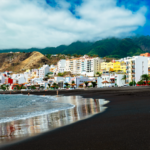
Several people described feeling sudden vibrations lasting several seconds before the movement subsided. Photo credit: Engel Drohnenpilot/Shutterstock
A magnitude 4.8 earthquake struck off the coast of Gran Canaria on Friday, May 22, and was felt across several Canary Islands, including Tenerife and Fuerteventura. The earthquake was recorded by Spain’s National Geographic Institute of Spain (IGN), which said the tremor occurred at approximately 9:50am local time in the Atlantic Ocean north of Gran Canaria.
According to initial seismic data, the epicentre was located around 59 to 61 kilometres north of Las Palmas de Gran Canaria at a depth estimated between 10 and 30 kilometres. Residents across parts of Gran Canaria, Tenerife and Fuerteventura reported feeling buildings shake, windows rattle and furniture move during the tremor.
Residents reported shaking across multiple islands
Spanish media described the earthquake as the strongest seismic event recorded in the Canary Islands in the past five years. Emergency services monitored the situation throughout the morning, although there were no immediate reports of injuries, evacuations or major structural damage.
Authorities urged residents and tourists to remain calm while seismic monitoring continued across the region. Several people described feeling sudden vibrations lasting several seconds before the movement subsided. Local residents also reported hearing low rumbling sounds during the earthquake in some areas close to the coast.
Earthquake originated offshore in the Atlantic Ocean
The IGN confirmed that the earthquake originated offshore in the Atlantic Ocean rather than directly beneath a populated urban area. The Canary Islands are regularly affected by low-level seismic activity because of their volcanic origin and geological position.
The archipelago sits on a volcanic hotspot and experiences earthquakes linked to both tectonic movement and volcanic processes. Although small tremors are relatively common across the islands, stronger earthquakes capable of being felt across several islands occur less frequently. The strength and depth of the earthquake meant it was widely noticed by residents and visitors across multiple parts of the archipelago.
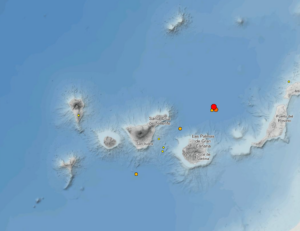
Region remains under close seismic observation
The earthquake renewed public attention on seismic activity in the Canary Islands following the 2021 volcanic eruption on La Palma. That eruption lasted nearly three months and destroyed thousands of buildings, roads and agricultural areas, forcing large-scale evacuations.
Since the eruption, Spanish authorities have continued strengthening seismic and volcanic monitoring systems across the islands. The IGN operates continuous monitoring stations throughout the archipelago to track earthquakes, underground magma movement and volcanic activity.
No tsunami warning issued following the tremor
Despite the strength of the earthquake, authorities confirmed that no tsunami warning was issued. Emergency officials said the characteristics of the tremor did not indicate a significant tsunami risk for coastal areas. Local emergency coordination centres continued receiving calls and public reports throughout the morning as monitoring operations remained ongoing.
Authorities also stated that no disruption had been reported at airports, ports or transport infrastructure across the islands following the earthquake. Tourist areas in southern Tenerife and Gran Canaria were among the locations where residents and visitors reported feeling the tremor.
Tourism areas among locations affected
The Canary Islands are one of Spain’s most important tourism regions and receive millions of international visitors every year. British tourists represent one of the largest visitor groups to the islands, particularly in destinations such as Tenerife, Gran Canaria and Lanzarote.
The earthquake was widely discussed across local social media platforms shortly after it occurred, with residents sharing videos and descriptions of the shaking. Some residents reported briefly leaving buildings as a precaution, although emergency services did not order evacuations.
Scientists continue monitoring volcanic and tectonic activity
Experts have repeatedly stated that earthquakes in the Canary Islands do not automatically indicate an imminent volcanic eruption. However, the islands remain one of Spain’s most closely monitored geological regions because of their volcanic structure and eruption history.
Scientists continue tracking underground movement, gas emissions and earthquake frequency across the archipelago as part of long-term volcanic risk assessment.
Strongest earthquake recorded in the Canary Islands in years
Spanish reports have described the earthquake as the strongest recorded in the Canary Islands since 2021.
Residents in parts of Gran Canaria and Tenerife described the tremor as unusually strong compared with previous seismic events felt in recent years. Authorities have advised the public to continue following official updates from emergency services and the IGN while monitoring continues across the region.















F1 Sprint Results Today: 2026 Canadian Grand Prix times and positions

S
La Cala de Mijas Lions Summer fair and fashion show


-

 Competiciones3 weeks ago
E
-
blackout April 20252 weeks ago
Insurance company Mapfre decides to pay out €14 million compensation for 2025 blackout
-
Costa del Sol4 weeks ago
Why home care is the new gold standard for living well in Spain
-
 Foreign demand2 weeks ago
Who Bought Where In The Second Half Of 2025?
-

 America3 weeks ago
E
-
Animal protection law4 weeks ago
Spain moves to redefine legal pets as draft law raises wider welfare concerns
-

 New Developments3 weeks ago
Luxury Villas For Sale, Estepona – ProjectL1
-

 New Developments2 weeks ago
Inside The Most LUXURIOUS Apartment Building In Spain!