
News from Spain
Can’t afford a home, worried about your next train. Spain calls this progress


Editorial montage illustrating questions over housing, rail safety and government accountability in Spain. Created with AI assistance using photographic references.
Opinion
Finding a home you can afford and boarding a train you can trust should be ordinary expectations of life in Spain. Neither ought to require exceptional wealth or a minister’s personal reassurance. Yet housing pressures and the deadly Toledo rail collision have raised profoundly different, but urgent, questions about what people can expect from those governing the country.
There is a particular talent in modern politics for confusing expenditure with achievement. Announce enough billions, promise enough reforms and eventually someone may mistake the performance of government for the practice of governing. After more than eight years under Pedro Sánchez, the public is entitled to ask what all the announcements have delivered.
A housing crisis built on promises
For young people without family wealth, buying a home can begin to resemble an inheritance lottery. Renters face their own uncomfortable choices over location, space and cost. Being told that housing is a national priority offers limited comfort when the property you need remains beyond your means.
Anyone familiar with Britain’s housing market will recognise the predicament. Moving to Spain may change the paperwork, but it does not necessarily remove the struggle to find somewhere affordable.
After eight years of promises, the Sánchez period has the lowest annual average of protected homes completed in a comparison of Spanish governments stretching back to 1981. An impressive distinction for a government so generous with announcements.
Tenant protection matters, but so does having somewhere for tenants to live. Declaring housing a national priority does not produce the land, workers and infrastructure needed to build homes. If declarations were construction materials, Spain would have a surplus.
Regional and local administrations, including those governed by the Partido Popular, must answer for their decisions too. They cannot denounce the national housing crisis while expecting their own record to escape examination. There is enough responsibility here to accommodate more than one party, however inconvenient that may be for the campaign literature.
Announcing money is the easy part
A spending announcement is an expression of intent. It becomes an achievement when something useful has been delivered. This distinction is elementary, although political communication frequently depends on the public overlooking it.
European recovery funding offered Spain an opportunity to modernise its economy and improve public services. An opportunity of that scale requires scrutiny equal to its ambition, rather than applause proportionate to the number of zeros in the announcement.
In May 2026, the European Court of Auditors warned of gaps in the recovery fund’s transparency and traceability. Public information about recipients, actual costs and results was insufficient. The audit covered the wider European programme, but also identified deficiencies in Spain’s reporting, including publishing allocated amounts rather than amounts received by its largest beneficiaries.
That does not establish theft. It establishes grounds to ask how much reached its destination, what it purchased and what improved. A government should be able to answer without behaving as though the taxpayer had committed an offence against good manners.
European funds have specific purposes and conditions. They are not a common pot from which every national problem can be paid away. But those conditions do not cancel the obligation to demonstrate results. The taxpayer should not need an archaeological expedition to discover what became of a public promise.
A resignation cannot be the whole answer
On Spain’s railways, accountability has acquired terrible urgency. The October 28 collision near Urda, in Toledo province, left 69 confirmed dead, according to the regional government’s October 31 update. Behind that figure are families whose need for truthful answers must take precedence over anyone’s political convenience.
EWN has examined the unfinished safety upgrade and questions facing Spain’s transport minister. Investigators must establish what caused the collision. Ministers must answer for the decisions within their responsibilities. An investigation should establish the evidence, not become a waiting room in which every question about oversight is deposited indefinitely.
The PP has demanded the resignation or dismissal of transport minister Óscar Puente. His departure would not bring back the dead, nor would it, by itself, make the next journey safer. That does not diminish the case for resignation where responsibility warrants it. It means a resignation cannot be accepted as the whole answer.
Accountability must establish what failed, who was responsible and what must change. Otherwise, removing a minister risks becoming one final public relations exercise, with a new face at the lectern and the same unanswered questions. The families deserve the truth and passengers deserve demonstrable improvements. Neither obligation is discharged by changing the name on an office door.
The opposition has a job too
The Partido Popular should not mistake the government’s failures for its own achievements. EWN has reported on Spain’s missing budget submissions and prolonged reliance on extended spending plans. The PP has challenged the budget situation and sought parliamentary scrutiny, so the criticism cannot honestly be that it has said nothing. The question is whether its scrutiny is effective enough.
Issuing complaints is the beginning of opposition, not its completion. Establishing where money has gone, what it has delivered and which promises remain unfulfilled requires documents, hearings and sustained pressure. Spain deserves more than indignation followed by the patient expectation of electoral reward.
If budgets matter, pursue them. If accountability matters, demand the accounts. Outrage should have a longer working day than the press conference. Waiting to inherit power is an ambition, but it is not the discharge of a public duty.
What residents are entitled to expect
After eight years, Sánchez cannot keep presenting Spain’s problems as unfortunate discoveries made on his way to the office. He sought the power to govern. The obligation to answer for the results was included.
People need homes, functioning services and an explanation of where their money went. The government offers announcements. The opposition offers to become the government. Neither appears short of confidence in its own suitability.
Spain has heard the promises and paid the bills. Asking what it received in return is not ingratitude. It is checking the receipt.






air traffic control
Barcelona airport halts departures as baby’s medical emergency forces plane to land

The aircraft was directed to park very close to the runway exit. Photo credit: Santi Rodriguez/Shutterstock
A flight to your holiday destination is unlikely to go exactly to plan if you end up making an unscheduled stop in another country. But for one family travelling with a baby, the diversion to Barcelona was not an inconvenience or a change of travel plans. It was an urgent race to get their child medical attention.
The aircraft was flying from Casablanca in Morocco to Istanbul in Turkey when the crew reported that an infant, just a few months old, needed urgent medical assistance. The flight was diverted to Barcelona-El Prat on Sunday, November 8, so the baby could be taken off the plane and transferred for treatment.
A medical emergency thousands of feet above the ground
There was no option to continue towards Istanbul and wait until the aircraft reached its scheduled destination. The crew requested an emergency diversion to Barcelona after reporting that the baby had medical problems requiring immediate attention.
The child’s condition has not been disclosed, and there is no information about whether the baby became unwell during the flight or had an existing medical problem. What is clear is that the crew considered the situation urgent enough to change course and request priority landing at another airport.
Barcelona airport gives the aircraft priority
Air traffic controllers coordinated a direct approach to runway 24L, allowing the aircraft to land as quickly as possible. The runway is closest to the sea and is normally used for take-offs, rather than arrivals. The airport also had to consider the amount of fuel still on board and the aircraft’s weight before the landing. Once the arrangements were made, the flight was given priority, with other movements adjusted to leave the runway clear.
The emergency landing briefly disrupted normal operations at Barcelona-El Prat. Take-offs were stopped temporarily, while other aircraft waiting to land were held until the diverted flight had safely touched down. The reports do not specify how many flights were affected or how long the interruption lasted, but the pause allowed the aircraft carrying the baby to land without competing with other movements.
Ambulance ready to take baby from the plane
Getting the aircraft onto the ground was only part of the operation. The next priority was making sure medical staff could reach the baby without having to wait for the plane to taxi across the airport. After landing, the aircraft was directed to park very close to the runway exit.
This allowed emergency personnel to get to the plane quickly and carry out the evacuation, with the baby taken away by ambulance for medical attention. The positioning was arranged specifically to speed up access for the medical teams. Rather than following the usual route to a stand or terminal, the aircraft stopped in a location that allowed the infant to be transferred as soon as possible.
Controllers send message of support
Spain’s air traffic controllers confirmed the incident in a post on X, explaining that the crew had requested an urgent diversion because of the baby’s medical problems. They also thanked the flight crew, medical staff and airport operations personnel who helped coordinate the response. Their message ended with a wish for the baby to recover soon and well. It was a brief acknowledgement of the people involved in an operation where every minute mattered to the child waiting for medical care.
La tripulación del vuelo Casablanca Estambul solicita desviarse de urgencia al aeropuerto de Barcelona 🛬 Hay un bebé de apenas meses a bordo con problemas médicos que requieren atención urgente 👶🚨
Coordinamos aproximación directa a la pista 24L, la más cercana al mar y usada para despegues 🛫 Para ello, nos aseguramos de que podrán tomar y, una vez hecho, paramos despegues y hacemos esperar momentáneamente a los aterrizajes.
Una vez en tierra, se les facilita estacionamiento muy cercano a la salida de pista 🚑 Ahí, los servicios médicos pueden llegar se inmediato y realizar la evacuación. Reanudamos operativa.
Esperamos que el pequeño se recupere pronto y bien ❤️🩹
Gracias a todos los implicados en el operativo; personal sanitario, tripulación, operaciones…#emergencia #atc #aviacion #airtrafficcontrol
— 😉Controladores Aéreos 🇪🇸 (@controladores) November 8, 2026
There has been no further public information about the baby’s condition, the treatment received or which hospital the ambulance took the infant to. The airline has also not released details about arrangements for passengers continuing to Istanbul. The aircraft’s diversion brought the journey to an unexpected halt in Barcelona, but the reports have not confirmed whether the flight later continued to Istanbul or what happened to the passengers. The baby’s condition also remains unknown.

Electricity grid
Spain’s €17bn electricity grid overhaul aims to unblock housing, factories and major investment
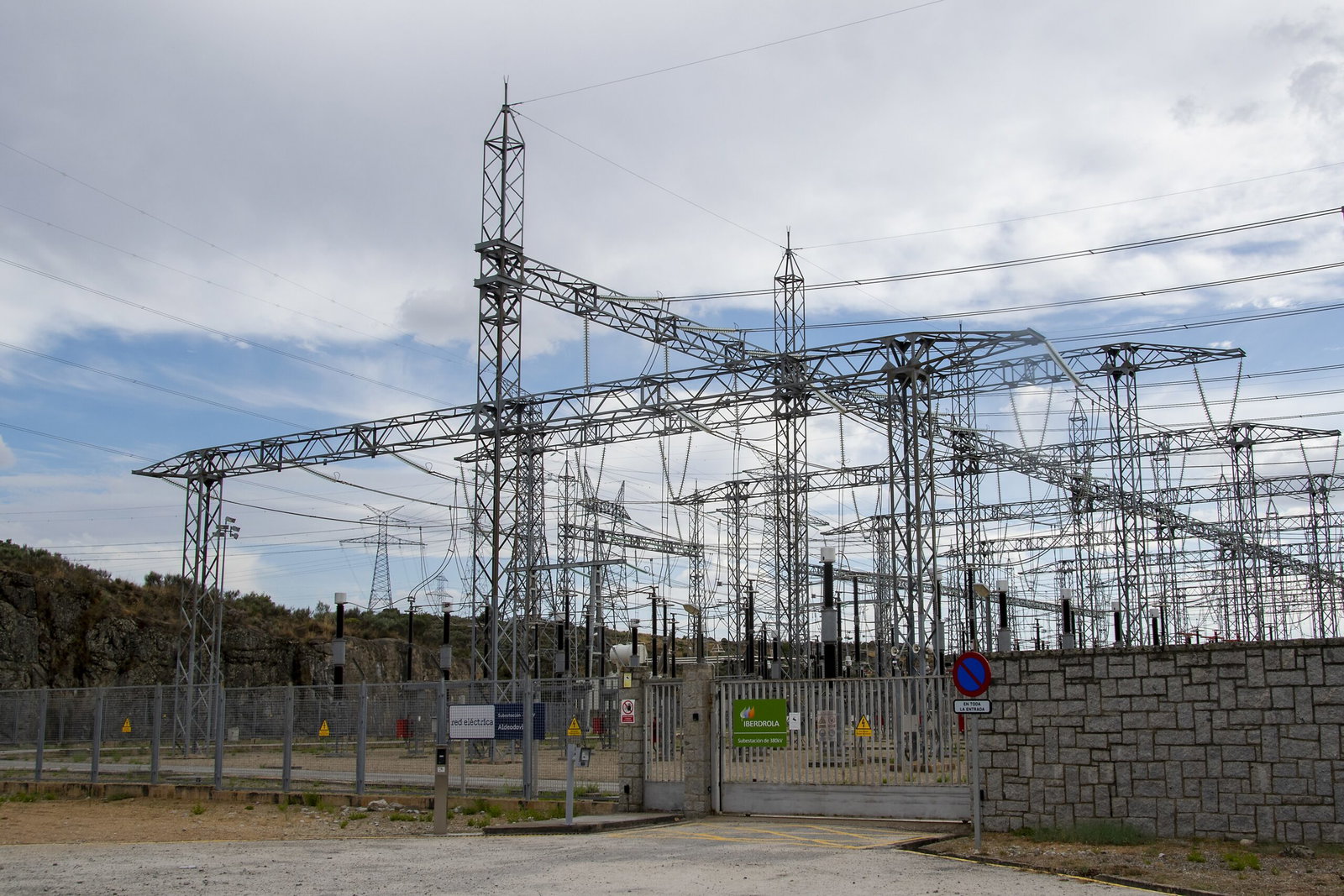
The proposal includes 19 new electricity substation sites. Photo credit: DFLC – Multmedia Designer/Shutterstock
The shortage of electricity connections has become another obstacle for Spain’s housing market, with new developments, factories and major investment projects competing for space on an already overstretched network. Now the Government is increasing the capacity it plans to make available to the autonomous communities, adding almost 20 gigawatts to its original proposal in a move that could unlock projects worth billions of euros.
The revised plan will make 47.3 gigawatts of additional connection capacity available for new demand by 2030, compared with the original 27.7 GW proposal presented in September 2025. The increase follows demands from regional governments, which have warned that insufficient access to the electricity network is holding back housing construction, industrial expansion and economic development.
Madrid, Aragón and Andalucía receive the biggest allocations
The investment required to deliver the expansion has also risen to more than €17 billion, €3.4 billion above the initial proposal. The number of connection points is set to increase by 52 per cent to 300, giving major electricity users more opportunities to connect to the national transmission network.
The distribution gives Madrid the largest additional allocation, with 6.5 GW, followed by Aragón with 6 GW and Andalucía with 5 GW. Castilla-La Mancha will receive 4.1 GW, while the Comunitat Valenciana has been allocated 3.8 GW. The increases reflect the different projects each region wants to attract. Madrid has pressed for more capacity to supply new housing developments in the north and south of the region, as well as planned data centres.
Andalucía, meanwhile, has asked the ministry to address what it considers a shortfall in its electricity network. La Rioja and the Balearic Islands will not receive additional demand connection capacity under the revised allocation, although their networks will still benefit from improvements to electricity transmission.
New homes, factories and green hydrogen projects
Access to electricity has become a major consideration for developers planning new housing, particularly in areas where existing networks cannot accommodate additional demand. Without an available connection, projects can struggle to progress even when land and planning permissions are in place. The revised plan identifies housing as a priority in Madrid, Andalucía, Catalonia, the Canary Islands, the Balearic Islands, Murcia, the Comunitat Valenciana and Castilla y León. More capacity is also earmarked for industrial development in the Basque Country, Cataluña, Galicia, Extremadura, Navarra, Murcia and the Comunitat Valenciana.
Data centres are included in the plans for Aragón and Madrid, while the availability of electricity for green hydrogen production is a priority in Andalucía, Castilla y León, Murcia, Cantabria, the Basque Country and Galicia. Rail electrification and cleaner port operations also feature in the proposals for several regions.
Andalucía provides an example of how the additional capacity could be used. Its allocation includes 5 GW for new electricity demand, with the regional proposal prioritising industry, including hydrogen production. According to the ministry, 70 per cent of the demand covered by its revised proposal relates to industrial projects, with the remainder covering housing, port decarbonisation and railway electrification.
A €17 billion investment with a long way to go
The infrastructure needed to support that expansion is substantial. In Andalucía alone, the proposal includes 19 new electricity substation sites, 1,283 kilometres of new power lines and improvements to another 651 kilometres of existing lines. The region is also expected to receive more than 8 GW of additional access capacity for renewable generation, alongside 1 GW for energy storage. Across Spain, the revised programme includes 193 electricity substations, 6,706 kilometres of new transmission lines and the upgrading of 8,164 kilometres of existing network.
The number of connection positions available to serve new demand through distribution networks will rise to 300, while positions for direct industrial consumption on the transmission network will reach 162. The plan follows an examination of 2,566 objections submitted by regional governments, businesses and other interested parties. The changes have increased the proposed investment from €13.6 billion to more than €17 billion, making it the largest electricity network planning programme in Spain’s history, according to the ministry.
When will the new electricity capacity become available?
However, announcing additional capacity does not mean every proposed home, factory or data centre will automatically receive an electricity connection. Red Eléctrica must still deliver the infrastructure, and developers must secure the necessary access permissions. Some projects have already experienced delays lasting up to 20 years, a problem the Government has previously criticised the network operator over.
The regional governments have also questioned the speed of the latest consultation process, with several councillors expressing concerns about the rushed meetings used to finalise the allocations. The ministry now wants to complete the remaining parliamentary step before taking the plan to the Council of Ministers.
Environment Minister Sara Aagesen is due to present the revised proposals to the Congressional Permanent Deputation on November 12. This will allow the Government to proceed with approval before the November 29 general election, after which it will enter caretaker status. For communities waiting for new homes, industrial investment and employment opportunities, the additional capacity could remove one of the obstacles holding projects back. But the real test will be whether the promised investment translates into functioning infrastructure and connections on the ground, rather than another round of plans waiting to be delivered.

Liam Lawson sends blunt Red Bull message over uncertain F1 future

Republican Lawmaker Moves To Force Vote On Pete Hegseth Impeachment

Who’s Who In The Nvidia Scandal
Viral video in Spain sparks fury over drivers who ‘have no idea how to drive’
Spain’s 24-hour shop with no tills expands to Barcelona Airport
Spain’s pet owners face fines of up to €200,000 for animal welfare offences


-
DGT3 weeks ago
Viral video in Spain sparks fury over drivers who ‘have no idea how to drive’
-
Automated supermarket4 weeks ago
Spain’s 24-hour shop with no tills expands to Barcelona Airport
-
Keeping cats and dogs outside3 weeks ago
Spain’s pet owners face fines of up to €200,000 for animal welfare offences
-
Council tax (IBI)3 weeks ago
Barcelona plans 150% property tax increase on tourist flats ahead of 2028 ban
-
airports3 weeks ago
Travelling between Spain and Italy? The extra border checks could soon end
-
Age Concern Marbella - San Pedro2 weeks ago
Halloween lunch sells out as 51 join Marbella get-together
-
Consumer Rights Spain3 weeks ago
EU offers extra year of warranty on phones, but Spain faces delays
-
Bedbug infestation on Quantas flight4 weeks ago
Bedbug infestation grounds Qantas plane in Rome after passengers report bites