Alicante
Costa Blanca discoveries and development projects making headlines in Alicante


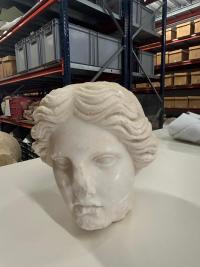
The Roman marble head discovered at Almadraba Beach in Alicante. Image: Ayuntamiento de Alicante
The Costa Blanca continues to attract attention for a mixture of history, tourism and innovation, with Alicante province making headlines this week for a remarkable Roman archaeological discovery, major luxury marina plans and a recycling campaign designed to reward environmentally conscious residents.
From ancient Roman treasures uncovered beside the Mediterranean to modern redevelopment projects transforming Alicante’s waterfront, several new initiatives and discoveries are helping shape the future of the province while also revealing more about its past.
Ancient Roman marble head discovered on the Costa Blanca
A major archaeological discovery on the Costa Blanca is attracting international attention after excavation works at Almadraba Beach uncovered a Roman marble head believed to date from the 1st or 2nd century AD.
Experts believe the sculpture may represent the Roman goddess Venus and say it could become one of the most important Roman artistic discoveries ever made in Alicante province.
The marble head was found during precautionary excavations linked to redevelopment works in an area already known for its historical importance.
Archaeologists had previously uncovered remains of an ancient Roman villa at the site, believed to have been connected to Lucentum, the Roman city that once occupied part of modern-day Alicante.
The sculpture, carved from white marble and found in remarkable condition, measures just over 22 centimetres high.
Specialists say the hairstyle, featuring wavy hair parted in the centre and swept backwards, reflects strong Hellenistic influence commonly associated with depictions of Aphrodite or Venus in ancient Greek and Roman culture.
Experts believe the piece may once have stood on a pedestal inside an upper-class Roman residence overlooking the Mediterranean coast.
The wider archaeological site dates from between the 3rd century BC and the 4th century AD.
Previous excavations have uncovered ceramics, coins and other remains linked to Roman coastal life and maritime trade in the Alicante area.
Archaeologists say the exceptional state of preservation makes the latest discovery particularly significant and could provide valuable new insight into Roman life on the Costa Blanca.
Port of Alicante moves ahead with luxury marina project
The Port of Alicante is finally moving ahead with plans for a major new luxury marina after years of delays and legal problems.
The project will transform docks 10, 12 and 14 at the Levante quay into a high-end marina designed for superyachts and large leisure vessels.
Port authorities say the development will help position Alicante alongside some of the Mediterranean’s best-known luxury marina destinations, including Marbella, Mallorca and ports in southern France and Italy.
The plans include moorings for superyachts up to 50 metres long, alongside restaurants, leisure areas, commercial spaces and pedestrian-friendly waterfront zones.
The marina will be managed by concession company Puerta del Mar y Ocio under a 10-year agreement, with total investment expected to reach around €15 million.
The development had remained blocked since 2022 because of legal disputes linked to planning regulations affecting the port area.
However, after appeals and court proceedings, the legal challenge has now been formally closed, allowing the project to move forward again.
Authorities believe the marina could create new jobs, increase year-round tourism and strengthen Alicante’s position within the growing luxury nautical tourism sector on the Costa Blanca.
Alicante rewards residents for organic waste recycling
Alicante is also encouraging residents to recycle more organic waste through a campaign offering lower rubbish bills for people using the city’s smart brown recycling containers.
The initiative aims to increase participation in organic recycling while reminding residents they can reduce rubbish tax charges by up to 20 per cent through the smart system.
Unlike traditional bins, Alicante’s brown containers can only be opened using a personal access card or the mobile app “Tú haces Alicante”.
The system records individual use and links participation to possible discounts on waste charges.
More than 36,000 access cards have already been issued, while over 15,000 residents actively use the app. During 2025 alone, the system recorded more than one million container openings.
Organic waste collection also continues to increase steadily. Alicante collected more than 1,700 tonnes of organic material during 2025, while the first months of 2026 have already passed 410 tonnes.
Residents can request access cards or register through tuhacesalicante.com and link their rubbish tax account to the recycling system.
The brown containers currently operate daily between 8:00 pm and midnight.