Connect with us

%

Danish EV Firm Bins All Its Bosses

Published

on

danish-ev-firm-bins-all-its-bosses

Imagine walking into work tomorrow and finding out the corporate ladder has been totally dismantled. No more CEO, no more middle managers, just you and your colleagues running the show.

That’s exactly what happened at Clever, Denmark’s biggest electric-vehicle charging operator. In an interesting shake-up, the company completely ditched its traditional hierarchy. A year after removing managerial titles, the story has resurfaced because the company has just been fully integrated into energy giant Andel following a major corporate acquisition, and the unusual structure has so far survived the takeover. Instead of reinstating a traditional corporate hierarchy, the new owners have insisted on keeping the boss-free model exactly as it is.

The firm now runs with around 500 employees split into more than 50 self-managed teams. Staff make decisions together, manage budgets, handle recruitment, and follow projects from start to finish without the usual layers of middle management. Co-founder Casper Kirketerp-Møller, who dismantled his own CEO role during the multi-year transition, argues that old-fashioned hierarchies slow companies down and limit creativity, especially at a time when AI is handling more routine efficiency tasks.

Does it actually work?

Experts say it depends on the people involved. Helge Hvid, a professor at Roskilde University, noted that while flatter structures heavily appeal to younger workers who want autonomy, self-management introduces its own unique pressures. Without a clear chain of command, petty arguments and confusion over who does what can quickly become major sources of workplace stress.

Clever’s teams say the model gives them genuine ownership and eliminates internal competition, though it also requires everyone to step up rather than waiting for instructions from above. Internal audits show a staggering 92 per cent employee happiness rate, suggesting they might be onto something.

A Scandinavian experiment watched from afar

Around the world, companies have been trimming management layers since the pandemic. In the US, middle-management roles have dropped by about 6 per cent, and several tech firms have publicly complained about having too many managers.

But critics warn that removing bosses entirely can create confusion about who does what, and can easily lead to unofficial leaders emerging anyway.

For now, Clever’s approach is attracting attention because it’s rare to see a company scale up, remove every title, and stick with it, even after a major sale. Whether it becomes a model for others or stays a ‘Clever’ idea remains to be seen.

%

66,000 Counterfeit Football Shirts Seized Across Spain In Nationwide World Cup Crackdown

Published

on

66,000-counterfeit-football-shirts-seized-across-spain-in-nationwide-world-cup-crackdown

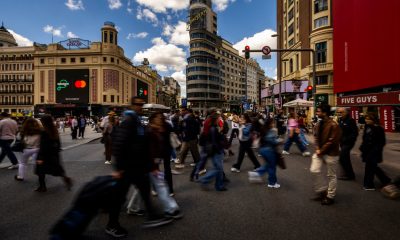
Raids took place in several cities including Madrid, Barcelona, Málaga, Elche and Dénia. Photo credit: Hans Elmo/Shutterstock

I’m sure no one is entirely innocent when it comes to buying clothing or items from street vendors in Spain, I know I’ve picked up the odd bracelet or pair of sunglasses myself, but what may seem like an innocent purchase has now been brought into focus after police seized more than 66,000 fake football shirts in what has been described as one of the biggest crackdowns on illegal merchandise across the country.

The shirts, intended for distribution during the World Cup, were intercepted in a nationwide operation aimed at protecting buyers and tourists from scam sales, resulting in the arrest of 95 individuals. The operation was carried out by the Policía Nacional with support from Europol and Interpol. Officers targeted an organised network suspected of producing and distributing fake sports merchandise across Spain on a large scale.

Buyers protection concerns

Raids took place in several cities across Spain including Madrid, Barcelona, Málaga, Elche and Dénia. Warehouses and distribution points linked to the network were searched, with large volumes of counterfeit goods seized.  The confiscated items consisted mainly of imitation national team shirts and branded football kits designed to be sold as official tournament merchandise. 

Police highlighted that counterfeit goods are not subject to the same safety, quality or authenticity checks as official products. Materials used in fake sportswear may not comply with European standards, may contain illegal dyes or sourced materials, meaning consumers risk buying items that are potentially dangerous, lower quality, or not as described

The seized merchandise was intended for online stores and street vendors, often used to target tourists and visitors looking for cheaper football shirts, where fake kits are sometimes sold as genuine. By removing large volumes of counterfeit stock before they reach the market, authorities reduce the number of scam listings online and limit the chances of visitors being misled during busy tourist and tournament periods.

Targeting supply chains ahead of major tournaments

This is not the first time police have intercepted ilegal sports merchandise in Spain, criminal networks exploit the demand when there are major sporting events by producing counterfeit goods at low cost and distributing them through informal street sellers, market stalls and online platforms, where they are often presented as genuine or authorised products. Officials said the operation was timed to disrupt supply ahead of the World Cup, when demand for football merchandise typically rises sharply.

Spanish authorities said the objective of the operation was not only to remove products already in circulation, but to dismantle the logistics and production structure behind the network.

Criminal organisation and arrests

Authorities confirmed that 95 people have been arrested in connection with the investigation. Those detained are being investigated for alleged industrial property offences, fraud and involvement in a criminal organisation. Police have not confirmed how many remain in custody pending further proceedings. Investigators believe the network operated across multiple stages of production and distribution. Materials were reportedly imported, assembled and processed within Spain before being circulated through informal street sellers, market stalls and online platforms. 

Economic impact on legitimate retailers

Authorities said the seizure protects legitimate businesses and licensed manufacturers who operate within regulated supply chains. Official kit producers invest in design, licensing agreements and authorised distribution systems. Counterfeit sales reduce revenue for these businesses and undermine contractual rights associated with sports branding. The removal of such a large volume of fake merchandise is expected to reduce unfair competition in the sports retail sector during a high-demand period.

International coordination

The investigation involved cooperation between Spanish police forces and international agencies including Europol and Interpol. Authorities said counterfeit distribution networks often operate across borders, sourcing materials in one country and distributing finished goods in several others. The involvement of international agencies reflects the scale and structure of the criminal networks targeted in the operation.

Ongoing investigation

Spanish authorities confirmed that investigations are continuing to identify additional suppliers, distributors and financial channels linked to the network. ata recovered from seized materials and electronic devices is being analysed. Further arrests have not been ruled out. Officials described the operation as part of an ongoing effort to combat intellectual property crime and protect both consumers and legitimate industry operators during major global sporting events.

Continue Reading

%

Designer Dinosaur Handbag Up For Auction

Published

on

designer-dinosaur-handbag-up-for-auction

Bag made from dinosaur skin up for auction Credit: Shutterstock, Wirestock Creators

Running experiments with dinosaur DNA is the plot of an iconic franchise which has now become a twenty-first century reality. Learning from the films, real-life scientists did not try to bring dinosaurs back from extinction (not yet, anyways). Instead, they paired cutting-edge biotechnology with luxury fashion to create a leather bag made from T-Rex skin.

Twenty-five years, a T-Rex femur was discovered in the state of Montana in the United States. Using advanced technology, scientists harnessed the traces of collagen remaining on the bone to create a replica of T-Rex skin, which scientists claim to be an accurate replica of what would have existed over 67 million years ago. The project has been widely promoted as the world’s first T-Rex leather handbag, blending palaeontology, genetic engineering and sustainable fashion.

How scientists created the T-Rex leather

To create the dinosaur leather handbag, what is possibly the most luxurious accessory to exit, scientists analysed preserved collagen fragments from the Montana fossil and used modern tissue-engineering techniques to reconstruct a collagen blueprint.

The resulting material was grown in a laboratory before being processed into leather. The finished handbag was designed by avant-garde fashion label Enfin Levé and first unveiled in Amsterdam earlier this year.

Is it really T-Rex leather?

Not everyone is convinced by the branding. Some experts have questioned whether the material can truly be described as T-Rex leather, noting that scientists only had access to fragments of ancient collagen rather than complete dinosaur DNA or preserved skin. Critics argue the material is inspired by T-Rex biology rather than being a direct recreation of dinosaur hide.

Nevertheless, those behind the project maintain that the science is sound and that the collagen-based material is derived from genuine fossil evidence.

Luxury dinosaur handbag up for sale

In what is a first for fashion, the T-Rex skin handbag was recently listed for auction. Representatives of the Parisian auction house Giquello admitted there was no established market value for such an unusual item, forcing them to estimate a price based on the cost of development and the bag’s rarity. As such, auctioneers set the reserve price at €300,000 and expected bids as high as €500,000.

Bidders, however, were reluctant to spend anywhere near half a million euros on the novelty accessory. The T-Rex bag peaked at €150,000 during June 13’s auction, and ultimately failed to sell.

Whether it is remembered as a failed auction or a glimpse into the future of sustainable luxury fashion, the world’s first T-Rex leather handbag has already secured its place in history as one of the most unusual products ever created.

Continue Reading

%

The Supermarket Habits That Surprise Many Newcomers To Spain

Published

on

the-supermarket-habits-that-surprise-many-newcomers-to-spain

Moving to Spain usually comes with the feeling of excitement and anxiety whilst you slowly get used to your new lifestyle. However, that can all stop when you realise you can’t find a jar of pickles in your local supermarket (in my case it was salad cream and jelly babies). But what can come as more of a shock is how the Spanish shop. Much like the lifestyle, it is much more ‘‘tranquilo’’ but with a few extras.

While Spain’s major supermarket chains may look familiar to those in the UK, everything from how often groceries are bought to the pace of the checkout queue is different, newcomers quickly discover that Spanish shopping habits reflect a different approach to food and daily life. We spoke to a few of our readers to find out just what it was that made them realise shopping in Spain was different.

Shopping everyday, literally!

For some, one of the biggest differences was how frequently people shop. Many households in the UK rely on large supermarket trips, filling trolleys to the brim with enough food to last a week or more. In Spain, shopping is much more like a social event, especially for the elder population who can frequently be seen talking to each other in the aisles of village supermarkets. ‘’Haciendo los mandaos’’ or ‘running errands’ is a daily routine that many end up putting into practice once they have lived here long enough.

Liesl, who has been living in Cádiz for a year, said the frequency with which people shop was one of the biggest adjustments.

“I can’t get over the amount of shopping people do here in Spain. They shop every day,” she said. “They will do small shops instead of one big weekly or monthly shop, so you will frequently see them at the supermarket getting together and discussing what meals they have planned for the day.”

What’s in the trolley

The contents of shopping baskets also differ between Spain and the UK, where supermarket trolleys often follow more predictable weekly patterns. In Spain, baskets tend to reflect immediate meals and individual routines, with less emphasis on structured bulk planning. Ready meals, convenience foods and frozen products remain more common in Britain. Spanish shoppers buy more fresh ingredients for home cooking, including olive oil, vegetables, legumes, rice, fresh fish and cured meats.

Sophie, who has been living in Granada since last year says:

“I love the simplicity and yet the randomness of the Spanish shoppers trolley content. The abuelas will have their fish, chickpeas, flour and peppers, whereas Juan who lives next door to me may have two cans of beer, a pack of jamón, a loaf of bread and some yogurts. That’s his food for the day. I love it!”

A different pace at the checkout

British residents frequently comment on how long it can take to get past the cashier. It’s like beating the ultimate boss on a video game stage of shopping here in Spain, and once you have successfully completed it you can class yourself as officially integrated into Spanish shopping culture.

Mike, who lives in Mijas, has given how he learnt to not rush the Spanish shopping process:

“You can be waiting for ages at the till. The cashier could be talking to her friend or even her mother that she will probably see later on, but they will quite happily stand there talking for 10 to 15 minutes while a huge queue forms behind them. It’s a whole new level of patience.”

Lucy, a fellow resident in Malaga also has the same opinion:

“The amount of time staff chat at the till and leisurely put through your shopping compared to the UK,” she said. “Especially in Aldi and Lidl where you are rushed through.”

Being an extremely social country, staff interaction is more common and people are more than happy to discuss little anecdotes about how their day is going, regardless of how many people are waiting or who is in a rush.

Local shops a godsend

Smaller shops remain widely used in Spain alongside supermarkets. Bakeries, fishmongers, greengrocers and markets form part of regular shopping routines, and it’s not uncommon for there to be several in a village or small town.

Liam, who has lived in Nerja for 15 years, tells us what stood out to him the most when he arrived:

“The amount of small supermarkets in the villages, there are at least 6–7 small supermarkets in a village if not more and at least one or two that’s always open on a Sunday, for me that store has saved me more than once! In the UK we might just have the CO-OP or a little corner store. There are also plenty of butchers, greengrocers and fishmongers, it reminds me of the UK 20 years ago.”

It’s not uncommon for at least one local shop to remain open on Sundays, providing more frequent access to essentials in moments of dire need than in many parts of the UK. Shopping times also differ, UK shoppers often shop earlier in the day. In Spain, supermarkets remain busy later in the evening, with many people stopping after work to get their dinner.

Price-value relation

Spanish shoppers show less loyalty to known brands compared with the UK. White-label products are widely used across major supermarkets, with value and practicality often prioritised over brands.

Carl, who first came to Spain on holiday 2 years ago before moving permanently in Torrevieja says:

“The prices of some of the wines in Lidl or Aldi, you can buy a bottle for little over €1.50. That’s cheaper than some of the expensive drinking water back home and the wine doesn’t taste too bad. It’s all down to making the right decision.”

It seems like the wine prices of the local Rioja were all it took for him to make the life-changing decision to move to Spain, and many have yet to follow.

Adapting to the Spanish shopping lifestyle

Growing accustomed to Spanish shopping culture can take some getting used to. Many find that as they start getting used to the slower way of life, so do their shopping habits along with their diet.

Meeting neighbours in the supermarket, discussing your meals for the day with the butcher, or even telling the cashier about your dentist appointment the next day are small pleasures that come with Spanish culture that many take for granted, but later look back at and think: where else in the world could we do that? Only in Spain, of course!

Continue Reading
Advertisement
Advertisement

Spanish Real Estate Agents

Tags

Trending

Copyright © 2017 Spanish Property & News