Connect with us

food safety

Deadly mushroom danger in Spain as shoppers are urged to check before buying

Published

on

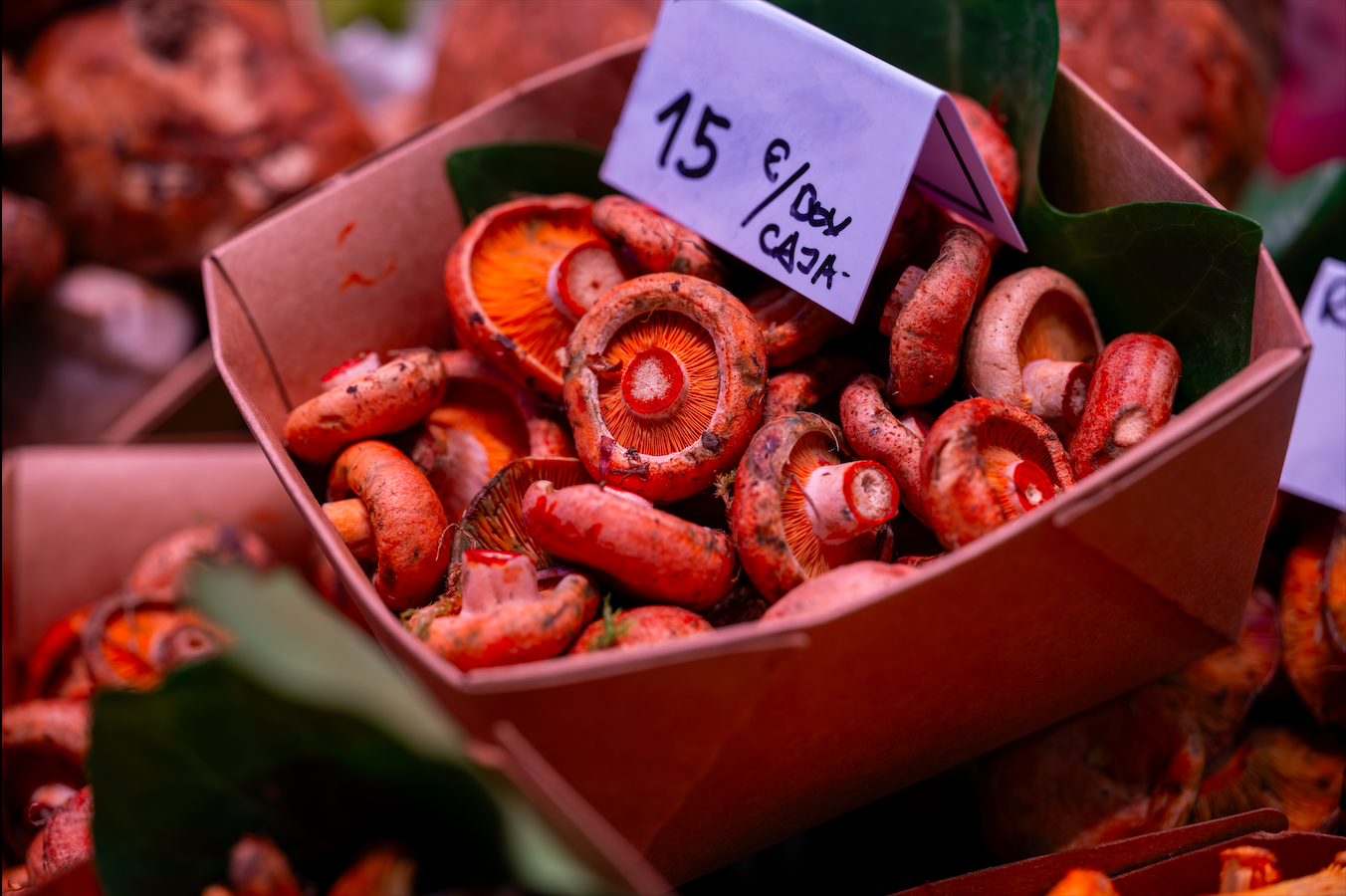
Be particularly cautious about buying wild mushrooms from roadside sellers. Photo credit: Carlovis/Shutterstock

If you enjoy a plate of freshly cooked mushrooms, autumn is a lovely time of year to find them in Spain. Markets start filling up with seasonal varieties, and plenty of people head into the countryside with baskets to collect their own. But before buying a bag from someone selling them by the roadside, or picking a few during a country walk, there is something worth remembering: not every mushroom that looks edible is safe to eat.

Some of Spain’s most poisonous mushrooms look surprisingly similar to varieties people happily cook and eat. Getting them mixed up can have serious consequences, including liver and kidney damage, and in some cases can be fatal. The problem is not just knowing which mushrooms to avoid. It is also knowing where the ones you buy have come from and whether they have been properly identified.

More than 150 kilos seized in Navarra

The warning comes as the Guardia Civil has seized 88 kilos of mushrooms collected irregularly in two operations in Navarra, while a wider series of interventions has brought the total confiscated in the region to more than 150 kilos since mid-October. The latest operations took place on October 29 in the valleys of Erro and Ultzama. In the first, officers carrying out checks on the N-135 noticed three vehicles with foreign number plates.

They stopped one car carrying five people after its driver made an evasive manoeuvre on seeing the police. Inside, officers found five plastic bags containing 42.9 kilos of mushrooms. One of the occupants said they had been collected near the Erro-Roncesvalles Mycological Park without the necessary authorisation.

Two separate operations uncover more irregular collection

In a separate operation in Ultzama, SEPRONA officers seized another 45 kilos from two people over suspected irregularities involving their collection. The cases were referred to Navarra’s Environment Department for possible administrative proceedings. The mushrooms were handed to the mycological centres in Erro and Ultzama, which will arrange for them to be distributed to social canteens.

According to Diario de Navarra, five separate interventions since the week of October 15 have resulted in more than 150 kilos being seized. The cases involved people collecting without the required permits or exceeding the quantities allowed in protected mushroom-gathering areas. There is no suggestion that the mushrooms confiscated in these operations were poisonous; the seizures concerned irregular collection.

Where should you buy mushrooms in Spain?

For anyone shopping for wild mushrooms, the first question should be where they came from. Buying from an established supermarket, greengrocer or market trader gives you a clear point of contact if you need information about the product.

Check the packaging and labelling rather than relying on a seller’s description. Commercially sold mushrooms should be correctly identified, with information that allows the species and its origin to be established. If loose mushrooms are being offered without clear identification, or a seller cannot explain what they are selling, it is better to walk away.

Be careful when buying from informal sellers

Spain has specific food-safety requirements for mushrooms sold for human consumption under Royal Decree 30/2009. These rules cover which species may be marketed and the conditions under which they can be sold. Poisonous or toxic species must not be placed on the market for consumption.

Be particularly cautious about buying wild mushrooms from roadside sellers, social media advertisements or informal stalls where there is no clear information about who collected them and how they were identified. A low price or a claim that they have just come out of the woods is no guarantee of safety.

Poisonous mushrooms can look just like edible ones

Spain’s food safety agency, AESAN, warns that poisonous mushrooms can be mistaken for edible varieties. It recommends that anyone without the necessary knowledge should collect them only with an experienced person or seek specialist advice before eating them.

There is no reliable home test that can tell you whether a wild mushroom is poisonous. The popular claims that toxic varieties taste unpleasant, smell bad, change colour when cut or are avoided by animals are myths. Some dangerous species have a pleasant taste, while some edible varieties change colour.

Why identification apps are not enough

Nor should you rely on a photograph in a guidebook or an identification app on your phone. The Community of Madrid’s health authority specifically warns against identifying mushrooms using photographs or apps alone, as mistakes can have serious consequences. Correct identification requires examining the actual specimen and knowing its distinguishing characteristics. If you are unsure about a mushroom, leave it where it is.

Do not put it in your basket and hope to identify it later, and never mix unidentified specimens with varieties you already know are edible. Even when collecting familiar species, check every mushroom individually before preparing them. Remove damaged or deteriorating specimens, and avoid eating wild mushrooms raw or insufficiently cooked. AESAN also advises seeking expert guidance rather than following traditional beliefs or tips from inexperienced collectors.

Mushroom poisoning symptoms can take hours to appear

One of the most dangerous aspects of mushroom poisoning is that symptoms do not always begin immediately after eating. Some toxins cause nausea, vomiting, diarrhoea and abdominal pain within a few hours, while others can take six hours or longer to produce symptoms.

That delay can be particularly worrying because certain toxins can cause serious liver or kidney damage. The Community of Madrid warns that poisoning with a long delay before symptoms appear can be especially severe and may even prove fatal.

What to do if you suspect mushroom poisoning

If you suspect that you or someone else has eaten a poisonous mushroom, seek urgent medical attention rather than waiting to see whether the symptoms improve. Call 112 if there is a suspected serious poisoning. Keep any uneaten mushrooms and leftover food, as these may help specialists identify the species responsible. If possible, keep an uncooked specimen in the fridge for identification. Anyone else who shared the meal should also be informed, even if they feel perfectly well.

Wild mushrooms can be a wonderful part of autumn cooking in Spain, but a little caution can make all the difference. Whether you are buying them or collecting them yourself, never take a chance on a species you cannot identify with complete certainty. A mushroom that looks like a familiar edible variety is not necessarily one.


%

This Popular Fish Is Now Being Fed Chicken Meat: What’s Really On Your Plate?

Published

on

this-popular-fish-is-now-being-fed-chicken-meat:-what’s-really-on-your-plate?

Using animal by-products in feed also raises questions about bacteria and antibiotic resistance. Photo credit: Zenytal/Shutterstock

If you buy salmon because you think you know what goes into it, think again, there is something about the fish on sale in some European supermarkets that may surprise you. Several Norwegian salmon producers are now using ingredients made from chicken by-products in their feed, replacing part of the fishmeal and other proteins traditionally used to raise farmed salmon.

This does not mean throwing raw chicken leftovers into the water. The poultry material is processed into meal and oil before being mixed into formulated fish feed. It can include bones, liver and other parts of chickens that are not normally sold as meat cuts. Producers are turning to it because it offers a cheaper alternative at a time when traditional marine ingredients are becoming more expensive and harder to source.

Why salmon producers are changing the menu

Fishmeal and fish oil have long been important ingredients in farmed salmon diets, providing protein and essential nutrients. However, they rely on catches of wild fish, and supplies have come under pressure. Disruption to Peru’s anchovy fishery, an important source of fishmeal, has added to the problem, while the availability of other marine ingredients has also been affected. Poultry meal is reported to cost less than half as much per tonne as fishmeal, making it an attractive option for companies trying to control production costs.

Lerøy Seafood Group has introduced poultry-derived ingredients at all its offshore salmon farms in Norway. Grieg Seafood began using chicken meal and oil in July, while SalMar started testing poultry-based feed in March. Mowi has also been reported to be preparing similar changes in Norway, although its position varies between markets and operations. The companies argue that using material left over from chicken processing makes better use of existing resources and reduces reliance on wild fish caught for feed. The industry is under pressure to find alternative protein sources as demand for farmed fish continues to grow.

What exactly is being fed to the fish?

Poultry by-product meal is made by processing material left over after chicken meat production. Depending on the source, this can include bones, organs and other parts not sold for human consumption. It is treated before being used in animal feed; it is not simply discarded kitchen waste.

Norwegian research institute Nofima is investigating how chicken residues can be used in salmon feed, including how processing affects protein digestibility and biological quality. Its research project runs until September 2027 and will also examine the effects of longer-term feeding on fish health, growth and the quality of salmon at slaughter.

The nutritional value of poultry meal can vary. Nofima says digestibility has sometimes been low, with heat treatment, freshness and the type of material used all affecting the result. The research is intended to establish how the ingredients should be selected and processed to produce a consistent feed component.

Could it increase the risk of antibiotic-resistant bacteria?

Using animal by-products in feed also raises questions about bacteria and antibiotic resistance. Chicken production, like other livestock industries, can be a source of bacteria carrying resistance to antibiotics. If contaminated material entered the feed chain without effective treatment and controls, there could be a route for bacteria or resistance genes to spread.  That is a potential food-safety concern, not proof that salmon fed poultry meal will contain antibiotic-resistant bacteria. Processing requirements are designed to reduce microbiological risks, and feed ingredients are subject to safety controls.

Norway’s Institute of Marine Research detected Salmonella in one sample of feather meal during its 2025 fish-feed monitoring programme. The report nevertheless described the general microbiological quality of the samples as satisfactory. The finding does not show that salmon fillets were contaminated or that poultry meal is spreading antibiotic resistance, but it demonstrates why sourcing, processing and testing matter. Separate research into salmon and chicken processing environments has identified antibiotic-resistance genes in some processing waste streams. However, it did not demonstrate that feeding poultry by-products to salmon transfers resistant bacteria into the fish or its flesh. 

Does chicken feed affect the quality of salmon?

There is also the question of whether changing the fish’s diet affects the quality of the meat people eventually eat. A commercial-scale study published in 2025 examined 435,000 Atlantic salmon over an 11-month feeding period. Poultry by-product meal replaced 5 or 10 per cent of the crude protein from conventional sources in the test diets. Researchers found no significant differences in growth, mortality, feed conversion, gut condition or fillet quality.

There were also no differences in the colour, firmness, gaping or fatty acid composition of the salmon. The findings do not support claims that moderate amounts of poultry meal automatically make salmon less nutritious or damage the texture of its flesh. However, they do not settle every question about different feed formulas or higher levels of inclusion. Nofima’s wider research is still examining long-term effects, including smell, appearance, taste and texture. 

Shoppers may not know what their salmon has eaten

For consumers, one of the biggest concerns is transparency. Feed ingredients do not generally have to be listed on supermarket salmon packaging, meaning shoppers may not be able to tell whether the fish they buy was raised on a diet containing poultry by-products. A Nofima survey of more than 1,000 consumers in England and France found that many knew relatively little about the ingredients in farmed salmon feed. Chicken-based ingredients were viewed particularly negatively, with respondents often associating them with something unnatural or lower quality. 

The debate is likely to continue as producers look for cheaper alternatives to fishmeal. The available research does not show that salmon fed poultry meal is automatically unsafe or inferior, but questions remain about how ingredients are sourced, processed and tested, how much is used and whether shoppers should be told. For anyone buying salmon, the change raises eyebrows: should consumers have the right to know what the fish on their plate has been fed? I think so.

Continue Reading

%

‘Farm Of Horrors’: Rotting Hens And Cockroaches Filmed At Mallorca Egg Farm

Published

on

‘farm-of-horrors’:-rotting-hens-and-cockroaches-filmed-at-mallorca-egg-farm

Animal groups have taken their footage of a Manacor egg farm to prosecutors. Credit: Damballa Bastet / Shutterstock

Hens with open wounds standing among rotting carcasses, cockroaches in the barns and eggs lying in droppings are what two animal groups say they filmed at a Manacor farm in July, and it’s run by the same company whose Llucmajor site sparked last year’s ‘farm of horrors’ scandal.

Hens with open wounds among rotting carcasses

Animal groups ARDE and Satya Animal say they recorded 54 minutes of footage at the Mirabó farm in Manacor in July. The site can house up to 40,000 laying hens and belongs to Avícola Ballester, one of Mallorca’s egg producers.

They say the recordings show hens with open wounds, birds pecking at each other’s exposed flesh and live hens standing among dead ones in different stages of decomposition, some completely skeletonised. There are also cockroaches, piles of droppings, cobwebs and a mummified rat, with one hen missing an eye.

“These animals are abandoned to their fate,” said Kike Gimeno, a spokesperson for Satya Animal.

A vet says the conditions look ongoing

A vet who reviewed the footage, Alba Nieto Palau, said eggs appeared to be in direct contact with droppings and close to carcasses. She said the problems showed up across many animals and on recordings made on different days, which points to persistent conditions rather than a one-off.

However, she was clear that it’s down to the authorities to check compliance and decide whether any rules were broken. The groups have reported their findings to the Balearic public prosecutor’s office and the regional agriculture department.

The company has ‘no comment’ and the farm is empty

Avícola Ballester answered 21 questions put to it by journalists by saying it wouldn’t comment, although it reserved the right to take legal action over images published without proof of where they came from. 

The Balearic government said the farm currently has no hens, and that the company told it of that decision in October. It added that the farm has been inspected since 2021 without deficiencies, apart from a salmonella outbreak in 2025, and that it has no record of the images. An inspection will take place before any new hens arrive, though no date has been set.

It follows last year’s Llucmajor scandal

Euro Weekly News reported in June 2025 that Mercadona and Alcampo pulled free-range eggs from a Llucmajor farm run by the same company after similar footage emerged. The Balearic government later fined the company around €200,000, although that process is now on hold while a court reviews a separate criminal complaint by a local campaign group.

The 2025 salmonella outbreak at Mirabó itself led to a halt on selling eggs from the affected flock and the culling of birds in that barn, according to a government file seen by journalists.

Meanwhile, the company proposed a second farm in Manacor in June 2026, for 80,000 hens, which neighbours have formally objected to. ARDE wants the project shelved.

What it means for the eggs on your shelf

Nothing in either report points to a new salmonella outbreak or egg recall, and neither says which shops, if any, currently sell eggs from Mirabó. The footage is also from July, and the farm is now empty.

So for now this is a story about conditions on the farm rather than a food safety warning. No decision from prosecutors has been reported yet, so in the meantime shoppers who want to know where their eggs come from can check the code stamped on each shell, which traces back to the farm.

Continue Reading

%

13 People Ill From Salmonella As Spanish Eggs Are Pulled In ‘serious’ EU Alert

Published

on

13-people-ill-from-salmonella-as-spanish-eggs-are-pulled-in-‘serious’-eu-alert

The brand behind the outbreak still hasn’t been confirmed. Credit: Elena Shishkina / Shutterstock

At least 13 people in Spain have fallen ill with salmonella after eating Spanish-produced eggs, with the batch, which was also sent to Portugal, now pulled from sale. However, shoppers still haven’t been told the brand, where it was sold or how many eggs were involved.

Which eggs are affected? 

At this stage, nobody outside the authorities can say. Spanish officials reported the outbreak to the RASFF (the EU’s Rapid Alert System for Food and Feed) on Thursday October 8, confirming the eggs were produced in Spain and formed part of a batch also distributed in Portugal.

That batch has now been withdrawn from the market. However, the brand, the areas where the eggs were sold and the quantity withdrawn haven’t been made public, and nor has the condition of the 13 people who fell ill.

According to the notification, laboratory results dated Wednesday September 23 identified Salmonella Enteritidis (a strain closely linked to eggs and poultry) as part of a food surveillance programme. The EU network has classed the incident as ‘serious’, the highest of the four risk levels a notification can be given.

Why it isn’t on AESAN’s alerts page

Anyone heading to the website of AESAN (Spain’s food safety agency) for a list of affected eggs won’t find one, with the agency yet to give any further detail on the case. In fact, the outbreak doesn’t appear on its food alerts page at all. This usually happens when the agency considers a product no longer poses a risk to the public, because steps such as pulling the batch from sale are judged enough to prevent new cases.

However, that’s little comfort to anyone wondering if some of those eggs are already sitting in their cupboards at home, and until AESAN or the Portuguese authorities say more, there’s no way of checking.

Symptoms can start within six hours

Salmonellosis (the illness caused by salmonella) comes on suddenly, anywhere from six to 72 hours after eating contaminated food. It brings diarrhoea, stomach pain, nausea, repeated vomiting and fever, along with a miserable, wiped-out feeling. Most healthy people recover within a few days without complications. However, it can be serious, and even fatal, for older people and those with underlying health conditions.

AESAN’s standard advice in its food alerts is that anyone who develops these symptoms after eating a suspect product should go to their health centre.

Spain’s second egg-linked outbreak since August

It’s not the first time eggs have been in the spotlight this year. On Sunday August 9, 29 people fell ill in Eibar (Gipuzkoa) after eating tortillas at a single establishment, with nine taken to hospital. Health officials traced those eggs to a farm in Aragón and ordered them withdrawn from other premises.

Nothing reported so far links the two cases. Further afield, at least 306 people fell ill in Belgium in an outbreak traced to a single egg producer, with Portugal among the countries told they may have received those eggs.

Part of the problem is the bacteria itself. Laying hens can pick it up from feed, water or wild animals, carry it without showing any signs, and pass it to eggs either before the shell forms or through droppings as the egg is laid. Vaccination and tighter hygiene have cut outbreaks sharply across Europe, but crowded farms and how hardy the bacteria is mean cases still crop up. 

How to cut the risk at home

Until more details are released, the usual food safety advice is the best protection, whether or not your eggs came from the affected batch. Castilla y León’s health service advises against buying eggs that are unlabelled, dirty, cracked or missing a best-before date, and says they shouldn’t be washed, as moisture helps salmonella get inside the shell. 

It also recommends avoiding raw or undercooked egg, not cracking eggs on the rim of the bowl you’re beating them in and not separating yolks using the shell. Homemade mayonnaise should be eaten straight away rather than kept, while custards, cakes and sauces belong in the fridge and should be eaten within 24 hours.

So until AESAN releases a brand or batch number, those everyday habits are the only protection shoppers have.

Continue Reading

Trending

Copyright © 2017 Spanish Property & News