Connect with us

%

Average Speed Cameras In Spain Have A Quirky Loophole

Published

on

average-speed-cameras-in-spain-have-a-quirky-loophole

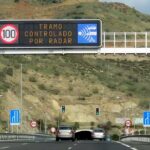
Average speed camera warning in Spain. Credit: DGT

Spain’s traffic authority has packed motorways and A-roads with average speed cameras in recent years, yet one design quirk still lets some drivers drop out of the calculation altogether.

Cameras at each end of a measured stretch time number plates from point A to point B. Take an earlier slip road and the second photo never happens, so no average speed, and no automatic ticket, can be produced for that control. This appears to be an error on behalf of the designers of these speed traps.

In the UK, average speed cameras are generally laid out so there are are no exits to wipe the reading. Spain’s DGT system only completes the sum when the same plate is timed at both published ends. Cameras are not routinely fitted on every slip road in between. That looks like a layout mistake on longer motorway stretches, not a trick the DGT has endorsed.

How average speed cameras actually work

Infrared cameras sit at the start and the finish of a signed section. First gantry logs the plate and a GPS-synced time. Last gantry does the same. A central computer matches both readings and works out the mean speed. Pass both cameras in less time than the minimum time calculated for that distance and a fine is generated automatically.

Those cameras are not usually mounted on every intermediate exit. Without a matching exit stamp for the same plate, the system has nothing to compare it with. That is why a last-second dive off the motorway can wipe that particular average speed camera from the equation. Official DGT explainers already describe the two-point method; motoring reports this week have spelled out the consequence when drivers never reach the second gate.

This is not a green light to race. Fixed boxes, mobile units and Guardia Civil patrols still operate on the same roads. Reckless weaving at a junction can earn a separate fine. Treat the gap as a technical limit of one device, not a strategy.

How many of these sections are now on Spanish roads

DGT-run average speed cameras jumped from 92 in spring 2024 to 153. Add regional kits in Catalonia, the Basque Country and Navarra, plus big-city council devices, and the national total is 299. About 140 section cameras were installed between 2021 and 2026. Policy under Pere Navarro has favoured longer corridors so drivers have less room to sprint then brake.

Spain’s longest average speed test is on the CL-615 in Palencia, kilometre points 34.61 to 67.51 towards Guardo: 32.9 km limited to 90 km/h. Second is the A-68 between Cortes and Tudela, 30.5 km at 120 km/h. Another Palencia stretch on the CL-615 covers 23.1 km. Those distances make mid-section exits more common, and more relevant to how the maths works.

EWN has already mapped Spain’s longest average speed camera and the legal ways to check published DGT lists. Locations of fixed and section cameras are public; radar detectors and jammers are not.

What this means if you clock a gantry too late

Anyone who spots the first camera late and knows an exit sits before the finish may drop off the measured pair. That appears to be an oversight in how many of these kits were laid out: long motorway sections often have service roads and junctions between the two check points.

Do not bank on it. Extra cameras can be added at busy slip roads. Other offences still apply. Speed limits apply whether a computer is watching that exact stretch or not.

Fines for being over the average still run from €100 with no points for modest excesses up to €600 and six points for the worst cases. Section systems typically allow a 10 per cent tolerance when the speed is calculated.

Steady driving still beats a last-gasp slip-road scramble. Average speed cameras were built to stop that yo-yo habit. On some layouts, leaving before the last camera simply means that one system never finishes its sum.

%

Spain Gardens Kitchen Cupboards

Published

on

spain-gardens-kitchen-cupboards

Anyone with a patio, terrace or garden in Spain has a narrow window over the coming days and to sort out a problem that tends to creep up between the summer heat and the autumn rains. With things slowly creeping towards wetter conditions, this dry spell could be one of the last decent chances to tackle the issue.

Why a splash of vinegar could save you hours of weeding

Ordinary household vinegar has become one of the go-to tricks for those with green fingers fancying themselves a bit of a gardener, without reaching for chemical sprays. Its usefulness has nothing to do with feeding plants or improving soil moisture. Acetic acid, the compound that gives vinegar its bite, damages plant tissue on contact, scorching leaves in a way that leaves weeds looking withered and dried out within a day or two.

Oregon State University’s Extension Service, a widely cited authority on home horticulture, confirms that this kind of treatment works on the foliage rather than the roots, and tends to be far more effective against young, recently sprouted weeds than established ones. Applying it on a dry day, before rain has a chance to wash it off the leaves, gives the acid longer to do its work.

Where should you be using this method

Patios, gravel paths and the gaps between paving stones are prime targets, as are the little tufts of weed that push up along the edges of terraces during Spain’s warmer months. Nobody is suggesting a general soaking of flowerbeds or lawns; this is a spot treatment, dabbed or sprayed directly onto unwanted growth rather than poured liberally around the garden.

A word of warning before you reach for the bottle

Confusing kitchen vinegar with a proper herbicide could leave you disappointed, or worse, with a ruined flowerbed. Standard cooking vinegar sits at roughly 5% acetic acid, whereas commercial horticultural versions can run at around 20%, four times stronger, and come with strict handling instructions. Oregon State’s experts are also clear that acetic acid cannot tell a dandelion from a prized rose bush, so overspray onto ornamentals, vegetables or grass you want to keep risks the same scorching effect.

Perennial weeds with deep roots, thistles and other stubborn regrowers, are especially likely to bounce back even after a good burning, since the treatment rarely reaches below the surface. Combining a vinegar spray with hand-pulling and a decent layer of mulch is the more reliable route for anyone determined to keep their outdoor space looking sharp before the rains return.

Continue Reading

%

Naomi Watts Honoured In Spain

Published

on

naomi-watts-honoured-in-spain

Naomi Watts has been celebrated for a career spanning more than three decades after receiving one of the most prestigious honorary awards at Spain’s San Sebastian Film Festival.

The British actress was presented with the Donostia Award during a gala at the Kursaal Theatre on Saturday, September 19, with Spanish director J.A. Bayona handing over the accolade.

Watts, 57, appeared on stage in a black evening gown as she accepted the award in front of the festival audience. The honour recognises her contribution to cinema across independent productions, major Hollywood films and television.

A career shaped by major film roles

Watts has built a reputation for taking on demanding roles throughout her career, with her international breakthrough coming in David Lynch’s 2001 psychological thriller Mulholland Drive.

The performance established her as a major name in cinema and led to collaborations with some of the industry’s best-known directors.

She has since appeared in films including 21 Grams, The Ring, The Impossible, Birdman and Eastern Promises, working with filmmakers including Peter Jackson, David Cronenberg, Clint Eastwood and Alejandro González Iñárritu.

Her work has also earned two Academy Award nominations, including one for her performance in 21 Grams and another for J.A. Bayona’s The Impossible.

Bayona, who directed The Impossible, was the person chosen to present Watts with the Donostia Award in San Sebastian, adding a personal connection to the ceremony.

Watts dedicates award to David Lynch

During her acceptance speech, Watts paid tribute to David Lynch, the director who gave her the career-changing role in Mulholland Drive.

She has previously spoken about the significance of working with Lynch and credited him with seeing something in her at a time when she was struggling to secure major roles.

The actress also used her appearance in San Sebastian to discuss the position of older women in the entertainment industry.

Watts said women of her generation need to see themselves represented on screen, describing herself as fortunate to be part of what she believes is a shift in the industry.

The comments come as Watts continues to work both in front of and behind the camera, having also established herself as a producer.

New film premieres at Spanish festival

Watts was in San Sebastian not only to collect the career honour but also to present her latest film, The Housewife.

The psychological drama marks the feature directorial debut of Canadian filmmaker Ben Shirinian and is set in 1964.

The film follows a young journalist who discovers that a former Nazi is living secretly in New York. He subsequently develops a friendship with the man’s wife, played by Watts.

The cast also includes Tye Sheridan, Luke Evans, Michael Imperioli and Lena Olin. The film was selected as the Donostia Award screening following Watts’ ceremony.

A return to San Sebastian

The visit also marked a return to a city Watts already knew.

According to Spanish public broadcaster RTVE, the actress had previously visited San Sebastian 17 years ago and remembered the city’s enthusiasm for cinema.

During her latest trip, she said she had enjoyed spending time by the sea and experiencing the city away from the festival spotlight.

The 74th San Sebastian Film Festival runs from September 18 to 26, bringing major international names from the film world to the Basque city.

Watts joins a long list of celebrated figures to receive the Donostia Award, which has previously been presented to stars including Gregory Peck, Al Pacino, Anthony Hopkins, Robert De Niro and Antonio Banderas.

Continue Reading

%

Italy Moves To Limit Foreign Pupils In Classrooms, Will Spain Follow?

Published

on

italy-moves-to-limit-foreign-pupils-in-classrooms,-will-spain-follow?

Italian Prime Minister Giorgia Meloni announced the plans on Sunday. Photo credit: Marco Iacobucci Epp/Shutterstock

If you have children at school in Spain, you may soon find yourself watching what happens in Italy rather closely, particularly if your local classroom already has pupils from several different countries. Italy is preparing a new measure that would put a legal limit on the number of foreign students in each class, raising the question of whether Spain could eventually consider something similar.

Italian Prime Minister Giorgia Meloni announced the plans on Sunday, September 20, saying the measure would soon go before the Council of Ministers. The proposed package would also require parents of foreign pupils experiencing serious difficulties integrating into the Italian school system to learn Italian. 

Italy already has a 30 per cent limit

The government has not yet said exactly how many foreign pupils would be allowed in a single classroom. Meloni said the intention was to prevent Italian children from becoming a minority in their own classrooms and argued that integration becomes more difficult when large numbers of pupils do not speak Italian but the proposal is not starting from a completely new idea.

Italy already has a rule dating from a ministerial circular which set a 30 per cent ceiling for pupils who are not Italian nationals in ordinary classes. However, the existing limit has not been consistently implemented, with Education Minister Giuseppe Valditara saying earlier this month that legislation was needed to make the limit effective.

The new proposal would therefore move the issue from a largely administrative guideline towards a legal requirement. There is an important distinction, though. Being a foreign national does not necessarily mean a child cannot speak Italian. Equally, a child born in Italy to foreign parents may speak Italian perfectly well. That makes the exact details of any future law particularly significant.

Spain already has its own classroom debate

Spain is not currently proposing an Italian-style nationality quota. Instead, the Spanish Government is progressing legislation aimed at reducing the overall number of pupils in classrooms. The proposed law would establish maximum class sizes of 22 pupils in Primary education and 25 in compulsory secondary education, with the changes due to be introduced gradually from the 2027-28 school year and fully implemented by 2031-32.  Spain also has a substantial foreign-pupil population.

According to Spain’s Ministry of Education, 1,125,860 foreign students were enrolled in the non-university education system during the 2024-25 school year, representing 12.9 per cent of all pupils. The proportion varies considerably between regions, reaching 19 per cent in the Balearic Islands and 18.5 per cent in the Valencian Community.  Those figures do not mean that foreign pupils are concentrated in individual classrooms, but they show why classroom composition can be a particularly relevant issue in some parts of Spain.

Could Spain introduce a similar limit?

There is currently no indication in the Spanish Government’s classroom-ratio legislation that it intends to introduce a maximum number of foreign pupils per class. The proposal currently before Parliament deals with the total number of pupils, regardless of nationality.  That could change in the future if Spain decided to examine the Italian approach, but there is no announced Spanish measure equivalent to Meloni’s proposal at present.

For parents, teachers and schools, the practical question will be what Italy actually puts into law. Until the Italian Government publishes the legislation, there is no confirmed number for the proposed cap and no way of knowing exactly how schools would be expected to distribute pupils between classes. The Italian proposal therefore remains just that for now: a measure announced by Meloni, rather than a new classroom rule already in force.

Continue Reading
Advertisement
Advertisement

Spanish Real Estate Agents

Tags

Trending

Copyright © 2017 Spanish Property & News