Alicante
Emergency code 7700 triggered on Ryanair flight from Alicante to Edinburgh


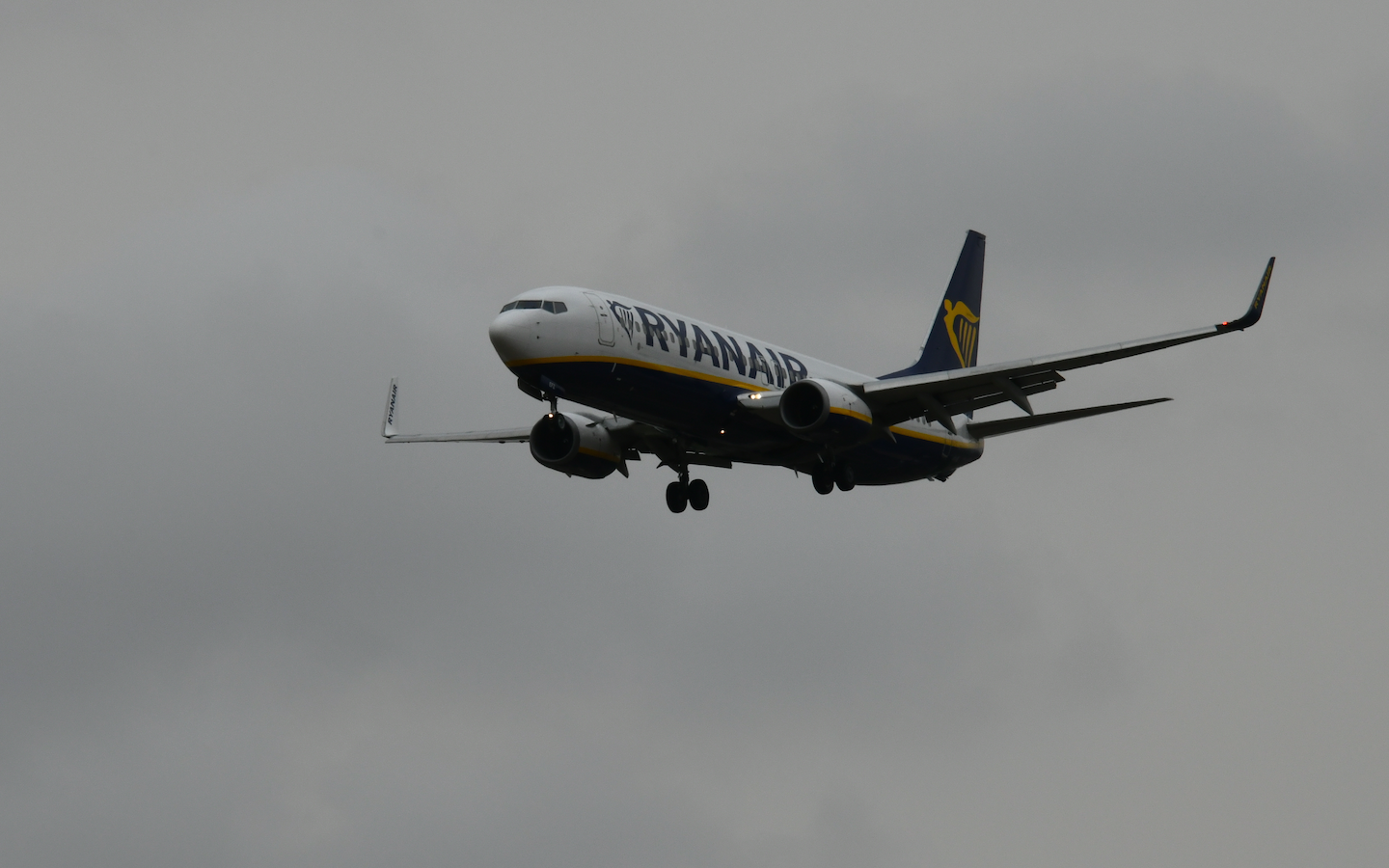
Air traffic controllers coordinated the arrival to ensure the aircraft received priority clearance. Photo credit: Ernest Rose/Shuttertock
Medics were waiting at Edinburgh Airport after a Ryanair flight from Alicante declared an onboard medical emergency while approaching Scotland. The aircraft, operating as flight FR5578, landed safely at its scheduled destination in Edinburgh after crew requested assistance for a passenger who became unwell during the journey.
The incident occurred at approximately 07:20 BST when the aircraft was flying over southern Scotland at around 20,000 feet. Cabin crew alerted the cockpit after a passenger fell ill, prompting the pilots to issue a ‘7700 squawk code’, the international transponder signal used to indicate a general emergency and ensure priority handling from air traffic control.
Emergency declared during descent into Scotland
The 7700 code placed the aircraft under priority status with air traffic control as it continued its descent towards Edinburgh. Despite the seriousness of the alert, the flight did not divert to another airport. Instead, the crew continued towards the scheduled destination, where medical support was already being prepared.
Decisions to continue rather than divert are typically based on several operational factors, including the severity of the passenger’s condition, remaining flight time, and the availability of medical facilities at the arrival airport. In this case, the proximity to Edinburgh and the readiness of emergency teams on the ground contributed to the decision to maintain the planned route.
Air traffic controllers coordinated the arrival to ensure the aircraft received priority clearance. The emergency signal also allowed airport services to mobilise in advance so that assistance would be available immediately upon landing.
Safe landing and immediate medical response
The aircraft touched down safely at approximately 07:40 BST. Once on the ground, it was met by medical personnel who boarded or met the aircraft at the gate to assess the passenger. The individual was then taken for further medical attention.
No official details have been released regarding the passenger’s identity or condition following treatment. It is not yet known whether hospital admission was required. In line with standard practice, such information is typically withheld to protect patient privacy.
The remainder of the passengers disembarked normally, and airport operations continued without disruption. There was no impact on wider flight schedules at Edinburgh following the incident.
How in-flight medical emergencies are managed
Commercial aircraft are equipped with procedures and equipment to handle medical situations during flight. Cabin crew receive training in first aid and emergency response, and aircraft carry medical kits designed to deal with a range of onboard health incidents.
When a passenger becomes unwell, cabin crew assess the situation and communicate with the flight deck. Pilots then coordinate with air traffic control to determine the most appropriate course of action, which may include continuing to destination, diverting, or requesting priority landing. The issuance of a 7700 squawk code ensures that all relevant authorities are immediately aware that an aircraft requires urgent attention.
In many cases, airlines will also request medical assistance in advance of landing so that emergency teams can meet the aircraft without delay. This allows assessment and treatment to begin as soon as the plane reaches the gate.
Alicante–Edinburgh route and operational context
The Alicante to Edinburgh service is a regular route operated by Ryanair, particularly popular with passengers travelling between Spain’s Mediterranean coast and Scotland. Flight times typically last around three hours, during which cabin crew must be prepared to respond to a variety of onboard situations, including medical incidents.
Flights operating in European airspace are monitored continuously by air traffic control systems, allowing rapid communication between aircraft and ground services. In this case, the coordination between the crew, controllers and airport medical teams ensured that the response was immediate and controlled.
No further disruption reported
There has been no indication of wider disruption at Edinburgh Airport following the incident. Other arriving and departing flights continued as scheduled, and the situation was contained to the affected aircraft.
Ryanair has not issued further public comment on the incident. Airlines typically do not provide detailed information on individual medical cases unless there are broader operational or safety implications.
The response followed established aviation procedures designed to prioritise passenger safety and ensure rapid medical support when required.