
Aesan
EROSKI issues food alert after glass fragments found in ricotta sauce

The alert applies to a specific batch imported from Italy. Photo credit: lma_ss/Shutterstock
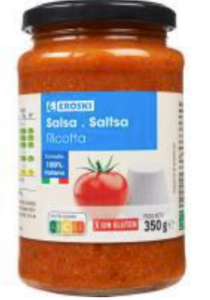
If you have recently purchased EROSKI’s ricotta sauce or have some in your kitchen cupboard, buyers are being urged check the batch number before adding it to your pasta. Spain’s food safety authorities have issued a warning over a batch of the 350g sauce after possible glass fragments were reported in the product. The alert applies to a specific batch imported from Italy, not every jar of ricotta sauce sold by EROSKI. Anyone who has bought the affected product should leave it uneaten and check the label carefully.
The Spanish Agency for Food Safety and Nutrition (AESAN) published the alert after receiving information from health authorities in Navarra. The warning was circulated through Spain’s food safety notification system so authorities in other regions could take the necessary action.
Which EROSKI sauce is affected?
The alert identifies the product as follows:
- Product: Salsa Ricotta
- Brand: EROSKI
- Batch number: LA310CRI01
- Pack size: 350g
- Packaging: Glass jar
- Country of origin: Italy
The batch number is the key detail for shoppers. The warning does not cover every product in the range, so customers should compare the code on their jar with the one listed in the alert rather than assume all ricotta sauces are affected. Authorities have not publicly explained how glass fragments may have entered the sauce, nor have they confirmed how many jars are affected or whether anyone has been injured after consuming the product.
What should customers do with the sauce?
AESAN’s advice is clear: do not consume the affected batch. Glass fragments can cause cuts or other injuries if swallowed, and they may not be easy to spot in a sauce. A jar that looks intact does not establish that its contents are safe. According to reporting by EITB, EROSKI has said customers can return the affected product to any of its shops. Anyone who finds the batch in their cupboard should keep it separate from food they intend to eat and take it back to the retailer.
The alert was issued through the Coordinated Rapid Information Exchange System, known as SCIRI. This allows food safety authorities to share information about potential risks and coordinate action across Spain’s autonomous communities. The notification enables regional authorities to check whether the affected batch has reached shops in their areas and ensure the necessary measures are taken.
Not every sauce sold as ricotta is affected
Shoppers should also avoid confusing the affected EROSKI product with other sauces carrying a similar name. EITB reported that a separate ricotta sauce manufactured by IAN, SA, was not included in the alert. That product can be identified by its barcode, 8480010310078. The warning concerns a particular product and batch, not ricotta sauce as a category. Customers should use the manufacturer, packaging details and batch information to identify the jar in question.
AESAN published its recall notice on October 22, with further reports appearing on October 23. The information available in the alert does not establish the precise source of the contamination, the number of affected units or whether the product was distributed nationwide. Anyone who has recently bought the sauce should check the label before using it. If the batch code matches LA310CRI01, do not eat the contents and return the jar to an EROSKI shop.








AESAN says the affected batch was sold across almost all of Spain. Credit: Arla Foods
If you regularly buy protein desserts in Spain, it may be worth checking your fridge before reaching for your next snack. Spain’s food safety agency, AESAN, has issued a warning over a batch of Arla Protein vanilla cookie puddings after concerns that it could contain pieces of glass. The product was distributed across much of Spain, and shoppers are being urged not to eat it if the batch number matches the affected product.
Only one batch is affected in Spain
Shoppers who’ve picked up Arla Protein’s vanilla cookie pudding are being told to check the jar before they tuck in. AESAN said on Tuesday October 27 that the pudding may contain fragments of glass, and asked anyone who has it at home not to eat it.
The alert covers a single batch, number ES26271001, with a best-before date of April 25 2027. It applies to the 200g jars, which are sold chilled.
How to check what’s in your fridge
Look at the batch number and the best-before date on the jar. If both match the details above, that’s the product AESAN is worried about and you should stay away from. If not, there should be no concern.
The agency hasn’t said where to take affected jars back, or whether shops are offering refunds. However, it has asked the regional authorities to check that the pudding is being pulled from sale.
The pudding was sold almost nationwide
According to AESAN’s alert, the pudding was first distributed across almost the whole of Spain. There’s no list of regions, provinces or supermarkets specifically, so no area should be ruled out from checking.
The warning was raised by Denmark through the EU’s rapid alert system for food and feed. Nothing has been published about how any glass might have got into the product.
Other countries have recalled more flavours
Spain isn’t the only country dealing with it. Arla has recalled several Protein Pudding batches in Denmark, describing the chance of glass as “extremely limited”, while the UK’s Food Standards Agency has told shoppers that chocolate, salted caramel and vanilla cookie puddings sold at Tesco, Asda, Sainsbury’s and Morrisons may contain glass. Australia and New Zealand have issued recalls too.
Those recalls cover more flavours and different dates, though. In Spain, AESAN’s alert only names the one vanilla cookie batch for now.
So if the number on your jar matches, don’t eat it, and keep an eye on AESAN’s alerts page in case more batches are added.

Burglar in Spain drinks himself to sleep in bar raid gone wrong
Is this Spain’s answer to Banksy? Swedish woman gives dog poo the golden treatment
Rincon tapas trail returns with 31 restaurants offering €4 local cuisine


-
DGT3 weeks ago
Viral video in Spain sparks fury over drivers who ‘have no idea how to drive’
-
Automated supermarket3 weeks ago
Spain’s 24-hour shop with no tills expands to Barcelona Airport
-

 Uncategorized4 weeks ago
Williams F1 driver caught up in four-car pit lane pileup
-
News4 weeks ago
Hundreds evacuated as huge fire erupts on Spain high-speed train route
-
Keeping cats and dogs outside3 weeks ago
Spain’s pet owners face fines of up to €200,000 for animal welfare offences
-
airports3 weeks ago
Travelling between Spain and Italy? The extra border checks could soon end
-
Council tax (IBI)3 weeks ago
Barcelona plans 150% property tax increase on tourist flats ahead of 2028 ban
-

 Uncategorized4 weeks ago
F1 just gave a new race a 10-year deal and fans HATE the track layout