Connect with us

%

Free Exhibition Explores Time And Memory – Jesús Ortiz Armada Brings Contemplative Oil Paintings To Torremolinos

Published

on

free-exhibition-explores-time-and-memory-–-jesus-ortiz-armada-brings-contemplative-oil-paintings-to-torremolinos

The art of Jesús Ortiz . Credit: JO

Visitors can now experience the exhibition Un Lugar en el Tiempo at Torremolinos Town Hall. Running from May 29 to June 26, this collection of oil paintings by Jesús Ortiz Armada invites reflection on how places evolve while remaining preserved in personal memory.

Organisers designed the display with a contemplative atmosphere that encourages viewers to pause and connect with scenes from everyday life and the past. Each canvas captures traces, absences, architecture, and recollections tied to specific locations, all rendered through the distinctive brushwork and palette of the artist.

Practical information for visitors

Access to the exhibition will be completely free. Opening hours run Monday to Friday from 9am to 1.30pm. The official opening takes place on Friday, May, at 7pm, offering an opportunity to meet the artist and view the works on the first evening.

Profile of the Malaga painter

Jesús Ortiz Armada was born in the village of El Burgo, Malaga. He studied education sciences in Malaga and later graduated in labour relations in Granada. His professional path has remained firmly rooted in his native region, where he draws inspiration from both impressionist and realist traditions.

Local competitions have recognised his landscape and bullfighting paintings with several awards over the years. Ortiz Armada created his first oil painting at the age of five and pursued art through private lessons while largely developing his skills as a self-taught artist. He later completed studies in applied arts in Granada.

Distinctive realist approach

The artist focuses primarily on Spanish customs in his subjects and demonstrates strong command of realistic techniques. His previous exhibitions have appeared in Malaga, Albacete, Ronda, Torre del Mar, El Burgo, Casarabonela and Tolox. Private collectors in Spain and abroad now hold many of his pieces.

Ortiz Armada excels at creating convincing light and atmosphere in his figure compositions, paying careful attention to both main elements and background details. His canvases deliver a strong sense of reality through balanced colour and gentle tonal transitions.

This exhibition offers residents and visitors to the Costa del Sol a chance to appreciate the work of one of Malaga province’s dedicated realist painters.

%

Benalmadena Traders Can Claim Up To €9,000 For Roadworks Impact Relief

Published

on

benalmadena-traders-can-claim-up-to-e9,000-for-roadworks-impact-relief

Benalmadena Pueblo after works. Credit: Ayuntamiento de Benalmadena

Applications opened on May 22 for a new support scheme that helps local businesses hit by major council projects in Benalmadena. This latest round targets shops and hospitality venues around Santo Domingo, Plaza de España, and nearby streets.

Previous support reached 70 businesses

Local leaders built on an earlier initiative that delivered €350,000 to around 70 traders in Avenida Retamar, Avenida Juan Luis Peralta, and the eleven Gamonal streets. Success in that first phase encouraged expansion into additional areas where work is still going on.

Higher grants reflect longer disruption periods

Businesses affected in this second phase qualify for amounts reaching €9,000 each. Extended construction timelines beyond twelve months justify the increased figures. Mayor Juan Antonio Lara stressed the importance of helping companies manage ongoing costs such as rent, utilities, and staff wages during these problematic periods.

Council strategy balances infrastructure needs

Complex improvement works in long-neglected zones form a key part of the current administration’s plans. Officials introduced this pioneering aid programme to reduce economic pressure on local commerce. Support measures aim to keep shops viable while essential urban upgrades proceed.

Who qualifies for the grants?

Commercial operators, service providers, and restaurants open to the public can apply if registered before the call. Both individuals and companies meet criteria, provided they hold current tax clearances with national authorities and the Benalmadena council.

Single application rule ensures fairness

Authorities accept only one submission per person or company. This approach promotes equitable distribution across eligible premises.

How to submit claims before deadline

Interested parties must file requests by June 22 through the official electronic portal of the Benalmadena Town Hall website. Complete documentation including invoices and expense records remains essential for processing. Applicants should prepare evidence of costs directly linked to the construction period.

This fresh aid package demonstrates continued commitment to protecting local economic activity. Traders facing prolonged work now gain valuable financial breathing space to maintain operations and plan ahead. The initiative reinforces Benalmadena’s approach of combining necessary infrastructure development with practical business assistance.

Continue Reading

%

Payment Rules Tighten On Busy Line 260

Published

on

payment-rules-tighten-on-busy-line-260

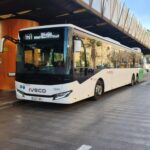
Bus to in Malaga. Credit: CTMAM X

Passengers on the popular coastal bus service between Malaga and Velez-Malaga are going to have to adapt to new ticketing rules following the town’s entry into the Malaga Metropolitan Transport Consortium. Line 260, which serves around 30 stops across three towns with departures every 45 minutes on weekdays, no longer accepts electronic tickets bought through the Alsa app.

Available ways to pay for journeys

Users can travel with the green consortium card, buy paper tickets from authorised sales points, or pay cash directly to the driver. Bank card payments are still unavailable on board. The change took effect on May 1, coinciding with Velez-Malaga’s integration into the public transport body.

Consortium officials confirm the Alsa mobile application stopped offering advance tickets for this route from that date. The bus operator says they are exploring ways to restore convenient advance purchase options that many regular travellers previously enjoyed.

Cheaper fares create major savings

Integration into the consortium has made substantial price reductions for daily commuters. A trip from Velez-Malaga to central Malaga now costs just 95 cents instead of the previous €3.96. Frequent users stand to save over hundreds of euros annually on this journey alone.

Families with multiple children, adults under 30, and kids under 15 gain extra discounts through the green card system.

Wider benefits for local residents

Around 33,000 people in the area can obtain the green card from numerous tobacconists, kiosks, and bookshops. The bus company stresses these economic advantages are the primary gain from the integration process.

Alsa continues working with Malaga Province transport officials to potentially reintroduce digital ticket options in the future. Until then, commuters should plan journeys using the approved payment methods to ensure smooth travel on this key coastal connection.

Continue Reading

%

Spain Confirms V16 Warning Lights Expire

Published

on

spain-confirms-v16-warning-lights-expire

Spain’s connected V16 warning lights became mandatory for drivers on 1 January 2026. Credit : DGT.es

A lot of drivers in Spain bought the new V16 emergency warning lights thinking they were basically a modern replacement for the old warning triangles.

Buy it once, leave it in the car and forget about it.

Turns out it is not that simple.

Spain’s traffic authority, the DGT, has now confirmed that the connected V16 devices eventually expire because of the SIM card installed inside them. And if drivers fail to replace outdated or non approved models in the future, they could end up facing fines of between €80 and €200.

The clarification came after growing confusion around the devices and whether they had an expiry date at all.

During a recent press conference, DGT director Pere Navarro initially said the lights did not expire. Moments later, he corrected himself and explained that they effectively stop being valid after around 11 years because that is when the internal SIM card reaches the end of its service life.

That detail caught many people off guard.Especially because the old emergency triangles could sit in the boot of a car for years without anybody really thinking about them unless they became damaged.

The new devices work very differently.

Why Spain’s V16 lights are connected to the DGT

The entire point of the V16 system is connectivity.

Unlike the old reflective triangles, these warning lights communicate directly with the DGT’s traffic platform through a built in SIM card. Once activated during a breakdown or accident, the device can send the vehicle’s location automatically to traffic authorities.

The idea is that nearby drivers can then be warned much faster about a stopped vehicle ahead.

And to be fair, the safety logic behind the system is easy to understand.

For years, one of the biggest dangers during roadside breakdowns came from drivers having to get out of the vehicle and walk along roads or motorways to place warning triangles properly.

That becomes especially risky at night, during heavy rain or on fast moving roads.

The V16 beacon was supposed to solve that problem.Instead of walking down the road carrying triangles, drivers simply place the flashing light on the roof of the vehicle and remain close to the car.

That is the reason the DGT has defended the system so strongly despite the criticism surrounding it.

But because the device relies on connectivity, it also behaves more like a piece of technology than a traditional safety tool.

It depends on batteries.It depends on a SIM card.

And eventually, according to the DGT itself, it needs replacing.

Many drivers are questioning whether the new system is really better

That is where the debate has started becoming more heated.

Some drivers fully support the move away from triangles and believe the connected lights are genuinely safer. Others feel the system has introduced unnecessary complications for something that used to be very straightforward.

Part of the frustration comes from the fact that many people assumed the V16 light was a permanent purchase.

Now they are discovering it has a limited lifespan.

There have also been complaints about other aspects of the devices. Some motorists questioned their brightness, others raised concerns about durability in bad weather and some criticised the fact that batteries need checking regularly to guarantee the device still works properly.

At one point, there was even controversy surrounding unofficial maps allegedly showing the location of connected beacons online, which triggered privacy concerns among some users.

That controversy helped fuel suspicion around a system many people already viewed as overly technological.

Still, the DGT is making one thing very clear : The connected V16 lights are staying.

Spain’s traffic authority says drivers must already be using approved V16 devices

Pere Navarro also reminded drivers during the press conference that the connected V16 system is already in force in Spain and that motorists are expected to carry approved devices connected to the DGT platform.

That means not every beacon sold online necessarily complies with Spanish regulations.

Drivers must use homologated models capable of connecting to the DGT 3.0 traffic system, which allows authorities to receive the vehicle’s location automatically during a roadside emergency or breakdown.

And yes, the fines are real.

According to the DGT, motorists carrying non approved devices could face penalties of around €80. If the warning light is not used correctly during an emergency situation or breakdown, the fine could reportedly increase to €200.

Even though the 11 year lifespan sounds long, the announcement still changes how many people see the product.

The old triangles were passive objects. You bought them once and they simply existed in the background for years.

The V16 lights are different. They belong to a newer generation of connected driving equipment where even emergency devices now depend on telecommunications systems, batteries and digital infrastructure.

And honestly, that reflects what is happening across modern motoring in general.

Cars themselves are becoming increasingly connected and software dependent. Safety systems that once worked mechanically are now tied to apps, sensors, updates and data platforms.

For some drivers, that feels reassuring and modern. For others, it feels like ordinary driving is slowly becoming more expensive, more monitored and more complicated than it used to be.

Either way, millions of motorists in Spain are eventually going to have to adapt because the old warning triangles are gradually disappearing and the V16 system is becoming the new normal on Spanish roads.

Continue Reading

Trending

Copyright © 2017 Spanish Property & News