Connect with us

%

Homeowners In Spain Urged To Check Shared Energy Bills As Consumer Group Finds Costly Contracts

Published

on

homeowners-in-spain-urged-to-check-shared-energy-bills-as-consumer-group-finds-costly-contracts

Shared energy contracts in Spain could be costing owners more than they need to. Credit: antoniodiaz / Shutterstock

Owners in Spanish apartment blocks and urbanisations could be paying more in community fees than they need to, simply because nobody’s checked the energy contracts behind the lift, garage and communal lights. Consumer group OCU’s look at 100 shared bills found plenty of room to cut, although any saving would belong to the whole community.

Shared electricity bills had room to fall in most cases

Owners who’ve already hunted down a better deal for their own home may still be overlooking the electricity bill hidden inside their community fees (gastos de comunidad, the monthly charge owners pay towards shared costs). Those fees cover supplies including lifts, garages and communal lighting, and in some buildings central heating too.

Consumer group OCU (the Organisation of Consumers and Users) published its findings on Tuesday October 20 after analysing 85 electricity bills from communities of owners. In 84 per cent of them, the building could have cut its contracted power (the maximum electricity a supply can draw at any one time, which is paid for whether it’s used or not).

Trimming only the peak-hour power would save about €314 a year per supply on average, according to OCU. Over the last year, the buildings had used just 37 per cent of their contracted peak power and 35 per cent of their off-peak power on average, which points to many paying for capacity they rarely need. 

The gap to the dearest contracts topped €1,500 

OCU also worked through an example community with 6.93 kW of contracted power using 5,500 kWh a year. On the regulated PVPC tariff (the state-backed price that follows the wholesale market), it would pay about €1,231, compared with an average of €1,667 across the free-market contracts OCU analysed, a difference of about €436. 

However, the gap widened to more than €1,500 against the worst-priced communities. Free-market deals can beat PVPC, though OCU says they need close watching, with renewals usually coming round every year.

Shared gas heating cost 54 per cent more than the regulated tariff

Communities with central heating face a bigger number. OCU checked 15 gas bills, all on free-market contracts, against the TUR (the regulated gas tariff, reviewed every three months under a public formula). On average they were 54 per cent higher than TUR, and in several cases the cost came to nearly double. 

Switching to TUR would save a community using 133,000 kWh a year about €3,515 annually, according to OCU’s calculation, while one using 630,000 kWh could save about €16,274. Communities have been able to contract TUR since July 2024 whatever their consumption, as long as they’ve got systems to measure each home’s heating use (unless that’s technically impossible) and a favourable energy-efficiency inspection.

There’s a catch for this winter though. The government capped October’s rise in TUR, but OCU says that only defers it, with the difference expected to be recovered from April 2027, so it recommends comparing the full price that would have applied without the cap. It adds that fixed-price free-market deals signed months ago may be worth keeping until they renew.

Why the savings won’t land straight in owners’ pockets 

The figures are for the whole community, so individual fees won’t automatically fall. Any change would be for the community to decide, usually with the administrator (administrador de fincas, the professional who manages the building’s accounts) or the community president leading the way.

The study is also small, with just 85 electricity bills and 15 gas bills, all on free-market contracts, and OCU gives no further detail on how they were chosen. The gas examples involve big consumers too, so they’re illustrations rather than a promise.

What to ask the administrator or community president

A sensible first step is asking when the shared energy contracts and contracted power were last reviewed. OCU suggests one person or a small group takes charge of checking the gas and electricity contracts, keeps the invoices and compares tariffs every year, including TUR before winter.

Contracted power can be checked on the bills or in the electricity distributor’s web portal, which shows monthly and hourly detail. Buildings with a lift or another service that needs continuous supply can ask about a maximeter (a meter that records peak demand without cutting the supply) instead of a standard power-limiting breaker, so contracted power can be lowered more safely.

OCU also says to compare the total annual cost rather than just the price per kWh, including power charges, rental fees, maintenance, lock-in periods and penalties. So at the next owners’ meeting, it’s worth asking whether the community’s contracts still match what the building actually uses.

%

Concrete Falls From Los Boliches Railway Bridge

Published

on

concrete-falls-from-los-boliches-railway-bridge

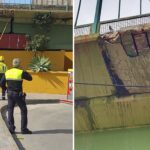
Falling to rack and ruin in Fuengirola. Credit: EWN

Fuengirola residents demand action as railway bridge deteriorates despite repeated warnings.

Residents in Fuengirola are increasingly concerned about the condition of railway infrastructure after another incident involving falling concrete from the elevated railway structure near Los Boliches station on Tuesday, November 10.

An elderly local woman was walking close to the station when pieces of concrete reportedly began falling from the structure above her. Concerned that somebody could be seriously injured, she immediately contacted the emergency services.

Police vehicles and two fire engines arrived within minutes. Firefighters subsequently removed fallen concrete and other loose material from the structure in an attempt to reduce the danger to pedestrians and passing traffic.

Photographs taken at the scene show a substantial area of damaged concrete, with sections of reinforcing metal exposed and visible deterioration around the affected area. A hole approximately one metre long was also reported in the concrete structure supporting the railway.

The incident has once again raised questions about the maintenance of the coastal railway, particularly as the central government, who is legally responsible in this case, have reportedly been warned about the problem previously. Today, nothing but a strip of police tape warns of the danger of falling concrete.

Adif warned but concerns continue

According to information provided by another concerned resident, both Fuengirola Local Police and the town hall have notified Adif, the state-owned company responsible for Spain’s railway infrastructure, about the deterioration. However, the local Malaga government says that despite these notifications, the situation has not been properly addressed.

The latest emergency response involved firefighters removing loose material, but residents want to know whether a comprehensive structural inspection has been carried out and when permanent repairs will take place.

There were also initial concerns about whether trains should continue running while firefighters dealt with the situation. Services were reportedly allowed to continue, with Renfe ordering trains to reduce their speed when passing the affected section.

In a previous incident, a pedestrian narrowly avoided being struck when a piece of concrete fell from the elevated railway structure at Los Boliches station. Firefighters attended and Local Police recorded a formal statement.

Read the earlier report: Crumbling railway: Fuengirola pedestrian narrowly avoids falling concrete at Los Boliches Station.

The recurrence of falling concrete in the same station area, following the earlier incident, raises fresh questions about what action was taken after the first warning.

Costa del Sol infrastructure under scrutiny

Concerns about deteriorating infrastructure are not limited to Fuengirola. Several Costa del Sol mayors have been publicly demanding improvements to transport links and greater investment in infrastructure.

Mijas mayor Ana Mata recently criticised the lack of progress, saying that the area had effectively been left with infrastructure dating back to the 1980s.

Speaking at a mobility forum in Malaga on November 12, she said: “En materia de infraestructuras, nos hemos quedado en los años 80.” (In terms of infrastructure, we’re stuck in the 80s). Her comments reflected growing frustration about the pressure on roads and public transport as the population of the Costa del Sol has increased.

Estepona mayor José María García Urbano has also repeatedly called for improvements to the A-7, including better access arrangements and investment in the busy coastal road.

For residents, the concern is increasingly about whether essential infrastructure is being maintained sufficiently, rather than simply whether new projects are being delivered. Many locals now complain how it looks like it is all going to “rack and ruin.”

Railway disasters increase public concern

The latest Fuengirola incident comes at a particularly sensitive time for Spain’s railway network. The January Adamuz disaster, which claimed 46 lives, and the October 28 collision near Urda, which killed 69 people, have shaken public confidence in railway safety.

The consequences have extended to the highest levels of the Transport Ministry. Óscar Puente resigned as Transport Minister on November 3, accepting political responsibility for the Urda disaster. Adif president Luis Pedro Marco de la Peña subsequently resigned. The tragedies have also prompted renewed demands from railway workers for greater investment in maintenance and improved safety procedures.

Although there is no suggestion that the damage at Los Boliches is connected to either railway disaster, the latest incident has added to public anxiety about the condition of the country’s transport infrastructure.

For the resident who raised the alarm in Fuengirola, the concern is straightforward: people should not have to walk beneath a railway structure fearing that pieces of concrete could fall on them.

With previous warnings reportedly already passed to Adif, residents now want answers about inspections, repairs and who is ultimately responsible for ensuring that the structure is safe.

How many more warnings will it take before something is done?

Continue Reading

%

Deadly Rabies Case Confirmed After Dog Enters Spain From Abroad

Published

on

deadly-rabies-case-confirmed-after-dog-enters-spain-from-abroad

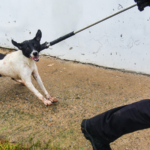
The dog’s vaccination status was unknown when it entered Spanish territory. Photo credit: tsyklon/Shutterstock

A rabies infection is not something anyone wants to discover in their neighbourhood. Once symptoms develop, the disease is almost always fatal, making prompt treatment after exposure essential. For dog and cat owners in Ceuta, the latest confirmed case is another reminder of why keeping vaccinations up to date matters, particularly in a city bordering a country where rabies is still present.

The latest infection involved a dog that crossed from Morocco into Ceuta on October 28. Fortunately, it was spotted at the Tarajal border crossing and captured less than 30 minutes later, before it could come into contact with residents or other animals. The infection was confirmed on November 12 by Spain’s National Centre for Microbiology at the Carlos III Health Institute. 

Dog showed worrying symptoms after crossing border

The dog’s vaccination status was unknown when it entered Spanish territory. Guardia Civil officers spotted it near the border and alerted the animal collection service, which managed to capture it shortly afterwards.

Its condition was already extremely poor. The animal was severely emaciated, had a limp in one leg and displayed continuous, frantic running behaviour. Given these symptoms and its arrival from a rabies-endemic area, veterinary authorities suspected infection and decided to euthanise it immediately.

Laboratory tests subsequently confirmed rabies using immunofluorescence and PCR, which detect the presence of the virus. One important detail is that the dog remained under continuous surveillance following its capture. Authorities confirmed that it had no contact with people or other animals, meaning no human or animal exposures have been identified in connection with this case. 

Second rabies case recorded in Ceuta this year

Unlike mainland Spain, where terrestrial rabies has been eradicated, Morocco continues to report infections in both animals and humans. The country’s National Office for Food Safety (ONSSA) identifies rabies as an endemic disease found across much of its territory, with dogs acting as the main reservoir of infection. 

The scale of the problem remains significant. According to the World Health Organisation, 451 human rabies cases were documented in Morocco between 2000 and 2022, averaging around 20 deaths annually. Animal infections are also regularly reported, with stray dogs representing a major source of transmission. 

Why pet owners need to take rabies seriously

Although Spain and its islands have been free of terrestrial rabies since 1978, imported cases continue to occur occasionally in Ceuta and Melilla because of their proximity to countries where the disease remains present. The Ministry of Agriculture stresses that vaccination is one of the most important tools for preventing the spread of rabies. In Ceuta, annual rabies vaccination is compulsory for dogs, cats and ferrets, and owners must keep their animals’ vaccination records up to date.

The disease affects the central nervous system of mammals and can spread to humans through the saliva of an infected animal, usually following a bite or scratch.  Once clinical symptoms appear, rabies is virtually always fatal. Anyone bitten or scratched by an animal suspected of carrying rabies should wash the wound thoroughly with soap and running water for at least 15 minutes before seeking urgent medical attention. Preventive treatment can stop the disease developing if administered promptly. Dogs, cats and ferrets in Ceuta must be vaccinated against rabies annually, with owners required to keep their animals’ vaccinations up to date.

Continue Reading

%

Fed Up With Cramped Economy Seats? These Five Airlines Offer A Better Way To Fly

Published

on

fed-up-with-cramped-economy-seats?-these-five-airlines-offer-a-better-way-to-fly

Five carriers have been recognised in the 2026 World Airline Awards. Photo credit: Photofex_AUT/Shutterstock

Anyone who has spent hours squeezed into an economy seat on a long-haul flight knows how uncomfortable travelling can become. Business class might offer a welcome escape, but with prices often beyond the reach of ordinary holidaymakers, premium economy is an increasingly attractive alternative.

Offering more legroom, wider seats and better onboard services, it promises a more comfortable journey without the full cost of business class. But which airlines actually deliver an upgrade worth paying for? Five carriers have been recognised in the 2026 World Airline Awards by aviation rating organisation Skytrax, with EVA Air taking first place, followed by Emirates, Singapore Airlines, Cathay Pacific and Virgin Atlantic.

EVA Air takes the top spot

Taiwanese airline EVA Air claimed first place, drawing on decades of experience since becoming the first airline to introduce premium economy in 1992.

Its Boeing 777-300ER aircraft offer 38 inches (96.5cm) of seat pitch, compared with approximately 31 to 33 inches (78.7 to 83.8cm) in standard economy. Passengers also benefit from wider seats, additional recline and upgraded onboard amenities.

Emirates and Singapore Airlines

Emirates secured second place, taking the top award for its premium economy seats and onboard catering. Passengers receive leather seats, adjustable headrests, calf and footrests, larger entertainment screens and upgraded meals. Its newer Airbus A350 cabins also feature wireless charging and 4K entertainment screens, although these facilities are not available across the entire fleet.

Singapore Airlines came third, offering approximately 38 inches (96.5cm) of seat pitch, wider seats and additional recline. Passengers also receive priority boarding, calf and footrests, and an upgraded dining experience. Its Book the Cook service allows travellers to pre-order dishes from a selection of chef-inspired meals.

Cathay Pacific and Virgin Atlantic

Hong Kong-based Cathay Pacific took fourth place. Its premium economy cabins offer up to 40 inches (101.6cm) of seat pitch, adjustable leg rests and additional recline. Passengers also receive priority boarding, extra baggage allowance and upgraded meals. Selected refurbished aircraft feature redesigned seats and larger entertainment screens.

Virgin Atlantic completed the top five, offering priority check-in and boarding, two checked bags of up to 23kg each, and an improved onboard dining experience. Passengers are also welcomed with sparkling wine, while meals are served with a restaurant-style approach. Seat dimensions vary between aircraft, so checking the configuration before booking is advisable.

Is premium economy worth the extra cost?

The biggest drawback is the price. Premium economy can cost hundreds of euros more than a standard economy ticket, and the difference between airlines can be substantial. Travel expert Katy Nastro, from flight-tracking app Flighty, told the BBC that upgrades with some airlines can approach €690 per flight segment.

However, buying an economy ticket first and checking for discounted upgrade offers later can sometimes be considerably cheaper. The aircraft operating the route is another important consideration. Airlines often have different premium economy configurations across their fleets, meaning passengers could pay extra without receiving the newest seats or facilities. For overnight flights and particularly long journeys, the additional space and ability to recline more comfortably may justify the expense. For shorter trips, however, the money might be better spent elsewhere.

Continue Reading

Trending

Copyright © 2017 Spanish Property & News