Connect with us

%

Is The Global Medicine Supply At Risk?

Published

on

is-the-global-medicine-supply-at-risk?

Fitness to practice: why world leaders lack the oversight of doctors

Many professions issue fitness to practice licences of one sort or another, and I’m sure you draw comfort from the fact that your dentist, doctor, even your bank manager are all subject to some kind of external verification from time to time, and will hold some form of fitness to practice license of some sort. Shame this doesn’t seem to apply to leaders of the free world.

The geopolitical fallout: why the Iran situation matters

Speaking personally, I’m furious with the action taken by the United States, or rather their deranged President, regarding the supposed immediate threat to the rest of world posed by Iran. There is no doubt that the past and current regime in Iran treat their own citizens with contempt, and any civilised nation will feel disgust and wish for a fairer, and more humane, society. But the actions taken by the United States, and its supporters, are having real-world impacts for everyone and unlikely to improve the situation for ordinary Iranians.

Trade disruptions: how the straits of Hormuz affect your healthcare

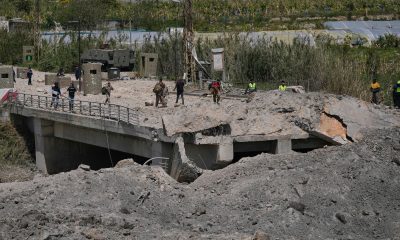
The closure of the straits of Hormoz to commercial shipping and the various restrictions on airspace and overflying are more than an inconvenience; they could seriously impact the lives of vulnerable people all over the world, thanks to the fact that pharmaceuticals are very much a part of globalisation that has evolved over the past thirty years or so.

It might come as a surprise to know that hardly any country is self-sufficient these days when it comes to medicines. Pretty much everywhere imports a substantial proportion of the medicines they require. The disruption to international trade is pushing up costs, and at the same time countries that are being directly impacted are in need of extra stocks, add to that those countries that manufacture certain medicines have decided to suspend exports keeping products for their own, and this may come as a further surprise but many medicines start life with a petroleum product in there somewhere.

Shortage alerts: what patients in the uk and spain need to know

The British Medical Journal has reported that there is already a shortage of certain medicines in the UK. Spain, as things stand at the moment has not formally issued any alerts, but of course that may change. If you are reliant on any long-term medication to help control things like high blood pressure, cardiac conditions, diabetes, or types of anxiety then it maybe an idea to have a chat with your pharmacist the next time you fill a prescription just to find out how things stand. This isn’t something to worry about right now, and if things do deteriorate the Spanish Government have central stocks and also plans in case shortages become severe. As a member of the EU there are also EU-wide contingency plans that are now being activated.

The obvious solution would be for every nation state to be self sufficient and manufacture their own medicines, but this just isn’t practical – nor should it be necessary.

A question of mental fitness: the case for revoking a president’s ‘license’

I referred to the President of the United States as deranged, I think it is important to stick to international conventions and protocol; and so, I should say whilst I have the utmost respect for the Office of the President of the United States, I believe the current holder of that office to be deranged. This is a view that is widely shared within medical circles, although the term most often used is ‘Malignant Narcissism and Paranoia’ which actually includes a broad mix of various personality disorders. This isn’t a case of someone who gets occasionally confused or forgetful, it is someone who compares themselves to messiah-like figures, in unable to experience empathy, and also appears to enjoy sadistic behaviour. In my view, his fitness to practice license should be revoked immediately as he currently poses a serious threat to public safety.

Mr Trump is not only threatening world-wide disruption to pharmaceutical manufacturing and distribution, but he has destroyed medical facilities and killed, and injured, medical personnel. This is a clear violation of the First Geneva Convention. Deliberate violations of any of the Geneva Conventions, there are four of them with two additional protocols, is a war crime.

Normal, balanced, reasonably educated people would not threaten to annihilate an entire population and return it to the Stone Age, nor would they share such a desire on some global media platform, unless they suffered from some major personality disorder. Geneva Convention number four, along with Additional Protocol 1, forbids any deliberate attacks against the civilian population and any civilian infrastructure considered to be essential. This would constitute a war crime.


And now for something completely different: managing hay fever safely

I don’t often stray into politics (or religion for that matter) but things have recently seemed to be getting out of control, so I apologise. Back to more familiar territory and I think steroid nasal decongestants would be as good a place as any.

With the hay fever and general pollen season about to unleash misery upon many people I wanted to share something about popular nasal decongestants that are steroid based, as most are. These sprays are very effective at reducing congestion and people who suffer from pollen allergies find them particularly useful. As with most medications there are some side effects but these tend to be fairly minor and disappear once treatment stops. Nasal steroids are generally considered very safe because the active ingredient (the steroid) is actually delivered to the place where it needs to act which is the lining of the nose. Steroid decongestants which are taken orally, on the other hand, probably don’t actually help that much because once the medication has been swallowed and passed trough the liver before it gets into the bloodstream and then reaches the nose there often isn’t enough left to have any meaningful effect. If you increase the oral dose you run the real risk of causing blood pressure to spike. For this reason, the spays are the best way of safely delivering steroids to the nose.

Understanding the rebound effect: what is rhinitis medicamentosa?

There is one important caveat. Because steroid spays are so good at doing their job, if you use them for a prolonged period of time and then stop you run the risk of something known as ‘rebound effect’. Essentially what happens is when the spay hits your nose the small delicate blood vessels all shrink and contract, this is what gives you the relief. If you continue with the spray for too long your nose gets used to these constricted blood vessels. Stop the spay and the blood vessels quickly relax and fill again with more blood which in itself causes congestion. This is known as Rhinitis Medicamentosa, which as the name implies is a direct result of using the medication. Current advice if you are one of the unlucky ones to suffer from pollen allergies, is to use the sprays sparingly and if you do have to use them for a prolonged period seek advice from your GP about the safest way of stopping use, which usually means a gradual withdrawal combined with saline sprays which allow time for the nasal tissue to recover.

Be prepared: essential items for a home first aid kit

Last week, I was enjoying a pleasant lunch with a group of friends – something I should make time for more often – when one person mentioned they were “stocking up on a few essentials” in case global events took a turn for the worse and local supermarkets began to run short of everyday necessities, and not just toilet paper. The conversation then shifted to what should be kept in a well-prepared home first aid kit.

Regardless of global circumstances, it is advisable for every household to maintain a comprehensive first aid kit. I would recommend including the following items:

  • A sufficient supply of adhesive plasters and a range of sterile bandages
  • Disposable gloves (they do not need to be sterile)
  • Triangular bandages, which can be used as slings or for securing larger dressings
  • A variety of sterile, non-adherent dressing pads
  • A roll of cling film, useful for covering burns and helping to retain moisture
  • Antiseptic lotion
  • Antiseptic cream
  • Adhesive wound closure strips
  • Paracetamol tablets
  • Loperamide tablets (for diarrhoea)
  • Tweezers (both blunt and pointed) for removing debris
  • Scissors, including a pair capable of cutting through clothing quickly
  • A reliable torch

In addition, it is prudent to keep a reserve supply of bottled drinking water, as well as any medications that you or your family members regularly require.

For further guidance on general emergency preparedness, you may wish to consult reputable organisations such as the Red Cross or your local Civil Protection office.

Stay informed on these changes by following the latest health and beauty news.

%

Palma’s Binter NightRun Transformed The City Into A Huge Open-Air Sporting Festival

Published

on

palma’s-binter-nightrun-transformed-the-city-into-a-huge-open-air-sporting-festival

Palma’s Binter NightRun drew thousands of runners and spectators for its sixth edition across the city centre. Credit: Instagram/Binter NightRun

Thousands of runners and spectators filled the streets of Palma on Saturday night as the sixth edition of the Binter NightRun turned the city centre into one of Mallorca’s biggest sporting events of the spring.

The popular night race returned to Palma on May 9 with illuminated routes, live music, DJs and entertainment points spread across the city, creating a festival atmosphere that continued late into the evening. Organisers described the event as one of Spain’s leading urban night races, attracting participants of all ages and abilities.

Three races brought runners through Palma’s landmarks

The event featured three different race formats designed to appeal to both experienced runners and families. The Green Family Mile, a charity-focused 1.7-kilometre route, began at the Dalt Murada esplanade beneath Palma Cathedral. The race was designed as an accessible and inclusive event encouraging participation from families and casual runners.

Later in the evening, participants took part in the 5K and 10K races through Palma’s historic centre and waterfront areas. The 5K route began near the Consolat de Mar on Passeig Sagrera, while the longer 10K race started at Bellver Castle before runners descended into the city centre under special lighting and entertainment effects. Large crowds gathered along the routes as runners passed some of Palma’s best-known landmarks including the Cathedral, the seafront promenade and the old city walls.

Music, lights and entertainment created festival atmosphere

Unlike a traditional road race, the Binter NightRun focused heavily on creating an entertainment experience for both runners and spectators. Throughout the evening, DJs, music stages and lighting installations animated the route while bars and terraces across Palma remained busy with visitors watching the race unfold. Organisers promoted the event as a combination of sport, tourism and nightlife, helping strengthen Palma’s growing reputation for large-scale urban sporting events.

Participants were encouraged to arrive early, with race bib collection taking place at El Corte Inglés Alexandre Rosselló throughout Friday and Saturday before the event.

Palma continued growing role in sports tourism

The Binter NightRun forms part of a wider race series held in several Spanish cities including Tenerife, Murcia, Zaragoza and Las Palmas. Palma’s edition has steadily expanded in recent years and is now considered one of the island’s standout sports tourism events. Earlier this year, the race was officially promoted at FITUR 2026 as part of Mallorca’s international tourism strategy.

For many runners, however, the appeal went beyond competition. The combination of illuminated streets, warm Mediterranean temperatures and a festive city atmosphere once again transformed Palma into a giant nighttime celebration of sport and community.

Continue Reading

%

Calvià Celebrated Europe Day With Music, Markets And Family Activities In Palmanova

Published

on

calvia-celebrated-europe-day-with-music,-markets-and-family-activities-in-palmanova

Palmanova’s seafront promenade hosted music, markets and family activities during Calvià’s Europe Day celebrations. Credit: Facebook/Ayuntamiento de Calvia

Palmanova transformed into a lively multicultural festival this weekend as Calvià celebrated Europe Day with live music, street performances, food stalls and family activities along the Passeig de la Mar.

The all-day event took place on Sunday, May 10, bringing together residents, tourists and local associations for one of the municipality’s most colourful community celebrations of the spring season. Organised by Calvià Town Hall, the festivities ran from 10am until 10pm and attracted families throughout the day.

International market and live entertainment filled the promenade

Visitors explored an international market stretching along the seafront promenade, while children enjoyed face painting sessions, inflatable attractions and street parades held throughout the day.

The event placed a strong focus on cultural diversity and European coexistence, with organisers highlighting the importance of solidarity and community spirit in one of Mallorca’s most international municipalities. Local associations and performers helped create a festive atmosphere designed to reflect the many cultures that form part of everyday life in Calvià.

Several parades moved through Palmanova during the celebration, while the main stage hosted a full programme of performances ranging from traditional Mallorcan dance to modern music acts.

Traditional dance and music shared the stage

The entertainment programme began in the morning with performances by a modern dance academy followed by the official opening ceremony. One of the highlights of the day was a Ball de Bot performance featuring traditional Mallorcan dancing accompanied by live music, bringing a local cultural element to the European-themed celebration.

Throughout the afternoon and evening, DJ sessions and live bands kept crowds gathered near the stage area. Organisers scheduled several festive-style performances that continued until the closing concert in the evening.

The seafront atmosphere, warm spring weather and family-friendly programme helped maintain a steady flow of visitors across the day.

Calvià continued tradition of Europe Day celebrations

Europe Day celebrations have become an established annual tradition in Calvià, where a large international population has helped shape the municipality’s identity over recent decades.

Town hall officials described the event as an opportunity to celebrate coexistence and strengthen connections between local communities and international residents living across the municipality.

Palmanova’s Passeig de la Mar once again served as the centrepiece for the festivities, with market stalls, performances and activities spread across the waterfront area until the event concluded at 10pm.

The celebration formed part of wider Europe Day events taking place across Mallorca and Spain marking European unity, cultural exchange and cooperation between member states.

Continue Reading

%

Police From France And Germany Join Patrols In Spain’s Granada Tourist Areas Under EU Scheme

Published

on

police-from-france-and-germany-join-patrols-in-spain’s-granada-tourist-areas-under-eu-scheme

The scheme has previously been used in other Spanish tourist destinations. Photo credit: javi_indy/Shutterstock

Police officers from France and Germany have begun joint patrols in tourist areas of Granada alongside Spain’s National Police as part of a European cooperation programme aimed at improving cross-border policing and visitor assistance.

The deployment forms part of the Comisarías Europeas 2026 (European Police Stations) initiative, which places foreign officers in selected Spanish cities during peak tourism periods. The scheme is designed to strengthen cooperation between European police forces and improve support for international visitors.

Under the arrangement, officers remain under the coordination of Spanish authorities but work visibly in mixed patrols in areas with high tourist activity.

Programme built on cross-border policing cooperation

The initiative is based on agreements between European Union member states that allow police forces to collaborate in public-facing roles during the tourist season. In Granada, officers from France and Germany are now working alongside Spanish National Police in areas with heavy visitor traffic, including parts of the city centre and key heritage locations.

Their presence is intended to complement existing policing rather than replace it, with Spanish officers maintaining operational control and decision-making responsibilities. The scheme has previously been used in other Spanish tourist destinations, particularly during periods of increased visitor numbers.

Focus on tourist areas and public assistance

The joint patrols are concentrated in areas with high footfall from international visitors, including historic districts and main cultural attractions. Officers are equipped to assist tourists directly, particularly in situations involving language barriers or basic security concerns such as theft prevention and reporting incidents.

While Spanish remains the primary working language of local policing, the presence of French and German officers allows for more immediate communication with visitors from those countries. The initiative also aims to improve visibility in busy public spaces, where pickpocketing and minor theft can increase during peak tourist periods.

What it means for tourists in Granada

For visitors, the most immediate impact is increased accessibility to police assistance in multiple languages. Tourists from France and Germany may find it easier to report incidents or seek help directly from officers who speak their language, reducing delays in communication.

The presence of mixed patrols is also intended to provide reassurance in high-traffic areas, particularly in locations such as the Alhambra surroundings, central squares and transport hubs where international visitors are concentrated. Authorities have stated that the goal is not to change policing methods but to improve communication and support in environments where language differences can slow down responses.

Impact on foreign residents

Foreign residents in Granada may also benefit from the initiative, particularly those from participating countries. The presence of French and German officers can make it easier to report non-emergency incidents or seek clarification on procedures without relying entirely on translation services.

However, the programme is limited in scope and time-bound, meaning it does not replace permanent policing structures or create dedicated foreign police units in the city. Instead, it is designed as a supplementary measure during periods of higher tourist activity.

Part of wider European security coordination

The deployment is part of a wider EU effort to improve operational cooperation between member state police forces, particularly in regions with high cross-border travel. Spain regularly participates in similar initiatives, especially during the summer season, when tourist numbers increase significantly across major destinations.

These arrangements are intended to improve coordination between agencies, share expertise and provide additional support in public-facing roles. In practice, officers remain bound by their national regulations while operating under the host country’s command structure.

Overlook

The introduction of French and German police officers into Granada’s tourist areas reflects a continued focus on managing international tourism through coordinated European policing efforts. For tourists, the most noticeable change is likely to be increased visibility of uniformed officers capable of communicating in multiple languages, particularly in busy central areas.

For foreign residents and visitors, the initiative may improve access to immediate assistance in familiar languages, although standard Spanish policing services remain unchanged. As Granada continues to attract high levels of international tourism, particularly in heritage and cultural districts, the programme forms part of a wider strategy to maintain public safety while improving communication between police and visitors from across Europe.

Continue Reading

Trending

Copyright © 2017 Spanish Property & News