%
Lightning Bolt Forces EasyJet Flight Emergency Landing
EasyJet flight getting a nasty shock. Credit: Viral photo on X
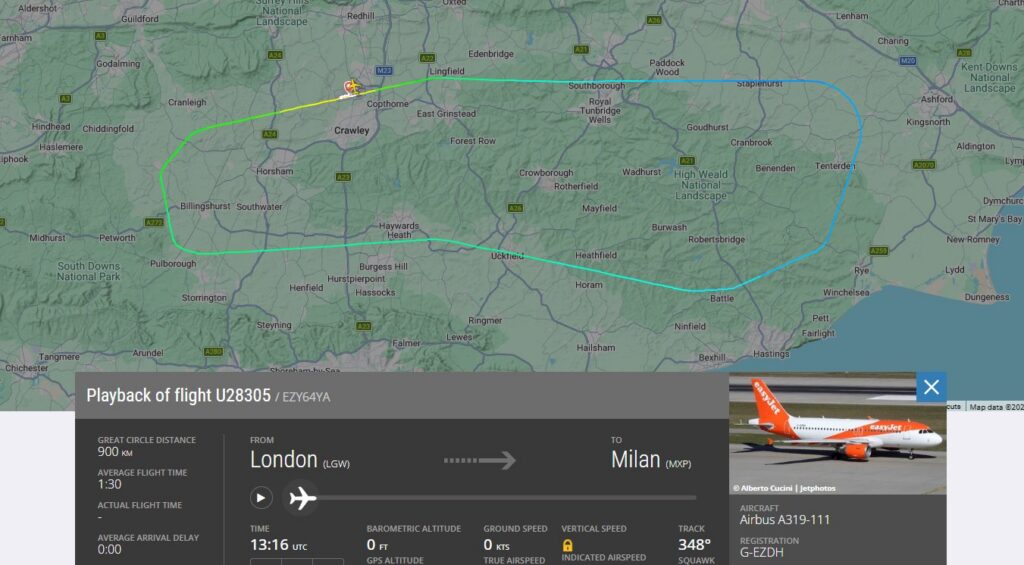
An EasyJet flight bound for Italy returned to London Gatwick this afternoon after a huge lightning bolt struck the aircraft shortly after takeoff.
Flight U28305 using an Airbus A319 registered as G-EZDH departed Gatwick runway 08R at 2.22pm GMT on Thursday, May 14.
Ground witnesses looked on nervously as they saw the stormy conditions around the airport during departure. Lightning then dramatically struck the aircraft as it climbed through the clouds. The pilots then decided to continue the initial climb to around 16,000 feet while checking all systems.
However, it was then that the pilots declared priority status and requested an immediate return to London Gatwick under standard safety procedures.
Air traffic control guided the aircraft back for an immediate approach. A safe and normal landing followed on the same runway just 27 minutes after the initial departure. EasyJet confirmed the diversion in an official statement as a precautionary step.
Crew members then assisted passengers with updates on replacement aircraft or revised schedules while emergency services met the plane on arrival as routine practice.
Lightning strike details on the easyJet flight
Witness reports and flight data confirm the incident occurred during the climb phase in stormy weather. Mandatory post-strike inspections will have followed to verify all avionics and airframe components remained intact.

What happens when lightning hits an aircraft?
As aircraft climb through clouds, lightning can attach to extremities such as the nose or wingtips. Electricity then flows along the conductive outer skin and exits at another point like the tail. Passengers notice a bright flash or loud bang, while instruments may flicker briefly.
Modern fuselages function as a Faraday cage to direct electric current safely around the exterior and away from the cabin interior. Flight crews are trained in protocols to follow to assess systems before deciding on any diversion.
Can lightning cause serious damage to aircraft?
Design standards require aircraft to be able to survive high-current strikes without loss of control. Surface marks or pitting might appear at entry and exit points, and in many cases damage stays cosmetic.
Engineers conduct detailed checks afterward to rule out any internal effects on wiring or fuel systems. Commercial jets experience such strikes several times yearly with passengers and crew remaining safe throughout, and often none the wiser.
Rare historical incidents led to improved bonding and protection features now standard across fleets. This EasyJet event is in line with routine outcomes where aircraft land safely after precautionary returns. But, it was exciting, nonetheless!