
Barcelona riots
Looting and street violence hit Barcelona as El Corte Inglés customers are trapped

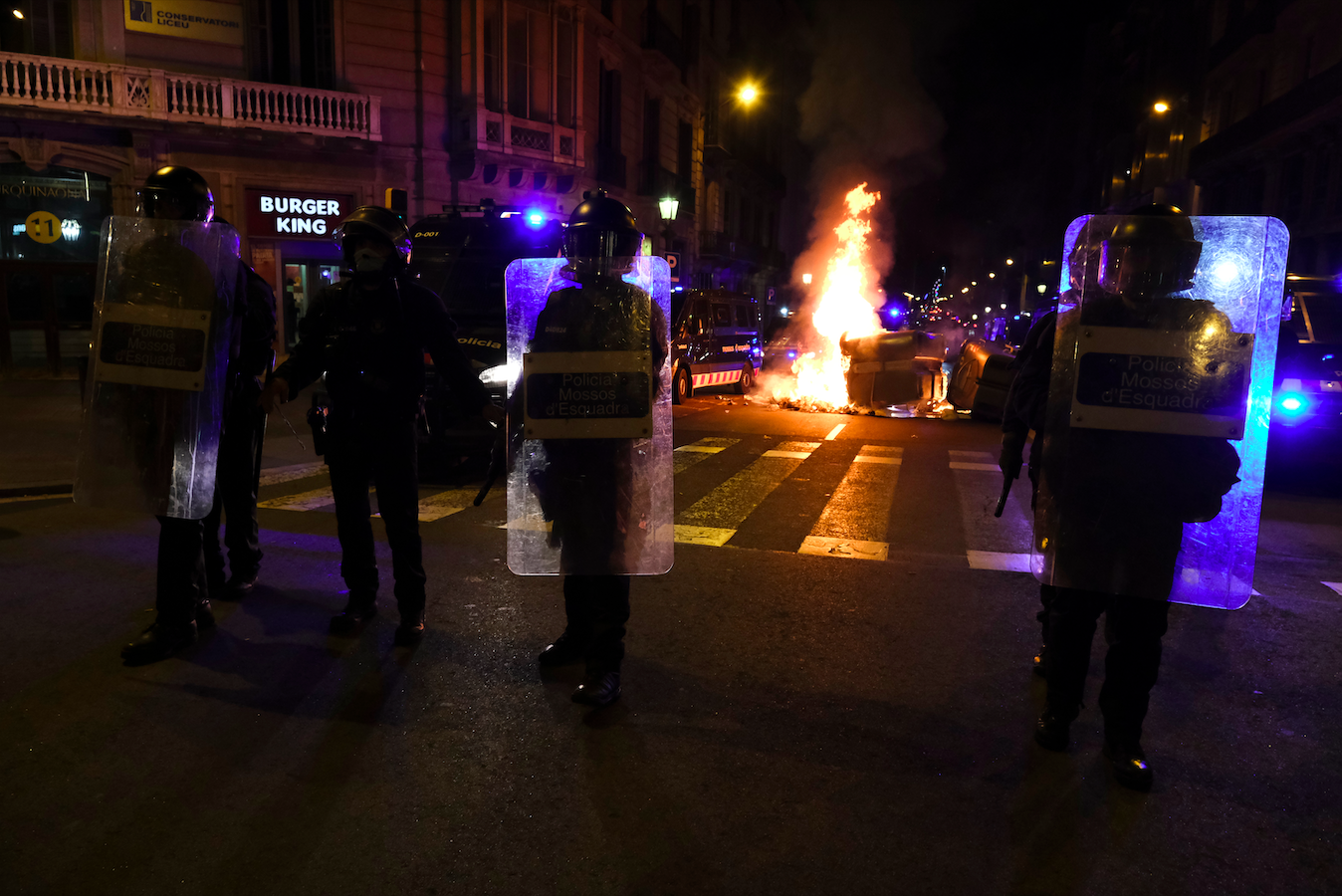
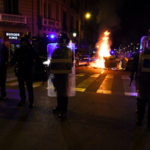
The Mossos d’Esquadra and Barcelona’s Guàrdia Urbana deployed more than ten police units. Photo credit: Alexandros Michailidis/Shutterstock
Barcelona’s city centre became a very different place on Saturday evening as a student protest against ‘the system’ descended into violence. Anyone heading into the centre to shop, eat out or enjoy an evening in the city faced a situation involving burning bins, looting, clashes with police and shops closing their doors, with El Corte Inglés among the businesses caught up in the unrest.
The demonstration began with young people gathering in Plaça de Catalunya under the slogan ‘Against the system, schools in struggle’. Called Instituts Indignats and organised through social media, it was inspired by the Lycées Indignés student movement in France. Rising housing costs and demands for better living conditions were among the grievances behind the gathering, which had not been formally notified to the authorities.
Fires, smashed street furniture and looted shops in Barcelona
By early evening, the protest had turned violent. Groups of demonstrators, many dressed in black with their faces covered, threw stones at bus shelters and set off fireworks and flares. Rubbish bins were set alight, parked motorbikes were knocked over and a barricade made from bins and motorcycles was set on fire near Carrer de Bergara and Plaça de Catalunya. Bus shelter glass was smashed and a traffic light damaged.
The damage was not confined to street furniture. Groups moved through nearby streets, including La Rambla and Portal de l’Àngel, where shops were targeted and some were looted. Businesses that had expected an ordinary Saturday trading day instead found themselves shutting their doors or protecting their windows as the unrest spread through the shopping district.
The Mossos d’Esquadra and Barcelona’s Guàrdia Urbana deployed more than ten police units as the situation escalated. Officers moved through the square and nearby streets, pursuing groups who scattered after police intervention. Stones and other objects were thrown at officers, and riot police carried out charges to disperse demonstrators.
El Corte Inglés closes as customers remain inside
El Corte Inglés in Plaça de Catalunya was among the businesses that closed as the unrest intensified. Catalan news outlet Nació reported that customers were still inside when the department store shut its doors. Other retailers in the area also lowered their shutters or took precautions to protect their premises as fears of further damage and looting grew.
The closure came as groups moved through the shopping district and reports of looting emerged. However, the available reporting does not establish how long customers remained inside El Corte Inglés, whether they could leave through another exit or when everyone was able to get out.
Police restricted access to the surrounding streets, closing off parts of the area between Plaça d’Universitat and Plaça d’Urquinaona. Access to the central metro station was also restricted, although transport services continued running without stopping there. The measures affected one of Barcelona’s busiest shopping and transport hubs on a Saturday evening.
Interior de El Corte Inglés de Plaza Cataluña. La gente no puede salir a la calle.
¿Qué pasa? ¿Es este el país seguro del que presume el autócrata Pedro Sánchez? https://t.co/ZnlZbdSOGT— J. Simón 🇪🇸 ##SanchismoNoGracias (@mehuelea) October 24, 2026
Police move in as the crowds scatter
The Mossos d’Esquadra and Barcelona’s Guàrdia Urbana deployed more than ten police units as the situation escalated. Officers moved through the square and nearby streets, pursuing groups who scattered after police intervention. Stones and other objects were thrown at officers, and riot police carried out charges to disperse demonstrators. The scale of the disorder grew as the evening went on. El País reported that close to 100 people had been detained, while shops and restaurants across the centre closed to avoid further damage. Firefighters were called to deal with fires, and police urged people to stay away from the area.
The unrest happened beside a separate encampment supporting the right to housing, which has occupied part of Plaça de Catalunya for weeks. Organisers of that protest distanced themselves from the violence, saying they did not want their peaceful campaign to be associated with the destruction taking place nearby. The two gatherings shared the same square but were separate demonstrations. Catalan president Salvador Illa condemned the violence while defending the right to protest. His message was that demonstrating is a democratic right, but attacking people, intimidating others and damaging property are not.
Barcelona joins the wave of European protests
The Barcelona gathering came as demonstrations over living costs, housing, education and public services have spread across Europe. In France, student protests over school conditions and teacher shortages have fed into wider anger over the cost of living. Belgium has also seen clashes during demonstrations over austerity and education, while protests in Italy have focused on prices, wages and public services. In Portugal, housing costs and pressure on household budgets have drawn thousands into the streets.
These are separate movements, not one coordinated European protest. But the issues behind them overlap: people are struggling with the cost of essentials, young people face barriers to finding affordable homes, and many feel that their concerns are not being addressed. In Barcelona, those grievances were the backdrop to Saturday’s demonstration. The fires, looted shops and clashes that followed left businesses closing early and parts of the city centre restricted as police worked to restore order.






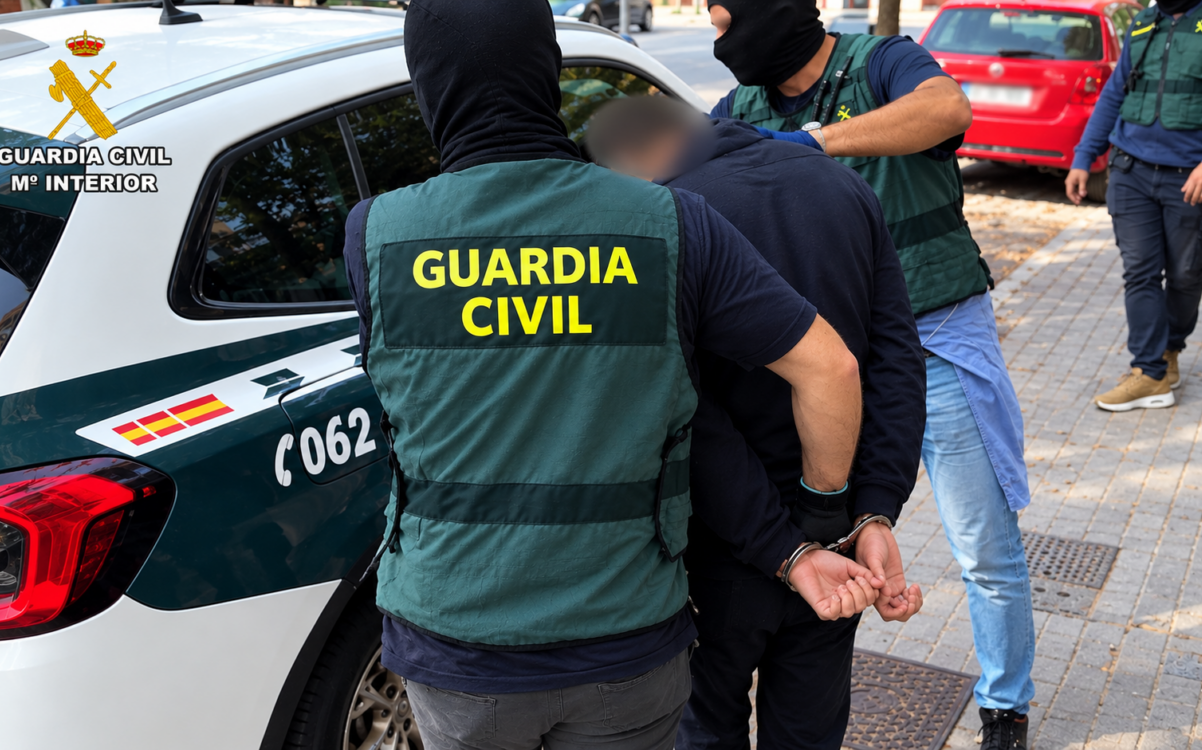
Online calls for looting and violence over Halloween weekend have prompted fresh concern in Spain after shops were targeted during unrest in Barcelona. Police have now arrested the alleged founder of Blocus, the movement linked by investigators to calls for further gatherings in several Spanish cities.
The Guardia Civil detained the suspect in Picanya, Valencia province, on Friday, October 30. EWN previously reported on the online mobilisation in its Halloween warning over new looting calls across Spain.
#OperacionesGC | Detenido en Picanya el presunto fundador e impulsor del movimiento “#Blocus” en España
📍 Picanya (#Valencia).
▶️ El detenido estaría vinculado a convocatorias difundidas en redes sociales que, bajo la apariencia de protestas estudiantiles y otras reivindicaciones sociales, buscaban llevar a cabo saqueos y actos violentos
👮🏻♂️ La investigación se relaciona con los disturbios del 24 de octubre en #Barcelona, en el que alrededor de 500 personas participaron en los altercados.
🚔 La detención se ha producido mientras se preparaba una nueva movilización para el día 31 de octubreda a convocatorias para saqueos y actos violentos bajo cobertura de protestas estudiantiles
🔗https://t.co/m8rlWgOFII
— Guardia Civil (@guardiacivil) October 30, 2026
According to the police, the man created and administered Telegram groups used to coordinate the planned actions. He also allegedly presented himself on social media as the person in charge of Blocus in Spain.
Investigators say he shared a video featuring a masked individual claiming to be the movement’s leader. The case could involve charges of aggravated public disorder and participation in a criminal organisation, although the final legal classification will depend on the judicial investigation, according to Europa Press’s report on the arrest.
Blocus linked to Barcelona riots
The arrest follows disturbances in Barcelona on Saturday, October 24, when hundreds of people took part in unrest that resulted in shops being looted, fires being started and numerous arrests.
The disturbances included looted shops, burning rubbish bins and clashes with police, with businesses in the city centre forced to close as the violence escalated. EWN reported on the Barcelona looting and street violence that left shoppers trapped inside El Corte Inglés.
Authorities are investigating calls for further demonstrations on Saturday, October 31, coinciding with Halloween. Online calls have circulated for gatherings in several Spanish cities, although the existence of a call does not mean that an event will necessarily take place or turn violent.
According to investigators, Blocus recruitment began with videos on TikTok and posters featuring QR codes directing interested young people into WhatsApp and Telegram groups. RTVE, the Spanish state broadcaster, has also examined how Blocus used social media to spread calls for demonstrations.
Police allege that some messages encouraged participants to wear black clothing and masks to make identification more difficult. Other communications reportedly identified shops as potential targets and discussed how to carry out looting.
The authorities have not established that every account or person using the Blocus name was part of a single, centrally controlled organisation.
Police prepare for further gatherings
Barcelona’s security authorities have agreed to coordinate police and judicial action in response to planned gatherings, stressing the need to prevent a repeat of the previous weekend’s violence, according to El País’s report on the city’s security preparations.
Investigators are continuing to examine the online networks behind the calls for unrest and whether further individuals were involved in organising the alleged criminal activity.
The identity of the man described by the Guardia Civil as the movement’s alleged founder has not been confirmed in the official announcement.


Woman makes horror discovery of newborn’s body in freezer while clearing out late mother’s home in Spain
Asian hornets are heading for the Costas: how to spot a nest this winter and who to call
Christmas food bill worries drive Spanish households to start shopping weeks early
Viral video in Spain sparks fury over drivers who ‘have no idea how to drive’
Spain’s 24-hour shop with no tills expands to Barcelona Airport
Spain’s pet owners face fines of up to €200,000 for animal welfare offences


-
DGT3 weeks ago
Viral video in Spain sparks fury over drivers who ‘have no idea how to drive’
-
Automated supermarket4 weeks ago
Spain’s 24-hour shop with no tills expands to Barcelona Airport
-
Keeping cats and dogs outside4 weeks ago
Spain’s pet owners face fines of up to €200,000 for animal welfare offences
-
Council tax (IBI)4 weeks ago
Barcelona plans 150% property tax increase on tourist flats ahead of 2028 ban
-
Age Concern Marbella - San Pedro2 weeks ago
Halloween lunch sells out as 51 join Marbella get-together
-
Consumer Rights Spain3 weeks ago
EU offers extra year of warranty on phones, but Spain faces delays
-
airports4 weeks ago
Travelling between Spain and Italy? The extra border checks could soon end
-

 %3 weeks ago
Santa Pola Museo Del Mar