Connect with us

%

Michael Douglas Back In Mallorca

Published

on

michael-douglas-back-in-mallorca

Michael Douglas shares a message with fans while enjoying Mallorca Credit: Instagram/MichaelDouglas

Hollywood legend Michael Douglas is once again enjoying time in Mallorca, giving fans another glimpse into his enduring love affair with the island he has called a second home for decades.

The Oscar-winning actor, 81, shared a video on Instagram from his latest stay in Mallorca, encouraging his millions of followers to visit the Sa Bassa Blanca Museum near Alcúdia. In the clip, Douglas describes the attraction as an “incredible and fabulous” place, helping shine an international spotlight on one of the island’s lesser-known cultural treasures.

Back on his beloved island

Few international stars have a relationship with Mallorca quite like Douglas. His connection stretches back to the late 1980s, when he purchased the spectacular S’Estaca estate on the dramatic coastline between Valldemossa and Deià. Nestled within the UNESCO-listed Serra de Tramuntana, the historic property has become one of the island’s most famous celebrity homes.

Over the years, Douglas has frequently spoken about how much peace he finds in Mallorca, regularly spending long summer holidays there with family and friends. The actor has also been credited with helping raise the island’s profile internationally, with many visitors drawn by his long-standing affection for the island.

A family retreat

Douglas shares two children, Dylan and Carys, with actress Catherine Zeta-Jones. Although the couple have homes elsewhere, Mallorca has remained an important family retreat throughout their marriage, with the pair often spotted enjoying local restaurants, villages and the island’s coastline during the summer months.

The actor’s ties to Mallorca extend beyond his own home, with longstanding friendships across the island and regular appearances at cultural events during his visits.

Spotlight on Sa Bassa Blanca

The Sa Bassa Blanca Museum was founded by artists Ben Jakober and Yannick Vu, longtime friends of Douglas. Set within beautiful landscaped grounds overlooking the Bay of Alcúdia, it combines contemporary art, sculpture gardens and permanent collections with a strong focus on education and cultural exchange.

Douglas’s latest Instagram post is proof he is one of Mallorca’s most devoted ambassadors, whose decades-long connection continues to put the island in front of a global audience each summer.

%

Spain Heatwave Linked To 463 Deaths

Published

on

spain-heatwave-linked-to-463-deaths

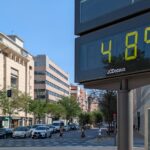
Extreme temperatures topped 40°C in parts of Spain during the latest heatwave. Credit : Carlos Koblischek, Shutterstock

Spain may have officially come out of its second heatwave of the summer, but health experts say the risk from extreme temperatures is far from over. Preliminary estimates suggest the six day heatwave that ended on Thursday 9 July was linked to 463 deaths, making it deadlier than the country’s first heatwave in late June.

While temperatures are expected to ease slightly over the weekend, much of Spain will continue to experience unusually hot weather. Authorities are urging people, especially older adults and those with existing health conditions, to remain cautious even though the heatwave has technically come to an end.

Spain’s second heatwave becomes the deadliest of the summer so far

According to Spain’s Daily Mortality Monitoring System (MoMo), 463 deaths are currently estimated to be linked to the second heatwave, which lasted from Sunday 5 July until Thursday 9 July.

The figure is already significantly higher than the 333 heat related deaths recorded during the first official heatwave between 21 and 25 June.

The sharpest rise came during the final two days of the latest heatwave. An estimated 261 people died on 8 and 9 July alone, with Thursday proving the most severe day.

MoMo estimates that 138 deaths were associated with extreme temperatures on 9 July, while 123 were recorded the previous day, reflecting the impact of soaring temperatures across much of the country.

These numbers remain preliminary and are expected to be refined over the coming week as more data becomes available.

It is also important to understand what these figures represent. MoMo does not record confirmed heat related deaths individually. Instead, it uses a recognised statistical model that compares expected mortality with the number of deaths actually recorded, while taking daily temperature data into account. The difference, known as excess mortality, provides an estimate of the number of deaths that may be associated with extreme heat.

Who is most at risk during periods of extreme heat?

Health authorities have repeatedly stressed that extreme heat does not affect everyone equally.

Older people, those with chronic heart or respiratory conditions and individuals with other underlying illnesses remain the most vulnerable. High temperatures can place additional strain on the body, worsening existing medical conditions and increasing the risk of serious complications.

During the final day of the heatwave, thermometers climbed above 42C in several parts of Spain, while almost the entire country was placed under weather alerts.

Only Cantabria and Asturias escaped heat warnings, with around 10 regions placed on orange alert, indicating a significant risk to health from exceptionally high temperatures.

Although many people associate heat related illness with dehydration or heatstroke, prolonged periods of very high temperatures can also place significant stress on the cardiovascular and respiratory systems, particularly among vulnerable groups.

The heatwave may be over but Spain is still facing very high temperatures

From Friday onwards, meteorologists say Spain will no longer meet the strict criteria used to classify a heatwave. However, that does not mean temperatures will suddenly return to normal.

According to Aemet spokesperson Rubén del Campo, much of the country will continue to experience very high temperatures over the coming days, despite the official end of the heatwave.

For anyone spending time outdoors, the advice remains largely unchanged. Staying hydrated, avoiding strenuous activity during the hottest part of the day and checking on elderly relatives or neighbours continue to be among the most effective ways to reduce the health risks associated with prolonged hot weather.

The latest figures also highlight the broader impact of this summer’s extreme temperatures.

According to MoMo, 621 estimated heat related deaths were recorded during the first nine days of July alone.

Looking at the wider picture, June ended with an estimated 939 deaths linked to extreme temperatures.

Since 15 May, when Spain’s Ministry of Health activated its annual summer heat plan, an estimated 1,667 deaths have been associated with excess temperatures across the country.

Those figures underline a growing reality for Spain. Even when an official heatwave comes to an end, the health risks often continue for days afterwards, particularly during prolonged periods of exceptionally hot weather. With much of the country still facing temperatures well above seasonal averages, health officials continue to encourage residents and visitors alike not to let their guard down simply because the heatwave has officially ended.

Continue Reading

%

Tracy-Ann Oberman Refused Spain Flight

Published

on

tracy-ann-oberman-refused-spain-flight

EastEnders star Tracy-Ann Oberman has revealed she was unable to board a flight to Spain after an EU passport rule left her grounded, despite her passport showing an expiry date in 2027.

Celebrity airport shock over passport issue

Former EastEnders actor Tracy-Ann Oberman says Ryanair airline staff refused to let her travel after deciding her passport did not meet European Union entry requirements, even though it appeared to have almost two years left before it expired.

Sharing her experience on social media, Oberman explained she had assumed her passport remained valid because of the printed expiry date. Checks before boarding revealed that its issue date, rather than the expiry date alone, meant it no longer qualified for travel to Spain under current EU rules.

Tracy-Ann Oberman twitter
Passport confusion
Credit:TracyAnneBermanX

Oberman’s experience shows how a passport can appear valid while failing to meet the entry requirements for many European destinations.

Why the 10-year passport rule catches travellers out

Current regulations require most UK passports used for travel to countries in the Schengen Area to have been issued less than 10 years before the date of arrival. Passports must also have at least three months’ validity remaining beyond the planned departure date.

Confusion often stems from older British passports that included extra months carried over from a previous document. Although those months still appear in the printed expiry date, they are not counted when calculating the passport’s age for entry into most EU countries.

Oberman’s experience is not an isolated case. Earlier this summer, a British mother was unable to board a flight to Greece after checks found her passport fell outside the EU’s validity rules despite its printed expiry date appearing to be valid. Both incidents show how confusion often centres on a passport’s issue date rather than the expiry date.

Check your passport before you fly

Holidaymakers travelling to Spain, France, Italy, Portugal or Greece should check both the passport’s issue date and expiry date well before leaving for the airport.

Taking a few minutes to confirm that a passport meets the EU’s entry requirements could help avoid expensive disruption, missed flights and the disappointment of seeing a long-planned holiday come to an unexpected end.


Continue Reading

%

Ryanair Flight Nightmare: Passenger Sucked Out Window

Published

on

ryanair-flight-nightmare:-passenger-sucked-out-window

Ryanair flight over Thessaloniki. Credit: Leif Ingvarson – Shutterstock

Ryanair flight FR1879 from Thessaloniki/Salonika in Greece to Memmingen in southern Germany turned into a scene of pure terror on Friday morning after part of the engine broke off and smashed straight through a cabin window.

Minutes into the journey the Boeing 737-8AS shook with a loud bang that sent shockwaves through the whole aircraft.

A 61-year-old man from Serbia who was sitting beside the shattered window got dragged halfway out into the freezing air by the explosive decompression. His wife and fellow passengers next to him fought to hold him back and stop him disappearing into the sky for good. Screams filled the cabin as oxygen masks dropped down from above while people grabbed at them in fear.

Pilots kept a steady head, spoke calmly to the crew and turned the plane straight back towards Thessaloniki Macedonia Airport in Greece.

Problem first seen while flying over North Macedonia

The crew spotted the engine issue while the plane passed over North Macedonia and realised they could not sort it out while still in the air. They called in an emergency and set course for the airport they had just left behind.

BREAKING: Ryanair passenger reportedly saved from being sucked out the cabin after window fails during a flight from Thessaloniki to Memmingen.

According to local media Ryanair flight FR1879, a Boeing 737-8AS, returned safely to Greece on Friday after part of a damaged engine… pic.twitter.com/YPgRodjPFp

— Breaking Aviation News & Videos (@aviationbrk) July 10, 2026

Ground teams got the message and were preparing for a possible rough landing with all emergency services on full alert. Firefighters, police and ambulances lined up ready in case anything went wrong on the return.

Plane touches down safely

Ground staff watched the safe touchdown before moving the aircraft to a special area away from the main terminal. Checks on the damage showed the engine had taken a real battering while the fuselage itself stayed intact with no big cracks or holes, except in the one window.

Injured passenger heads straight to hospital

A 61-year-old Serbian man reached AHEPA University General Hospital back in Thessaloniki, still in shock but awake, lucid and talking. Medics found friction burns across his body from the powerful pull of the air outside. He now faces a CT scan to rule out fractures or any deeper harm.

NEW: Ryanair passenger, 61, nearly sucked out of Greece–Germany flight after damaged engine debris shatters cabin window; suffers friction burns pic.twitter.com/L8cpxF1Ad9

— Rapid Report (@RapidReport2025) July 10, 2026

Another passenger asked for help on the ground and received treatment at the airport itself. Four travellers in all went for hospital checks just to be safe, with most getting the all clear and heading back to the airport for a replacement flight, while one stayed on for more tests.

Mimi, who was on the flight, said on X, “Thankfully we’re all (almost) at least physically ok and heading to Munich as we speak. The person near the window had a strong hit and is in the hospital right now. No more news at the moment.”

Replacement plane whisks passengers to their destination

Ryanair moved fast and brought in a second aircraft so everyone could still make it to Memmingen with as little delay as possible. The replacement flight took off from Thessaloniki at around 9.50am local time, carrying the original group minus those getting medical attention.

Aviation watchdogs launch probe into engine failure

Experts have started digging into what caused the engine part to come loose and strike the window so hard.

Ryanair said in a statement that the window was smashed during the flight, but the plane landed normally and all passengers returned to the terminal without further incident. Company bosses stressed they brought in the replacement flight quickly to keep disruption to a minimum for those on board.

Union officials later said the incident came close to a full tragedy as the passenger’s body ended up out in the rushing air until his wife and others dragged him back inside.

Remember to keep your seatbelt fastened at all times!

Continue Reading

Trending

Copyright © 2017 Spanish Property & News