Connect with us

%

Murcia City Opens Its First Five-Star Hotel Inside Restored 18th-Century Palace

Published

on

murcia-city-opens-its-first-five-star-hotel-inside-restored-18th-century-palace

Murcia opens its first five-star luxury hotel inside historic palace. Photo Credit: Booking.com

Amid vibrant music, mouth-watering regional food, and a grand, festive atmosphere, Murcia has also officially entered a new era of luxury hospitality with the opening of the city’s very first five-star hotel, coinciding with the 2026 edition of the Murcia Fair. The landmark opening of the Palacio de San Juan, a Royal Hideaway Hotel on Wednesday, September 9, has fulfilled a long-standing ambition to establish a luxury accommodation in the heart of the capital.

Restoring an 18th-century palace for luxury living: Murcia City’s first five-star hotel

The boutique hotel, in the Plaza de San Juan, occupies the 18th-century Palacio de Floridablanca, the former home to the iconic hotel Arco de San Juan. The transformation is the result of a joint business venture between Barceló Hotel Group and Grupo Fuertes, representing a total investment of more than €17 million. Architect Jesús Zafra led the two-year restoration, carefully preserving the building’s Grade 3-protected neoclassical facade while adding two upper levels to expand the property.

Inside, the hotel merges historic architecture with contemporary luxury, using wood and marble finishes, as well as inspiration from Scandinavian interior design. The hotel boasts 70 rooms, each starting between €200 and €300 per night, and ultra-luxury suites reaching up to €1,500 per night. The opening of the hotel has also created 70 direct jobs.

Michelin-starred dining and delicious local tapas

Gastronomy is central to the hotel’s identity. On the ground level, the Ocra restaurant offers refined cuisine crafted from local Murcian produce, under the guidance of two-Michelin-starred consultant chef Juanlu Fernández and executive chef Pablo Rodríguez. Later this autumn, a traditional tapas terrace will open adjacent to the hotel in the plaza to welcome locals for the city’s tardeo tradition.

Rooftop views across the historic centre: See the Murcia Cathedral from a luxury hotel bar

On the upper floor is Royal Heaven, the city of Murcia’s first rooftop bar and pool deck reserved exclusively for guests. The terrace provides panoramic views across the historic centre, including the spire of the famed and iconic Murcia Cathedral.

As Grupo Fuertes president Tomás Fuertes noted at the launch, the arrival of the Royal Hideaway marks a transformative investment that elevates quality tourism and positions Murcia firmly on the global luxury stage.

With the grand opening, a former three-star property in Murcia has been transformed into a luxury five-star destination, and this year’s edition of the Murcia Fair had yet another reason to be the major talking point of the Costa Calida this September.

%

France Runs Short Of Diesel As Europe Faces Fuel Supply Warning

Published

on

france-runs-short-of-diesel-as-europe-faces-fuel-supply-warning

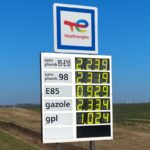
Diesel prices through the roof in France. Credit: CGT X

France is facing growing problems getting fuel to petrol stations, raising concerns about what a worsening diesel shortage could mean for drivers and households in Spain.

Around 15 per cent of French petrol stations were reporting shortages of at least one type of fuel on September 20, according to official figures reported by French broadcaster TF1. That works out at around 1,500 stations across the country.

The situation has deteriorated quickly, with the proportion affected rising from around 7 to 9 per cent in the middle of last week. France has not run out of fuel nationally, but the shortages are a warning of the pressure building across Europe’s diesel market.

Why is diesel becoming harder to find?

Several problems are hitting fuel supplies at the same time. Disruption to oil shipments through the Strait of Hormuz has reduced supplies reaching international markets, while problems affecting Middle Eastern oil infrastructure have added further pressure.

Russia is also producing and exporting less diesel after Ukrainian attacks damaged several of its refineries. Moscow has restricted exports to protect supplies for its own motorists and businesses.

European refineries are working hard to make up the shortfall, but diesel prices have risen sharply as countries compete for available supplies. According to Reuters, European diesel prices recently reached around €2.39 a litre, a record level.

France also has a problem of its own. TotalEnergies has capped prices at its French stations at €1.99 a litre for petrol and €2.25 for diesel. The cheaper fuel has attracted more drivers, meaning some stations are selling diesel faster than replacement deliveries can arrive. French government figures showed that around 90 per cent of stations reporting supply difficulties in mid-September belonged to TotalEnergies.

Could diesel prices rise more in Spain?

Drivers in Spain are already paying more at the pumps. Average Spanish diesel reached around €1.83 a litre in mid-September, while petrol was approaching €1.87. Prices could rise further if the European diesel market becomes tighter.

Spain is not currently experiencing a nationwide fuel shortage, and there is no indication that motorists should expect petrol stations to suddenly run dry. However, Spain is still part of the European fuel market. If refiners and fuel companies have to pay more to obtain diesel, those higher costs can eventually reach the pump. A prolonged shortage could therefore mean another round of increases for Spanish drivers.

Why higher diesel prices could affect everyone

Diesel is not just a drivers’ problem. Lorries and vans depend heavily on diesel to move goods around Spain. Farmers also use it to operate tractors and other machinery. Higher fuel costs can therefore work their way into the prices of food, building materials, parcels and other everyday goods.

Spanish farmers are already feeling the pressure. Agricultural diesel was reported at around €1.65 a litre earlier this month, with farming organisations warning that the higher cost is adding hundreds of millions of euros to the sector’s bills. Transport companies face the same problem.

A delivery company paying more for diesel has to absorb that extra cost or pass some of it on to customers. Taxis, coaches, buses and other commercial vehicles can also be affected.

Spain has some protection from a diesel shortage

Spain does have an important advantage over France. The country has a large refining industry capable of producing substantial quantities of fuel, while companies can also import refined diesel when it is available internationally. That means French-style shortages are not inevitable in Spain.

Much will depend on how long the problems affecting Russian and Middle Eastern supplies continue and whether global refineries can keep producing enough diesel to satisfy demand. Also, Spain’s diesel discount is also due to disappear at the end of September.

For British expats in Spain, the biggest concern is therefore not empty petrol stations at this stage. It is the possibility that diesel becomes considerably more expensive, pushing up the cost of driving, deliveries, farming, food and other everyday services.

With Europe heading into the autumn and winter months, France’s empty pumps are a warning worth watching.

Continue Reading

%

Dog Lovers Day Out At Casares Guau Fest

Published

on

dog-lovers-day-out-at-casares-guau-fest

Dog owners and lovers have a treat in store, as Casares Costa gets ready to welcome its beloved pets festival back for another helping of fun, learning and tail-wagging togetherness.

What’s happening at this year’s celebration

Jardines del Rosario opens up its gardens on Sunday, September 27 from 11am for Guau Fest, or “Woof Fest” if you prefer! Casares Town Hall organises the free family gathering together with Comunicacion Al Dente, weaving it into the wider “Deja Huella” (Leave a Mark) awareness campaign that encourages owners to clean up after their dogs and treat animals with care and respect.

Visitors can browse stalls selling pet products and services, listen to talks on canine training and behaviour, and let children loose on workshops designed just for them. The debut edition featured face painting, balloon modelling and a costumed character visit for younger guests, giving a flavour of what families might find this time round.

Treats, workshops and a canine cookery class

New additions this year include a dog illustration workshop and a canine bakery session, where owners can learn to whip up homemade snacks for their pets. Free gifts under the “Casares Dog Lovers” banner will also be handed out, with food and drink stalls on hand to keep hungry humans fuelled.

A Canine Unit will demonstrate the impressive work carried out by assistance and detection dogs, giving the public a rare glimpse of these highly trained animals in action. La Linea’s Local Police are bringing their own handlers and dogs to the festival, building on the involvement seen at previous gatherings.

Getting involved

Businesses, associations and animal-related entities keen to take part can reach organisers on 650 163 356 or via Instagram at @guau.fest. Entry is completely free, and everyone is invited to bring their pets and join in. For more information visit the Casares Town Hall website and FaceBook pages.

Continue Reading

%

Madeleine McCann Prime Suspect Planning Book To Tell His Side Of The Story

Published

on

madeleine-mccann-prime-suspect-planning-book-to-tell-his-side-of-the-story

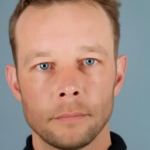
Brückner maintains that he had no involvement in her disappearance. Photo credit: MET Police record

If you have followed the Madeleine McCann case for years, there is one question that has never gone away: what happened to the little girl who disappeared from her family’s holiday apartment in Portugal in 2007? Now, almost two decades later, the man German authorities identify as the main suspect is preparing to put his own version of events into print.

Christian Brückner is reportedly planning a book in which he will defend his innocence and set out his account of what happened. The development comes at a particularly striking moment, after he has also broken years of silence about where he says he was on the night Madeleine disappeared.

Brückner wants to tell his side

Brückner, 49, has begun working on a draft and has approached at least one professional writer to help with the project. According to reports, he wants the book published in both German and English and is looking for a publisher or financial backing. Sources cited by The Mirror claim Brückner is keen to tell his side of the story and believes a book could give him the opportunity to explain his version of events and defend himself against the allegations surrounding Madeleine’s disappearance. The reported plans come after years in which Brückner has largely refused to discuss the case publicly.

He has never been charged with Madeleine’s disappearance and has repeatedly denied having anything to do with what happened to her. Being identified as a suspect by German authorities does not mean he has been convicted of any offence connected to the case. Madeleine was three years old when she disappeared from her family’s holiday apartment in Praia da Luz, in Portugal’s Algarve, on May 3, 2007. Her disappearance prompted an international investigation and generated worldwide attention, with searches continuing over the years in Portugal, Spain and Germany.

He says he was close to the apartment

The reported book plans follow a recent interview in which Brückner gave a new account of his whereabouts on the night Madeleine vanished. Speaking to the Mail on Sunday, he claimed he was around 150 yards from the McCann family’s apartment. Brückner said he was on a beach near the resort, where he claims he was selling drugs.

He also said he had travelled from Spain to Portugal carrying marijuana and claimed Portuguese police stopped his van three times that night while officers were searching for Madeleine. Brückner has maintained that he was not involved in her disappearance and reportedly said he had previously kept quiet because he believed authorities were attempting to frame him. His account places him close to the holiday apartment that night, but it remains his own version of events and does not establish what happened to Madeleine.

What happened to Madeleine?

German prosecutors identified Brückner as a suspect in 2020. He has not been charged in connection with Madeleine’s disappearance. The case against him has therefore remained an investigation rather than a criminal conviction. Brückner was released from prison in Germany in September 2025 after serving a sentence for the rape of a 72-year-old woman in Portugal, an offence unrelated to the Madeleine investigation. He has also faced other allegations, which he has denied. His reported plans to publish a book could now bring his version of the case into the public eye in considerably greater detail.

There is also a financial motive being reported. Sources say Brückner sees the project as a possible way of making money, as well as an opportunity to present his account directly to readers. Whether the book is actually published remains to be seen. There is currently no confirmed publication date or publisher. For the McCann family, however, the central issue remains unchanged.

Madeleine disappeared almost 20 years ago and has never been found. A book from the man German authorities regard as their main suspect could contain new claims, explanations and his account of the night she vanished. But it would still be one person’s version of events, rather than an established account of what happened to the missing three-year-old. Until there is evidence establishing what happened to Madeleine, the biggest question in one of Britain’s most closely followed missing-person cases remains unanswered.

Continue Reading

Trending

Copyright © 2017 Spanish Property & News