Connect with us

%

Rejected For Spain’s Widow’s Pension? Unmarried Parents Could Get A Second Chance

Published

on

rejected-for-spain’s-widow’s-pension?-unmarried-parents-could-get-a-second-chance

The Government intends to introduce the change through a royal decree-law. Photo credit: gg-foto/Shutterstock

Unmarried parents in Spain who were refused a widow’s pension because they never officially registered their relationship could soon have another chance to claim financial support. The Government is preparing a change that would allow eligible couples with children in common to prove their relationship through shared residence, while a proposed 12-month window could reopen the door for people whose applications were previously rejected.

The measure is due to go before the Council of Ministers on Tuesday, October 20. If approved, it would change the rules for unmarried couples and introduce a route for reviewing earlier cases, potentially helping families who were excluded because of a formal requirement rather than a lack of evidence that they had built a life together. 

A year to revisit rejected applications

One of the most significant elements of the proposed reform is a transitional period of 12 months for people who were previously unable to obtain a widow’s pension. Under the draft, those affected could ask for earlier applications to be reviewed or submit a new claim under the revised rules. This could matter to surviving partners who had children with the deceased and lived together for years but were refused because they had not registered their relationship as a pareja de hecho. 

The provision could be particularly useful to people who did not challenge an earlier decision because they believed there was no way around the registration requirement. If the proposed change takes effect, they may have an opportunity to have their circumstances considered under the revised criteria. However, a previous rejection would not automatically be overturned. Applicants would still need to satisfy the conditions applicable to their claim, and the final legislation will determine how the review process operates. The 12-month period is therefore an opportunity to seek reconsideration, not a guarantee of payment.

Why the current rules have left some families without a pension

Spain’s contributory widow’s pension provides financial support to eligible surviving spouses or registered partners following the death of their partner. But unmarried couples who have children together can still face a legal obstacle if they never formally established their relationship. Under Article 221 of the General Social Security Law, couples who are not married generally need to prove that their pareja de hecho was registered with the relevant authority or established in a public document at least two years before the death. 

The existing rules normally require five years of uninterrupted cohabitation, but couples with children in common are exempt from that particular five-year requirement. The formal-registration requirement is separate, however, and having children together does not automatically remove it.

That distinction can have serious financial consequences. Two people may have shared a home, raised children and managed household expenses together for years, yet the surviving partner may still be refused a pension because they never completed the official registration process. The proposed reform would address that specific problem by allowing eligible couples with children in common to establish their entitlement through evidence of cohabitation instead.

What would unmarried parents need to prove?

Under the draft, couples with children in common would need to demonstrate at least two years of uninterrupted cohabitation immediately before applying for the pension. They would not need to have registered their relationship as a pareja de hecho. A municipal residence certificate, known as a certificado de empadronamiento, would be accepted as evidence that the couple shared an address. This would give surviving partners a defined way to prove cohabitation without having to demonstrate that they completed the formalities required under the existing system. 

The change would not remove all the conditions attached to the benefit. The other eligibility requirements for a contributory widow’s pension would continue to apply, including the relevant Social Security conditions concerning the deceased person’s contribution record, where required. The reform is therefore aimed at one particular barrier: the need for unmarried parents to have formally registered their relationship. It would not make every surviving parent automatically eligible simply because they have a child with the deceased.

A separate change for divorced and separated people

The proposed package also includes a different measure affecting some people who divorced or legally separated before 2008. Eligible survivors in this group would be able to receive a widow’s pension alongside another public pension, such as a retirement or incapacity pension. The proposal is intended to remove restrictions that can prevent some people from combining these benefits. 

This provision is separate from the changes for unmarried parents. It concerns the compatibility of pensions rather than the formal recognition of a relationship, and the final legislation will determine which cases qualify. For people affected by these rules, the distinction matters: the proposed exemption for unmarried parents would change how a relationship can be proved, while the provision for some divorced or separated people would affect whether two pension payments can be received together.

When could the new rules take effect?

The Government intends to introduce the measures through a royal decree-law. Approval by the Council of Ministers would be an important step, but the decree must also be validated by Parliament within 30 days to remain in force. Until the changes are formally approved and take effect, the existing eligibility rules continue to apply. 

The immediate development for unmarried parents is not simply the possibility of qualifying without registration, which EWN has previously reported. It is the proposed opportunity for people whose claims were rejected to seek reconsideration under the revised rules. Anyone who believes they may be affected should check the final published legislation before making a new application or assuming that a previous refusal will be reversed. The exact conditions and procedure for reviewing earlier claims will depend on the approved text.

%

100kg Wild Boar Smashes Into French Funeral Parlour

Published

on

100kg-wild-boar-smashes-into-french-funeral-parlour

Wild boar runs amok in village funeral parlour. Credit: archive image

A giant wild boar weighing around 100kg caused chaos in a small French village after charging through the streets, smashing its way into a funeral parlour and leaving two people terrified after a face-to-face encounter.

The extraordinary incident happened in Salviac, in the Lot department of south-west France, on Sunday, November 1, when the animal was apparently startled during a hunting expedition and headed towards the village instead of escaping into the surrounding countryside.

According to French newspaper La Depeche du Midi, people sitting outside the village’s La Poste bar had to rush indoors as the enormous animal came charging down the street.

Boar crashes into funeral business

The animal then crossed the road and repeatedly charged at the entrance to a funeral business, eventually smashing through its glass doors. Owner Catherine Figeac was inside meeting a client when the boar burst into the reception area. The pair suddenly found themselves face to face with the animal, which was so large that its back repeatedly struck the top of her 90cm-high desk.

Terrified, Catherine climbed onto her chair and shouted warnings to people outside as the boar charged through the premises. Although it damaged the entrance and some equipment, neither she nor her client was injured.

The animal subsequently headed towards a nearby restaurant, where it also attempted to force its way through the entrance before eventually fleeing towards the Dégagnac road. Members of the local hunting association later visited the funeral business and arranged for its insurance to cover the damage.

Wild boar increasingly close to homes

The incident has also drawn attention to the growing presence of wild boar around residential communities. A follow-up report by La Depeche on November 12 quoted the president of the Lot Departmental Hunters’ Federation, Michel Bouscary, who said encounters between the animals and residents were becoming increasingly common.

The problem is not confined to France. Wild boar have become a familiar sight in parts of Spain, particularly around the Costa del Sol, where easy access to food and water has encouraged them into built-up areas. Euro Weekly News has previously reported on wild boar running along the A-7 motorway in Mijas, as well as growing concerns over their presence in Fuengirola.

The Spanish government’s national hunting management strategy advises people who encounter wild boar not to run, approach the animals or feed them. Instead, they should leave an escape route and alert the authorities if necessary. Its guidance is particularly relevant to anyone walking dogs or living close to woodland and open countryside.

The Salviac incident ended without injuries, but it was a frightening reminder of what can happen when large wild animals suddenly find themselves in the middle of a residential community.

Continue Reading

%

Glasses Under Scrutiny: Congress Backs Tougher Checks On Cheap Spectacles For Driving

Published

on

glasses-under-scrutiny:-congress-backs-tougher-checks-on-cheap-spectacles-for-driving

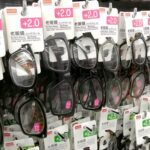
Cheap pre-mounted glasses. Credit: COOOA

Thousands of people in Spain buy inexpensive ready-made glasses from pharmacies, supermarkets and other shops, but a new parliamentary decision could bring greater scrutiny to how these products are sold.

Spain’s Congress of Deputies has backed calls for stronger road-side inspections and monitoring of spectacles, including ready-made glasses, prescription glasses and contact lenses sold online or outside specialist healthcare establishments.

The plan was approved by the Committee on Social Rights and Consumer Affairs on May 26, receiving 33 votes in favour and four against. It was subsequently published in the Congressional Bulletin on June 10.

The proposal, put forward by the Socialist parliamentary group, calls on the Government to work with regional authorities and European institutions to strengthen controls over the sale of optical products.

However, the decision does not introduce an outright ban on ready-made glasses or make them illegal to buy outside opticians.

Why cheap glasses are under scrutiny

Ready-made glasses, known in Spain as gafas premontadas, are sold in standard magnifications rather than being individually prescribed. Unlike prescription spectacles, they do not require individual adaptation by an optician and can legally be sold outside specialist healthcare establishments, provided they meet the applicable safety and quality requirements.

The parliamentary initiative argues that stronger checks are needed to ensure these products are stored, handled and sold in suitable conditions. It also raises concerns about prescription glasses and contact lenses purchased online, particularly where customers have not received the necessary professional assessment.

DGT warning puts drivers in the spotlight

The issue also has implications for drivers, particularly older ones who may rely on inexpensive glasses purchased without an eye examination. Spain’s Directorate-General for Traffic (DGT) has previously warned that ready-made glasses are not a substitute for properly prescribed driving glasses. They are designed for close-up vision and may not correct problems affecting distance vision, astigmatism or differences between the two eyes.

Drivers who need corrective lenses to meet the eyesight requirements for driving must comply with the conditions recorded on their licence. As explained in EWN’s guide to the €200 penalty for driving without required glasses or contact lenses, failing to follow a visual-correction restriction can result in a fine.

Drivers can check their requirements using the codes recorded on the reverse of their Spanish driving licence, as explained in EWN’s previous DGT warning about glasses and contact lenses.

The latest parliamentary decision does not create a new driving offence or introduce an automatic fine for wearing ready-made spectacles. Instead, it puts pressure on the Government to strengthen consumer protection and oversight of the optical products being sold to the public.

Continue Reading

%

Mijas Sows 33,000 Super Seed Balls

Published

on

mijas-sows-33,000-super-seed-balls

Mayor Ana Mata sowing superseeds. Credit: Ayto

Mijas distributes 33,000 super-seeds across its Sierra to regenerate plant life scorched by wildfires and combat creeping desertification.

In a hands-on bid to reverse decades of environmental damage, the Spanish town of Mijas has distributed more than 33,000 “supersemillas” across its Sierra, aiming to regenerate plant life scorched by wildfires and threatened by creeping desertification.

The plan, led by the Ayuntamiento de Mijas in partnership with the local firm Exploramás, relies on a centuries-old Japanese technique known as nendo dango. Volunteers crafted small balls of clay, natural fertilizer, substrate and meadow seeds. Once scattered on the ground, the clay casing shields the seeds from birds, wind and sun until rainfall gradually dissolves it, allowing germination without any need for planting or irrigation. A similar nendo dango approach has already been used on the Costa del Sol dunes.

Deployment of seeds follows successful experiments

The second phase of the project saw the seed balls dispersed around the former Los Arenales quarry near Mijas Pueblo and in the Hipódromo area, zones still recovering from recent fires. The effort builds on an earlier workshop held between 20 and 21 October at Cortijo Don Elías, where roughly 700 residents, students and association members rolled the balls by hand. Participants included pupils from the Las Lagunas, Sierra de Mijas, Torre Almenara and Villa de Mijas institutes, students from Kampus Formación, and members of the Fuenmijas Parkinson’s association and Afesol.

Organisers had originally planned for 27,000 seed balls; the final tally exceeded 33,000, a figure chosen in part to symbolically represent the workforce of General Electric, which supported the social action through Exploramás.

Mayor Ana Mata takes part

Mayor Ana Mata joined Environment Councillor Marco Cortés and Education Councillor Juan José Torres for the distribution. She described the Sierra’s recovery as a collective responsibility and stressed that involving schools, associations and businesses turns a practical restoration project into broader environmental education. This latest action continues broader volunteer-led efforts to revive the fire-damaged forests of the Sierra de Mijas.

“When administrations, companies, young people and social groups work together, we achieve results that go far beyond a single environmental action,” Mata said. “We are also teaching values and respect for nature.”

By combining traditional low-tech methods with broad community participation, Mijas is betting that a few tens of thousands of carefully made seed balls can help tip the balance toward greener slopes and greater resilience against the Mediterranean’s intensifying dry spells.

Continue Reading

Trending

Copyright © 2017 Spanish Property & News