Connect with us

%

Robotaxis In Spain, Who Pays The Price?

Published

on

robotaxis-in-spain,-who-pays-the-price?

Robotaxis could soon be driving on Spanish roads Credit: Shutterstock, The Global Guy

As if driving in Spain wasn’t chaotic enough, self-driving robotaxis could soon be hitting the streets. robotaxis are expected to begin operating across the country by the end of 2026 as Uber, which will invest an additional €430 million in the self-driving service, recently approved its first robotaxis in the Community of Madrid.

The arrival of autonomous vehicles is being promoted as a step towards a more efficient, technology-driven transport system. Companies involved in the sector argue that robotaxis could reduce operating costs, improve vehicle utilisation, and offer passengers lower fares. However, the financial impact of replacing human drivers with automated systems could be significant, particularly in a country where taxi and private hire services provide income for tens of thousands of workers.

The problem with robotaxis

In the United States, autonomous vehicles are already up and running. Alphabet-owned Waymo has quickly become the leading robotaxi company in the US, but its rollout has not been without issues.

Passengers have shared accounts of taxis driving erratically, running red lights, and stopping on train tracks and in the middle of busy intersections. In one incident, a robotaxi responded to police sirens by speeding off, leaving passengers bewildered in the backseat. As a result, thousands of vehicles have been recalled, and several lawsuits are pending.

One seemingly overlooked flaw is that robotaxis can’t close their own door. To fix this inconvenience, companies are paying food delivery drivers to close the doors for them. One driver was reportedly paid €9.74, while another was offered up to €20 to do so.

How robotaxis could affect Spain’s economy

But while delivery drivers are getting paid to close doors, what about taxi drivers? Driving is one of the largest employment categories in many counties, with a relatively low barrier of entry. As of March 2026, 62,406 taxi licences and 24,764 VTC licenses were registered in Spain.

Many taxi operators are small business owners who spend their earnings within their communities, from vehicle maintenance and insurance to restaurants, housing, and local services. A shift towards large technology companies controlling transport fleets could redirect a significant share of that money away from local economies.

At the same time, robotaxis may create new opportunities in areas such as fleet management, software development, vehicle maintenance, and autonomous technology services. The challenge for Spain will be ensuring that the benefits of automation are distributed while limiting disruption for workers whose livelihoods depend on driving.

Madrid’s autonomous taxi future and the cost of innovation

European regulators are increasingly looking at ways to support autonomous vehicle development while maintaining safety standards. Companies such as Uber and its autonomous partners are preparing launches in Madrid, following trials and regulatory progress across Europe.

For passengers, robotaxis could eventually mean cheaper journeys and greater availability, especially during busy periods when traditional taxis are in high demand. However, lower prices may come at the cost of reducing one of the most accessible employment routes in the transport sector.

The question facing Spain is not simply whether robotaxis can drive safely, but whether the economic model behind them can work for everyone. As autonomous vehicles move closer to becoming part of everyday life, policymakers will need to consider how innovation, employment, and local economies can coexist.

%

22-Hour Flights Are Coming In 2027 As Airbus Begins Testing Ultra-Long-Range Jet

Published

on

22-hour-flights-are-coming-in-2027-as-airbus-begins-testing-ultra-long-range-jet

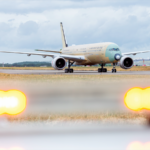
the A350-1000ULR is expected to change long-haul travel patterns. Photo credit: Airbus SAS 2026

Airbus has begun flight testing of its A350-1000ULR, a new ultra-long-range variant developed for Qantas’ Project Sunrise programme, marking a key step towards the introduction of what is expected to become the longest-range commercial passenger aircraft in service.

The aircraft completed its maiden test flight in Toulouse, France, on June 2, where it remained airborne for just under four hours while testing core systems and performance parameters. According to Airbus, the flight forms part of a wider certification campaign that will run for several months before the aircraft is cleared for commercial use. The programme is focused on validating modifications designed to significantly extend range compared with the standard A350-1000.

Designed for ultra-long-haul operations up to 22 hours

The A350-1000ULR is being developed to operate flights of up to around 22 hours, with a range of approximately 10,000 nautical miles. This is made possible through structural and fuel system modifications, including an additional rear centre fuel tank that increases fuel capacity and extends endurance by around 1,000 nautical miles compared with the baseline model.

Airbus states the aircraft is intended for non-stop services between Australia’s east coast and major global hubs such as London and New York. These routes fall within the Project Sunrise concept, which aims to remove stopovers on some of the world’s longest commercial journeys.

What the aircraft is, and is not

Despite some claims circulating in media headlines, the A350-1000ULR is not capable of flying around the world without refuelling. Its maximum range remains well below the roughly 40,000-kilometre circumference of the Earth.

Instead, its design focus is on ultra-long intercontinental sectors rather than global circumnavigation. Airbus has emphasised endurance, fuel efficiency and operational reliability over record-setting continuous global distance.

The aircraft remains in the testing and certification phase, and commercial service is expected only after completion of flight trials and regulatory approval. Current industry expectations place initial deliveries for Project Sunrise aircraft in 2027. The aircraft is expected to become operational for passengers in 2027, with first deliveries likely around April 2027 and entry into commercial service expected from mid to late 2027, depending on certification and airline readiness.

Development linked to Qantas Project Sunrise

The aircraft is being developed specifically for Qantas, which has ordered a fleet of A350-1000ULRs for its Project Sunrise operations. The airline plans to use the aircraft on direct services between Australia and Europe or North America once certification is complete.

The test aircraft is the first of a series expected to undergo extensive evaluation, including systems testing, fuel management validation, and long-duration flight simulations. Airbus engineers are also assessing cabin systems designed for extended flight times, including environmental controls and passenger comfort features.

Impact on passengers and tourists

For travellers, the introduction of the A350-1000ULR is expected to change long-haul travel patterns rather than increase overall capacity. The most immediate impact will be on passengers travelling between Australia and Europe or the United States, who may eventually be able to fly directly without stopovers.

This could reduce total journey times by several hours compared with current one-stop routes through the Middle East or Asia. However, the flights will also require careful scheduling due to their length, which is close to a full day in the air.

Tourists are unlikely to see immediate changes, as the aircraft is still undergoing testing and will not enter service until certification is complete and airline schedules are confirmed. When operational, fares are expected to reflect the premium nature of ultra-long-haul operations, particularly in the early phase of deployment.

Comfort and operational considerations

Aircraft designed for flights of this duration place additional emphasis on cabin environment and passenger wellbeing. Airbus and Qantas have indicated that the aircraft will include design adjustments intended to support comfort during extended time in the air, including seating configurations and environmental systems tailored for long-duration travel.

From an operational perspective, airlines will also need to manage crew rotation, fuel efficiency, and route planning in ways that differ from conventional long-haul services. These factors may influence ticket pricing, availability, and frequency of flights in the early years of operation.

Outlook for commercial introduction

The A350-1000ULR remains in the certification phase, with flight testing continuing through 2026. Entry into service is expected in 2027, although timelines may be subject to regulatory approval and final delivery schedules.

Once operational, the aircraft is expected to enable a small number of ultra-long-haul routes that remove stopovers entirely, reshaping travel options for passengers on specific intercontinental journeys. However, industry sources indicate that these services will initially be limited, as airlines evaluate demand and operational performance.

For tourists, the key change will be convenience on select long-distance routes rather than a broad shift in global air travel. The aircraft’s introduction represents a targeted development in aviation capability rather than a wholesale transformation of short- or medium-haul travel markets.

Continue Reading

%

Fake Bank And Delivery Scam Texts Will Keep Hitting Phones In Spain This Summer

Published

on

fake-bank-and-delivery-scam-texts-will-keep-hitting-phones-in-spain-this-summer

A familiar-looking text can be all it takes for fraudsters to trick phone users into clicking. Credit: Tete_escape / Shutterstock

Fake bank and delivery scam texts will continue hitting phones across Spain this summer after the government delayed new anti fraud protections until September.

Millions of people in Spain receive suspicious text messages every year, often pretending to come from banks, parcel companies, tax offices or public services. Some are obvious scams. Others are convincing enough to catch people off guard during everyday situations like waiting for a delivery or checking a bank account.

SMS scam
A standard fraudulent text message, received from a ‘supposed’ national bank.
Credit: Harry Dennis

The delayed system was supposed to block fraudulent messages using fake sender names pretending to come from trusted companies, banks and public bodies, making it harder for scammers to impersonate trusted organisations.

Why Spain delayed the new scam text protections until September

However, the start of the blocking obligation, which had been due to take effect on Sunday June 7, has now been delayed until Tuesday September 15, 2026, following changes published in the Boletin Oficial del Estado (BOE), Spain’s official state gazette.

That means scam messages using false or misleading sender names could remain a risk throughout the summer, at a time when people are regularly receiving texts about banking, parcel deliveries, medical appointments, travel bookings and official paperwork.

How Spain plans to stop fake bank and parcel scam texts

The rules focus on what Spain calls message “aliases”. These are the sender names that appear on a text message instead of a normal phone number, including names that may look like a bank, courier firm, public administration or private company.

Under the system, companies and public bodies using aliases must register them with tSpain’s National Commission on Markets and Competition (CNMC). Once the blocking rules take effect, operators involved in transmitting these messages will be required to block messages using aliases that are not in the official register, or that are sent through providers not authorised for that registered alias.

In simple terms, the system is designed to make it harder for fraudsters to send texts that appear to come from a trusted source.

Why Spain could remain exposed to scam tests all summer

The delay does not mean the anti-fraud plan has been scrapped. Instead, the official documents point to practical problems in getting the system ready.

The CNMC said more than 75,000 alias registration requests had been submitted in the first two months of the system, including both individual requests and bulk uploads from providers handling large volumes of sender names.

Operators also reported difficulties linked to digital certificates, especially for some companies or organisations outside the European Union that do not have an establishment or economic activity in Spain.

There were also concerns about the complexity of bulk registrations, the time needed to validate large volumes of aliases, and the risk that legitimate messages could be blocked if registration was not completed in time.

How to protect yourself from scam texts while the new system is delayed.

The change affects operators, messaging providers, companies and public administrations that send messages using aliases. Ordinary phone users do not need to change anything on their devices.

However, until the new blocks are in place, people should continue treating unexpected messages with caution, especially texts asking for payments, bank details, passwords, delivery fees, tax information or urgent identity checks.

Messages that appear to come from a known organisation should still be checked through official apps, secure websites or customer service numbers listed on the company’s own website, rather than through links included in the message.

Why a familiar sender name still cannot be trusted.

The delay gives operators and providers more time to adapt their systems, register aliases and test access to the official database before the blocking obligation starts, ensuring its functionality, efficiency and accuracy.

If the timetable holds, the new blocking system should begin on Tuesday September 15, 2026. Until then, the safest approach for consumers remains: do not trust a text message just because the sender name looks familiar.


Continue Reading

%

€300m Superyacht Arrival In Puerto Banus

Published

on

e300m-superyacht-arrival-in-puerto-banus

Marbella has turned heads once again. Spotted off the coast of Puerto Banus, the magnificent 110-metre megayacht Kaos, owned by American billionaire Walmart heiress Nancy Walton Laurie, has drawn crowds of onlookers to the glamorous marinas, arriving in convoy with its 67-metre support vessel, Kalm.

A floating palace with Qatari royal origins

Kaos carries an eye-watering price tag of around €300 million, making it one of the most spectacular and valuable private vessels in international sailing. Originally built in the Netherlands by renowned shipyard Oceanco, the vessel was commissioned for the late Emir of Qatar, Sheikh Khalifa bin Hamad bin Abdullah Al Thani, before later passing into Walton Laurie’s hands.

Onboard services are designed to rival those of an ultra-luxury hotel, comfortably accommodating up to 31 guests across 15 premium cabins, including an exclusive master suite located on an entirely private deck. A dedicated crew of up to 45 professionals keeps things flawlessly running. World-class amenities include a fully equipped gymnasium, a luxury spa, a guest lift, an onboard cinema room, a certified helipad, and a private medical bay.

The optical illusion that stops people in their tracks

Much of Kaos’s fame rests on her extraordinary exterior, the work of Barcelona-based designer Igor Lobanov, who has said he “was allowed to do anything he wanted.” Cascading decks painted in different shades of blue evoke the waves of the sea, create an effect that tricks the eye into perceiving a far leaner silhouette than the vessel truly possesses. At the time of her delivery, she contained more marble and stone in her interior than any other superyacht ever recorded.

Following purchase, Walton Laurie, daughter of Walmart co-founder James “Bud” Walton and one of the world’s wealthiest women with a fortune estimated at around $10 billion, undertook a major refit in Hamburg. Over 1,500 square metres of interior spaces were redesigned, and the yacht was rechristened Kaos.

Meet Kalm, the vessel travelling in convoy

Accompanying Kaos on her Puerto Banus visit is Kalm, a 67-metre support vehicle valued at around $30 million. Carrying helicopters, tenders, jet skis, and all technical equipment required for operations at sea, Kalm ensures Kaos keeps its guest spaces completely uncluttered

Environmental scrutiny and a brush with eco-activists

Kaos has not always sailed in calm waters. Back in July 2023,she was targeted by eco-activists , defacing her hull with red and black spray paint in protest at the environmental impact of superyacht travel. During a previous stay in Spanish waters, Euro Weekly News reported on the massive strain the vessel placed on local infrastructure, revealing how the €300m superyacht drained immense amounts of electricity and shore power simply to keep its internal systems running while sitting idle at the dock in Malaga.

Puerto Banus still a magnet for the global elite

Every summer, the world’s most exclusive superyachts choose the famous port as one of their stops through Europe. Few destinations can match Marbella’s combination of glamour, infrastructure, and climate.

Continue Reading

Trending

Copyright © 2017 Spanish Property & News