Connect with us

%

Spain Braces For Hotter Summer And Storms

Published

on

spain-braces-for-hotter-summer-and-storms

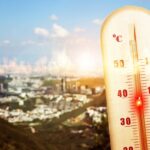
Forecasters say Spain could face a hotter than normal summer with extreme heat and stronger storm risks. Credit : New Africa, Shutterstock

A lot of people across Spain have already started saying the same thing lately : ‘We’re still in May… so how is it already this hot?’

After weeks of unusually high temperatures, packed terraces and heavy afternoons that already feel closer to July than spring, forecasters now believe summer 2026 could become even tougher than many people expected.

According to the latest outlook discussed by Meteored climatologist Samuel Biener, Spain is likely heading towards a warmer than normal summer across much of the country, with temperatures in some areas potentially ending up between 1.5 and 3 degrees above seasonal averages.

And while the heat itself is already making people nervous, meteorologists are also watching another problem developing quietly in the background : Storms.

Not the kind of long rainy periods people sometimes hope for during hot weather either.

Instead, forecasters believe parts of Spain could see a more unstable summer with sudden storms, hail and violent downpours becoming more frequent in some regions.

Honestly, after the strange weather swings Spain has already experienced this spring, the forecast does not feel particularly shocking anymore. Because for many people, it already feels like summer arrived far too early.

Why forecasters think this summer may feel especially exhausting

The latest seasonal models used by Meteored continue pointing towards persistent warmth across large parts of the country during the coming months.

Central Spain appears especially exposed. Areas including Madrid, Castilla La Mancha, Castilla y León and Extremadura could see some of the strongest temperature anomalies compared with what would normally be expected during summer.

And people living in those areas already know what that can mean in practice :

  • Very hot nights.
  • Heavy air sitting inside apartments long after sunset.
  • Cities that barely cool down properly even at midnight.

That is often the moment when summer starts becoming physically draining rather than simply pleasant.

Especially during long heat episodes. Meteorologists are still being careful not to officially predict specific heatwaves this far in advance because seasonal forecasting always contains uncertainty. But Samuel Biener openly admits that recent years clearly show an increasing tendency towards periods of extreme heat in Spain.

And honestly, most residents no longer need scientific charts to notice the difference.

People feel it already, air conditioning starts earlier, fans come out sooner and afternoons become harder to tolerate much faster than they used to.

In some southern cities, people are already adjusting routines before June has even started, avoiding the streets during the hottest hours because temperatures suddenly feel far more aggressive than expected for this time of year.

Storms could become one of the biggest problems this summer too

What makes this forecast more complicated is that meteorologists are not only talking about heat. Several regions could also experience more storm activity than usual during the coming months.

According to Meteored’s current projections, the Pyrenees, Mediterranean side of Spain, southern Iberian mountain areas and even the Canary Islands may end up seeing more unstable conditions over the summer period.

Of course, forecasting storms months ahead is difficult.

Rainfall is one of the hardest things for meteorologists to predict accurately over long periods because storm systems depend on many rapidly changing atmospheric factors.

Still, forecasters say the current signal for instability is becoming increasingly noticeable in some areas.

And honestly, many people across Spain already feel like summer storms have changed over recent years.

They often arrive faster, more violently and sometimes with almost tropical intensity.

A normal sunny afternoon can suddenly turn into hail, violent wind and flooded streets within less than an hour.

That pattern has already appeared several times this spring. Especially after days of trapped heat build up.

The heat keeps building quietly in the background until the atmosphere suddenly snaps.

Lightning starts flashing across the sky, huge drops of rain begin hammering the ground and violent gusts arrive almost without warning.

Then come the short but intense storms that can turn streets chaotic within minutes before disappearing again almost as quickly as they arrived.

Meteorologists believe similar situations could repeat this summer if current conditions continue developing the way models currently suggest.

Many people in Spain are already dreading another difficult summer

For tourists, headlines about hot weather in Spain often sound attractive. For many residents, the reality feels more complicated now. Because extremely hot summers no longer simply mean beach weather.

They increasingly affect daily life in exhausting ways. Electricity bills rise sharply because air conditioning runs almost constantly. Sleeping becomes difficult during tropical nights.

Older buildings trap heat for days. Outdoor workers struggle during afternoon hours and drought concerns quickly return every time rain disappears for long periods.

That growing discomfort is one reason seasonal forecasts now attract far more attention than they used to. People genuinely want to know what kind of summer may be coming. Especially after several years where heat records across Spain have repeatedly fallen earlier and earlier.

Experts say Spain’s summer temperatures cannot simply be explained by El Niño alone

According to Meteored, European weather patterns depend heavily on other atmospheric factors too, including the behaviour of the polar jet stream.

Still, whatever the technical explanation behind it, the feeling many people have across Spain is becoming increasingly similar every year.

A lot of people across Spain now have the same feeling every year.

Summer seems to start earlier than expected, the heat hangs around for much longer and storms often feel far more aggressive than they used to. Even the nights no longer cool down properly in many parts of the country.

For now, forecasters are still stressing that long range models can evolve over the coming weeks. But after the temperatures Spain has already experienced before June has even started, many residents are already looking ahead towards July and August with a certain amount of concern.

Because if late May already feels like this, people are starting to wonder what the middle of summer might look like.

%

Spanish Supermarket Giant Fined €30,000 Over Labelling That ‘misled Shoppers’

Published

on

spanish-supermarket-giant-fined-e30,000-over-labelling-that-‘misled-shoppers’

The ministry found that the packaging omitted details identifying the company responsible for marketing the product. Photo credit: Axel Alvarez/Shutterstock

Spain’s Ministry of Consumer Affairs has fined Mercadona €30,000 after concluding that the labelling and presentation of one of its private-label food products could mislead shoppers about its ingredients. The sanction relates to the supermarket chain’s “tortillas de avena 51%”, an ”oat” wrap-style bread product sold under Mercadona’s Hacendado range.

The investigation began following a complaint filed by FACUA-Consumidores en Acción, which argued that the packaging created confusion about the cereal content of the product. According to Spain’s Ministry of Social Rights, Consumer Affairs and Agenda 2030, the retailer committed three separate breaches of food labelling rules. Authorities issued three fines of €10,000 each covering misleading product presentation, incomplete company information and failures linked to mandatory naming requirements.

Authorities say packaging created confusion

Consumer officials stated that the wording and design of the packaging gave the impression that oat flour was the primary or sole cereal ingredient, despite the inclusion of refined flours. Regulators argued that this could influence purchasing decisions among consumers specifically looking for wholegrain or oat-based alternatives. Under Spanish food regulations, bread and wrap products must clearly identify the cereals used in their preparation. Authorities concluded that the presentation of the product did not provide sufficiently clear information about its true composition.

The ministry also found that the packaging omitted details identifying the company responsible for marketing the product. In the case of supermarket own-brand goods, retailers themselves are legally responsible for ensuring labels comply with consumer protection laws, even when products are manufactured by external suppliers. Officials stated that consumers must be able to understand the nature of a product quickly and accurately without needing to closely analyse ingredient lists or nutritional tables. The investigation concluded that the overall presentation of the wraps could lead shoppers to assume they were buying a product with a greater oat content than was actually the case.

Mercadona rejects the sanction

Mercadona has disputed the ministry’s conclusions and is considering an appeal before the High Court of Justice of Madrid.

The company stated that the product already included the legally required ingredient information and maintained that the labelling complied with applicable regulations. Mercadona also defended the standards used across its private-label range, saying its products are designed to provide customers with clear and accurate information.

Reports indicate that the ministry did not initially identify the supermarket publicly because of restrictions surrounding the publication of sanction procedures before they become fully finalised. However, the case quickly became linked to Mercadona following the original FACUA complaint and later reporting by national news outlets.

The ruling formally closes an investigation carried out by the Directorate-General for Consumer Affairs. Alongside the financial penalty, the ministry has ordered the supermarket to correct the issues identified during the inspection process.

Wider implications for supermarkets

Although €30,000 is a relatively small fine for a retailer of Mercadona’s size, the decision is significant because it reinforces the responsibility supermarkets hold over the marketing and labelling of their own-brand products. The case comes with growing scrutiny across Europe over food packaging and the way products marketed as healthier alternatives are presented to consumers. Terms linked to oats, wholegrains and fibre are increasingly used in supermarket branding because they appeal to shoppers seeking healthier diets and less processed foods.

Consumer organisations have repeatedly argued that some packaging creates misleading impressions even when ingredient lists technically comply with regulations. Regulators across several European countries have stepped up monitoring of claims linked to nutrition, natural ingredients and wholegrain content in recent years. The decision may encourage supermarkets to review the wording, branding and imagery used across private-label packaging. Retailers could also place greater pressure on suppliers to ensure products meet both legal requirements and consumer expectations regarding transparency.

What the ruling means for consumers

For consumers, the ruling highlights the importance of carefully checking ingredient lists rather than relying solely on front-of-pack branding or product names.Spanish authorities concluded that the overall appearance and wording of the packaging could lead the average shopper to believe the wraps contained a higher proportion of oat or wholegrain ingredients than they actually did. Consumer groups say this is particularly important for shoppers making purchasing decisions based on health or dietary concerns.

The case may also lead to clearer food labelling standards in supermarkets if retailers take steps to avoid similar investigations. Greater transparency could help consumers compare products more easily and better understand exactly what they are buying. The ruling comes at a time of increasing public attention on food marketing and nutritional claims across Europe. As regulators continue to examine how products are presented to shoppers, supermarkets may face greater pressure to ensure packaging reflects the true nature and composition of the foods they sell.

Continue Reading

%

Spain Launches Its Third Quantum Supercomputer To Revolutionise AI And Medicine

Published

on

spain-launches-its-third-quantum-supercomputer-to-revolutionise-ai-and-medicine

Spain unveils advanced quantum supercomputer to accelerate AI and science. Photo Credit: BSC

Spain has finally revealed its third quantum supercomputer, a machine that is capable of developing far more complicated algorithms than conventional computers can. The supercomputer, located at the Barcelona Supercomputing Centre, or BSC, was designed and built by Barcelona-based company Qilimanjaro Quantum Tech and funded by the European Commission and Spain’s Secretariat of State for Digitalisation and Artificial Intelligence, representing a total investment of €9.8 million. The computer was revealed on Thursday, May 28 at the BSC headquarters.

Conventional computers vs. supercomputers: What is the difference?

What differentiates a supercomputer from a conventional computer is that the latter works with bits, which is short for “binary digits” and is the most basic unit of information in computer science. These bits can only represent the values 0 or 1. Supercomputers, on the other hand, use qubits, which can represent both states at once. This means that supercomputers can easily take on problems that a conventional computer can barely solve.

The newest addition to the MareNostrum 5 supercomputer system: 314 million billion calculations per second

The BSC’s third supercomputer was built to speed up research and the development of artificial intelligence. Unlike the two previous supercomputers built at the centre, the third one is analogue, while the others are digital. The machine has been made to complement the systems that are already in place.

It will be integrated into the MareNostrum 5 system, a large supercomputer already in place at the centre that is capable of performing up to 314 quadrillion calculations per second, combining classical supercomputing, quantum computing, and artificial intelligence.

This incredible machine is a main driver of European research into artificial intelligence, climate modelling, and medicine. It is housed at the chapel of Torre Girona, which was also home to the first four versions of the MareNostrum supercomputer between 2005 and 2023.

Since their launch in February 2025, the first two supercomputers have already clocked up to 4,200 computing hours and have participated in 53 research projects.

How can supercomputers impact daily life?

These machines are capable of furthering research into various sectors, and will therefore have a direct impact on science and advancement in many areas.

To begin with, these computers are capable of simulating complex human organs, leading to faster diagnoses of diseases and tailor-made, individualised medical treatments.

The supercomputers can also generate highly localised and precise meteorological data, allowing for earlier predictions for extreme weather, including storms and droughts.

They can also help with modelling major cities like Barcelona and Madrid, helping officials to plan public infrastructure and optimise traffic flow.

Supercomputers will be integral in the furthering of artificial intelligence technology, which has already taken the world by storm and is a major part of the daily life of many citizens.

They can also simulate renewable energy models, reducing carbon footprints and lowering energy costs, and much more.

Furthering European technological sovereignty and making major scientific advancements

To date, the programme promoting the new quantum computer, the European High Performance Computing Joint Undertaking, has acquired six quantum computers distributed across different European countries, including Poland, the Czech Republic and Germany.

The launch of this new supercomputer represents a significant step forward for not only Spanish computer science, but European technology as a whole. This incredible machine, capable of solving major problems in science today, including medicinal science and climate science, will also help European countries to achieve technological sovereignty and reduce reliance on infrastructure from other countries.

Continue Reading

%

Norway Joins France Led Defence Talks

Published

on

norway-joins-france-led-defence-talks

France and Norway signed a new defence and security agreement during talks in Paris. Credit: Christian Liewig / Office of the Prime Minister of Norway

A few years ago, the idea of Norway joining discussions around French nuclear deterrence would probably have sounded unlikely to many people in Europe.

Now it is happening openly. And the reason is simple.

Europe’s sense of security has changed dramatically since Russia invaded Ukraine.

On Wednesday, May 27, Norwegian Prime Minister Jonas Gahr Støre confirmed in Paris that Norway will join France’s growing discussions with European countries about nuclear deterrence and defence cooperation.

Standing beside French President Emmanuel Macron, Støre said Norway would participate alongside several other European countries already involved in talks about how French nuclear capabilities could contribute to European security.

The announcement may sound highly technical at first glance, but politically it says a lot about the atmosphere currently spreading across Europe.

Countries that once felt relatively comfortable relying almost entirely on NATO and American military protection are now starting to think much more seriously about what Europe’s own defence structure could look like in the future.

And honestly, the fact that Norway is participating makes the situation feel even more significant. Because Norway has traditionally been one of the European countries closest to the United States when it comes to defence and security cooperation.

Why France is suddenly becoming central to Europe’s defence discussions

Since Brexit, France has become the European Union’s only nuclear power. That reality has pushed Emmanuel Macron into a much more important position inside Europe’s defence conversations over the past few years.

Back in March, Macron revealed that several countries had already agreed to begin discussions with France around possible nuclear cooperation.

Germany, Poland, Sweden, Denmark, Belgium, Greece and the Netherlands were among the countries mentioned at the time.

Now Norway has officially joined that group too.

Much of what is being discussed remains confidential, but officials have already indicated the talks could involve joint military exercises, intelligence sharing and possible cooperation involving French nuclear capable Rafale fighter jets.

French officials reportedly described the broader concept as a form of ‘forward nuclear deterrence’.

At the moment, nobody is suggesting France is preparing to place nuclear weapons across Europe tomorrow. Norway itself stressed very clearly that no nuclear weapons would be deployed on Norwegian soil during peacetime.

Still, the symbolism matters enormously. Because Europe’s political mood around defence has changed very noticeably since 2022.

Conversations that once felt uncomfortable or politically sensitive are now happening far more openly. And a lot of that anxiety comes directly from geography.

Norway shares a border with Russia in the Arctic region and sits close to some of Russia’s most important military and nuclear infrastructure.

Speaking in Paris, Støre pointed out that Russia’s largest nuclear arsenal is located in the High North only a relatively short distance from Norwegian territory.

Why many European countries are rethinking defence strategy

Officially, NATO remains at the centre of European security. That has not changed.

Norwegian leaders themselves repeated very clearly that the alliance remains the foundation of Norway’s defence policy.

But at the same time, many European governments are becoming increasingly nervous about depending too heavily on a single system during a period of growing geopolitical uncertainty.

Especially with questions continuing around future American foreign policy.

Donald Trump’s return to US politics has added another layer of concern for some European governments, particularly those wondering how stable long term American military commitments may remain in the future.

That uncertainty has encouraged several countries to strengthen defence ties inside Europe itself alongside NATO structures rather than relying exclusively on Washington.

Before 2022, discussions about European “strategic autonomy” in defence often sounded abstract and distant.

Now they feel much more real. Military budgets are rising across Europe. Countries are modernising armed forces at speed and defence cooperation between European governments has intensified significantly over the last few years.

Nordic countries especially have moved much closer together on security matters since the start of the war.

Finland joined NATO, Sweden followed shortly afterwards and Arctic security itself has become far more important strategically as tensions continue growing between Russia and NATO countries in northern Europe.

The new France Norway defence agreement reflects a changing Europe

Alongside the nuclear discussions, France and Norway also signed a wider defence and security agreement on Wednesday known as the Narvik agreement.

The deal includes cooperation around air defence, military planning, Arctic security and increased coordination between the armed forces of both countries.

Again, none of this appeared suddenly out of nowhere. The political atmosphere across Europe has shifted steadily over the past few years.

And honestly, many European leaders no longer seem convinced that the continent can afford to think about security the same way it did before Russia invaded Ukraine.

That does not mean Europe is preparing for war tomorrow. But it does mean governments are increasingly planning for a future where military deterrence, defence coordination and long term security risks are no longer treated as distant theoretical problems. Because for many European countries today, especially those geographically closer to Russia, the sense of vulnerability feels far more real than it did only a few years ago. And that changing feeling is starting to reshape Europe’s defence conversations very quickly.

Continue Reading

Trending

Copyright © 2017 Spanish Property & News