
Ceuta
Spain Says Sorry For ‘abandoning’ The People Of Ceuta After July’s Unprecedented Migrant Border Crossing

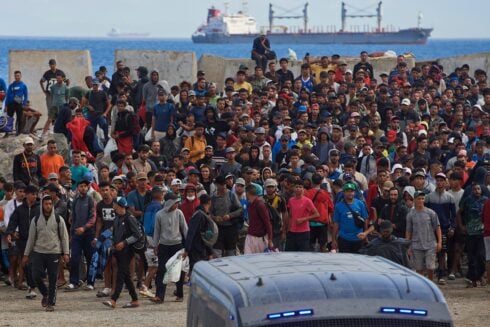 SPAIN’S government has apologised to Ceuta’s residents for the migrant crisis inflicted on the country’s North African enclave since late July. Defence Minister, Margarita Robles, was the first minister to









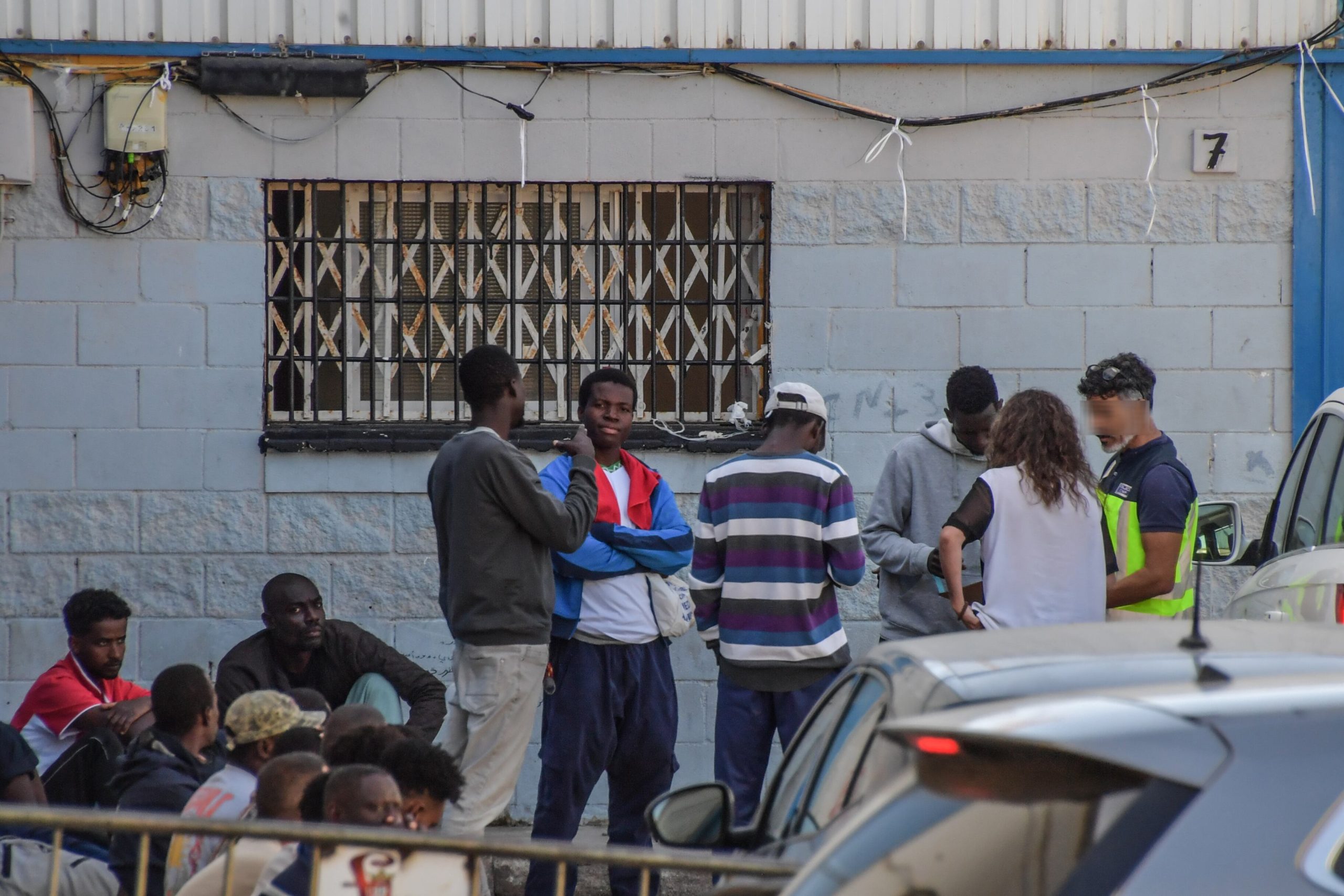
Since July 30 and 31, when some 80,000 people entered Ceuta, the streets leading to the Loma Margarita facilities in the western part of the city have become a vivid summary of all the wars, famines, and fundamentalist groups battering the Sahel, the belt of countries stretching from the Sahara to the Red Sea where unimaginable tragedies unfold.
Lying on the sidewalks, staring at their cellphones, or wandering aimlessly, these teenagers pass the hours like soldiers who were spared from having to carry a weapon in Mali. Others fled jihadist groups in Niger, and still others simply ran out of food when armed groups in Burkina Faso doused the entire village’s vegetable gardens with glyphosate to starve them to death. If there is any crisis left without a face, it can be found at the gates of the Temporary Immigrant Shelter (CETI), where more children from Chad, Mauritania, or Sudan spend their days. After many months of hardship, they all sleep in a bed and eat three meals a day.
Loma Margarita is a plateau owned by the Spanish army where huge olive-green tents have been set up to house 1,100 people. After days of chaos for migrants and staff, a measure of order has finally returned to the site, guarded inside by a private security firm and outside by a group of legionnaires.
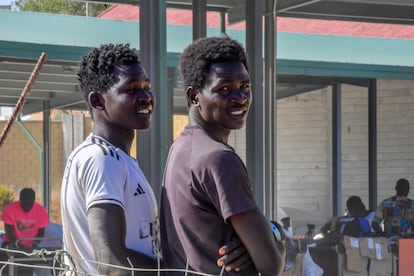
Clinging to the fence, Abdallah, 21, says that returning to Sudan would mean having to “integrate into an armed group.” His friend, 17, says he left Sudan three months ago but is happy because he will be able to “legalize his situation and tell someone what is happening in his country,” he explains in fluent English. The youngest of the group, 15, has had an infected ankle wound for 25 days. He is reluctant to speak and only shows a photo on his phone of his mother’s cousin living in Madrid wearing a Spain national team shirt. “In Morocco we lived like dogs, but they told us here we would have an interview to get papers. If they take me to Sudan, they would end up killing me,” Abdallah says. Here they not only sleep in a bed, but can charge their phones and treat wounds.
By rough estimates, of the 5,000 young people still roaming the city of Ceuta, between 1,100 and 1,500 are sub-Saharan Africans, housed mainly in two centers. According to the refugee NGO Accem, the police have begun interviews to determine who is eligible to apply for asylum. The first stage of the process, however, took place much earlier when authorities separated, on one hand, women and girls into a safe space to prevent sexual abuse; on another, sub-Saharan Africans into other facilities; and, finally, Moroccans. A couple of Algerians, however, prefer to keep sleeping on the beach because they feel they do not fit into any of the three spaces.
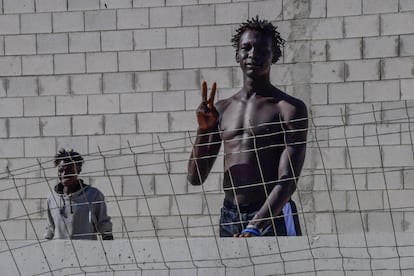
Everyone sleeping at Loma Margarita “are men aged between 18 and 35,” Accem, the organization contracted by the government to manage the situation, says. Most had been waiting in northern Morocco for a chance to cross into Spain when on July 31 they joined the caravan heading to the border. “The police told us to go by sea,” one recalls of that Thursday. It is possible to come and go freely from the Loma Margarita shelter, but during meal shifts the facility’s gates are closed to organize distributions. On El Trampolín beach, Mohamed Camara from Guinea-Conakry waits for the daily food distribution to begin. Camara is from the Siguizin region, known for its gold mines. At just 20, “most of my friends were seized for forced labor in the mines,” he says in French. As of this week, police have his name and he can begin the procedures to apply for asylum.
The Sahel is a semi-arid belt about 3,670 miles long, situated between the Sahara desert and the tropical savannas, from the Atlantic to the Red Sea. The region includes, according to the UN, Senegal, Gambia, Mauritania, Mali, Burkina Faso, Niger, northern Nigeria and Cameroon, Chad, Sudan, South Sudan and Eritrea — in other words, 400 million inhabitants across 12 countries. The government initially said everyone who entered Spain irregularly would be sent back, but the obligation to process asylum claims and laws regarding the return of minors makes that impossible. In Spain last year a total of 75,275 favorable resolutions for international protection and humanitarian statuses were approved, and applications originating from the Sahel top the lists, with approval rates close to 100%.
On the road that climbs past the equestrian center and leads to the CETI, a young man from Mali passes the time sitting with his back against the wall. Omar’s head rests on his outstretched legs. He doesn’t speak or play with his phone. He just stares into the distance and runs his hand over his companion’s head. Omar and Ahmed recount jihadist kidnappings that make a normal life impossible. After a while, they acknowledge they are a couple, and that is another reason they cannot go back.
Sign up for our weekly newsletter to get more English-language news coverage from EL PAÍS USA Edition


Ángel Víctor Torres
El Gobierno Endurece Las Leyes De Extranjería Y Asilo En Línea Con El Pacto Europeo En Plena Crisis De Ceuta



Calendario Escolar 2026-2027 En España: Inicio De Curso, Festivos Y Vacaciones En Cada Comunidad

Ceuta Crisis Reaches Mainland Spain As Rallies Are Called Across The Country

‘It Could Kill Them’: Experts Warn Beachgoers Against Pushing Stranded Dolphins Into Sea


-

 800 metros lisos2 weeks ago
Attaoui Saca Un Bronce En 800m De La Casi Nada
-
aragon wildfire2 weeks ago
Flames force Spanish troops to evacuate 1,000-year-old kings’ bones from burning monastery
-

 New Developments2 weeks ago
Inside The Most LUXURIOUS Apartment Building In Spain!
-
Costa del Sol2 weeks ago
Motril Port closing in on record cruise year with 47,000 summer passengers
-
 Altas temperaturas2 weeks ago
Francia Encara Su Quinta Ola De Calor En El Peor Verano Desde Que Hay Registros
-

 Accidentes tráfico2 weeks ago
Tráfico Prevé 5,6 Millones De Desplazamientos Este Fin De Semana
-
Axarquia2 weeks ago
Velez-Malaga’s €9.14m budget windfall to keep water bills steady for locals
-
Austria2 weeks ago
Electric cars can legally drive 30km/h faster than petrol cars in one European country: Will Spain be next?