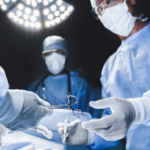
Spain’s transplant system continues to be regarded as one of the most effective in the world. Photo credit: Inside Creative House/Shutterstock
Spain’s organ transplant system is widely regarded as one of the most advanced and tightly regulated in the world, with strict residency-based rules governing access to donor organs. Under current policy, organ transplants through the public healthcare system are reserved for Spanish citizens and foreign nationals who are legally resident in Spain, reflecting the need to allocate scarce organs to patients within the national healthcare framework.
At the heart of the system is the National Transplant Organisation (ONT), which coordinates organ donation and allocation across Spain. The organisation is responsible for ensuring that donated organs are distributed according to medical need and established clinical criteria, while safeguarding public confidence in the system.
Residency Rules and Access to Transplants
A key feature of Spain’s transplant framework is that access to organ transplantation is generally limited to Spanish citizens and foreign nationals who are legally resident in the country. The policy is intended to prevent transplant tourism and ensure that scarce donor organs are allocated fairly among those entitled to receive treatment through the Spanish healthcare system.
The issue is particularly significant because demand for organs continues to exceed supply. Although Spain records some of the highest donation rates globally, thousands of patients remain on waiting lists each year for lifesaving procedures.
International organisations, including the World Health Organisation and the Council of Europe, have long warned about transplant tourism. Both bodies argue that organs should be allocated through transparent and ethical systems rather than through financial means or by exploiting gaps in healthcare administration.
A Network Involving Bulgarian Kidney Patients
One of the most significant challenges to Spain’s safeguards against health tourism emerged following a Guardia Civil investigation, several years back, into a network that allegedly enabled Bulgarian nationals suffering from severe kidney disease to gain access to Spain’s public healthcare system through fraudulent means. According to investigators, a number of Bulgarian patients were registered through fictitious employment contracts and false Social Security enrolments. These registrations allowed them to obtain Spanish health cards despite not meeting the legal residency requirements for access to the country’s healthcare system.
The investigation found that the scheme enabled patients to receive publicly funded dialysis treatment and, in some cases, join kidney transplant waiting lists. Authorities later revealed that six Bulgarian nationals ultimately received kidney transplants after entering the system irregularly.
Investigators examined around 20 individuals connected to the network and concluded that 14 Bulgarian citizens had obtained healthcare access through fraudulent registrations. The operation was estimated to have cost the public healthcare system more than €1.5 million. The Guardia Civil reported at the time that Spain’s international reputation for transplantation had created what investigators described as an “effecto llamada”, or ”pull effect”, among kidney patients in Bulgaria. Reports of successful treatment in Spain encouraged others suffering from advanced renal disease to travel to the country in the hope of obtaining dialysis and, potentially, a transplant.
Six Irregular Transplants
The case generated concern because kidney transplantation depends on a limited supply of donor organs. Every organ allocated to one patient is unavailable to another person waiting for treatment, making strict adherence to eligibility rules essential. Investigators estimated that the scheme cost the public healthcare system more than €1.5 million. However, the financial losses represented only part of the issue.
For transplant authorities, the greater concern was the potential impact on fairness within a system that relies on public trust and the willingness of individuals and families to donate organs after death. The investigation highlighted how organised fraud can exploit administrative processes designed to provide healthcare access to legitimate residents. While the number of confirmed cases represented only a tiny fraction of Spain’s overall transplant activity, the incident demonstrated that even highly regulated systems remain vulnerable to abuse.
The Wider Debate Around Health Tourism
The case reignited discussion about health tourism and the challenges faced by publicly funded healthcare systems. While Spain’s transplant programme remains highly regulated, the investigation demonstrated how administrative fraud can create pathways into services that would otherwise be inaccessible.
Experts note that transplant tourism differs from conventional medical tourism. While medical tourism often involves patients travelling abroad and paying privately for treatment, transplant tourism raises ethical concerns because it involves access to donated organs, which are a limited public resource.
International guidance, including the Declaration of Istanbul, states that travel for transplantation becomes problematic when it involves organ trafficking or when resources devoted to non-resident patients reduce a country’s ability to provide treatment for its own population. Spain’s residency requirements are intended to prevent such situations from arising, but the Madrid investigation highlighted the difficulty of enforcing those rules when fraudulent documentation is used.
What the Rules Mean for Non-Residents
Under Spain’s transplant system, foreign nationals who are not legally resident in the country are generally not eligible to join transplant waiting lists or receive organ transplants through the public healthcare system.
The restriction is designed to prevent transplant tourism and ensure that donor organs are allocated fairly among patients who are entitled to healthcare coverage in Spain. Given the limited number of available organs, authorities consider residency requirements an important safeguard.
While exceptional cases can be considered on medical or humanitarian grounds, non-residents cannot ordinarily travel to Spain with the expectation of accessing transplant services. The policy aims to protect both the integrity of the transplant system and public confidence in organ donation.
Spanish authorities have repeatedly stated that residency requirements help ensure that organs donated within Spain are distributed according to medical need among those entitled to receive care through the country’s healthcare system. The rules are also intended to maintain public confidence in a donation model that depends on widespread public participation and trust.
Protecting Spain’s Global Success Story
Despite isolated cases of abuse, Spain’s transplant system continues to be regarded as one of the most effective in the world. The ONT maintains a nationally coordinated approach to organ allocation, supported by extensive oversight and cooperation between hospitals, healthcare authorities and transplant coordinators.
The overwhelming majority of transplants carried out in Spain are conducted within a system that is considered transparent, equitable and medically driven. Nevertheless, authorities acknowledge that constant vigilance is necessary to protect its integrity.
As demand for donor organs continues to outstrip supply, ensuring that organs are allocated fairly remains one of the greatest responsibilities facing transplant authorities. The challenge is not only to maintain high donation rates but also to preserve public confidence that access to lifesaving transplants is determined by need and eligibility rather than by an individual’s ability to exploit weaknesses in the system. While Spain’s safeguards remain robust, the investigation demonstrated how fragile the barrier against health tourism can become when administrative controls are circumvented.















 Argentina2 weeks ago
 Uncategorized1 week ago
 %2 weeks ago
 Anthropic2 weeks ago
 Foreign demand1 week ago
 %1 week ago
 New Developments1 week ago
 %1 week ago