
Donald Trump
Texas: The Democratic Bet In The Midterms To Gauge Republican Loss Of Support


Anything can happen in these midterms in Texas. In the most anticipated race, the Senate contest, the outlook is unclear for either candidate. The gap between Democrat James Talarico and Republican Ken Paxton falls within — or close to — the polls’ margin of error. But in the final stretch of the campaign and with the winds at their backs, it is the Democratic Party that remains hopeful of winning that seat after decades of defeats.
Talarico, a rising Democratic star and state lawmaker, and Paxton, the controversial attorney general, have crisscrossed — and revisited — key Texas locations to secure votes from undecided voters, first-time voters, independents, and their core supporters.
Seeking swing and disillusioned voters, Talarico, a moderate progressive with strong Christian values, has campaigned confidently in Latino-dominated border districts that voted for President Donald Trump in 2024 but are now angry over his immigration policies and weak economic performance. He has moved from there to big cities, where EL PAÍS even found African American voters casting ballots for the first time who say they will back him because they see in him someone who can raise their needs in Congress. With strong private funding, Talarico has even reached remote communities, where he campaigned at the same time as Republican candidates accompanied by Trump.
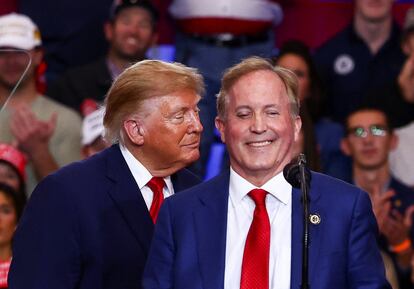
Paxton, for his part, has run a turbulent campaign in which he has had to contend with controversy and with Republican disappointment at his candidacy instead of that of veteran Senator John Cornyn. And although Trump has been insistently urging voters for the past two months to support him, surprisingly the polls still do not show the three-time Texas attorney general in the lead. He hasn’t even managed to gain an edge after questioning Talarico’s religious faith at every rally or raising controversial issues that stir recurring fears among Republicans — such as his Democratic rival’s alleged support for gender transition in children.
This contest — alongside the race for the state’s governorship and the House seats in districts recently redrawn by Republicans to favor their candidates — has focused all eyes on Texas. The battle has taken on national significance, not only because a Democratic win would be the first in more than three decades in a territory that traditionally dresses in red and is a Trump stronghold, but because it could give them another seat in their bid to regain control of Congress.
For the first time, voters could punish the incumbent over major issues: poor economic performance — with inflation rising to 3.7% in September — tariffs, the war with Iran, and the separation of migrant families from their communities.
At stake, for the first time
When discussing the races in Texas, some political analysts say the competition is so close in this state that it won’t be over until the polls close and the votes are counted.
For Texas Governor Greg Abbott, the 2026 campaign has been his toughest fight. Since 2014, the Republican, a long-established state politician, has never lost an election for his office. He has comfortably beaten every Democratic challenger he has faced. But the margin with his opponents has narrowed election after election, and forecasts have never been as close as they are now.
By any poll you look at, he leads his Democratic rival Gina Hinojosa, although — as in the Senate race — he is only ahead by about as much as the statistical margin of error. Seeing that, Democratic figures rushed to boost funding for their candidate’s campaign and the gap kept shrinking. Hinojosa, aware of her momentum, has challenged Abbott to debates in various forums and has appeared ready to face him, but the governor has not shown up, as he did in prior campaigns.

Daughter of a prominent state Democratic politician, Hinojosa was born and raised in Texas border towns in the Rio Grande Valley, a territory in dispute in these midterms. She graduated as a lawyer and says on her website that she entered politics by accident after defending the closure of her son’s school when the state threatened to cut its funding. She won that fight and in 2015 became president of the Austin school district parent board. A year later she was elected state representative, a post she has held to date.
Her campaign slogan is “Don’t let them tell you it can’t happen in Texas” and she promises to tackle educational issues that worry the state’s parents, but above all she has pledged to fight the corruption she says is being generated by the governor. She is also opposed to the expansion of data centers in the state and has promised to lower property taxes, the cost of living, utility costs, and healthcare expenses.
The race for Texas governor is another contest that has shown 2026 is different in the political and economic climate of this traditionally red state. Analysts consulted say the omnipresence of Trump could be shifting the numbers against candidates from his own party.
Looking ahead, analysts interviewed by EL PAÍS — such as Jerónimo Cortinas, director of the Center for Mexican-American and Latino Studies at the University of Houston — say that Texas could turn red, blue, or purple, depending on how elected officials respond to the needs of their constituents. But in any case, that shift in political color will take even longer.
Sign up for our weekly newsletter to get more English-language news coverage from EL PAÍS USA Edition













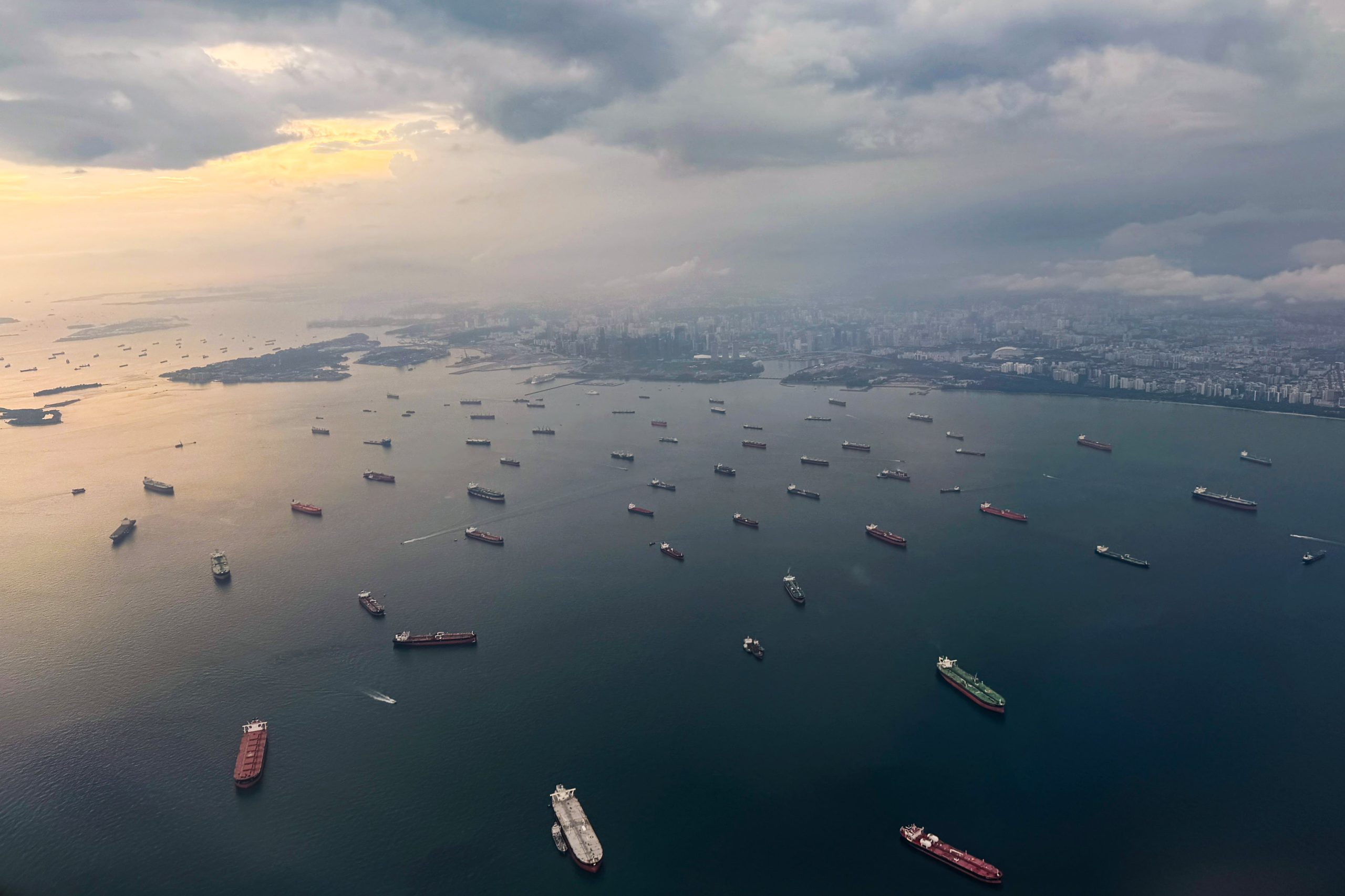
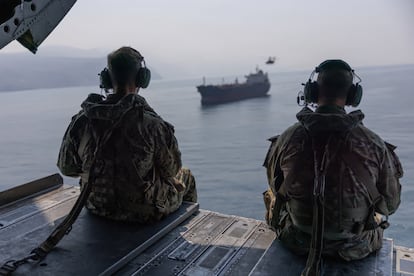
More than 80% of global merchandise trade is transported by sea, a vast share that, in times of peace, allows commerce to flow smoothly but, in times of turmoil, starkly reveals the oceans’ influence over the economy and consumers’ purchasing power. The closure of the Strait of Hormuz, a narrow waterway just over 20 miles wide through which 20% of the world’s oil consumption passed as recently as February, is a traumatic and unprecedented example of how disrupting maritime traffic through a strategic chokepoint can trigger a massive snowball effect. Less energy supply, a sudden spike in fuel prices, soaring shipping costs and higher inflation. It is impossible for the global economy to function independently of the sea.
The shockwave from the closure of Hormuz has been global and has hit the U.S. economy particularly hard. U.S. President Donald Trump likely never imagined that the conflict launched alongside Israel against Iran would last this long, or that it would drive gasoline and diesel prices for Americans to record highs. The collapse in maritime traffic through Hormuz has disrupted oil exports from the Persian Gulf and sharply increased transportation costs worldwide. According to analysts, higher shipping rates are adding more than $30 to the cost of each barrel of oil, roughly 10 times more than before the conflict.
Hormuz, with its enormous influence over the world’s energy supply, is the clearest example of the strategic importance of maritime straits to global trade and the economy. But the world is dotted with other waterways that are just as critical to the movement of goods and the shape of the geopolitical landscape. These are the so-called chokepoints: highly sensitive passages through which a significant share of global trade flows. Whoever controls them holds a lever capable of moving the world.
They do not even need to be blocked, as in Hormuz. A deterioration in weather conditions or security is enough to send ripples across the global economy. That is already happening in the Bab el-Mandeb Strait, which separates the Horn of Africa from the Arabian Peninsula and serves as the southern gateway to the Red Sea, before vessels pass through the Suez Canal on their way to Europe. Attacks by Yemen’s Houthi rebels against Saudi Arabia are threatening navigation in the area, which has never fully recovered since the militia disrupted traffic through the strait in 2023 and 2024 in protest against Israel’s offensive in Gaza.
For weather-related rather than military reasons, the Panama Canal is another hotspot. Drought linked to the El Niño phenomenon has forced the Panama Canal Authority to cut traffic and impose draft restrictions on vessels, as the canal’s locks require large volumes of water to operate.
The risk of disruption has also briefly hovered over the Strait of Malacca, located between Malaysia, Singapore and Indonesia, which is one of the world’s busiest shipping routes, serving as the main corridor between Asia and Europe via the Indian Ocean. In April, Indonesia’s finance minister even floated the idea of introducing a toll, though he quickly walked back the proposal.
“The Strait of Hormuz is the major energy chokepoint; the Strait of Malacca is Asia’s major commercial and energy chokepoint,” notes Alicia García Herrero, chief economist for Asia-Pacific at Natixis.
Hormuz, Bab el-Mandeb, Suez, Panama and Malacca are the world’s key maritime chokepoints. Any disruption in these passages has an immediate impact on the global economy. But there are other strategically vital straits, including Gibraltar, the Bosporus and the Dardanelles in Turkey, the Taiwan Strait, Lombok and Sunda in Indonesia, and the English Channel. These critical passages are monitored daily by the powerful maritime industry: shipowners, shipping companies that manage the transport of goods, and insurers that cover vessels and cargo and also issue war-risk policies in times of conflict —premiums that have surged since the outbreak of the war against Iran. War-risk insurance premiums for ships transiting Hormuz have risen to between 3% and 10% of a vessel’s value, compared with around 0.25% before the conflict.
A study by the University of Oxford estimated last year that disruptions at maritime chokepoints cost the global economy about $192 billion annually, due to delivery delays, rerouting and higher insurance premiums. “The world has changed, but the consequences in terms of detour distances and costs remain the same,” one of the authors, Professor Jim Hall, said in an email.
In June, at the height of the Hormuz blockade, Allianz estimated that more than $125 billion worth of cargo was stranded aboard over 1,000 ships anchored in the area. In its latest report, published in October, the World Trade Organization warned that “upward momentum in trade may have stalled following the outbreak of the Middle East conflict.” Global container traffic volumes had reached record highs in February this year, but by July 2026 they had fallen by 2.5%, including a 4.0% decline in traffic through Chinese ports, according to the WTO.
Hormuz: An energy and financial chokepoint
“No shipping, no shopping” has long been a favorite slogan of the maritime industry, but it has never rung truer than it does today in Hormuz. Never before has this sea passage been completely shut down, and “there is no historical precedent in the sample for traffic at a major global chokepoint dropping to zero within days,” according to the Bank for International Settlements (BIS). The institution argues that Hormuz is the world’s most economically significant maritime chokepoint, not only because of its impact on energy supplies but also because of its financial implications.
Before the war, nearly a fifth of the world’s oil and liquefied natural gas passed through Hormuz, along with 13% of all chemicals traded globally, including fertilizers and plastics.
More than 130 vessels a day used to transit the strait. That figure has now fallen to around 20, driving up the price of these commodities and fueling broader inflationary pressures for which, so far, no ceiling is in sight as long as shipping disruptions persist. The crisis in Hormuz has, in fact, forced central banks to raise interest rates, twice in the case of the European Central Bank and once, its first increase in three years, in the case of the U.S. Federal Reserve. It has also contributed significantly to the current rise in bond yields, pushing up borrowing costs across the economy.
According to the BIS, the Strait of Hormuz is of “critical importance” to global financial stability and the world’s most consequential maritime chokepoint in terms of its influence on credit conditions. “The unique role of Hormuz as a chokepoint for global energy flows makes it a key variable in assessing financial vulnerabilities,” the BIS warns, underscoring its strategic importance.
Freight rates and the inflationary chain reaction
Shipping a tonne of oil from the Persian Gulf to China now costs around $237, compared with $25 in February, before the war. On a per-barrel basis, freight costs have risen from about $3.50 to more than $30, meaning they now account for more than a quarter of the price of Brent crude, compared with barely 2% to 3% before the conflict.
Transport costs have, in fact, become the main obstacle preventing fuel prices from easing, even as Gulf producers begin to increase their oil exports. What began as a supply crisis is increasingly turning into a maritime transport crisis. Meanwhile, fears that hostilities could flare up again in the Persian Gulf remain acute, helping to push Brent prices in recent days back to their April highs of around $116 a barrel.
“Even when there is supply, there is a shortage of vessels and shipping routes have become longer,” explains Jorge Molinero, an analyst at commodities platform Sparta. “What the war has done is reduce the effective supply of tankers through several channels at once. The global fleet may be unchanged [since building a ship takes years], but many tankers have been stranded inside the Gulf. At the same time, voyages have become longer. Shipments that once travelled from the Gulf to Asia are being replaced by crude from more distant origins, which means more days at sea and fewer ships available.”
On top of that, war-risk insurance premiums for tankers have soared, a cost that shipowners are passing on through higher freight rates. The same pattern can be seen elsewhere. Freight rates for tankers sailing from the United States to Europe reached about $188 per tonne in October, an all-time high and nearly four times the level recorded in February.
“Tankers have been redeployed and voyages are longer, so there is a shortage of ships everywhere,” Molinero adds. With renewed tensions around Bab el-Mandeb, vessels avoiding the Red Sea and carrying crude to Europe via the Cape of Good Hope can add as much as two weeks to their journey.
Tankers have become the most valuable assets in global shipping, particularly for traders and energy companies that do not own fleets and must charter vessels on the open market. According to maritime consultancy Clarksons Research, average weighted tanker earnings exceeded $200,000 per day by late September. In the case of VLCCs (Very Large Crude Carriers), which can transport around two million barrels of oil, daily earnings have reached $600,000, roughly 17 times their average level over the past decade. But the impact of the disruption in Hormuz extends far beyond oil and is rippling across the entire transport chain.
“Rising crude and refined product prices are pushing up the cost of marine fuel, jet fuel and road freight, which in turn raises transport costs worldwide,” says Izabela Listowska, head transport analyst at S&P Global Ratings.
Container shipping lines have also imposed emergency surcharges to offset higher fuel and operating costs, rerouting expenses and rising insurance premiums. “For example, for a container carrying 10,000 pairs of adult shoes, an emergency surcharge of $3,000 per container would add around $0.30 per pair to shipping costs,” Listowska explains in an email. Freight rates on the route from China to the U.S. West Coast have climbed to $7,500 per 40-foot container, up from $1,850 at the end of February.
China’s search for routes beyond Malacca
The disruption of shipping through Hormuz has affected not only energy prices but the entire maritime logistics chain. Yet if there is one strait whose closure would deal a truly devastating blow to global trade, it is Malacca.
According to García Herrero, “Roughly one-third of global maritime trade passes through it and, in terms of volume, more oil now flows through Malacca than through Hormuz [around 23 million barrels a day compared with about 21 million]. It is critical for China, Japan and South Korea: nearly 80% of China’s imported oil passes through the strait.”
There are alternatives to Malacca, such as Indonesia’s Lombok and Sunda straits, but they are slower and more expensive. Anticipating the possibility of a disruption at this strategic choke point, China has developed a network of pipelines bringing crude oil from Russia, Central Asia and Myanmar, alongside a chain of ports stretching across the Indian Ocean. This network is known as the “String of Pearls”: commercial facilities with clear potential military value, including Gwadar in Pakistan, Hambantota in Sri Lanka, Kyaukpyu in Myanmar and Chittagong in Bangladesh.
“China is a power and is surrounded by governments that may become threats, such as Japan or Taiwan,” explains Emilio Rodríguez‑Díaz, director of the Department of Navigation Sciences and Naval Construction at the University of Cádiz in Spain and an expert in maritime security.
Trade protection and geopolitics converge in China’s maritime strategy. Beijing recently launched a regular commercial route linking Asia and Europe through the Arctic by way of the Northern Sea Route, which is under Russian control. While the route is highly seasonal and handles relatively small cargo volumes, China sees it as an “Ice Silk Road” because it allows ships to travel from China to Europe in roughly 20 days, about half the time required via Suez, while bypassing Hormuz, Malacca and the Red Sea.
As García Herrero notes, “It does not replace Suez or Malacca on a large scale, but it does give Beijing another card to play in its contest with Washington.”
The contest for global supremacy is therefore also being fought at sea. That helps explain Donald Trump’s determination to secure influence over Hormuz and Greenland.
“For decades the United States has been the great defender of freedom of navigation, and now it is seeking to secure control of specific points,” explains Judith Arnal, senior researcher at the Elcano Royal Institute. “It escorts the tankers of its Gulf partners in Hormuz while blocking Iranian exports; it even proposed in July to charge for that protection, and it has signed an agreement with Denmark and Greenland that allows it to expand its military presence on the island.”
A new reality
With Trump seeking greater control over key maritime routes and Iran planning to levy transit fees on ships passing through Hormuz, what lies ahead for maritime security? The Strait remains the Gordian knot at the center of the energy and shipping crisis, but “for maritime traffic through the Strait of Hormuz to return to normal, blockades and attacks on vessels would have to cease and safe passage would need to be guaranteed,” warns Niels Rasmussen, chief shipping analyst at the Baltic and International Maritime Council (BIMCO), the world’s leading shipping association. For now, Rasmussen adds, most shipowners believe the risks of transiting Hormuz are too high.
A return to normality will require a credible and lasting agreement between Iran and the United States, and even that may not be enough. “Insurers and shipowners demand proof of sustained stability before they consider an area that was previously in conflict to be normal,” says Listowska. “After the memorandum of understanding signed in June between the U.S. and Iran, we observed greater insurance capacity return to the market, but premiums remained well above pre‑war levels.”
Deflating the massive shock that the war with Iran has inflicted on global shipping will not be easy, even once the conflict eventually ends. Reopening a strait can happen relatively quickly if there is a political agreement, but restoring pre-conflict security conditions and confidence in the rules of navigation is a much slower process.
“Iran has charged some vessels for crossing Hormuz and is considering legislation to formalize this. And the United States even announced a 20% toll on cargo,” recalls Arnal.
The long-term scars that the war with Iran will leave on maritime trade remain uncertain, even if the disruption is currently at its peak.
“I resist the notion that the international legal order governing the seas has somehow disappeared simply because serious regional disturbances are taking place in certain parts of the world,” says Antonios Tzanakopoulos, professor of Public International Law at the University of Oxford’s Faculty of Law. He points out that risks to navigation have fluctuated throughout history. “More than a decade ago, risks in the Gulf of Aden were significant due to piracy, and today they are less so.”
Only time will tell whether the unprecedented closure of Hormuz leaves the world with permanently higher shipping costs.
Sign up for our weekly newsletter to get more English-language news coverage from EL PAÍS USA Edition

Liam Lawson sends blunt Red Bull message over uncertain F1 future

Republican Lawmaker Moves To Force Vote On Pete Hegseth Impeachment

Who’s Who In The Nvidia Scandal
Viral video in Spain sparks fury over drivers who ‘have no idea how to drive’
Spain’s 24-hour shop with no tills expands to Barcelona Airport
Spain’s pet owners face fines of up to €200,000 for animal welfare offences


-
DGT3 weeks ago
Viral video in Spain sparks fury over drivers who ‘have no idea how to drive’
-
Automated supermarket4 weeks ago
Spain’s 24-hour shop with no tills expands to Barcelona Airport
-
Keeping cats and dogs outside3 weeks ago
Spain’s pet owners face fines of up to €200,000 for animal welfare offences
-
Council tax (IBI)3 weeks ago
Barcelona plans 150% property tax increase on tourist flats ahead of 2028 ban
-
Age Concern Marbella - San Pedro2 weeks ago
Halloween lunch sells out as 51 join Marbella get-together
-
airports3 weeks ago
Travelling between Spain and Italy? The extra border checks could soon end
-
Bedbug infestation on Quantas flight4 weeks ago
Bedbug infestation grounds Qantas plane in Rome after passengers report bites
-
Axarquia4 weeks ago
Torrox Oktoberfest gets a 1,500sqm beer tent for four-day festival