Connect with us

%

The Rising Cost Of Finding Love

Published

on

the-rising-cost-of-finding-love

Redmond, WA, USA – Jan 13, 2024: Assorted dating apps, including Tinder, Bumble, Hinge, HUD, Hickey, Wink, Coffee Meets Bagel (CMB), OkCupid, and Plenty of Fish (POF), are seen on an iPhone.

Around the world, millions of people have given up on the idea of finding love the old fashion way, instead turning to dating apps in search of a soulmate. While most platforms are free to download and use, many now offer premium subscription plans packed with additional features, transforming modern dating into a highly profitable global business.

The search for love is no longer happening in bars, workplaces or through mutual friends, but through algorithms, premium memberships and monthly direct debits.

Online dating is big business

Recently released statistics from Business of Apps reveals over 350 million people use dating apps, with 23 million paying for premium features. Since 2015, revenue generated by dating apps has risen consistently, with the industry now regularly producing more than €5 billion annually.

Although 2025 marked the first notable slowdown, with revenues falling by 1.78 per cent compared to 2024, long-term forecasts for the sector remain optimistic as companies continue to expand internationally and introduce new monetisation features.

The business model behind modern dating apps

The modern dating app economy increasingly relies on a “freemium” model, where basic access is free but the most desirable features sit behind a paywall. This strategy has proven extremely effective, particularly among younger users accustomed to subscription-based digital services.

Companies behind the world’s biggest dating apps continue investing heavily in artificial intelligence, personalised matchmaking and user engagement tools designed to keep people active on their platforms for longer periods. Critics argue that this model can sometimes prioritise profit over successful matchmaking, as apps benefit financially from retaining paying users rather than helping them leave the platform after finding a relationship.

Why men spend more on dating apps

On the apps themselves, there is a real imbalance within the user-base. According to Players Time’s recent analysis of dating apps, men outnumber women on every major platform. Tinder, Hinge and even Bumble – where the women make the first move – all report substantially higher percentages of male users, creating intense competition among men seeking matches and interactions.

Many dating services have capitalised on this imbalance by encouraging users to upgrade to premium memberships. Paid features often include unlimited swipes, profile boosts, advanced filters, read receipts and the ability to see who has already liked a profile. These tools are marketed as ways to improve visibility and increase the likelihood of securing dates.

As a result, men are considerably more likely to pay for premium subscriptions than women. Research from Players Time found that men spend between 145 per cent and 458 per cent more per date than women when using dating apps. In some cases, users may spend hundreds of euros annually on subscriptions, boosts and in-app purchases without any guarantee of finding a long-term partner.

%

Tourist Begs Police Not To Fine Her After Swimming In The Trevi Fountain During Heatwave

Published

on

tourist-begs-police-not-to-fine-her-after-swimming-in-the-trevi-fountain-during-heatwave

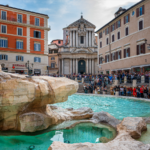
Officials in Rome have repeatedly stated that preserving monuments such as the Trevi Fountain remains a priority. Photo credit: Rudolf_Prchlik/Shutterstock

A tourist visiting the Trevi Fountain decided, seemingly out of the blue, to take a swim in it fully dressed, sunglasses included, to cool off during high temperatures in the Italian capital. Police were seen trying to remove the woman whilst a man that was accompanying her started to yell at them. The incident took place in front of large crowds gathered around the historic fountain, one of Rome’s busiest tourist attractions. Footage shared online showed the woman standing and walking through the water while visitors nearby watched and filmed the scene on their phones.

Security staff quickly intervened before officers from the local police force escorted the tourist away from the fountain area. According to reports, the woman later pleaded with officers not to issue her with a fine.

Extreme temperatures reported across Rome

Rome has experienced intense heat in recent days, with temperatures rising as large numbers of tourists continue to visit the city during the summer season. Witnesses said the tourist entered the fountain in an attempt to cool herself down amid the heatwave conditions affecting the Italian capital. Videos circulating online show her smiling while moving through the water moments before security personnel approached.

Authorities in Rome prohibit visitors from entering the Trevi Fountain under heritage protection regulations designed to preserve the historic monument. Bathing, climbing or sitting inside the fountain can result in financial penalties and removal from the site. The Trevi Fountain remains one of the most visited landmarks in Italy and attracts thousands of tourists each day, particularly during warmer months when visitor numbers increase significantly.

Police escort tourist away from the monument

Footage of the incident spread rapidly across social media platforms after bystanders recorded the exchange between the tourist and police officers. According to reports, the woman appeared visibly upset after being removed from the water and reportedly begged officers not to fine her for entering the fountain.

Italian authorities have not publicly confirmed whether the tourist ultimately received a financial penalty. However, local regulations allow police to fine individuals who enter protected fountains or engage in behaviour considered damaging to public monuments. The incident prompted widespread discussion online, with some users criticising the tourist for ignoring preservation rules while others pointed to the unusually high temperatures being experienced in Rome.

Authorities have tightened controls around the fountain

Rome’s authorities have increased security around the Trevi Fountain in recent years following repeated incidents involving tourists entering the water. The monument, designed by architect Nicola Salvi and completed during the 18th century, is considered one of Europe’s most important examples of Baroque architecture. City officials have repeatedly warned that entering the fountain risks damaging the structure and increasing maintenance costs.

Earlier this year, Italian media reported that another visitor was fined €500 and temporarily banned from the area after jumping into the fountain. In response to growing tourism pressures, Rome has introduced stricter crowd-control measures around several historic landmarks. Security officers and police patrols are regularly stationed near the Trevi Fountain to monitor visitor behaviour and enforce regulations.

Trevi Fountain remains one of Italy’s busiest attractions

The Trevi Fountain is recognised internationally as one of Rome’s best-known tourist sites and receives millions of visitors every year. The landmark became especially famous after appearing in La Dolce Vita, which featured actress Anita Ekberg entering the fountain in a scene that later became closely associated with the monument.

City authorities continue to remind tourists that recreating scenes from films or entering the water for photographs is prohibited. Visitors are permitted to walk around the fountain and throw coins into the water from designated public areas, but entering the basin itself remains against local regulations. The latest incident comes as several major European cities continue to deal with the effects of overcrowding during peak travel periods. Authorities in Rome have stated that preserving historic landmarks remains a priority as visitor numbers continue to rise during the summer months.

Continue Reading

%

Spanish Supermarket Giant Fined €30,000 Over Labelling That ‘misled Shoppers’

Published

on

spanish-supermarket-giant-fined-e30,000-over-labelling-that-‘misled-shoppers’

The ministry found that the packaging omitted details identifying the company responsible for marketing the product. Photo credit: Axel Alvarez/Shutterstock

Spain’s Ministry of Consumer Affairs has fined Mercadona €30,000 after concluding that the labelling and presentation of one of its private-label food products could mislead shoppers about its ingredients. The sanction relates to the supermarket chain’s “tortillas de avena 51%”, an ”oat” wrap-style bread product sold under Mercadona’s Hacendado range.

The investigation began following a complaint filed by FACUA-Consumidores en Acción, which argued that the packaging created confusion about the cereal content of the product. According to Spain’s Ministry of Social Rights, Consumer Affairs and Agenda 2030, the retailer committed three separate breaches of food labelling rules. Authorities issued three fines of €10,000 each covering misleading product presentation, incomplete company information and failures linked to mandatory naming requirements.

Authorities say packaging created confusion

Consumer officials stated that the wording and design of the packaging gave the impression that oat flour was the primary or sole cereal ingredient, despite the inclusion of refined flours. Regulators argued that this could influence purchasing decisions among consumers specifically looking for wholegrain or oat-based alternatives. Under Spanish food regulations, bread and wrap products must clearly identify the cereals used in their preparation. Authorities concluded that the presentation of the product did not provide sufficiently clear information about its true composition.

The ministry also found that the packaging omitted details identifying the company responsible for marketing the product. In the case of supermarket own-brand goods, retailers themselves are legally responsible for ensuring labels comply with consumer protection laws, even when products are manufactured by external suppliers. Officials stated that consumers must be able to understand the nature of a product quickly and accurately without needing to closely analyse ingredient lists or nutritional tables. The investigation concluded that the overall presentation of the wraps could lead shoppers to assume they were buying a product with a greater oat content than was actually the case.

Mercadona rejects the sanction

Mercadona has disputed the ministry’s conclusions and is considering an appeal before the High Court of Justice of Madrid.

The company stated that the product already included the legally required ingredient information and maintained that the labelling complied with applicable regulations. Mercadona also defended the standards used across its private-label range, saying its products are designed to provide customers with clear and accurate information.

Reports indicate that the ministry did not initially identify the supermarket publicly because of restrictions surrounding the publication of sanction procedures before they become fully finalised. However, the case quickly became linked to Mercadona following the original FACUA complaint and later reporting by national news outlets.

The ruling formally closes an investigation carried out by the Directorate-General for Consumer Affairs. Alongside the financial penalty, the ministry has ordered the supermarket to correct the issues identified during the inspection process.

Wider implications for supermarkets

Although €30,000 is a relatively small fine for a retailer of Mercadona’s size, the decision is significant because it reinforces the responsibility supermarkets hold over the marketing and labelling of their own-brand products. The case comes with growing scrutiny across Europe over food packaging and the way products marketed as healthier alternatives are presented to consumers. Terms linked to oats, wholegrains and fibre are increasingly used in supermarket branding because they appeal to shoppers seeking healthier diets and less processed foods.

Consumer organisations have repeatedly argued that some packaging creates misleading impressions even when ingredient lists technically comply with regulations. Regulators across several European countries have stepped up monitoring of claims linked to nutrition, natural ingredients and wholegrain content in recent years. The decision may encourage supermarkets to review the wording, branding and imagery used across private-label packaging. Retailers could also place greater pressure on suppliers to ensure products meet both legal requirements and consumer expectations regarding transparency.

What the ruling means for consumers

For consumers, the ruling highlights the importance of carefully checking ingredient lists rather than relying solely on front-of-pack branding or product names.Spanish authorities concluded that the overall appearance and wording of the packaging could lead the average shopper to believe the wraps contained a higher proportion of oat or wholegrain ingredients than they actually did. Consumer groups say this is particularly important for shoppers making purchasing decisions based on health or dietary concerns.

The case may also lead to clearer food labelling standards in supermarkets if retailers take steps to avoid similar investigations. Greater transparency could help consumers compare products more easily and better understand exactly what they are buying. The ruling comes at a time of increasing public attention on food marketing and nutritional claims across Europe. As regulators continue to examine how products are presented to shoppers, supermarkets may face greater pressure to ensure packaging reflects the true nature and composition of the foods they sell.

Continue Reading

%

Spain Launches Its Third Quantum Supercomputer To Revolutionise AI And Medicine

Published

on

spain-launches-its-third-quantum-supercomputer-to-revolutionise-ai-and-medicine

Spain unveils advanced quantum supercomputer to accelerate AI and science. Photo Credit: BSC

Spain has finally revealed its third quantum supercomputer, a machine that is capable of developing far more complicated algorithms than conventional computers can. The supercomputer, located at the Barcelona Supercomputing Centre, or BSC, was designed and built by Barcelona-based company Qilimanjaro Quantum Tech and funded by the European Commission and Spain’s Secretariat of State for Digitalisation and Artificial Intelligence, representing a total investment of €9.8 million. The computer was revealed on Thursday, May 28 at the BSC headquarters.

Conventional computers vs. supercomputers: What is the difference?

What differentiates a supercomputer from a conventional computer is that the latter works with bits, which is short for “binary digits” and is the most basic unit of information in computer science. These bits can only represent the values 0 or 1. Supercomputers, on the other hand, use qubits, which can represent both states at once. This means that supercomputers can easily take on problems that a conventional computer can barely solve.

The newest addition to the MareNostrum 5 supercomputer system: 314 million billion calculations per second

The BSC’s third supercomputer was built to speed up research and the development of artificial intelligence. Unlike the two previous supercomputers built at the centre, the third one is analogue, while the others are digital. The machine has been made to complement the systems that are already in place.

It will be integrated into the MareNostrum 5 system, a large supercomputer already in place at the centre that is capable of performing up to 314 quadrillion calculations per second, combining classical supercomputing, quantum computing, and artificial intelligence.

This incredible machine is a main driver of European research into artificial intelligence, climate modelling, and medicine. It is housed at the chapel of Torre Girona, which was also home to the first four versions of the MareNostrum supercomputer between 2005 and 2023.

Since their launch in February 2025, the first two supercomputers have already clocked up to 4,200 computing hours and have participated in 53 research projects.

How can supercomputers impact daily life?

These machines are capable of furthering research into various sectors, and will therefore have a direct impact on science and advancement in many areas.

To begin with, these computers are capable of simulating complex human organs, leading to faster diagnoses of diseases and tailor-made, individualised medical treatments.

The supercomputers can also generate highly localised and precise meteorological data, allowing for earlier predictions for extreme weather, including storms and droughts.

They can also help with modelling major cities like Barcelona and Madrid, helping officials to plan public infrastructure and optimise traffic flow.

Supercomputers will be integral in the furthering of artificial intelligence technology, which has already taken the world by storm and is a major part of the daily life of many citizens.

They can also simulate renewable energy models, reducing carbon footprints and lowering energy costs, and much more.

Furthering European technological sovereignty and making major scientific advancements

To date, the programme promoting the new quantum computer, the European High Performance Computing Joint Undertaking, has acquired six quantum computers distributed across different European countries, including Poland, the Czech Republic and Germany.

The launch of this new supercomputer represents a significant step forward for not only Spanish computer science, but European technology as a whole. This incredible machine, capable of solving major problems in science today, including medicinal science and climate science, will also help European countries to achieve technological sovereignty and reduce reliance on infrastructure from other countries.

Continue Reading

Trending

Copyright © 2017 Spanish Property & News