Connect with us

%

The Spanish City Where Britain Built A Neighbourhood, Started Football And Introduced Golf

Published

on

the-spanish-city-where-britain-built-a-neighbourhood,-started-football-and-introduced-golf

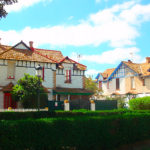
Walk through the Barrio Reina Victoria and the British influence is difficult to miss. Photo credit: Jose A CC 2.0/Wikipedia

Would you believe me if I told you there is a little British neighbourhood hidden away in Huelva? Known as the Barrio Reina Victoria, the Barrio Obrero and, rather fittingly, the Barrio Inglés, it isn’t an expat community living in Spain. The entire neighbourhood was built in British styles, with pitched roofs, chimneys, timber details, gardens and the sort of architecture you would expect to find in Britain rather than southern Spain.

But the really fascinating part is that Huelva became home to what has been described as Spain’s first unofficial British colony.  Long before British retirees began settling along the Spanish coast, the Rio Tinto mines attracted a British community that established its own homes, clubs, sports and way of life in this corner of Andalucía. The Barrio Reina Victoria was one of the most visible results of that extraordinary period, a British-built neighbourhood that has survived for more than a century.

When Britain arrived in Huelva

The story starts in 1873, when the Rio Tinto mines were sold to foreign investors and the British-owned Rio Tinto Company Limited took control of the operation. The mines were enormously important to the local economy, and British engineers, managers and workers began arriving in the province, many bringing their families with them. The community became remarkably self-contained. The British established housing, social clubs and recreational facilities, while bringing familiar customs and pastimes from home. Huelva was developing a British presence unlike anything most people would associate with Spain today.

As the population connected to the mining company grew, so did the demand for suitable housing. In 1916, the Rio Tinto Company commissioned architects Gonzalo Aguado and José Pérez Carasa to design a new residential neighbourhood in Huelva. The development followed the principles of the British garden-city movement, with houses surrounded by gardens and plenty of open space. The first plans contained 71 buildings and 213 homes, with the first phase completed by 1919. More houses were added during the 1920s, creating the neighbourhood that remains today.

A British neighbourhood under the Andalucían sun

Walk through the Barrio Reina Victoria and the British influence is difficult to miss. The houses feature pitched roofs, chimneys, exposed brick, timber framing, gables and dormer windows, while gardens and open spaces form an important part of the neighbourhood’s layout. Some of the later homes designed by British architect R.H. Morgan in the 1920s made the connection even more obvious, incorporating Old English architectural features and decorative timber work.

Yet this isn’t simply an English village transported wholesale to Spain. Local Andalusian influences were incorporated into the designs, producing an unusual combination of British architecture and southern Spanish surroundings. The result is particularly striking under the Huelva sunshine. Traditional British-looking houses sit behind gardens and colourful façades, creating a neighbourhood that feels familiar and completely foreign at the same time. The Barrio Reina Victoria was declared a Cultural Heritage Site and protected as a Historic Site in 2002, ensuring that this unusual piece of Huelva’s history is preserved.

The British brought football to Huelva

Believe it or not the mining community didn’t just come to mine, they also left an extraordinary sporting legacy. The Real Club Recreativo de Huelva was founded on 18 December 1889, emerging from the British community and its sporting activities. The club is officially recognised as the oldest football club in Spain. Its first recorded football match followed just days later, on 29 December 1889, when the then called ‘Huelva Recreation Club’ played against sailors from ships in the city’s port.

Huelva continued to make football history. On 13 August 1892, the Velodrome was inaugurated, becoming the first purpose-built football ground in Spain. So while football is now inseparable from Spanish culture, one of the country’s earliest chapters in the sport was written by British residents in Huelva more than 130 years ago.

And they brought golf too

Football wasn’t the only British sport to take root, golf arrived with the British mining community too. The North Lode Golf Club was established at Minas de Rio tinto in 1914, making it one of Spain’s earliest golf clubs.

Then, in 1916, the Club de Golf de Huelva was founded on land provided by the Rio Tinto Company. Huelva consequently became one of the country’s early centres for the sport, decades before golf courses became such a familiar sight to visitors and expats across Spain. The British miners had brought the sports they enjoyed at home and established them in their new surroundings.

The British legacy is still here

The Rio Tinto Company and the British mining era are no longer the force they once were, but their fingerprints remain all over Huelva. They can be found in the old mining and railway infrastructure, in the history of Recreativo, in the city’s early golf clubs and, perhaps most charmingly, in the streets of the Barrio Reina Victoria.

For British expats living in Spain, it is a reminder that the British connection with Andalucía didn’t begin with package holidays, cheap flights or retirement communities on the coast. It stretches back to the 19th century, when British workers arrived in Huelva in search of opportunity in one of the world’s most important mining regions. More than 150 years later, the neighbourhood they helped create still stands, with its British-style houses sitting beneath the Andalusian sun. You don’t need to cross the Channel to find ‘little Britain’, It’s hiding in Huelva.

%

France Runs Short Of Diesel As Europe Faces Fuel Supply Warning

Published

on

france-runs-short-of-diesel-as-europe-faces-fuel-supply-warning

Diesel prices through the roof in France. Credit: CGT X

France is facing growing problems getting fuel to petrol stations, raising concerns about what a worsening diesel shortage could mean for drivers and households in Spain.

Around 15 per cent of French petrol stations were reporting shortages of at least one type of fuel on September 20, according to official figures reported by French broadcaster TF1. That works out at around 1,500 stations across the country.

The situation has deteriorated quickly, with the proportion affected rising from around 7 to 9 per cent in the middle of last week. France has not run out of fuel nationally, but the shortages are a warning of the pressure building across Europe’s diesel market.

Why is diesel becoming harder to find?

Several problems are hitting fuel supplies at the same time. Disruption to oil shipments through the Strait of Hormuz has reduced supplies reaching international markets, while problems affecting Middle Eastern oil infrastructure have added further pressure.

Russia is also producing and exporting less diesel after Ukrainian attacks damaged several of its refineries. Moscow has restricted exports to protect supplies for its own motorists and businesses.

European refineries are working hard to make up the shortfall, but diesel prices have risen sharply as countries compete for available supplies. According to Reuters, European diesel prices recently reached around €2.39 a litre, a record level.

France also has a problem of its own. TotalEnergies has capped prices at its French stations at €1.99 a litre for petrol and €2.25 for diesel. The cheaper fuel has attracted more drivers, meaning some stations are selling diesel faster than replacement deliveries can arrive. French government figures showed that around 90 per cent of stations reporting supply difficulties in mid-September belonged to TotalEnergies.

Could diesel prices rise more in Spain?

Drivers in Spain are already paying more at the pumps. Average Spanish diesel reached around €1.83 a litre in mid-September, while petrol was approaching €1.87. Prices could rise further if the European diesel market becomes tighter.

Spain is not currently experiencing a nationwide fuel shortage, and there is no indication that motorists should expect petrol stations to suddenly run dry. However, Spain is still part of the European fuel market. If refiners and fuel companies have to pay more to obtain diesel, those higher costs can eventually reach the pump. A prolonged shortage could therefore mean another round of increases for Spanish drivers.

Why higher diesel prices could affect everyone

Diesel is not just a drivers’ problem. Lorries and vans depend heavily on diesel to move goods around Spain. Farmers also use it to operate tractors and other machinery. Higher fuel costs can therefore work their way into the prices of food, building materials, parcels and other everyday goods.

Spanish farmers are already feeling the pressure. Agricultural diesel was reported at around €1.65 a litre earlier this month, with farming organisations warning that the higher cost is adding hundreds of millions of euros to the sector’s bills. Transport companies face the same problem.

A delivery company paying more for diesel has to absorb that extra cost or pass some of it on to customers. Taxis, coaches, buses and other commercial vehicles can also be affected.

Spain has some protection from a diesel shortage

Spain does have an important advantage over France. The country has a large refining industry capable of producing substantial quantities of fuel, while companies can also import refined diesel when it is available internationally. That means French-style shortages are not inevitable in Spain.

Much will depend on how long the problems affecting Russian and Middle Eastern supplies continue and whether global refineries can keep producing enough diesel to satisfy demand. Also, Spain’s diesel discount is also due to disappear at the end of September.

For British expats in Spain, the biggest concern is therefore not empty petrol stations at this stage. It is the possibility that diesel becomes considerably more expensive, pushing up the cost of driving, deliveries, farming, food and other everyday services.

With Europe heading into the autumn and winter months, France’s empty pumps are a warning worth watching.

Continue Reading

%

Dog Lovers Day Out At Casares Guau Fest

Published

on

dog-lovers-day-out-at-casares-guau-fest

Dog owners and lovers have a treat in store, as Casares Costa gets ready to welcome its beloved pets festival back for another helping of fun, learning and tail-wagging togetherness.

What’s happening at this year’s celebration

Jardines del Rosario opens up its gardens on Sunday, September 27 from 11am for Guau Fest, or “Woof Fest” if you prefer! Casares Town Hall organises the free family gathering together with Comunicacion Al Dente, weaving it into the wider “Deja Huella” (Leave a Mark) awareness campaign that encourages owners to clean up after their dogs and treat animals with care and respect.

Visitors can browse stalls selling pet products and services, listen to talks on canine training and behaviour, and let children loose on workshops designed just for them. The debut edition featured face painting, balloon modelling and a costumed character visit for younger guests, giving a flavour of what families might find this time round.

Treats, workshops and a canine cookery class

New additions this year include a dog illustration workshop and a canine bakery session, where owners can learn to whip up homemade snacks for their pets. Free gifts under the “Casares Dog Lovers” banner will also be handed out, with food and drink stalls on hand to keep hungry humans fuelled.

A Canine Unit will demonstrate the impressive work carried out by assistance and detection dogs, giving the public a rare glimpse of these highly trained animals in action. La Linea’s Local Police are bringing their own handlers and dogs to the festival, building on the involvement seen at previous gatherings.

Getting involved

Businesses, associations and animal-related entities keen to take part can reach organisers on 650 163 356 or via Instagram at @guau.fest. Entry is completely free, and everyone is invited to bring their pets and join in. For more information visit the Casares Town Hall website and FaceBook pages.

Continue Reading

%

Woman Rescued After Car Plunges Down Steep Lorca Embankment

Published

on

woman-rescued-after-car-plunges-down-steep-lorca-embankment

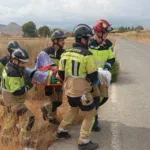
Firefighters rescue woman after car plunges down steep Lorca embankment. Photo Credit: Fire and Rescue Consortium of the Region of Murcia

A 62-year-old woman was rescued on the afternoon of Thursday, September 17, after her vehicle fell down an embankment in Lorca. Firefighters rushed to the scene to rescue the woman, who had been on the road to the Puentes Reservoir, near the Huerto del Nulo area.

Vehicle plunges off the RM-C15, driver calls 112

The accident occurred between kilometers 5 and 6 of the RM-C15 road, in the direction of the Puentes Reservoir. The woman’s vehicle ran off the road and had plunged into a steep embankment on the Pantano de Puentes road, located in Lorca.

The 112 Emergency Coordination Centre of the Region of Murcia received the call at around 2:54pm by the woman herself, who reported that she had run off the road and had been able to exit the car on her own. Notwithstanding, the woman stated she required medical attention.

Complex rescue on a steep slope: woman transferred to hospital for treatment

Firefighters, as well as an ambulance from the 061 Emergency and Urgent Healthcare Management were speedily dispatched to the scene. Once the woman was found, the paramedics requested the intervention of the firefighters due to the significant slope of the embankment down which the vehicle had fallen.

When the members of the Fire and Rescue Consortium of the Region of Murcia reached the woman, she was given medical assistance on the scene. The first responders immobilised her and then evacuated her on a stretcher to the Rafael Méndez Hospital in Lorca to continue receiving medical attention.

A warning for residents driving near embankments and steep slopes

The factors that made the woman’s car swerve off the road are unknown, but first responders and safety officials in Murcia take the opportunity to remind local residents of the importance of remaining vigilant on the roads, especially during or immediately after harsh weather and other factors that could make the roads slippery, difficult to navigate, or difficult to see.

Thankfully, the quick action of Murcia first responders allowed them to reach the injured woman quickly and give her the medical attention she required.

Continue Reading

Trending

Copyright © 2017 Spanish Property & News