Connect with us

%

The Tour De France Has A Secret Team With One Very Unusual Job

Published

on

the-tour-de-france-has-a-secret-team-with-one-very-unusual-job

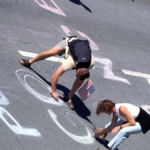
If you see any woodland creatures painted on the road, you’ll know the erasure team was there. Credit: GCN/NOS Sport

As the Tour de France begins in Barcelona, one unusual team has a job very few viewers ever think about. Before the cyclists and TV cameras arrive, they search the roads for giant penises painted on the tarmac and make them disappear.

The Tour de France team that erases rude road drawings

Patrick Dancoisne, a 65-year-old retired undertaker from north-eastern France, has spent 15 years working what may be the Tour’s strangest shift. Each morning before a stage, he and a colleague drive the route in a white van, scanning the asphalt and surroundings for obscene drawings, political slogans and unauthorised marketing messages that organisers do not want broadcast to the world.

The most common find, Patrick told L’Équipe in a 2025 profile, is anatomical. “The drawing we find most on the road is the male organ,” he said. “I turn them into owls, rabbits or butterflies. But this year, I’m making a lot of rabbits.”

The penis-to-woodland creature work is part of a wider logistical operation run by Doublet, a French company that handles signage, barriers and banners for the Tour. Patrick and his colleague are among an 80-person team that sleeps in sleeper buses, eats in mobile canteens and rebuilds the entire race infrastructure every night.

Why the job matters on live television

The Tour de France is broadcast globally across more than 190 countries and reaches an estimated 150 million viewers in Europe alone, according to the race’s official figures. Helicopter cameras and motorbike crews film the peloton from above and alongside, meaning anything painted on the road surface can end up on screen in real time. 

The problem drew widespread attention in 2016, when footage of giant genitalia painted on the tarmac circulated during the broadcast. Since then, the erasure team has become a permanent fixture of the race’s behind-the-scenes operation.

Patrick told L’Équipe: “It must be remembered that the Tour is seen all over the world. It must remain clean, and above all remain a celebration.”

As previously mentioned, political messages are also targeted. In 2025, Patrick said many road slogans referenced the Israel-Gaza conflict. Those are erased. Encouraging messages for riders, declarations of love and marriage proposals are left untouched (but only the clean ones).

From rude graffiti to butterflies and owls

Patrick and his team do have to get quite creative. Because there is rarely time to scrub off the paint, he uses quick-drying white paint and a roller to transform the offending image into something harmless. One part may become a tree trunk, two circles become an owl’s eyes… The team uses around 350 litres of paint across the three-week race, according to Spanish tech site Xataka.

Sometimes speed is the only option. When graffiti is spotted at short notice, Patrick and his colleague simply paint scribbled lines over it to make the image unrecognisable before the peloton races past. On a single day during the 2024 Tour, the pair reportedly found 18 anatomical drawings, nine syringes and 30 political messages.

Patrick has become something of a cult figure on the roadside. Fans recognise him and ask for autographs. “My nickname has become ‘the eraser’,” he told L’Équipe. “There are a lot of people who ask me for autographs. It makes me laugh. It’s part of the game.” 

Why the story matters in Spain today

The 2026 Tour de France starts in Barcelona on Saturday July 4, with a 19.6-kilometre team time trial from the Forum Marine Platform to Montjuic. It is the fourth time the race has visited Cataluña, following appearances in 1957, 1965 and 2009.

Barcelona City Council expects between 650,000 and 850,000 spectators for the opening stage, with major road closures across several districts. Stage 2 runs from Tarragona to Barcelona on Sunday July 5, and Stage 3 departs from Granollers on Monday July 6, heading into France.

The Generalitat de Catalunya (Catalan regional government) has activated a Special Mobility Plan, warning that roads will close approximately three hours before riders pass through and reopen around one hour after the last cyclist.

For anyone watching the Barcelona stages on television, the tarmac will look spotless. However, if you happen to see any cute rabbits, butterflies, or owls painted on the road, you’ll know ‘the eraser’ has been at work.

%

Could Holidaymakers In Spain Soon Pay More Than Locals?

Published

on

could-holidaymakers-in-spain-soon-pay-more-than-locals?

Some attractions offer discounted rates for residents. Photo Credit: Roaming Pictures/Shutterstock

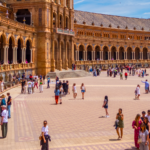
Imagine arriving at a famous attraction on holiday only to discover the person standing next to you is paying half the price simply because they live there. It might sound unlikely, but this kind of pricing difference is already being tested in parts of the world as destinations try to deal with growing visitor numbers and pressure on busy hotspots.

In Japan, some attractions have begun exploring higher prices for tourists compared to residents, and it is triggering a debate that is now starting to spread far beyond Asia. Which leads to the question many people visiting Spain may not expect to ask: could something like this ever appear here?

A growing strain in popular destinations

Japan has seen a sharp rise in international visitors, with some of its most famous locations becoming busier than ever. Streets, transport links and historic sites have all come under pressure at peak times, with queues, congestion and overcrowding becoming part of the experience in certain areas. In response, some places have started looking at charging visitors differently depending on where they come from. The idea is simple. Locals pay less and visitors pay more.

Supporters of the approach say it helps ease pressure on places that are being stretched by record visitor numbers. The reasoning is that residents already contribute through local spending and everyday life, while visitors are only there temporarily. Others see it differently. For many travellers, the idea of paying more simply because of where they are from feels unfair, especially when the experience is meant to be the same for everyone.

Why Spain is being drawn into the same conversation

Spain faces many of the same pressures seen in other major tourism destinations. Some of its most popular cities and coastal areas regularly experience intense visitor numbers, especially during peak seasons. Narrow streets filled with crowds, busy beaches and packed public spaces have become familiar scenes in places that attract millions of visitors every year.

At the same time, tourism remains one of the strongest parts of the Spanish economy, supporting jobs and businesses across the country. That combination creates a constant balancing act between welcoming visitors and keeping everyday life manageable for those who live there. Because of that, any idea linked to changing how visitors are charged is likely to attract attention.

Could tourists and locals actually be charged differently

At the moment there is no system in Spain where tourists are routinely charged more than residents for the same attraction or service. However, small differences in pricing already exist in certain forms. Some attractions offer discounted rates for residents, especially at cultural sites or local facilities. In other cases, visitor taxes are added in specific regions, meaning holidaymakers pay a small extra cost during their stay.

This is not the same as charging tourists a higher entrance fee than locals at the same ticket office, but it does show that pricing based on visitor status is not completely unfamiliar. Elsewhere in Europe, similar ideas have appeared in different forms as destinations try to manage demand during peak travel periods.

How travellers would likely react

If a system like this ever appeared in Spain, reaction would almost certainly be divided. Some holidaymakers would probably accept small differences in price if they felt it helped maintain popular destinations and improve facilities. Many already expect to pay tourist taxes or entrance fees when visiting major cities or attractions.

Others would likely see it as unfair, especially if the difference was clearly based on where someone comes from rather than what they are buying or doing. There is also a practical concern for travellers. If prices vary depending on residency, it could make planning a trip more complicated and create uncertainty around costs.

Spain’s busiest destinations are already under pressure

Across Spain, several well known locations continue to deal with large numbers of visitors, particularly during the summer months. Popular coastal areas, city centres and island destinations often see intense seasonal demand, with local infrastructure and services working at full capacity.

In some places this has already led to restrictions on holiday rentals, limits on cruise ship arrivals or efforts to spread visitor numbers more evenly throughout the year. These measures show that managing tourism has already become a key issue in many areas, even without changing how individual visitors are charged at entry points.

A debate that is spreading across travel destinations

Spain is far from alone in facing these questions. Many countries that rely heavily on tourism are trying to find ways to balance economic benefits with the impact of large visitor numbers. Some destinations have introduced entry fees, timed tickets or seasonal pricing to manage crowds.

Others are focusing on encouraging travel outside peak periods or promoting less visited areas to reduce pressure on well known hotspots. The idea of charging visitors more than locals adds another layer to that discussion, and while it is still limited in practice, it is becoming part of a wider conversation about how tourism is managed in the future.

What travellers can expect for now

For people planning holidays in Spain, nothing is changing in practical terms. Visitors are not being charged differently from residents for attractions or everyday experiences, and there are no current plans suggesting that this is about to happen. But the conversation around tourism is clearly shifting. The focus is moving towards how destinations handle growing demand, how they protect busy areas, and how costs are shared between visitors and residents.

That means ideas that once seemed unlikely are now being discussed more openly than before. Whether Spain ever moves towards anything similar remains uncertain. But as travel patterns continue to change, the way people experience popular destinations and what they pay when they arrive may not stay the same forever.

Continue Reading

%

Portugal Is Making A Big Airport Change That Could Reduce Long Travel Delays

Published

on

portugal-is-making-a-big-airport-change-that-could-reduce-long-travel-delays

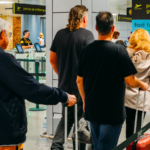
The most noticeable change should be shorter waiting times at arrivals. Photo credit: Alexandre Rotenberg/Shutterstock

If you have ever landed in Portugal during peak summer and found yourself stuck in a slow-moving passport queue, you will know how quickly a holiday mood can disappear before you even leave the airport. That experience could soon become less common.

Portugal is bringing in hundreds of additional border officers at its busiest airports in an effort to reduce waiting times at passport control during the summer travel rush. For holidaymakers arriving in Lisbon, Faro, Porto and other key destinations, it could mean a noticeably smoother start to their trip.

What is changing at Portugal airports?

Around 367 extra border officers are being deployed as of Monday, June 5, across Portugal’s main airports, with the aim of speeding up passenger processing during peak arrival periods. The extra staff will be focused on the country’s busiest entry points, including Lisbon, Porto and Faro, where queues have often built up when multiple international flights land within short periods.

Smaller but heavily used airports such as Madeira and the Azores are also expected to benefit. The goal is straightforward. Reduce congestion at passport control and move passengers through arrivals more efficiently at the height of the summer season.

Why airport queues have become a problem

Portugal remains one of Europe’s most popular short-haul holiday destinations, with millions of visitors arriving every year, particularly from the UK, Ireland and other European countries. During peak months, airports often see a sharp concentration of arrivals within tight time windows. When several flights land close together, passport control areas can quickly become overcrowded.

This has led to long queues in arrivals halls, with passengers sometimes waiting extended periods before they can leave the airport. For families, late arrivals or those with onward transfers, these delays can be particularly frustrating. Airport authorities have faced increasing pressure to improve flow without compromising border security checks.

What the extra officers will actually do

The new border officers will be placed directly in passport control areas where queues tend to form. Their role is to help manage passenger flow, open additional processing capacity where needed and reduce bottlenecks during peak arrival times.

In other words, this should mean more desks operating during busy periods and quicker movement through immigration checks when several flights arrive at once. Passport checks will still take place as normal, but the added staffing is designed to prevent long backlogs forming.

What it means for holidaymakers

For travellers flying into Portugal this summer, the most noticeable change should be shorter waiting times at arrivals.Instead of long queues stretching through terminals, passengers are more likely to experience a steadier flow through border control, especially during peak afternoon and evening arrivals.

For families, elderly passengers or those arriving after late-night flights, even a small reduction in waiting time can make a significant difference to the overall travel experience. It could also reduce pressure on transfer connections, car hire pick-ups and onward travel plans, which are often affected when queues build up. However, officials are not suggesting that queues will disappear completely. Busy arrival periods are still expected during peak holiday weeks.

Why this matters for Spain-based travellers

For many readers in Spain, Portugal is a regular short-break destination, particularly for city breaks, coastal holidays and weekend travel.With frequent short flights between the two countries, even small improvements in airport processing times can have a noticeable impact on overall journey experience.

Faster passport control could make short trips more appealing, especially for travellers flying into Lisbon or Faro for quick getaways. It also comes at a time when travel demand across southern Europe remains strong, placing continued pressure on airports to handle high volumes efficiently.

Will it solve the issue completely?

While the extra staffing is expected to ease congestion, it is unlikely to eliminate queues entirely during the busiest summer periods. Airports across Europe continue to face fluctuating passenger numbers, peak-time surges and strict border processing requirements, all of which can create delays when flights arrive in clusters.

However, aviation experts often point out that increasing staff at passport control is one of the fastest ways to improve flow without major infrastructure changes. In that sense, the move is seen as a practical step to manage pressure during peak season rather than a long-term structural fix.

A smoother arrival experience?

For now, holidaymakers heading to Portugal this summer may notice the difference as soon as they step off the plane. If the extra officers succeed in easing the queues, arrivals could feel faster and less stressful, helping passengers move through the airport with fewer delays. While queues are unlikely to disappear entirely, the expectation is that travellers will spend less time waiting at passport control and more time starting their holiday.

Continue Reading

%

Donkey Dreamland Mijas Fire Safety Appeal Success

Published

on

donkey-dreamland-mijas-fire-safety-appeal-success

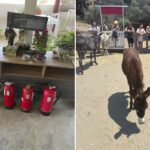
Firefighting equipment at Donkey Dreamland bought with community funds. Credit: DD

Amaya Isert asked the Costa del Sol community for help last week, and they really delivered! Fire risks from overgrown neighbouring land threatened donkeys at Donkey Dreamland in Mijas during the heatwave. Council warnings about cutting back overgrown bushes and grass had gone unheeded by many landowners on surrounding grounds. Fire extinguishers and other equipment needed funding, and fast.

Support came quickly via GoFundMe. Donations ended up exceeding the target in just one week. Sanctuary volunteers now have all required supplies and protection items.

Donkey Dreamland wins local love

Many families on the Costa del Sol visit often to meet the rescued donkeys. Children learn about animal rescue and care during trips. Animals at the sanctuary enjoy safe and caring surroundings thanks to ongoing work at the site.

Amaya Isert earns community respect

Amaya and the volunteers at Donkey Dreamland devote themselves to rescuing and caring for donkeys every day. Recent steps for fire prevention reflect her proactive style. Everyone in the area knows her for, and values her updates on needs and spending.

Donations top fire safety goal

Required spending reached some €2852.58. However, total donations rapidly hit €3200. All costs have received payment in full with extra money remaining for many of the ongoing needs of the centre, and to cover losses suffered by having to temporarily close the sanctuary. The danger of wildfire is still very much present, but at least now they have some sort of defence.

Amaya Isert Thanks Every Donor

“We are so grateful to the donors who have supported our campaign on GoFundMe, enabling us to purchase crucial equipment and supplies thus protecting our donkey family from the high risk of fires during the summer season. Transparency for us is so important, therefore we wish to inform you that the total cost has been €2852.58 so far. Thanks to your generosity we have exceeded our initial request and we have raised €3200!! This has meant that we have been able to cover all the expenses to date. We wish to take this opportunity in expressing our heartfelt thanks to each and everyone of you… It really means so much for us.”

Continue Reading
Advertisement
Advertisement

Spanish Real Estate Agents

Tags

Trending

Copyright © 2017 Spanish Property & News