Connect with us

%

Torrox Creates Giant Spanish Flag Canopy In Constitution Plaza For World Cup

Published

on

torrox-creates-giant-spanish-flag-canopy-in-constitution-plaza-for-world-cup

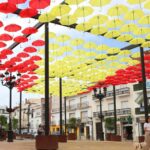
Plaza de la Constitución, Torrox. Credit: OM FB

Torrox town has replaced the usual multicolour umbrellas over Constitution Plaza with red- and yellow-coloured models that form a giant Spanish flag. Council workers completed the installation last week in the historic village centre to celebrate the kickoff of the FIFA World Cup 2026.

Red and yellow canopy builds support for national team

Mayor Oscar Medina explained that the project is going after two main goals. Council members hope to generate a party atmosphere backing the Spanish national football team. They also want to use the tournament’s popularity as promotion for Torrox. Council leaders want the central square to reflect this support by linking sports excitement with the clear appeal of the public space.

Local businesses should benefit from increased sales during the match weeks. Shops and bars in the centre benefit from extra visitors drawn by the striking displays. Medina said that Constitution Plaza ranks among the most photographed and shared spots on social media along the coast.

Photo-friendly design set to draw more visitors

People are already sharing images of the square widely online. The new flag design should become a popular subject for posts from residents and holidaymakers who visit the town. Medina is encouraging torroxeños to decorate their balconies and business premises with national symbols throughout the competition period.

The square update forms part of wider efforts that include flags for Malaga CF on the town hall front. Malaga CF faces a decisive playoff game at La Rosaleda to gain promotion to the first division.

Timing chosen to lift tourism profile

Services staff managed the physical setup of the umbrella structures. Their efforts let Torrox present a fresh image that combines football enthusiasm with care for its main public areas. Leaders chose this moment to give the town tourism profile an original boost through the massive media coverage that surrounds big football events.

Sign up for personalised news

Subscribe to our Euro Weekly News alerts to get the latest stories into your inbox!

By signing up, you will create a Euro Weekly News account if you don’t already have one. Review our Privacy Policy for more information about our privacy practices.

%

From Andalucía To Buckingham: The Surprising Orange Tradition Linking Sevilla To King Charles III

Published

on

from-andalucia-to-buckingham:-the-surprising-orange-tradition-linking-sevilla-to-king-charles-iii

Sevilla is known for its extensive population of bitter orange trees. Photo credit: Simona Bottone/Shutterstock

Sevilla has renewed its long-standing cultural and diplomatic tradition with the British Royal Family as bitter oranges from the gardens of the Real Alcázar are once again being used to produce marmalade destined for King Charles III.

The annual harvest continues a practice that has been maintained for decades, reinforcing a symbolic connection between the Andalucian capital and the British monarchy through one of Spain’s most historically significant royal sites.

The oranges are collected each year from the grounds of the Real Alcázar, a UNESCO World Heritage Site and one of the oldest royal palaces still in use in Europe.

Bitter oranges from the Real Alcázar gardens

The fruit involved in the initiative comes from bitter orange trees (Citrus aurantium), which are widely found throughout Sevilla. These trees were introduced centuries ago during Andalucía’s agricultural development and have since become a defining feature of the city’s landscape.

Although the fruit is not suitable for direct consumption due to its strong bitterness, it is highly valued for marmalade production, particularly because of its aromatic peel and high natural pectin content.

The Alcázar’s gardens contain hundreds of these trees, which are maintained as part of the historic landscape rather than for commercial agricultural use. Each winter, the fruit is carefully harvested under the supervision of the palace’s horticultural teams.

Collection and transfer through diplomatic channels

Once harvested, the oranges are sorted and transferred through official diplomatic channels linked to the British Embassy in Spain. The process is carried out as part of a structured cultural exchange rather than a commercial arrangement.

The fruit is then used to produce traditional marmalade, which is associated with British culinary heritage and long-standing royal breakfast traditions. The finished product is subsequently distributed through official channels connected to the British Royal Household.

King Charles III, known for his interest in sustainability and traditional food production, is associated with the continuation of the marmalade tradition within the royal context.

Origins of a century-old tradition

The origins of the practice are generally traced back to the early 20th century, when cultural exchanges between the Spanish and British royal households were established during the reign of Alfonso XIII.

What began as a symbolic gesture has evolved into an annual tradition that has endured for more than a century. Over time, it has become a recurring expression of goodwill between Spain and the United Kingdom, maintained through royal, diplomatic and cultural ties.

Sevilla’s historic orange trees and urban identity

Sevilla is known for its extensive population of bitter orange trees, which are planted throughout streets, squares and historic courtyards across the city. These trees are a legacy of Andalucía’s Moorish agricultural history and remain one of the most recognisable features of the urban landscape.

In districts such as Santa Cruz and within major monuments including the Real Alcázar, the presence of orange trees contributes to the city’s distinctive visual and sensory identity, particularly during the flowering season when their fragrance fills the air.

Although the fruit is rarely used locally in cooking, it has found a unique international role through its use in marmalade production abroad.

Cultural diplomacy between Spain and the United Kingdom

The continuation of the tradition is widely viewed as an example of cultural diplomacy, where symbolic exchanges reinforce international relationships outside formal political or economic agreements.

For Sevilla, the initiative strengthens the global cultural profile of the Real Alcázar, highlighting its role not only as a historic monument but also as a living space where traditions continue to evolve.

For the British Royal Family, the connection ties a staple preserve of British culinary culture to a specific and historic source of fruit, adding a narrative layer to a familiar product.

Symbolism and continued relevance

Although the number of oranges used in the initiative is relatively small compared with the overall harvest across Sevilla, the symbolic importance of the exchange remains significant. It reflects continuity in a tradition that links heritage, agriculture and diplomacy.

The practice also highlights how historic customs can persist in modern international relationships, evolving in meaning while retaining their original symbolic intent.

A living tradition rooted in history

The Alcázar orange tradition remains a rare example of a cultural practice that bridges centuries of history and two nations. From the gardens of an Andalucian palace to the tables of the British Royal Household, the journey of these oranges represents a unique blend of heritage, symbolism and continuity.

As the tradition continues, it reinforces the enduring connection between Sevilla and the British monarchy, sustained not through formal agreements, but through a shared appreciation of history, culture and tradition.

Continue Reading

%

Estepona Boulevard Project Gaining Speed

Published

on

estepona-boulevard-project-gaining-speed

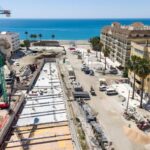
Estepona boulevard works. Credit: Ayuntamiento de Estepona

Construction works for the new boulevard in Estepona are advancing according to plan through multiple phases nearing finished in key areas. The underground network channel works stand-alone to 90 per cent, while foundation development has reached 50 per cent. The first-floor slab part of the project has got to 30 per cent completion, with the roof slab construction now underway, advancing this major urban infrastructure project. Local teams are coordinating efforts to minimise impact on surrounding neighbourhoods during all work stages, although complete normality is still far off.

Underground Infrastructure Progress

Underground installations covering electricity, telecommunications, drinking water, irrigation and drain networks are going well according to the council, with 90 per cent completion status.

Opening of pedestrian routes

Pedestrian passage on Avenida San Lorenzo is open already, improving zone connectivity throughout the construction period. Additional access from Juan Carlos I and Avenida España will open in July. Gardening activities have commenced in the surroundings of the Alboran building during recent days.

Boulevard design and future connections

The new boulevard will merge the pedestrian route to the Mediterranean created along the former N-340 road, now one of the country’s best seafront walks, with a renewed historic centre called “Jardin de la Costa del Sol”. This link strengthens overall urban renewal, connecting modern seafront developments directly to traditional town areas.

Parking facilities and mobility improvements

The new underground parking area will accommodate more than 300 vehicles, integrating into the council car park network available at just a €1 daily cost for users. Exterior zones will include distinctive plazas, promenades, water features and parks, adding character to the urban space and acting as social meeting points for residents. Reserved provisions cover taxi stops, loading and unloading areas suited to commercial needs, motorcycle parking, electric vehicle spaces and bicycle storage supporting improved mobility across Estepona.

Vision for town development

The council maintains focus on developing a friendly green urban environment open to the sea through this project. Such actions reinforce Estepona’s transformation into a national example regarding excellence of public areas together with dedication to citizen welfare across all age groups.

Continue Reading

%

Benalmadena Cable Car Stages Nighttime Rescue Drill With Provincial Firefighters And Drones

Published

on

benalmadena-cable-car-stages-nighttime-rescue-drill-with-provincial-firefighters-and-drones

Crews run drill in the dead of night. Credit: Ayuntamiento de Benalmadena FB

Benalmadena organised its annual emergency exercise at the cable car last week, raising the level of challenge by involving firefighters from several towns across the province. But, this time, they decided to make the test even more difficult than previous years – by carrying it out in the pitch-black darkness of night.

Multiple services join forces in complex scenario

Firefighters were brought in from Benalmadena, Mijas, Fuengirola, Marbella and Malaga capital, and the provincial consortium worked together with national police, local officers, civil protection teams, Red Cross staff and the cable car’s own technicians.

Organisers recreated an incident that required the evacuation and rescue of around thirty people from cabins stranded on the line. The cable car is usually closed by nightfall, but on this occasion, they might have been thnking about the astronomy nights run during the summer or even the predicted eclipse in August of this year.

Fire crews carried out procedures for rescue work, operational coordination, victim care and resource management inside the distinctive cable car environment.

The activity allowed crews to assess joint response capacity during a demanding situation and to improve communication and other links between the different bodies involved.

Mayor observes drill with fire and police chiefs

Juan Antonio Lara, mayor of Benalmadena, attended the exercise accompanied by fire service heads of Malaga’s provincial fire brigade and the local police.

Both chiefs followed the work of the various teams at close range throughout the operation.

Drones with thermal cameras support night operations

Local police deployed their new drone unit during the evening phase of the drill. The little aircraft carried night vision equipment and thermal imaging cameras, enabling teams to obtain clear views inside the cable car cabins and to detect any passengers who, theoretically, might remain trapped inside.

Officers also used the drones to assist with search tasks, traffic control around the site and general support for the emergency response in low-light conditions.

Regular training builds readiness at popular attraction

The drill forms part of ongoing preparation designed to keep response standards high at one of the Costa del Sol’s well-known tourist sites during the busiest months of the year.

By bringing together a wide range of specialist teams and testing new technology in realistic nighttime settings, organisers noted down practical information on how modern tools can improve location and rescue times.

The exercise confirmed that the collaboration between local and provincial administrations as well as specialised organisations is excellent, supporting further progress in safety and prevention measures for the cable car ride.

Teams completed the full programme without complications and finished earlier than scheduled, providing clear evidence of effective planning and execution.

Continue Reading
Advertisement
Advertisement

Spanish Real Estate Agents

Tags

Trending

Copyright © 2017 Spanish Property & News