
Donald Trump
Trump Rides To The Rescue For Republicans In The Midterms But Paxton Doubts His Effectiveness


President Donald Trump told reporters this week he would embark on a 32-day campaign tour to try to save Republican races ahead of the midterm elections. Texas, along with other traditionally Republican states such as Iowa, is on his must-stop list. But the state attorney general and the party’s Senate candidate, Ken Paxton, does not appear convinced the visit will help.
In a recording obtained by The New York Times, Paxton told a group of conservative donors and lobbyists last week in Washington that the unprecedented Republican convention held in Dallas in early September — “Trumpapalooza” — may have hurt him.
The audio, the Times reports, includes the moment when someone asks Paxton whether he feels “he’s a little bit of a drag,” although it is not clear whether that “he” refers to Trump. Two people told the newspaper they remember the question, and one confirmed it was about the negative consequences of Trump’s convention for Republican campaigns.
The Times says Paxton replied: “So to be honest with you, the numbers — when we did that convention — it dropped our numbers. Everybody’s numbers dropped. Right now, yeah, not good.”
At that two-day event in Dallas, Trump did not hold back on promises in his speeches, though it was unclear whether he could deliver. The biggest: he offered a $5,000 “Trump dividend” to all adult Americans, but only if Republicans win the midterms.
He also urged voters in the arena to think of him — rather than Paxton or any of the candidates — as the name on the ballot. He mocked and criticized Paxton’s dress, speech, and appearance while imploring Texas voters to elect him: “We have to make sure he wins.”
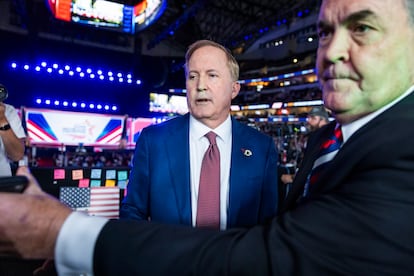
Paxton (and Trump), slipping
The Republican candidate for the U.S. Senate from Texas has failed to rebound in the polls. The most recent surveys put him slightly behind his Democratic challenger, James Talarico.
According to the RealClearPolitics polling average, if the election had been held on Monday, Talarico would have won the Senate race with 47.6% of the vote versus Paxton’s 44.7%. Other polls — such as Decision Desk HQ — showed an even wider gap and gave Talarico the edge, with a 56% chance of winning in November.
Despite Trump’s outsized support in sections of the party, the speeches do not appear to be generating a proportionate flow of money for Paxton. At the end of June, Talarico had more than $21.5 million available to spend on his campaign, while Paxton had less than $1.8 million on hand, Federal Election Commission data show. The national Republican Party, which has deep coffers, has had to spend significant money in Texas it had not planned for.
The race for that seat has drawn national attention not only because of doubts about the level of support Paxton will receive from Republicans, but also because the party could lose its first state election in Texas since 1994. The Texas Senate seat was one that the Republican establishment would hardly have considered at risk if the party’s candidate had been veteran Texas politician and Congressman John Cornyn. Since 2002, the Republican — who during the primaries boasted of having a record of legislative support for the president, even though he voted in favor of his impeachment following the 2021 Capitol riot — had remained undefeated in the Senate.
The comments by Paxton cited by the Times are significant because, in giving his endorsement, the president valued his loyalty over Cornyn’s, not the party’s position. He chose the attorney general, saying Cornyn did not support him enough during hard times.
But the atmosphere of division that Paxton’s nomination created within Republican ranks has not helped the president’s candidate. Nor has the corruption scandal that led to a state Senate investigation of Paxton in 2023: although he was acquitted, he faced more than a dozen charges of using his power as attorney general to benefit his friend and donor, Nate Paul, who was also under federal investigation. That is compounded by his contested divorce and infidelities. These are issues state conservatives often cite either to back him or to turn their backs on his candidacy.
Just last week, Republican Senator Thom Tillis of North Carolina told CNN that choosing Paxton over Cornyn was a “colossal mistake”: “We would not be spending tens or hundreds of millions of dollars in Texas if Cornyn had won.”
The same conclusion was reached by former George W. Bush adviser Karl Rove, speaking at a festival organized by The Texas Tribune: “If John Cornyn were the nominee, this race would be over.”
Paxton’s remarks at the Washington fundraising event are also seen as reflecting an analysis shared by other Republicans, given the drop in Trump’s approval ratings.
A polling average published by RealClearPolitics on Wednesday shows a 38.8% approval rating for the president’s job performance. The closest comparable approval level for a president near a midterm election was George W. Bush’s before his 2006 midterms; after a steep decline it reached 38% in early November 2006, Gallup reported.
In Trump’s case, analysts and polls attribute the decline to the high cost of living, which he had promised to lower during the campaign; weak support for the war in Iran and its impact on energy prices; and his aggressive detention and deportation policies for migrants.
Despite the Paxton audio from Washington, the reality is that the estimates reflected in the polls — unfavorable for Trump, and especially for Paxton and Republican candidates heading into the midterms — have not improved after the Dallas convention, nor five weeks out from the crucial midterm elections.
Sign up for our weekly newsletter to get more English-language news coverage from EL PAÍS USA Edition












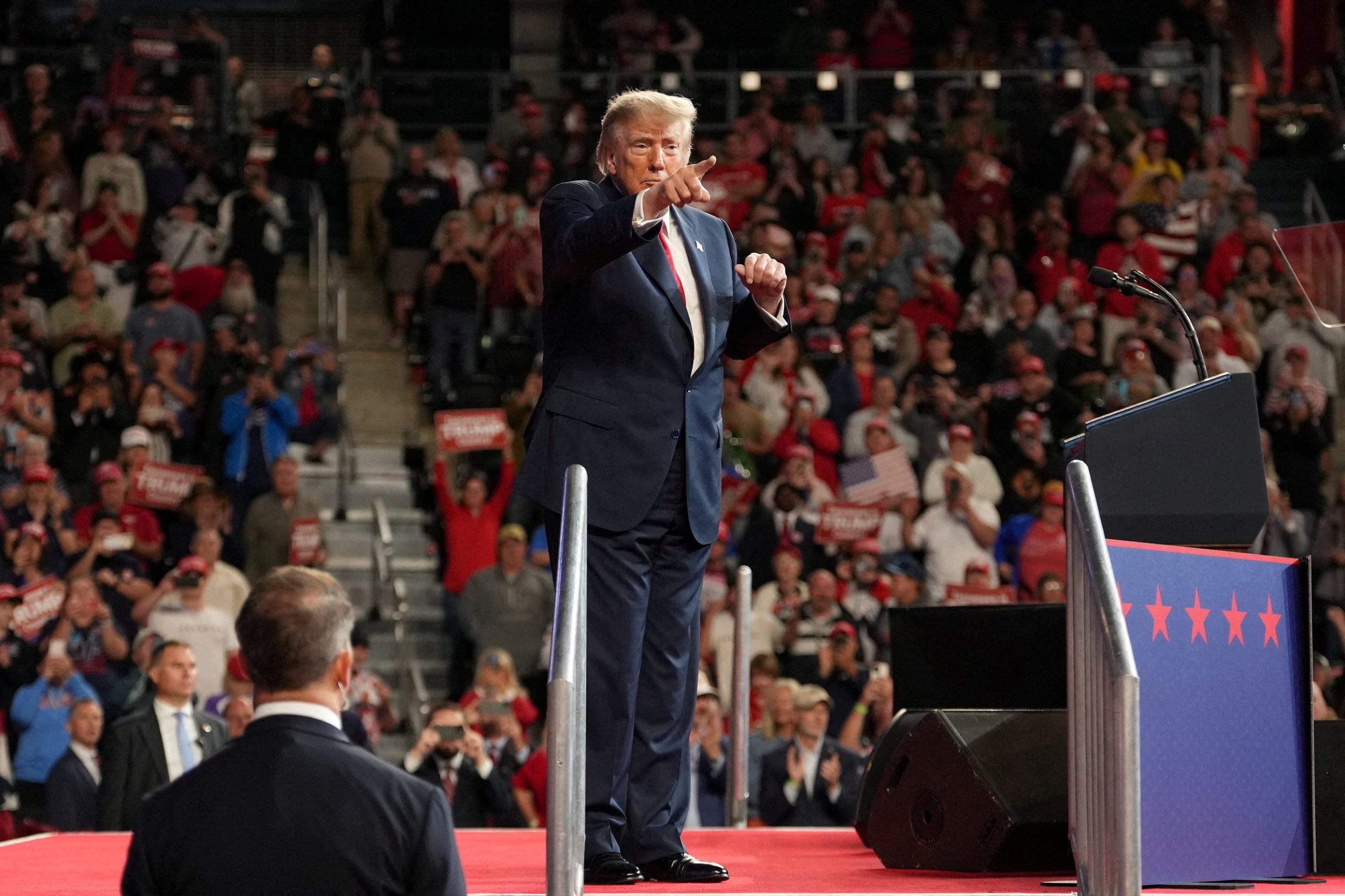
U.S. President Donald Trump was halfway through his speech at a campaign rally in Clarksville, Tennessee, this Saturday, surrounded by his usual supporters: mostly white, dressed in red, wearing MAGA hats, and displaying messages of support for the Republican. “It’s amazing. I could say the stupidest things and you’d clap me,” he boasted. On cue, the crowd, amid laughter, applauded.
A little later at the same rally, the president recalled executive orders he has signed during his year-and-a-half in office since reelection to rename the Gulf of Mexico and Lake Ontario at the Canadian border to Gulf of America and Lake America, respectively, on official documents. “We need a river, we need an ocean. So, I was thinking of either the Atlantic or the Pacific. We call it ‘Trump Ocean’ or ‘Ocean of the Americas,’” he said, again to applause and laughter from his followers.
This bluster is not especially new. The U.S. president has built his image and electoral success on statements like these — shocking and aggressive remarks, threats he may or may not carry out — to the delight of his audience, which cheers comments it would never tolerate from any other politician. He said it himself during his first term: that if he opened fire on a pedestrian on New York’s Fifth Avenue, he wouldn’t lose a single vote.
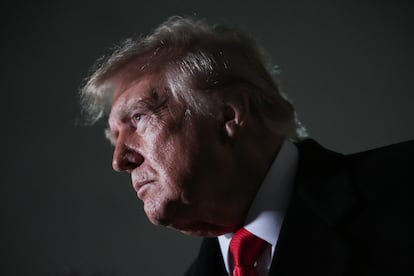
But he has hardened his tone and ramped up provocations noticeably in the final stretch before the midterm elections on November 3, in which Republicans trail in the polls. Convinced, like a modern Louis XIV, that the Republican Party is him, the president has launched an ambitious tour that takes him, almost daily, to states across the country where he won during the 2024 presidential election. And at each rally Trump — never known for holding his tongue — says increasingly whatever comes to mind: repeating one-liners, going on long tangents in which he can lose the thread, or lashing out cruelly and insulting his enemies, especially Democratic rivals.
At every rally and every press appearance he comes across as more defiant, more provocative, more polarizing. High fuel prices? They’re temporary, he insists. He says it’s worth paying them to prevent Iran from obtaining a nuclear weapon — the argument with which he launched the war in February. Iran? Its economy is a disaster, but the enemy could “take out” the Californian cities of San Diego and Los Angeles. The data centers voters hate? “Excellent sources of wealth!” The president surprised even his own party by announcing a deal to buy diesel from Russia — thereby aiding Moscow’s war against Ukraine — and by promising $5,000 checks to every citizen; but only if the Republicans win the elections.
In various appearances he has hurled insults at personalities he detests, from Nobel Peace Prize laureate Navi Pillay — “no one knows her” — to New York attorney general Letitia James (“disgusting dog”). On Saturday he blamed Ukrainian President Volodymyr Zelenskiy for high global diesel prices for bombing Russian refineries, although the shortages are due to the situation in the Persian Gulf.
He knows that these kinds of references, however rude or false they may be — or precisely because of that — succeed with his loyalists. And he also knows that in a country as polarized as the United States, where few voters remain undecided, the key to results on November 3 will above all be which party mobilizes its voters more, whatever the cost. Being an ever-more Trump-like Trump and turning this encounter with the ballot box into a referendum on himself is, in his eyes, the best way to galvanize his supporters. “Let’s pretend that I’m on the ballot,” he urges his followers. “I’m very popular. I really am,” he insisted, against all odds, to his devotees in Clarksville on Saturday.
Outside the ranks of the die-hards, the scene is no longer the same as during the presidential campaign, when he packed Madison Square Garden in New York. Nor is it the same as the 100 days after his return to the White House, when hundreds queued for hours to hear him at a sports center on the outskirts of Detroit. The venues for his rallies are now smaller and yet television cameras still show empty rows. Not even the conservative TV network Fox, to which he owes so much of his political career, broadcasts those events in full any more, to the president’s annoyance.
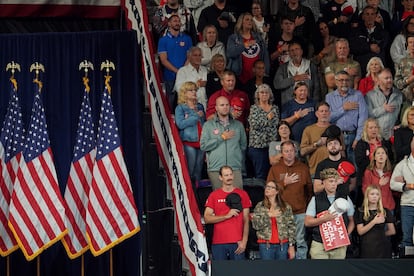
Each new poll is another pounding for the president. Only a quarter of voters approve of Trump’s handling of the economy, a figure that falls to 20% for his specific management of inflation, according to a survey published Sunday by the Financial Times. Two-thirds of respondents say the economy is headed in the wrong direction. Another Pew Research Center poll found that support for the president among those who voted for him in 2024 has fallen to 67%, down from 75% in July.
Even within his own party, some lawmakers are already rushing to distance themselves from their leader. After Trump announced an agreement with Russian President Vladimir Putin for Moscow to supply diesel fuel to the United States in order to lower prices, more Republican senators than Democratic senators — four and three, respectively — who are members of the Foreign Relations Committee signed a statement on Sunday demanding that the president cancel the deal on the grounds that it is illegal. “The United States must not provide Putin with a financial lifeline while Russia continues to kill Ukrainian civilians,” they wrote.
Trump insists everything is going according to plan and that his rallies are the perfect remedy for any Republican discouragement. “My Rallies, legendary they have already become, have made a tremendous difference with the enthusiasm of the Republican Party. They have been waiting for them to happen, even though I never thought I’d have to be doing Rallies again,” he wrote Sunday on his social media platform, Truth. “The good news is, I love them, the music, and the incredible enthusiasm, and will always be in favor of what’s good for America — and that means the Republican Party,” he added, announcing visits this week to Ohio and Alaska.
A touch of nostalgia
On his tour Trump always goes where Republican candidates are struggling. In part, this campaign has an almost nostalgic tone. About to become a lame-duck president — the term U.S. political language ascribes to an outgoing president, especially if his party loses its majority in both chambers of Congress on November 3 — his route includes solidly Trumpist states, like Tennessee, seemingly chosen to remind him of the good times. That he has fans who support him.
“You almost always go to a state where it’s close, and that makes sense, but I’ve gone to Alabama, where I won by 45 points, or something crazy like that. I’ve gone to Texas, where we won by 17 or 18… Why am I in Tennessee? I don’t need to be campaigning here. But sometimes it’s good to go to a place where you don’t need to, to thank the people who voted for you three times,” he told his followers in Clarksville on Saturday.
Whether it’s a Republican state or one where the race is much less clear-cut, there’s one thing the president won’t forgive: he wants people to talk about him during those visits, which—judging by what he says—sometimes seem to exasperate him: “I didn’t know it was going to be a Saturday afternoon. I could be doing a lot of other things on a Saturday afternoon,” he also remarked in Clarksville. And Trump gets angry when he’s ignored.
On social media last Thursday he complained that Fox News had not aired his rallies. “Sad to see that Fox & Friends (Sunday) is not covering our packed house and incredibly enthusiastic (beyond!) Rally that took place in Ohio last night, or the ones in Alabama, Texas, or Oklahoma, over the past two days,” he said. “Our people want to see our Rallies, and reports on our Rallies, on FoxNews, or they will very quickly stop watching (like I am doing right now!)”
The complaint about the coverage has not remained a mere anecdote. This Saturday, as the president was returning from Tennessee to the White House, the Department of Justice confirmed that it has launched an investigation into the five major television networks regarding their coverage of the president and whether their decision not to record his remarks was made while Trump’s order denying three media outlets access to the presidential compound was still in effect.
Sign up for our weekly newsletter to get more English-language news coverage from EL PAÍS USA Edition

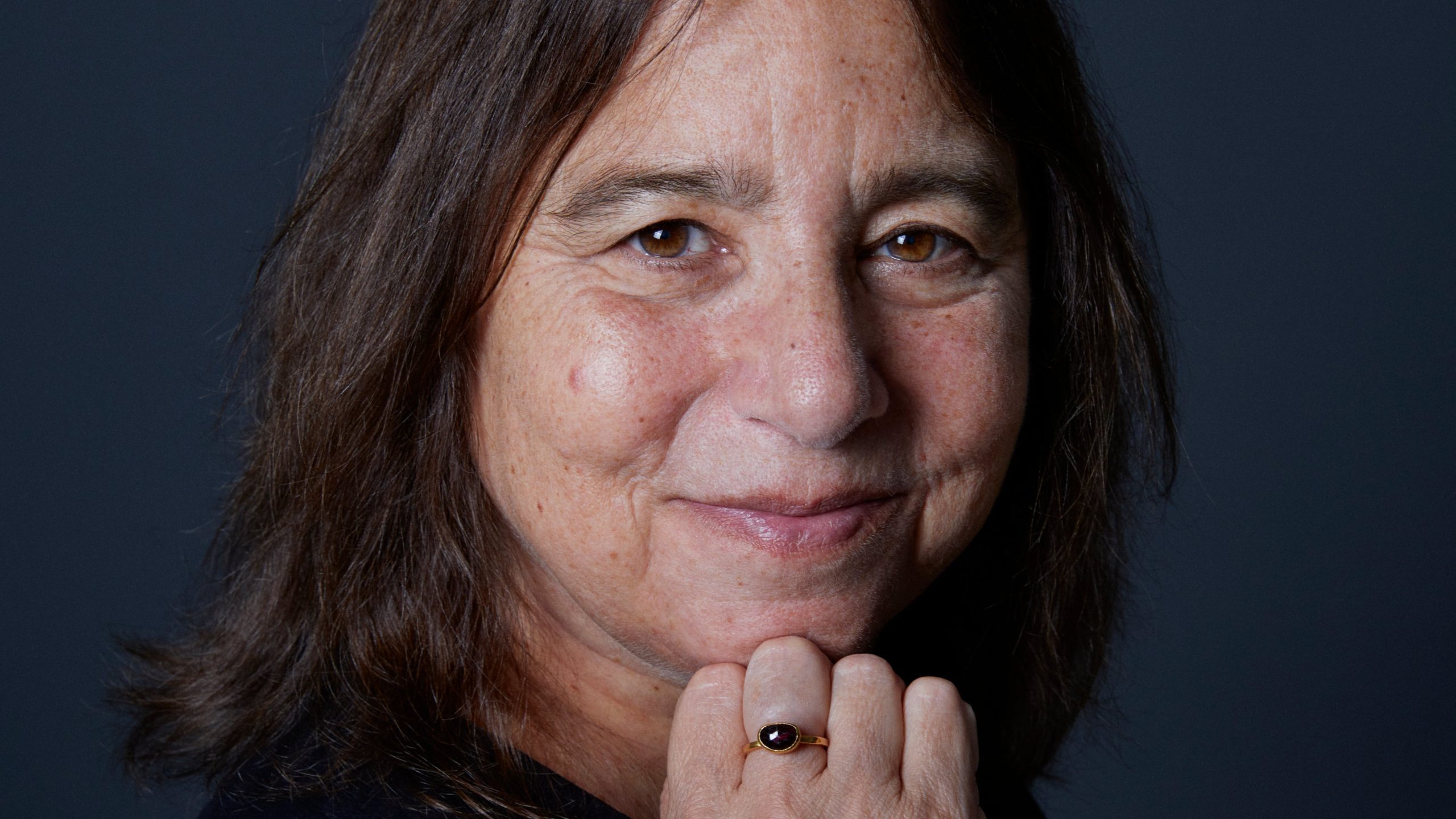
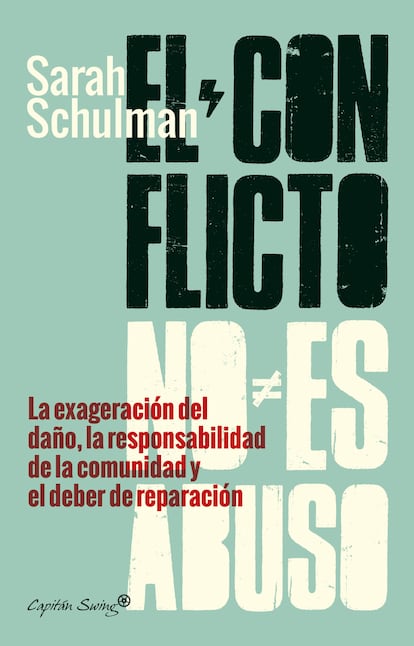
Victimhood, its exploitation and its political use to justify cruelty have been among the topics most extensively researched by Sarah Schulman. A decade has passed since the writer, LGBTQ+ activist and AIDS historian published Conflict Is Not Abuse: Overstating Harm, Community Responsibility, and the Duty of Repair, which is now being released in Spanish. “Sadly, it turns out the book was prophetic,” the 68-year-old author explains to EL PAÍS via video conference. “It came out before Trump was elected, and he’s proven all the arguments presented to be true. All of his rhetoric revolves around him being a victim. We see the same thing with Netanyahu. This idea of the perpetrator presenting themselves as the victim is now the global norm, unfortunately.”
Question. This line of reasoning can be applied to the far-right party Vox in Spain, or Milei in Argentina, or Le Pen in France. It’s the playbook of the so-called “reactionary international.” What’s behind this?
Answer. In the U.S., we have this rhetoric about how white men are so oppressed by everything. And how, if any woman or person of color has any job, they only have it because of DEI. The reality is that this dominant group feels repressed simply because they’re asked to be self-critical. This phenomenon already existed, but it has become more extreme.
Q. Why?
A. Because of the inability to recognize mistakes. People raised to dominate are told – and taught – that they should never feel uncomfortable. If you ask them to question themselves or reflect on how they relate to others, it’s as if you’re attacking them, mistreating them. On the other hand, there are also traumatized people… so much so that they have difficulty staying afloat and feel like they’re being attacked in every situation.
Both privileged and traumatized people feel deeply threatened by difference – by the expression and visibility of that difference. And the only way to go through life without ever feeling uncomfortable is for everyone around you to be repressed. Feeling uncomfortable is a sign of a healthy society; it’s something I think we should all want to experience.
Q. In the book, you highlight a complex nuance: that feeling like a victim doesn’t necessarily mean being right.
A. Unfortunately, now, in order to be eligible for compassion, you have to be a pure, flawless victim. And, if you say, “you know, maybe I participated in the problem, maybe I contributed,” everyone goes, “well then, you deserve whatever you get.” Acknowledging being part of a problem doesn’t diminish the value of having been a victim.
We’ve confused punishing others with repairing the harm done to us. We only feel relief from our suffering if someone is punished for it. But what would happen if we separated the two? What if we were listened to when we needed help? Punishment doesn’t work: it only creates more pain.
Q. Yet society has become more punitive, more punishing.
A. Every day, there’s more and more punishment. I live in a country where about 2,000 people each day are detained [by ICE] without having committed any crime… and they’re being deported to countries that they didn’t even come from. Right now, the level of cruelty in the United States is unbelievable. We have a government that doesn’t listen to the law. The country’s ruling class relies on blame and punishment… especially against immigrants. In the U.S., immigrants are the hardest-working people, but [the government] says that they’re stealing the nation’s wealth. It’s absurd. Right now, everything is topsy-turvy.
Q. In addition to anti-immigrant sentiment, there are also attacks on the LGBTQ+ community.
A. Especially against trans people. The government is repressing trans people and making an example out of them. They’ve always operated this way: they choose a very small minority that lacks power – a group that the majority of the population is unfamiliar with – and make them the object of all fears. It’s a historical pattern.
With gay people, it’s different. There’s a group of openly gay and lesbian men and women who are fascists: [the techno-oligarch] Peter Thiel; Bari Weiss, who runs CBS News and is also a Zionist; Alice Weidel, leader of the German far-right [AFD]… we can also talk about Caitlin Jenner, a trans woman and Trump supporter.
There have always been LGBTQ+ people in the elite who feel immune to everything. The only thing that matters to them is their money and their racial supremacy. This shows that identity may carry weight in our convictions, but what’s really important are the values you live by.
Q. One of the chapters in your book focuses on the 2014 Gaza War. Reading it is like watching the news… only now, it’s much more brutal.
A. Millions of people have taken to the streets for Palestine around the world. But many governments – like the American one – continue to send money to Israel. As an American Jew, I feel it’s my job to stop my government from continuing to fund Israel. This position is becoming increasingly popular. As soon as the United States stopped funding the killings, the Israeli government would collapse.
Q. American support for Israel has come from both Republicans and Democrats.
A. U.S. investments in Israel are also based on an imperial, racist and colonial past. Moreover, we have Christian Zionism – not just Jewish Zionism. In fact, there are more members in Christian Zionist organizations than Jews worldwide. There are alternatives to this. Spain has proved that: it has been inspiring. So has Ireland. Europe must lead the opposition to Trump. Canada, for its part, is now standing up to him. Many Americans are thinking, “Please, somebody say ‘no’ to Trump.”
Q. You’ve done a lot of research on LGBTQ+ activism and the worst period of the HIV/AIDS pandemic. Can that experience be of use today?
A. We have a lot to learn from it. I was part of ACT UP (the AIDS Coalition to Unleash Power, a leading organization that advocates for the rights of people living with HIV and AIDS) and a journalist specializing in covering AIDS. I even wrote a book – Let the Record Show: A Political History of ACT UP New York, 1987–1993 (2021) – about the organization’s history.
ACT UP achieved so many victories because it had a structure where you could disagree. They had a bottom line: direct action to end the AIDS crisis. A single sentence, not a 50-page manifesto. Within that framework, each person could do what they believed was useful. That structure of radical democracy – in which many different responses could coexist – is what made it so successful.
All movements that try to impose a single analysis or a single strategy fail in the end. We live in a situation where every community in the world is under attack from an oligarchy and threatened by the climate crisis. To ask all these different communities to have just one analysis is absurd. It’s never going to happen. So, we need a politics of strategic alliances, where we work with people [when] we agree with them and move forward.
Let me give you an example. The Catholic Church has been my enemy for my entire life, right? But now we have Pope Leo, and he supports migrants. When priests are arrested for confronting ICE, for the first time in my life, I’m on the same side as the priests. I still disagree with the Church on other issues, [but we can be] flexible and mature in our approach to politics. We have to get through this hell to reach a new future.

Q. That reflection could be taken into consideration by the left in many countries, including the United States.
A. For the first time, we have a left wing of the Democratic Party that’s getting some power. That’s something new here. It’s very exciting… and it’s happening all over the country. What happened in New York City (with the election of Zohran Mamdani, who hails from that faction) is a miracle. I’ve lived here all my life and I’ve never seen New Yorkers so proud of their city.
Q. Faced with the success of this leftist faction, Trump has responded by stirring up panic about what’s supposedly a communist “threat.”
A. Historically, the term “communist” has been used in the U.S. to silence people: the government even executed people for being communists, like the Rosenbergs [in 1953]. If you look at people with AIDS, Palestinians, or trans people, there’s a common pattern: they’re people who are in danger. They’re vulnerable, [yet they’re] falsely portrayed as dangerous, when the real threat comes from others, like tech oligarchs.
Q. You’ve written about how desire can become something that you get punished for. Is that still happening today?
A. At the highest levels of power [and] in everyday life, we’re still seeing so much of sexual violence. Right now, we’re in the midst of [learning about] terrible rape charges on university campuses (the “Cornell Seven” case). In recent years, women have changed enormously, but men haven’t changed at all.
On one hand, there’s an overreaction when somebody expresses desire for you. That’s not a crime. You should be able to simply say, “Thanks, I’m not interested.” And that should be the end of it. On the other hand, there’s a real threat: many straight men are still dangerous. People may overreact to that danger, and that has consequences, such as turning mere desire into something punitive. But it’s understandable.
Translated by Avik Jain Chatlani.
Sign up for our weekly newsletter to get more English-language news coverage from EL PAÍS USA Edition
california
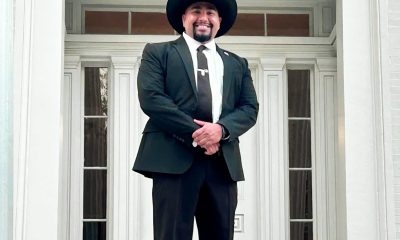
From Police Officer To Store Employee: The Life Change Of A ‘Dreamer’ Who Turned In His Badge

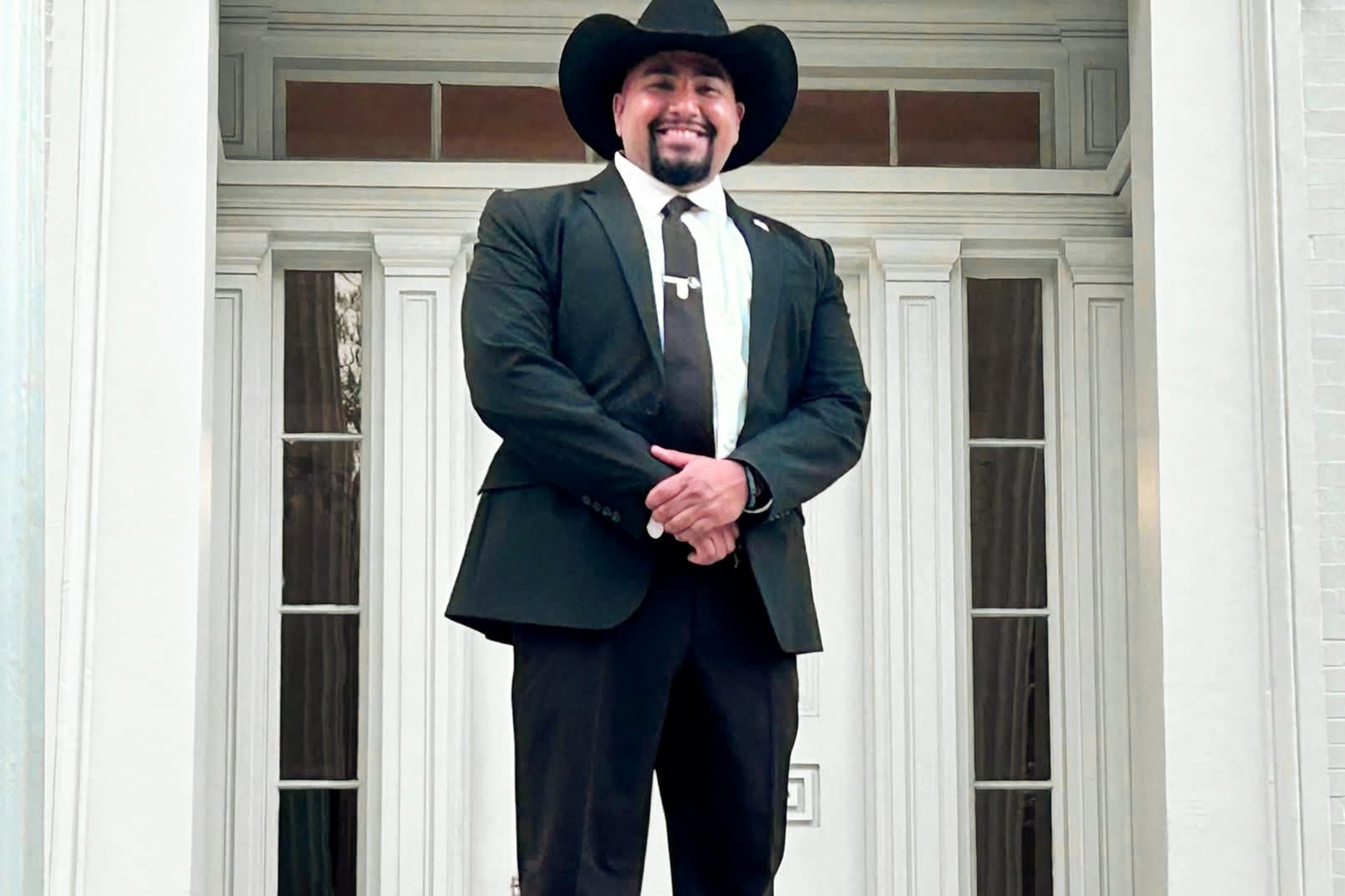
Édgar Vázquez Silva’s worst fears came true. His boss at the Stone County sheriff’s office in Mississippi called him and asked him to turn in his badge and uniform. The order was clear: all department officers had to be U.S. citizens or, at minimum, permanent residents.
Born in Mexico and brought to the United States without papers by his mother as a child, Vázquez Silva held neither status. For several years he had relied solely on a work permit obtained under DACA, the immigration program enacted by then-president Barack Obama to shield from deportation those who arrived in the country as minors without authorization.
“I felt awful. I held back the tears, but I went into the department and handed everything over,” Vázquez Silva recalls about the moment he returned his badge and uniforms, which he kept in a purple plastic bag. It was a quick procedure, and he was accompanied by his young son. There were no farewells, hugs or words of encouragement: none of his colleagues were at the station. “You have a dream and they take it away from you,” he laments.
Vázquez Silva is not the only one in this situation. Several officers in California have had to surrender their badges and guns or been placed on unpaid administrative leave because they could not renew their DACA status in time. The process has become increasingly complex and slow; it must be completed every two years and affects about 500,000 beneficiaries.
Those affected worked in the police departments of Los Angeles and Santa Ana. Others, like Vázquez Silva, lost their jobs after supervisors imposed stricter requirements on immigration status.
Amid the campaign against the DACA program under the Trump administration, processing times have increased and, for some, submitting a renewal months in advance was not enough. Average wait times rose from 15 days in 2025 to 70 days this year, an increase of more than 360%, according to data from U.S. Citizenship and Immigration Services (USCIS).
The end of a police career
Vázquez Silva had spent months lobbying for a green card that would allow him to keep his job at the Stone County sheriff’s office. He thought going public with his case might help. He gave interviews to several media outlets, met with the governor of Mississippi and with a congressman, and maintained an active presence on social media under the name “Deputy Dreamer.” Nothing worked.
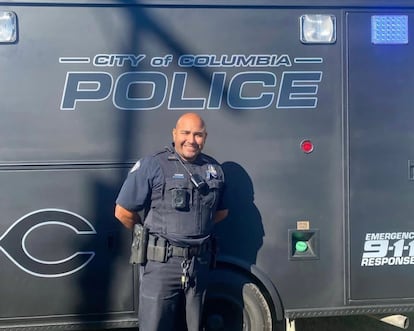
The order to require immigration status for all law enforcement officers came directly from Amy Vanderford, head of the State Department of Public Safety. “The sheriff told me he was very sorry, but there wasn’t much he could do. He told me he needed me to hand over the badge,” he recalls.
That ended a five-year law enforcement career in Mississippi, which he had managed to extend despite losing authority and ending up in a part-time role where he couldn’t even carry a firearm. He now works as an assistant manager in a store. “They paid me well and I have benefits. But it’s very different compared with being a police officer,” he says.
Vázquez Silva was born 36 years ago in the border state of Tamaulipas. He has no memories of Mexico. He was only three when his mother crossed with him into Texas, without documents. His stepfather’s construction work moved the family from state to state until they finally settled in Mississippi. When he was 12, his mother told him something that would change how he saw himself. “Son, you don’t have papers,” she said. He understood the meaning of those words years later, in high school as he began to plan his life. “And now what am I going to do?” he recalls asking his mother.
After finishing school, he worked as a gardener, bricklayer, and gas station attendant. His prospects changed in 2012 with the introduction of DACA, and a chance encounter sealed his future. A police officer he met invited him to ride around the city in a patrol car. When the ride ended, Vázquez Silva had one certainty: “This is what I want to be.”
“We are not criminals”
In 2021 he graduated from the part-time officers’ academy and began patrolling the streets of Columbia. Three years later he was selected to enter the full-time academy. But midway through training he received devastating news: he had been disqualified because he was neither a permanent resident nor a citizen. “You can finish the academy, but we can’t give you the badge,” they told him.
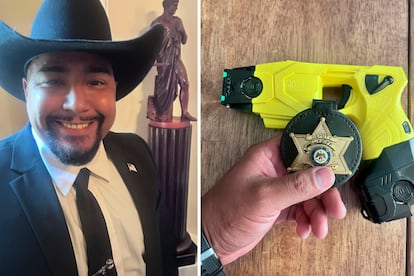
From that moment he was not allowed to carry a firearm and his career was put on hold. For a time he was responsible for guarding a public school in Columbia, although he was forbidden from using the shotgun in his patrol car. “I never felt right because I didn’t have a weapon. They could kill me,” he says.
In 2023 he found a new opportunity at the Stone County sheriff’s office, where he worked part time transporting inmates to their court hearings. He did so without carrying a weapon, despite the risks. Although he renewed his DACA card in 2025, the requirement to have at least a green card prevented him from keeping the position.
Vázquez Silva says he will keep fighting to get his police badge back. He now believes one of his options is to meet President Trump in person. “I would tell him to look at my story, to invite me to the White House and give me a chance to be an American and be a police officer again,” he says. “To prove that we, the Dreamers, are not criminals; we love this country deeply and we want the American dream.”
Sign up for our weekly newsletter to get more English-language news coverage from EL PAÍS USA Edition

Surfari Mar Menor Brings 180 Windsurfing Athletes To Los Alcazares

El Incendio De Un Tren Interrumpe La Circulación En La Línea De Alta Velocidad Madrid-Barcelona

Comuns Acusa A Rufián De Azuzar La División En Las Izquierdas Por Su Acuerdo Con Podemos


-

 Uncategorized2 weeks ago
F1 Bahrain Grand Prix will be live and FREE on TV this weekend
-
Latest1 week ago
Spain’s Government Dealt Huge Blow As MPs Reject Housing Crisis Laws
-
Latest2 weeks ago
Why You Can’t Donate Blood In Spain If You Don’t Speak Spanish
-
British tourists arrested in Magaluf1 week ago
British tourists arrested after taxi driver left bloodied in Magaluf
-

 Foreign demand2 weeks ago
Market Snapshot: German Market In Q2 2026
-

 Uncategorized2 weeks ago
Lewis Hamilton F1 wish could come true as stunning plans for new track revealed
-
Blackout preparedness2 weeks ago
Brussels takes action against Spain over failure to update blackout plan
-

 Housing access / crisis / affordability1 week ago
Radical Housing Decrees Defeated As Snap Election Talk Grows