A deadly fire that ripped through an apartment building in Magaluf in the early hours of Thursday June 11 morning has claimed the lives of two people, left several others in hospital and forced residents from their homes as investigators work to determine exactly how the tragedy unfolded.
The blaze broke out shortly after 5am at the Trianón II apartment block in the Torrenova area, close to the bustling tourist resort of Magaluf. Emergency services rushed to the scene after reports of flames engulfing a third-floor apartment before smoke rapidly spread through the building.
By the time firefighters brought the fire under control, two people had lost their lives and around 20 residents had been affected.
Fridge fault under investigation
Early investigations suggest the fire may have been sparked by an electrical fault in a refrigerator inside one of the apartments.
According to reports, occupants initially tried to tackle the flames themselves, but the fire quickly intensified. Thick smoke soon filled the building’s stairwell, creating what emergency officials described as a “chimney effect” that allowed smoke to spread rapidly through multiple floors.
Firefighters carried out rescues while ambulance crews treated residents suffering from smoke inhalation. Four people remain in hospital receiving treatment, with one reported to be in a serious condition.
Authorities have confirmed that the two victims were in separate apartments. One has been identified as a 58-year-old Argentine man, while the second victim is a woman whose identity has not yet been officially confirmed.
Questions over smoke and escape routes
Investigators believe smoke was responsible for much of the devastation.
The stairwell, which served as the building’s main escape route, quickly became filled with toxic fumes, making evacuation extremely difficult for residents attempting to flee.
Specialist teams are continuing forensic examinations of the building, although officials have stressed that the investigation remains ongoing and no definitive cause has yet been confirmed.
Municipal technicians are also assessing the structural impact of the fire. For now, the apartment where the blaze is believed to have started, along with the flats directly above and below it, have been sealed off.
Hotels step in to help displaced residents
As the community comes to terms with the tragedy, Calvià Town Hall has praised the response from local businesses, hotels and residents who quickly offered support to those affected.
In a statement, the council thanked hoteliers, traders and establishments across Torrenova, Magaluf and Palma for their solidarity following the fire.
Thanks to the collaboration of the local hotel sector, residents who cannot return to their homes this weekend are being accommodated in hotels across the area. Businesses also provided supplies and assistance to emergency services and displaced residents throughout the morning.
The council described the response as an example of the community coming together during an exceptionally difficult day.
Two days of mourning declared
Calvià Town Hall has declared two days of official mourning in memory of those who died.
Flags at municipal buildings will fly at half-mast, while a minute’s silence is due to take place outside the town hall at midday on Friday.
The fire has shocked both residents and visitors in one of Mallorca’s busiest tourist areas. While investigators continue to search for answers, the focus has now shifted to supporting the victims’ families and helping those who have lost their homes begin to rebuild their lives.
What began as an ordinary summer morning in Magaluf has left a community grieving, united by a tragedy that will not soon be forgotten.
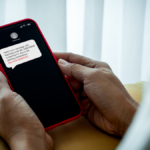
A familiar-looking text can be all it takes for fraudsters to trick phone users into clicking. Credit: Tete_escape / Shutterstock
Fake bank and delivery scam texts will continue hitting phones across Spain this summer after the government delayed new anti fraud protections until September.
Millions of people in Spain receive suspicious text messages every year, often pretending to come from banks, parcel companies, tax offices or public services. Some are obvious scams. Others are convincing enough to catch people off guard during everyday situations like waiting for a delivery or checking a bank account.
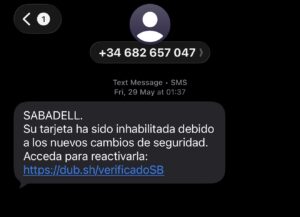
A standard fraudulent text message, received from a ‘supposed’ national bank. Credit: Harry Dennis
The delayed system was supposed to block fraudulent messages using fake sender names pretending to come from trusted companies, banks and public bodies, making it harder for scammers to impersonate trusted organisations.
Why Spain delayed the new scam text protections until September
However, the start of the blocking obligation, which had been due to take effect on Sunday June 7, has now been delayed until Tuesday September 15, 2026, following changes published in the Boletin Oficial del Estado (BOE), Spain’s official state gazette.
That means scam messages using false or misleading sender names could remain a risk throughout the summer, at a time when people are regularly receiving texts about banking, parcel deliveries, medical appointments, travel bookings and official paperwork.
How Spain plans to stop fake bank and parcel scam texts
The rules focus on what Spain calls message “aliases”. These are the sender names that appear on a text message instead of a normal phone number, including names that may look like a bank, courier firm, public administration or private company.
Under the system, companies and public bodies using aliases must register them with tSpain’s National Commission on Markets and Competition (CNMC). Once the blocking rules take effect, operators involved in transmitting these messages will be required to block messages using aliases that are not in the official register, or that are sent through providers not authorised for that registered alias.
In simple terms, the system is designed to make it harder for fraudsters to send texts that appear to come from a trusted source.
Why Spain could remain exposed to scam tests all summer
The delay does not mean the anti-fraud plan has been scrapped. Instead, the official documents point to practical problems in getting the system ready.
The CNMC said more than 75,000 alias registration requests had been submitted in the first two months of the system, including both individual requests and bulk uploads from providers handling large volumes of sender names.
Operators also reported difficulties linked to digital certificates, especially for some companies or organisations outside the European Union that do not have an establishment or economic activity in Spain.
There were also concerns about the complexity of bulk registrations, the time needed to validate large volumes of aliases, and the risk that legitimate messages could be blocked if registration was not completed in time.
How to protect yourself from scam texts while the new system is delayed.
The change affects operators, messaging providers, companies and public administrations that send messages using aliases. Ordinary phone users do not need to change anything on their devices.
However, until the new blocks are in place, people should continue treating unexpected messages with caution, especially texts asking for payments, bank details, passwords, delivery fees, tax information or urgent identity checks.
Messages that appear to come from a known organisation should still be checked through official apps, secure websites or customer service numbers listed on the company’s own website, rather than through links included in the message.
Why a familiar sender name still cannot be trusted.
The delay gives operators and providers more time to adapt their systems, register aliases and test access to the official database before the blocking obligation starts, ensuring its functionality, efficiency and accuracy.
If the timetable holds, the new blocking system should begin on Tuesday September 15, 2026. Until then, the safest approach for consumers remains: do not trust a text message just because the sender name looks familiar.
Marbella has turned heads once again. Spotted off the coast of Puerto Banus, the magnificent 110-metre megayacht Kaos, owned by American billionaire Walmart heiress Nancy Walton Laurie, has drawn crowds of onlookers to the glamorous marinas, arriving in convoy with its 67-metre support vessel, Kalm.
A floating palace with Qatari royal origins
Kaos carries an eye-watering price tag of around €300 million, making it one of the most spectacular and valuable private vessels in international sailing. Originally built in the Netherlands by renowned shipyard Oceanco, the vessel was commissioned for the late Emir of Qatar, Sheikh Khalifa bin Hamad bin Abdullah Al Thani, before later passing into Walton Laurie’s hands.
Onboard services are designed to rival those of an ultra-luxury hotel, comfortably accommodating up to 31 guests across 15 premium cabins, including an exclusive master suite located on an entirely private deck. A dedicated crew of up to 45 professionals keeps things flawlessly running. World-class amenities include a fully equipped gymnasium, a luxury spa, a guest lift, an onboard cinema room, a certified helipad, and a private medical bay.
The optical illusion that stops people in their tracks
Much of Kaos’s fame rests on her extraordinary exterior, the work of Barcelona-based designer Igor Lobanov, who has said he “was allowed to do anything he wanted.” Cascading decks painted in different shades of blue evoke the waves of the sea, create an effect that tricks the eye into perceiving a far leaner silhouette than the vessel truly possesses. At the time of her delivery, she contained more marble and stone in her interior than any other superyacht ever recorded.
Following purchase, Walton Laurie, daughter of Walmart co-founder James “Bud” Walton and one of the world’s wealthiest women with a fortune estimated at around $10 billion, undertook a major refit in Hamburg. Over 1,500 square metres of interior spaces were redesigned, and the yacht was rechristened Kaos.
Meet Kalm, the vessel travelling in convoy
Accompanying Kaos on her Puerto Banus visit is Kalm, a 67-metre support vehicle valued at around $30 million. Carrying helicopters, tenders, jet skis, and all technical equipment required for operations at sea, Kalm ensures Kaos keeps its guest spaces completely uncluttered
Environmental scrutiny and a brush with eco-activists
Kaos has not always sailed in calm waters. Back in July 2023,she was targeted by eco-activists , defacing her hull with red and black spray paint in protest at the environmental impact of superyacht travel. During a previous stay in Spanish waters, Euro Weekly News reported on the massive strain the vessel placed on local infrastructure, revealing how the €300m superyacht drained immense amounts of electricity and shore power simply to keep its internal systems running while sitting idle at the dock in Malaga.
Puerto Banus still a magnet for the global elite
Every summer, the world’s most exclusive superyachts choose the famous port as one of their stops through Europe. Few destinations can match Marbella’s combination of glamour, infrastructure, and climate.
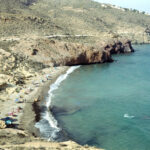
British man dies after hitting rocks while swimming in Mazarron. Photo Credit: Danipuntocom / Flickr
A young British man has passed away after smashing into rocks in the Spanish sea in the municipality of Mazarron, located in the southeastern region of Murcia. The man, 25, had gone into cardiac arrest after making impact with rocks on the Percheles Beach.
Horror incident in Spanish holiday hotspot
The tragic incident happened just after 4:00pm on the afternoon of Wednesday, June 10. A spokesman for the local government-run emergency response coordination centre stated: “We received several 999 calls around 4:05pm yesterday afternoon reporting difficulties in getting a swimmer out of the water at Percheles Beach in Canada de Gallego, part of the municipality of Mazarron. […] According to the callers, two young English men reported that their companion had struck the rocks and was unconscious in the water.”
Emergency services race to the scene, but it is sadly too late for the young man
The young man had been holidaymaking in the popular Spanish town, and was swimming in the sea when the horror incident took place. Two of his companions drew attention to the accident, and locals managed to pull the man out of the water. Emergency responders, including the Guardia Civil, the Mazarron Local Police, the Mazarron Civil Protection, firefighters from the Murcia Region Fire and Rescue Consortium, and an ambulance from the 061 Emergency and Urgent Healthcare Service, raced to the scene. The health professionals present tried to revive him, using the CPR method as well as specialised resuscitation equipment, but they were unable to do so and the man was sadly pronounced dead.
A beach with no lifeguard: A striking and tragic reminder for holidaymakers in Spain
Questions are swirling as to the nature and safety of the beach in which the incident occurred, as well as the lack of a lifeguard on the beach. The beach in question is accessible by an unpaved road, and the closest town to the area is Cañada de Gallego.
The tragic incident has called attention to the importance of being safe while swimming at sea, particularly in secluded beaches. Beaches that do not have a lifeguard, nor access to quick emergency response in the case of an incident, should be avoided if holidaymakers want to swim.
Additionally, as peak season comes into full swing, holidaymakers and locals are reminded that the increase of alcohol consumption, late-night partying, and the holiday mindset could make accidents like these more likely, and that any tourist or resident should exercise caution when swimming, hiking, or doing any other physical activity that may result in injury, especially in low-light conditions or areas where help cannot arrive immediately.