Connect with us

%

Two Young Men Are Choosing A Life Most Of Their Generation Has Left Behind

Published

on

two-young-men-are-choosing-a-life-most-of-their-generation-has-left-behind

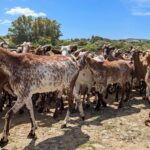
Spain’s rural traditions cannot survive on nostalgia alone. Photo credit: Pat Moore/Shutterstock

If we asked a 19-year-old that he could spend his days playing on his PlayStation or looking after 200 goats, most of us could probably guess which one would choose. But David Tomé is not like most 19-year-olds, while many young people are looking towards university, office jobs and life in the cities, this young man from Málaga has chosen a very different path, and he is building his entire future around it.

David has gone from buying his first goat at just 12 years old to running a herd of around 200 animals in the Málaga countryside. He has no family farming business to inherit and no long-established career behind him. He simply decided that this was what he wanted to do, and perhaps that makes his story about much more than one teenager and his goats.

From one goat to 200

Spain desperately needs young people willing to take on the country’s farms and livestock traditions as an ageing generation of farmers and rural workers approaches retirement. At a time when keeping those traditions alive is becoming increasingly difficult, David is proof that some young people are still prepared to choose the countryside, even when there are plenty of easier options elsewhere.

David, from Torrox, first became interested in goats when he was just 12. While other children were more interested in spending their free time playing, he bought his first goat and began learning how to look after it. By 16, he had his own small farm. This year, he took the next major step. In August, he moved to Corumbela, a small village in the Axarquía, where he now lives alongside his herd of around 200 goats.

It was not a family tradition that pushed him into the profession. His family initially worried about his decision because they knew how demanding life as a livestock farmer can be, but they eventually respected the path he had chosen. David, however, seems to have known for years that this was where he wanted to be. He has said that, as a child, he would rather go out with goats and a goatherd than go to the park. While some people might be drawn to motorbikes or other hobbies, goats were what caught his attention. Now they are his livelihood.

No days off for 200 goats

There is nothing particularly glamorous about running a herd of this size. The animals need feeding and caring for every day, regardless of whether David feels like getting out of bed, whether it is a weekend or whether he has other plans. His daily work includes feeding the goats, providing straw, milking and dealing with the constant jobs involved in keeping such a large herd healthy.

There are no traditional days off because the animals cannot simply be left without care. Yet David does not describe that as a sacrifice. For him, it is the life he has chosen. His unusual career has also attracted attention online, where people have told him that he is an example to other young people because he continued working towards what he wanted despite being different from those around him. He has described himself as something of an odd one out because there are so few people his age choosing this profession.

Spain needs young farmers

That makes David’s story particularly interesting in a country where agriculture and livestock farming face a serious generational problem. Spain’s Ministry of Agriculture has warned that around two out of every three holders of agricultural holdings will reach retirement age by 2030, while only about 9% of farmers are currently under 41. The problem is not simply that young people are moving away from rural areas. There are still young people interested in countryside living, and some rural municipalities have actually recorded population growth.

The bigger challenge is ensuring that there are enough young people willing and able to take over farms, livestock operations and the knowledge that comes with them. Agriculture requires land, investment, equipment and years of practical experience. For somebody starting from scratch, the barriers can be considerable. That is why David’s decision stands out. He did not inherit a farm and decide to continue the family business. He saw a way of life he wanted and started building towards it himself.

From bricklayer to shepherd

David is not the only young person choosing a rural life over a more conventional career. Marcus, a 25-year-old shepherd, made his own dramatic change after leaving his job as a bricklayer to become responsible for a flock of around 1,400 sheep. His work takes him high into the Alps, where he spends the summer months looking after the animals as they move through traditional mountain grazing routes between Italy and Austria.

He can spend weeks living in a mountain hut at more than 2,400 metres above sea level, accompanied by his dog and responsible for keeping track of the enormous flock. It is an exhausting job, but it is also part of a centuries-old tradition of moving livestock between seasonal grazing grounds. Marcus has chosen to make that his career rather than leave the mountains behind for a more conventional job. And that is the connection between his story and David’s. Neither young man was simply handed a rural lifestyle and told to continue it. They chose it.

There may still be hope for Spain’s countryside

Spain’s rural traditions cannot survive on nostalgia alone. Someone has to milk the goats, tend the sheep, maintain the farms and pass the practical knowledge of one generation to the next.For years, there have been concerns about what will happen when older farmers and livestock keepers retire without somebody ready to take over. That makes young people like David particularly important. His ambition does not stop at 200 goats, either.  He hopes to eventually increase his herd to around 300 animals, establish a small cheese factory and develop his farm for ecotourism, giving visitors the chance to see his animals and experience rural life for themselves.

There is no guarantee that he will succeed. Farming and livestock are difficult businesses, and the challenges facing Spain’s countryside are not going to disappear because one 19-year-old has decided to give it a go. But perhaps that is not the point. At a time when Spain needs a new generation to keep its rural economy and traditions alive, David is showing that being young does not automatically mean wanting to leave the countryside behind. Sometimes, it means choosing 200 goats instead.

%

British Couple’s Spanish Dream In Ruins As Their Mobile Home On Their Land Is Declared Illegal

Published

on

british-couple’s-spanish-dream-in-ruins-as-their-mobile-home-on-their-land-is-declared-illegal

The couple say they understood that having a non-permanent home on their rural property was permitted. Photo credit: Juanamnc/Shutterstock

Moving to Spain is a dream for many that only some ever accomplish. It can take years of planning, saving and investing before the keys to that little piece of Spanish paradise finally become a reality. But for one British couple from Bristol, their dream of escaping busy city life and creating a simple rural home in Granada has turned into a nightmare after they were told their mobile home must be removed from their land.

Amy and Mike bought their rural property in 2024, with the intention of eventually leaving their old life behind and creating their own little piece of paradise. They finally moved onto the land in April this year, after buying a mobile home and beginning to build the life they had spent years working towards.

Building a life from scratch

Now, not even five full months later, they say they have been told that the mobile home is illegal and must be removed immediately. “It’s come as a huge shock,” Amy says. “We were under the understanding that non-permanent housing was perfectly legal on the land. We’re really worried with what to do.”

The couple’s new home was never intended to be a conventional Spanish property. Their aim was to live simply and make the most of the land they had bought. They installed solar electricity, while their water comes from a well already located on the property. They have also started growing their own vegetables and keeping animals, including chickens and a goat which they milk themselves.

For Amy and Mike, this is not simply a holiday property or somewhere they occasionally visit. It is their home. “It’s a huge slap in the face, to be honest,” Mike says. “This was our dream and it’s our land. We’re not hurting anyone.” The couple say they understood that having a non-permanent home on their rural property was permitted, which is why the latest warning has left them trying to work out what they can do next.

Why can a mobile home be illegal?

The problem is that Spanish planning law does not necessarily treat a mobile home as a vehicle simply because it has wheels and can physically be moved. In Andalucía, planning rules can apply to mobile homes, prefabricated houses, fixed caravans and similar installations when they are placed on land for residential use. Regional regulations require authorisation for such installations, with exceptions including authorised camping and tourism areas where they are permitted.

The main issue is the classification and permitted use of the land. Buying suelo rústico, or rural land, does not automatically give an owner the right to establish a home on it. Agricultural, livestock and forestry activities can be permitted on rural land, while residential uses are subject to specific planning conditions and, depending on the circumstances, the necessary authorisations. This means that putting a house on wheels does not necessarily provide a way around planning regulations.

Andalucía is cracking down

The issue is not unique to Amy and Mike’s property. The Junta de Andalucía’s 2023–2026 inspection plan specifically identifies prefabricated houses, fixed caravans, mobile homes and even shipping containers among installations being used to create residential developments outside planning controls. There has also been growing scrutiny of mobile homes in Málaga province. In 2025, Seprona identified 62 allegedly illegal cases involving mobile homes as part of Operation Murus, with the Fiscalía de Málaga investigating their use on rural land.

The concern for authorities is not simply whether something has wheels. A mobile home can become a planning issue when it is installed with the intention of remaining on the land and being used as a permanent residence. Connections to water and electricity, septic systems, terraces, fencing and other infrastructure can also be relevant when authorities assess whether a supposedly temporary installation has effectively become a residential development.

‘We could be left homeless’

For Amy and Mike, the legal difference between a mobile home and a conventional house does little to ease the immediate problem. They have invested money in the land and in making it habitable, only to be told that their home now has to go. Mike says they were given the impression before buying the property that their plans were permitted. The first indication that there could be a problem came when the couple went to the Ayuntamiento to register on the Padrón, Spain’s municipal register.

They say they were informed that they could not register their address on the land. Shortly afterwards, they received a visit from the Junta and were issued with paperwork telling them that the mobile home was illegal and had to be removed. “We were told by the notaría and land owner that we could put a caravan or mobile home on the land as long as it was not cemented or ‘fixed’ to the ground,” he says. “However, when the Junta came, we were just issued papers and told to get it off, that it was illegal.

We feel let down and taken advantage of.” The couple now face the possibility of having to dismantle the life they have spent months creating, despite owning the land itself. “We need to think where we can go, because we will have nowhere to put our home and we will be left homeless,” Amy says, but Mike is not ready to give up. “I don’t really want to move,” he says. “We’ve spent a lot of money on the land and setting it all up, so there must be some way around it.”

Is there a way to stay?

Whether Amy and Mike can legally remain on the property will depend on details specific to their land and municipality. The classification of the plot, local planning regulations, whether the land is protected, the permitted uses and the precise nature and installation of the mobile home can all affect the outcome. Andalucía’s planning framework does allow certain residential uses on rural land in specific circumstances, but these are subject to planning requirements and authorisation.

For the couple, the priority now is finding out whether their situation can be regularised or whether the removal order leaves them with no option but to take their home elsewhere. After finally achieving their dream of leaving Britain behind and building a quiet life in the Granada countryside, Amy and Mike now face the possibility that the piece of Spain they bought for their future may not legally be able to accommodate the home they brought with them.

Continue Reading

%

Cataluña Proposes AI Ban For Under-14s As Screen Concerns Grow

Published

on

cataluna-proposes-ai-ban-for-under-14s-as-screen-concerns-grow

Illa has said he wants AI banned in Catalan classrooms until pupils reach 14. Photo credit: LBeddoe/Shutterstock

If you have ever handed your child a phone just to get five minutes of peace, you are hardly alone. Screens have become part of family life so quickly that it can be difficult to know where normal use ends and too much begins. Now, one Spanish region wants to put much stricter limits on how children use them, including keeping artificial intelligence out of schools until the age of 14. Cataluña is preparing a package of more than 60 measures aimed at reducing children’s exposure to screens and tackling problematic digital use.

The plans include a future law covering screen use and artificial intelligence, while Catalan president Salvador Illa has proposed banning AI in schools for pupils under 14.  The proposals come after the Catalan Health Department published a new Digital Health Guide, based on a review of between 650 and 700 scientific references. The guidance warns about a range of potential health and developmental problems linked to excessive or poorly managed screen use among children and teenagers. 

Children are getting phones younger

One figure in particular will make plenty of parents sit up. The Catalan data shows that 82.4 per cent of young people have their own mobile phone, with the average age at which they get their first one now just 10.8 years old. Among those aged 10 to 20, 92.5 per cent have at least one social media profile.  The amount of time some teenagers spend online is also considerable. Those aged 14 to 18 reportedly spend an average of 4.8 hours a day on recreational internet use during the week, rising to 6.7 hours at weekends.

The research found signs of potentially problematic internet use among 23 per cent of 14 to 18-year-olds, while 34 per cent showed signs of potentially problematic social media use.  Health officials have linked excessive screen exposure with problems including sleep difficulties, myopia, anxiety, attention problems and excess weight. The guide also stresses that the impact depends on factors such as what children are doing online, the content they are consuming, their age and how much supervision they receive. 

AI ban proposed for under-14s

The most striking part of the plan is the proposed restriction on artificial intelligence in schools. Illa has said he wants AI banned in Catalan classrooms until pupils reach 14, while also pushing for a greater role for traditional textbooks and reading. The proposal forms part of a broader attempt to reduce screen dependence and encourage more direct interaction and reading. 

This would build on guidance already introduced for the 2026–27 school year. Cataluña’s education department says pupils under 14 should not independently use general-purpose AI tools, while those aged between 14 and 18 require authorisation.  That distinction matters: the proposed legislation has not simply switched off screens for every child under 14. Instead, Cataluña is looking at a broader set of restrictions and recommendations covering different ages, types of technology and circumstances.

A return to books?

Illa has also argued for bringing textbooks back to the centre of classroom learning, alongside handwriting and reading. The Catalan president has said the recommendations from the new health guide should ultimately be incorporated into a future law, with the government seeking the widest possible consensus and coordination with both Spain and the European Union.

 The Generalitat wants Cataluña to become the first Spanish autonomous community with its own model for children’s and teenagers’ digital wellbeing. For parents, however, the debate is likely to extend far beyond what happens inside the classroom. A child may be protected from AI during school hours, but that does not stop them using it at home. Likewise, restricting phones or social media in one setting does little if the same child spends hours online elsewhere.

That is why the proposed law is being framed around digital wellbeing rather than simply banning technology. The aim is to change children’s relationship with screens while still recognising that technology has a place in modern education and everyday life. For families across Spain, the Catalan experiment could therefore be one to watch. If the legislation goes ahead, it could provide a test of just how far governments can go in trying to give children more time away from the screens that have become almost impossible to escape.

Continue Reading

%

France Runs Short Of Diesel As Europe Faces Fuel Supply Warning

Published

on

france-runs-short-of-diesel-as-europe-faces-fuel-supply-warning

Diesel prices through the roof in France. Credit: CGT X

France is facing growing problems getting fuel to petrol stations, raising concerns about what a worsening diesel shortage could mean for drivers and households in Spain.

Around 15 per cent of French petrol stations were reporting shortages of at least one type of fuel on September 20, according to official figures reported by French broadcaster TF1. That works out at around 1,500 stations across the country.

The situation has deteriorated quickly, with the proportion affected rising from around 7 to 9 per cent in the middle of last week. France has not run out of fuel nationally, but the shortages are a warning of the pressure building across Europe’s diesel market.

Why is diesel becoming harder to find?

Several problems are hitting fuel supplies at the same time. Disruption to oil shipments through the Strait of Hormuz has reduced supplies reaching international markets, while problems affecting Middle Eastern oil infrastructure have added further pressure.

Russia is also producing and exporting less diesel after Ukrainian attacks damaged several of its refineries. Moscow has restricted exports to protect supplies for its own motorists and businesses.

European refineries are working hard to make up the shortfall, but diesel prices have risen sharply as countries compete for available supplies. According to Reuters, European diesel prices recently reached around €2.39 a litre, a record level.

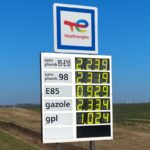
France also has a problem of its own. TotalEnergies has capped prices at its French stations at €1.99 a litre for petrol and €2.25 for diesel. The cheaper fuel has attracted more drivers, meaning some stations are selling diesel faster than replacement deliveries can arrive. French government figures showed that around 90 per cent of stations reporting supply difficulties in mid-September belonged to TotalEnergies.

Could diesel prices rise more in Spain?

Drivers in Spain are already paying more at the pumps. Average Spanish diesel reached around €1.83 a litre in mid-September, while petrol was approaching €1.87. Prices could rise further if the European diesel market becomes tighter.

Spain is not currently experiencing a nationwide fuel shortage, and there is no indication that motorists should expect petrol stations to suddenly run dry. However, Spain is still part of the European fuel market. If refiners and fuel companies have to pay more to obtain diesel, those higher costs can eventually reach the pump. A prolonged shortage could therefore mean another round of increases for Spanish drivers.

Why higher diesel prices could affect everyone

Diesel is not just a drivers’ problem. Lorries and vans depend heavily on diesel to move goods around Spain. Farmers also use it to operate tractors and other machinery. Higher fuel costs can therefore work their way into the prices of food, building materials, parcels and other everyday goods.

Spanish farmers are already feeling the pressure. Agricultural diesel was reported at around €1.65 a litre earlier this month, with farming organisations warning that the higher cost is adding hundreds of millions of euros to the sector’s bills. Transport companies face the same problem.

A delivery company paying more for diesel has to absorb that extra cost or pass some of it on to customers. Taxis, coaches, buses and other commercial vehicles can also be affected.

Spain has some protection from a diesel shortage

Spain does have an important advantage over France. The country has a large refining industry capable of producing substantial quantities of fuel, while companies can also import refined diesel when it is available internationally. That means French-style shortages are not inevitable in Spain.

Much will depend on how long the problems affecting Russian and Middle Eastern supplies continue and whether global refineries can keep producing enough diesel to satisfy demand. Also, Spain’s diesel discount is also due to disappear at the end of September.

For British expats in Spain, the biggest concern is therefore not empty petrol stations at this stage. It is the possibility that diesel becomes considerably more expensive, pushing up the cost of driving, deliveries, farming, food and other everyday services.

With Europe heading into the autumn and winter months, France’s empty pumps are a warning worth watching.

Continue Reading

Trending

Copyright © 2017 Spanish Property & News