
benaojan
Warehouse of horrors: Blood, filth and chemically treated pork uncovered in Spain

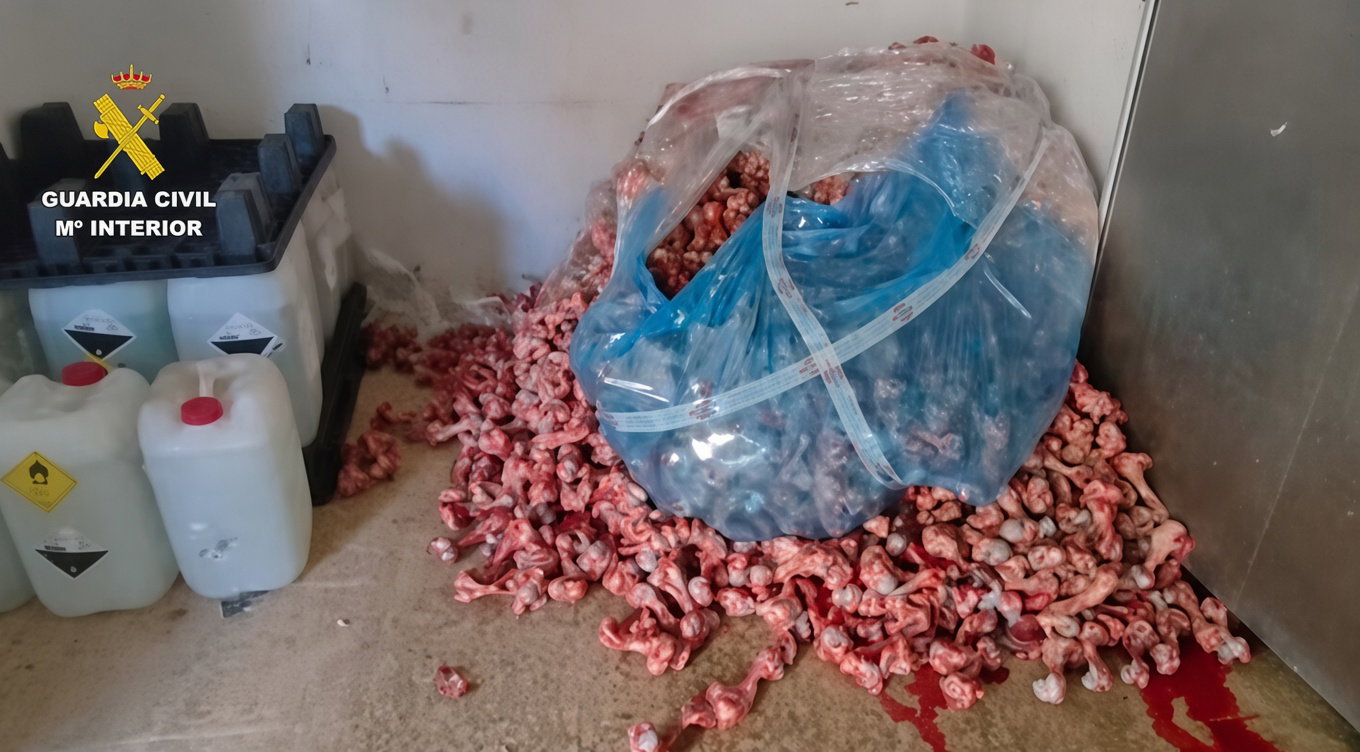
Laboratory analysis found that pork bones and backbones had been immersed in a solution containing 50% hydrogen peroxide. Photo credit: Guardia Civil/Ministerio de Interior
What if you had bought some meat for dinner unaware that it had been left unrefrigerated, stored on a dirty floor and treated with an industrial chemical to make it look better? That is the disturbing reality discovered during an investigation in southern Spain, where authorities have seized more than 30 tonnes of meat and bones from a premises in Benaoján, Málaga.
The Guardia Civil seized 30,530 kilograms of meat products after uncovering serious hygiene problems and evidence that pork bones and backbones had been treated with industrial hydrogen peroxide. The premises have been closed, and the seized products have been ordered to be destroyed.
Investigation uncovers two neighbouring warehouses
The investigation, known as Operation Redox, began in December 2025. Officers from the Guardia Civil’s Nature Protection Service, SEPRONA, inspected a meat business and discovered two neighbouring warehouses, one authorised and another allegedly operating without the necessary licences.
According to investigators, the unauthorised premises were being used to alter meat products before they were transferred to the authorised facility, concealing their origin and allowing them to be prepared for possible sale.
Pork bones whitened with industrial chemicals
Laboratory analysis found that pork bones and backbones had been immersed in a solution containing 50% hydrogen peroxide, an industrial chemical that is not authorised for this use in food processing. Investigators believe the treatment was intended to whiten the products and improve their appearance. The process raised concerns that meat could be made to look more acceptable despite problems with its handling and storage.
Officers also found meat kept without adequate refrigeration, with products lying on the floor among dirt and fluids. Testing identified microbiological contamination associated with the failure to maintain the cold chain. The two problems posed different risks. Poor refrigeration can allow harmful microorganisms to multiply, while hydrogen peroxide at the concentration identified is corrosive and can cause serious burns and damage to the digestive tract if ingested. The combination made the products a significant food safety concern.
More than 45 tonnes of hydrogen peroxide purchased
Investigators traced the business’s purchases of hydrogen peroxide and found that the owner had acquired a shocking 45,830 kilograms between February 2025 and June of this year in order to treat the meat he was bleaching and later trying to sell, according to reports citing the Guardia Civil investigation.
The figure gives an indication of the scale of chemical purchases examined during the investigation. The case centres on more than the appearance of the products. Investigators are examining how meat was being handled, how the chemical treatment was carried out and whether the use of neighbouring facilities helped conceal the products’ origin.
Premises closed and meat ordered destroyed
The Andalucian regional government’s health authorities ordered the closure of the premises and the destruction of all 30,530 kilograms of seized meat and bones. The business owner and the plant manager are being investigated over suspected offences against public health and alleged falsification of private documents. The case has been referred to the judicial authorities in Ronda, Málaga.
Authorities have not been able to confirmed how much, if any, of the affected meat reached consumers before the seizure. The investigation has established the scale of the products removed and the conditions found at the premises, but the available reports do not establish that the entire quantity had been treated with hydrogen peroxide or sold. The seized products are to be destroyed, preventing them from entering the food chain through the stock covered by the order.










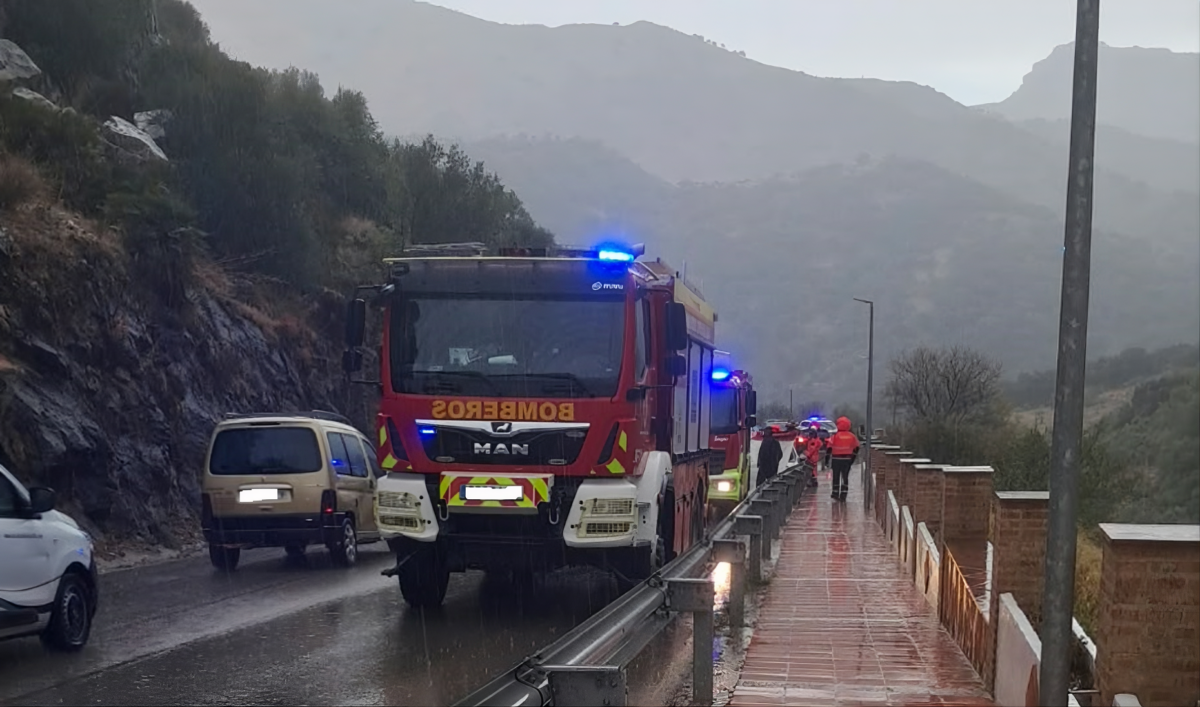
A 41-year-old man has died after a large rock fell onto his car during Monday’s torrential rain in Malaga province, prompting renewed warnings about the dangers of driving in extreme weather.
Three other occupants of the vehicle, two men aged 21 and a woman aged 19, were injured in the incident on the MA-8400 road between Benaojan and Estacion de Benaojan, near Ronda, on Monday, October 19. They were taken to hospital for treatment, according to Andalucia’s 112 emergency service.
The accident happened at around 4.11pm, when a rock broke away from a hillside and struck the vehicle. The Guardia Civil, provincial firefighters and medical teams were called to the scene.
Orange weather alerts mean serious danger
The tragedy occurred as parts of Malaga province were experiencing intense rain and thunderstorms. The Spanish weather agency AEMET had issued orange warnings for areas including Ronda, with further warnings covering the Sol and Guadalhorce districts as the storm developed.
An orange weather warning is not simply advice to take an umbrella. AEMET classifies it as a level of important danger, meaning weather conditions could cause serious harm, particularly to people in exposed locations.
Heavy rain can make roads treacherous within minutes. Water reduces tyre grip, increases stopping distances and can cause aquaplaning. On rural and mountain roads, intense downpours can also contribute to flash flooding, landslides and falling rocks or branches. Drivers should remember that even a familiar route can become dangerous when conditions change rapidly.
What should drivers do in extreme rain?
Spain’s Directorate-General for Traffic (DGT) advises motorists to reduce their speed, increase the distance from the vehicle in front and use dipped headlights so they can be seen more easily.
Its recommendations also include:
- Avoid unnecessary journeys: If an orange warning is in force and conditions are deteriorating, consider postponing non-essential travel.
- Never drive through floodwater: Water depth and the condition of the road beneath it can be difficult to judge.
- Watch for falling debris: Take particular care on roads beneath steep slopes, cliffs and exposed rock faces.
- Avoid sudden braking: Smooth driving helps reduce the risk of losing grip on wet surfaces.
- Stop safely if visibility becomes dangerous: Pull completely off the carriageway at a suitable place and wait for conditions to improve. Never stop in a live traffic lane.
Check the forecast before setting off
Drivers in Spain can check the latest warnings on the official AEMET website and road conditions through the DGT. Weather alerts can change during the day, so checking before departure is not always enough if a journey is lengthy.
The Benaojan accident is a stark reminder that dangerous weather is not confined to flooded streets and motorways. On exposed mountain roads, falling rocks can pose a potentially fatal risk. When an orange warning is in force, the safest journey may be the one that can wait.

Mensaje Enviado
Spain Under Weather Warning For Storms And Hurricane-Force Winds

False Leads And Road Checks: Search Continues For Fugitive Responsible For Explosive That Killed A Police Officer In Spain
Viral video in Spain sparks fury over drivers who ‘have no idea how to drive’
Spain’s pet owners face fines of up to €200,000 for animal welfare offences
Barcelona plans 150% property tax increase on tourist flats ahead of 2028 ban


-
DGT4 weeks ago
Viral video in Spain sparks fury over drivers who ‘have no idea how to drive’
-
Keeping cats and dogs outside4 weeks ago
Spain’s pet owners face fines of up to €200,000 for animal welfare offences
-
Council tax (IBI)4 weeks ago
Barcelona plans 150% property tax increase on tourist flats ahead of 2028 ban
-
Consumer Rights Spain3 weeks ago
EU offers extra year of warranty on phones, but Spain faces delays
-
Age Concern Marbella - San Pedro2 weeks ago
Halloween lunch sells out as 51 join Marbella get-together
-
airports4 weeks ago
Travelling between Spain and Italy? The extra border checks could soon end
-

 %4 weeks ago
Santa Pola Museo Del Mar
-

 New Developments2 weeks ago
How To Get A Tourist Rental Licence In Andalusia (Spain) – Step-By-Step Guide 2025