Connect with us

%

V16 Beacon Rules Begins To Fall Apart

Published

on

v16-beacon-rules-begins-to-fall-apart

V-16 use in Spain. Credit: Audio und werbung/Shutterstock

Spanish V16 beacon manufacturers are sounding the alarm over widespread uncertainty and lack of clarity surrounding the compulsory use of the connected emergency beacons. The carrying of the beacons in vehicles became law in Spain on January 1, and until now, the traffic authority, the DGT, is still releasing information about new rules in May.

In a joint manifesto issued in mid-April 2026, companies including Netun Solutions, Atressa, Turisport, Erum Vial, and others from the Sector V16 Conectada working group called on the government to provide clearer regulations, better public information campaigns, and to depoliticise the safety measures.

Rules on V16 beacons still vague and confusing

Despite the obligation in force since the beginning of the year, they warn that over half of Spain’s vehicle fleet may still be non-compliant due to driver confusion about valid devices, proper usage, and fines brought on by contradictory public statements. This situation, they say, not only jeopardises road safety and increases accident risks but also threatens the national industry that invested heavily in innovation and production, calling for firm institutional support to restore legal certainty and consumer confidence.

Sales of V16 beacons plummeting

The manufacturers are currently under threat from closure as sales of the devices are said to have plummeted, while drivers seem bewildered over which V16 beacons are approved and which ones are not.

DGT announces even more V16 rollout information

Pere Navarro, head of the DGT traffic authority, made another media appearance recently to detail the problems that have turned the connected emergency beacon programme into a complete shambles for road safety efforts across Spain.

Strong criticism flowed from the DGT director general towards opposition political parties for reporting the authority to Brussels over claims that notification requirements went unmet for the mandatory safety device.

Media organisations received a similar rebuke for apparently spreading the reports, while he singled out a firm labelled a ‘fine dodger’ specialised in getting road fines overturned by the courts.

Did you know the V16 has a ‘use-by date’?

Drivers have only just learned of an overlooked detail when Pere Navarro revealed that V16 beacons expire after 11 years once the internal SIM card reaches the end of its life. Purchasers of the devices will almost certainly need replacements in just over a decade, according to this official timeline.

How long do the batteries last in a V16?

Battery degradation is another aspect the DGT failed to take into consideration when launching the new legal requirement. The more pressing concern about battery life is because devices are stored inside vehicles and therefore face constant exposure to heat from sunlight, which often leaves the batteries expired or damaged exactly when an emergency strikes and the beacons are required. The only way of finding out if the device still has a battery is by activating it.

Is the V16 waterproof?

As well, what if it is raining when we break down? Most car drivers are still blissfully unaware that V16 beacons offer no water resistance, so any prolonged contact with rain or submersion causes immediate malfunction with no possibility of recovery.

Still, for the time being, police and Guardia Civil officers are required to hand out fines to any drivers they find not carry or using the V16 beacons. To keep from having to pay a fine, it is best to continue carrying the device, at least until the DGT issues another press release.

%

British Airways Demands £10 Million Compensation Over 20,000 Suitcases Left Behind

Published

on

british-airways-demands-10-million-compensation-over-20,000-suitcases-left-behind

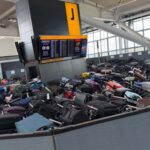
Bags left behind at Heathrow. Credit: Graeme Bowd FB

British Airways has demanded up to £10 million in compensation from Heathrow Airport after a major baggage system failure disrupted travel for thousands of passengers last Friday, May 15.

According to the Times, Sean Doyle, chief executive at British Airways, apparently contacted Thomas Woldbye, group chief executive at the airport, in a direct letter to seek financial redress and better safeguards against future baggage problems. Doyle also requested firm assurances that similar breakdowns would not recur at Terminal 5 and called for detailed contingency plans to protect operations.

Passengers arriving at the terminal waited for hours or departed without their belongings, while those leaving on flights discovered their bags had stayed behind at the airport. An astonishing 20,000 bags went missing in total from the incident, creating massive disruption.

Hi there, Due to a technical fault on Friday, some baggage did not depart Terminal 5 as planned and we apologise for any disruption this may have caused. The issue has been fixed. We will continue to support British Airways to ensure any missed bags are resent as quickly as…

— Heathrow Airport (@HeathrowAirport) May 18, 2026

Baggage chaos as suitcases lay dumped at airport

This is the fifth baggage system collapse at the airport since January. Earlier problems during the February half-term holiday impacted 7,000 pieces of luggage, and another at Easter affected 4,000. British Airways estimates the latest failure has cost the airline £10 million plus considerable damage to its reputation.

Photographs circulating online captured piles of luggage and personal items scattered across areas in Terminal 5. British Airways now employs courier services and additional flights to clear the backlog, though some passengers may still be separated from their belongings until Thursday.

@British_Airways Absolute joke at Heathrow airport, flight landed at 10:35 was delayed from getting of the plane for 30 minutes. To then arrive at baggage reclaim waited 3 hours and two belt changes to be then told all the staff have gone home and you can’t get your baggage. pic.twitter.com/Ww2Ad5BAKL

— ki (@KieannaWhite) May 16, 2026

Heathrow Airport takes charge of outbound baggage processes, whereas individual airlines and their ground handlers manage inbound luggage. Inbound items travel straight from aircraft to reclaim halls without entering the main airport system. British Airways apologised to affected customers on Friday and stressed that the fault lay beyond its control. Extra staff from the airline continue to work through remaining cases to speed up resolutions.

Hi, we’re sorry your bags didn’t travel with you. Due to an issue with Heathrow Airport’s baggage system at Terminal 5 on Friday, a significant number of bags have been delayed. Our Baggage team is doing all they can to get them back to you as soon as possible. You can check 1/2

— British Airways (@British_Airways) May 18, 2026

Heathrow Airport issued a statement expressing regret for the inconvenience and frustration caused by the Friday incident. Officials confirmed the system has returned to full operation and confirmed close collaboration with British Airways to reunite owners with their bags. The airport maintains that its baggage processes achieve 99 per cent reliability even while operating at maximum capacity.

Heathrow management promise to do better

Management at Heathrow pledged ongoing cooperation with airlines and ground handlers to reduce future risks and explore ways to increase overall baggage performance. They expressed hope that the Civil Aviation Authority would recognise the benefits of these upgrades for passengers and back necessary investment.

Passengers voiced their anger on social media after the chaos. One passenger described disappointment upon landing at Terminal 5, noting families waited hours only to learn bags had been abandoned throughout the building. Another called the episode an absolute joke, explaining a flight that touched down at 10.35 faced a 30-minute delay off the aircraft, followed by three hours at baggage reclaim with two belt changes before staff left and retrieval became impossible.

Social media posts from passengers erupt

@_aggiemay on X said, “1000s of passengers have been flown to their destinations without their checked baggage due to computer failure in T5 Heathrow. My elderly mother on her own without essentials in Spain.” And later: “Over 100 hours and still no luggage for their holidays. 1000s of bags left in T5.”

@1Drubsy posted, “@British_Airways customer service is diabolical. Luggage lost since last Friday due to T5 crappy baggage system. Spent over 4 hours on hold over 6 occasions trying to contact BA – no one ever answers the phone numbers provided. Complete crap.”

British Airways continues to prioritise passenger support during the clear-up. The compensation request goes to show growing tensions between the carrier and the airport over operational standards. Travellers using Terminal 5 services may wish to keep essential items in hand luggage for the time being until full stability returns.

Heathrow management and British Airways both mean to prevent any repeat of this scale of disruption. Passengers affected can contact the airline directly for updates on delayed items and potential claims.

Continue Reading

%

Mijas Takes Action On Children’s Screen Time

Published

on

mijas-takes-action-on-children’s-screen-time

Mijas Town Hall has expanded its important “Little Ones Without Screens” campaign into municipal nurseries, hoping to raise even more awareness about the negative effects of screen exposure on babies and young children. Local officials introduced the initiative during a meeting with directors from nursery schools in Las Lagunas, La Cala and Mijas Pueblo.

Education councillor Juan Jose Torres says the programme as a practical guide for modern families navigating the tricky world of technology during early childhood. Health professionals involved in the campaign warned that prolonged use of phones, tablets and televisions may affect language development, emotional wellbeing, sleep quality and social interaction in children under six.

Nursery schools join awareness drive

Teachers and childcare staff warmly welcomed the initiative, stating that many parents are uncertain about recommended screen-time limits for very young children. Specialists working with the project plan to visit nurseries to speak directly with families and provide advice on healthy daily routines.

Ten educational videos created for the campaign are currently being broadcast by local public media and shared through municipal channels. Printed information leaflets are also being distributed in schools, health centres and council buildings across Mijas.

Medical experts connected to the project stressed that face-to-face interaction, outdoor play and reading are all essential during the first years of development. Guidance from the campaign also encourages parents to reduce device use during meals, bedtime and family activities.

Plans for screen-free public spaces

Council representatives are also considering new awareness measures in parks and playgrounds. Proposed signs would encourage adults to avoid mobile phone use while spending time with children outdoors.

Future events linked to the new initiative include a public discussion featuring paediatric and education specialists, who will examine how excessive digital exposure can influence childhood behaviour, communication skills and learning habits.

Concern over screen dependency among young children is a huge topic worldwide and has led many Spanish municipalities to introduce similar awareness campaigns in schools and community spaces, with some schools starting to put a ban on devices in their learning environments. 

For more information about the new plans for screen free time visit the Mijas town hall website.

Continue Reading

%

Murcia Breast Milk Bank Marks 5 Year Anniversary With More Than 700 Babies Helped

Published

on

murcia-breast-milk-bank-marks-5-year-anniversary-with-more-than-700-babies-helped

Murcia breast milk bank celebrates five years supporting newborns care. Photo Credit: Jaye Haych / Unsplash

The breast milk bank of the Region of Murcia recently celebrated its five year anniversary. The bank, which boasts three locations in Murcia, Cartagena, and Lorca, has helped more than 700 newborn babies, and has launched a new website for an initiative that provides useful content for families, developed by professionals.

Nearly 700 kindhearted donors help vulnerable newborns in the Region of Murcia

To be exact, 733 newborns, mostly premature newborns, have benefited from the regional breast milk bank. Over its five years of existence, 668 women have donated breast milk for the cause. This has established the regional bank as an essential resource for neonatal care in the Region of Murcia.

Nearly 4,000 litres of breast milk donated and sent to different areas in Murcia

According to the Minister of Health of the Region of Murcia, Juan José Pedreño, some 3,750 litres of breast milk have been collected over the past five years. This milk is then pasteurised, and distributed to neonatal units all across the Region, including in the Virgen de la Arrixaca Hospital in Murcia, the Santa Lucía Hospital in Cartagena, and the Rafael Méndez Hospital in Lorca, proportional with the orders placed.

Celebrating generous breast milk donors and support groups

This anniversary was as much about celebrating the generosity of the donors as it was about the five successful years of the breast milk bank. In the Region of Murcia, there were 109 active donors in 2026, who contributed 284 litres of milk and directly improved the care and survival of nearly 60 vulnerable newborn babies.

The kindness of the donors cannot be overstated, from mothers who have surplus milk to those who want to use it for charitable purposes, as well as those who have experienced the reality of caring for a child with a shortage of breast milk. Breastfeeding support groups, with outreach work, have also helped to gain more donors for the breast milk bank.

The ‘First 1,000 Days’: An initiative to help overwhelmed new parents

The bank’s new initiative, called “The First 1,000 Days of Life and Beyond,” provides expert care for families with newborns, developed by experienced professionals. This programme supports families with children, from pregnancy to age 14. Those interested in the content can access downloadable information, audiovisual resources, and links to helpful external sources endorsed by national and international experts on the subject of caring for a child. A new website for the initiative, which will be updated regularly, was unveiled at the anniversary ceremony.

The Region of Murcia’s breast milk bank was already one of the top six nationally ranked breast milk banks just a year after beginning its operations in March 2021, both in number of donors and volume of pasteurised milk collected.

Continue Reading

Trending

Copyright © 2017 Spanish Property & News