
ElPais
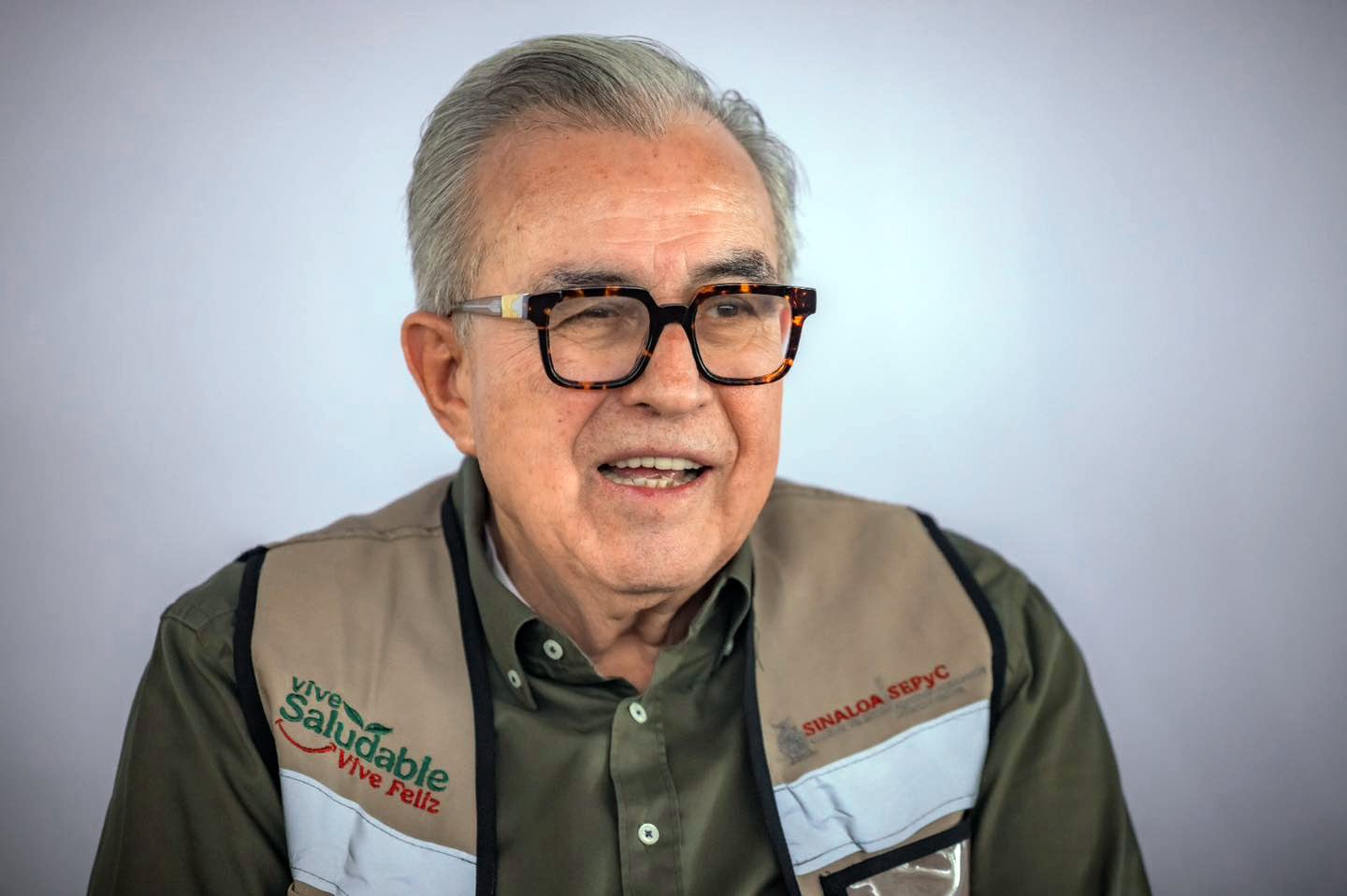
Mexico’s Most Controversial Politician, Rubén Rocha, Goes To Ground As Cartel Questions Intensify














Cuba
US Supreme Court Paves Way For Companies Affected By Fidel Castro’s Expropriations To Seek Compensation From Cuba

The justices ruled in favor of Havana Docks Corporation receiving compensation after the nationalization of its docks in 1960


A new twist in the tensions between the United States and Cuba. The U.S. Supreme Court ruled on Thursday in favor of a U.S. company whose docks were confiscated by the Castro regime in 1960 after Fidel Castro came to power. The court’s decision — in a case openly supported by U.S. President Donald Trump — opens the door to future claims by other U.S. firms and citizens affected during the wave of expropriations carried out in the early years of the Cuban Revolution.
The ruling passed by a vote of eight to one. The company in question is Havana Docks Corporation. The decision comes amid the White House’s campaign to pressure Cuba, which is gripped by a severe economic and humanitarian crisis. It also comes one day after the U.S. Department of Justice indicted former president Raúl Castro (2008–2018) for his alleged role in the 1996 downing of two planes belonging to the Brothers to the Rescue organization, in which four people were killed.
This is a breaking story. Please refresh your browser for more updates.
Archived In
cancer
Edith Sánchez Fights For Her Severance After 25 Years Working For Luis Miguel: ‘He Told Me I Was Like His Mother; Thank God I Never Believed It’


If photographs could make a sound, the one Edith Sánchez keeps in a small plastic bag would play Luis Miguel’s version of Las Mañanitas. Dated September 16, 1994, the photo shows the Mexican singer hugging her as she looks at the camera. It is the only picture she has left beside the man who was her boss for more than 25 years.
“He was singing to me because it was my birthday; they threw me a party with mariachis and everything,” the woman says shyly.
Sánchez, 69, a two-time cancer survivor who is living with osteoarthritis and diabetes, is fighting to get Luis Miguel to give her the severance pay she says she is owed after working “day and night” for him for decades. “I never had vacations, I never had anything, I was always with him and for him,” she says.
Sánchez has been pursuing this fight since 2017, but speaks now, exclusively to EL PAÍS, because she was the personal assistant to the most famous artist in Latin America and survives thanks to what family and friends lend her: “All I’m asking for is a fair severance because I can’t go on like this.”
EL PAÍS repeatedly sought the artist’s version. His team, after asking three separate times for more time to respond, declined to comment. They have, however, said that Luis Miguel’s legal firm will be “watching very closely” in order to take legal action against the newspaper for “giving cover” to this testimony.
In 2017, Edith Sánchez flew from Los Angeles to Mexico City for her annual check‑up at the National Cancer Institute. She had been a patient there for a decade; her left breast had already been removed, and she had managed to overcome her first cancer. Luis Miguel had given her the days off to travel and make sure the tumors had not returned. The tests came back fine, but she felt a sharp pain on her right side. After much insistence, they performed a biopsy. When she received the news that she had cancer again, she wrote to the artist: “I sent him a personal message saying I needed them to pay me what they owed me.” She says they owed her practically an entire year of work. Her salary, she explains, was $1,500 a month. “He didn’t answer anything at all, and he blocked me.”
She never saw Luis Miguel again, nor was she able to communicate directly with him. She did not need to be formally fired because she had never signed an employment contract. The doors were simply closed to her. She was left without a job and without severance. She has waited nine years. “I still haven’t filed a formal lawsuit, because those processes are very expensive and lengthy. Also, because I had hoped he would respond. And I didn’t want to be the one to cause him that kind of trouble,” she says.

Sánchez did not — and still doesn’t — understand what led the singer to cast her aside like that: “Until 2017, everything was perfect. He always said I was his only family, that I was like his mother. We were together 24 hours a day.”
She says she joined him when he was still a minor and lived through his turbulent break with his father, Luis Rey; his father’s death and the death of his manager, Hugo López; the golden years of touring and the downtime in the Bahamas. They also celebrated birthdays and Christmases together and survived a brutal plane accident in Guadalajara. She was with him through Aracely Arámbula’s first pregnancy and supported the singer through the enduring pain over the disappearance of his mother, Marcela Basteri.
“He was always very kind and polite with me. I can’t say anything bad about that. He was always very nice, even when I returned from the first cancer. I don’t know what happened afterwards,” she says now from Mexico City.
The woman has shared with EL PAÍS her medical records from the National Cancer Institute and all her passports, from 1991 onward, filled with dozens of travel stamps and U.S. work visas specifying “Luis Miguel Group.” She also showed one of the tour books from the artist’s 1999 Spain tour, where her privileged position (“LM Wardrobe / Valet,” that is, Luis Miguel’s personal assistant) appears alongside then–tour manager Alejandro Asensi and head of security Joe Madera.
EL PAÍS also contacted Francisco and Gerardo Castell, who handled security for the artist’s team in the 1990s. Both confirmed Edith Sánchez’s work before and after their time. “On several occasions, Luis Miguel introduced her as the most important woman in his life,” Gerardo says. “She worked for him unconditionally, 24/7. She devoted her entire life to this man,” adds Francisco, who confirms that Edith has turned down offers to tell her story in exchange for money for books and films.
More than 25 years without a contract
Edith was eight the first time she came to Mexico City. The third of 13 siblings from a humble family in Ixcaquixtla, Puebla, she arrived in the Mexican capital to work with her aunt and uncle. From their workshop on Sullivan Street, the family made costumes and fine jewelry for Mexico’s biggest stars, preparing the beading and trains of evening gowns for figures such as Angélica María — the first of the legendary trio Las Tres Angélicas — and singer Monna Bell.
One day, Lucía Miranda — an Argentine model and the wife of Hugo López — showed up at the workshop. López had received an offer in 1987 to manage Luis Miguel’s career, but he had postponed it until the singer turned 18 so they could work without the shadow of his father.
“Mrs. Lucía told my aunt and uncle that they wanted a trustworthy person who would have no problem traveling, no problem with schedules, no problem with anything,” Edith Sánchez recalls.
The job: to find, buy and prepare the singer’s clothes, accompany him on trips and at shows, sometimes cook for him, sometimes hire staff, look after his home, and make sure all his needs were covered. She was 31 at the time. She went to the interview and found Luis Miguel “very pleasant”; she says he only asked if she had a visa to travel. “I told him yes. I had already been to Miami, New York, and Disneyland.”

Neither then nor afterwards did she sign any employment contract, she was not registered as a worker with the Mexican Social Security Institute (IMSS), she had no right to vacation, she did not marry, did not have children, and did not spend any celebrations with her family.
“You work all hours there, 24 if possible,” she says, explaining: “If he went to dinner at 10 p.m., at that hour I would make up his room and clean his bathroom, because even if someone came to clean the whole house, no one went into his bedroom. Only I did. Sometimes he would come back, and I still hadn’t finished. That was every day, all the time.”
In hotels, the routine was similar: Edith would enter his room, gather “the important things” so “there would be nothing personal,” and then call the front desk so they could clean it. Gerardo Castell says Edith was so protective of the singer that when he went to get a haircut she would collect all the cut hair and throw it away somewhere else so no one could use it.
She describes her $1,500 salary as “paltry,” adding firmly: “I worked out of affection, respect, and admiration for him. I never got tired; I was very happy, I liked what I did. I never thought about the pay, but rather that when I no longer wanted to work, he would give me a good severance.”
Luis Miguel and Heidina
Edith Sánchez’s passports contain the story of Luis Miguel’s life. She stacks them carefully — from 1991 to 2014 alone, there are 12 documents. Behind those frantic stamps — Spain, Argentina, the Dominican Republic, Brazil, Panama, Chile, Peru, Colombia, Venezuela, Nicaragua, Ecuador, Costa Rica, Canada, the United States — lies the singer’s performance at the Seville Expo in 1992, one of his final clashes with his father; the entries and exits from Argentina in November and December of that year, when he received word that Luis Rey was dying and had to fly urgently to Barcelona (Edith waited for him in Argentina, where Luis Miguel returned to perform after mourning period: “You have to respect the audience,” biographies recount him saying at the time); and the visits to Santo Domingo, to Juan Luis Guerra’s “beautiful” home, where the Dominican musician wrote Hasta que me olvides for him — one of the songs that cemented his rise in the ballad genre in 1993.

Sánchez accompanied him in Mexico City, and then lived with him in Acapulco and in Los Angeles. In the tourist jewel of Guerrero, she was in charge of hiring the gardener, the chef, and the cleaning staff. The Castell brothers corroborate this as well. “Once there was a problem with one of the maids because she wouldn’t listen to me. And he [Luis Miguel] gathered the workers by the pool and told them that whatever I ordered had to be done: ‘Because she is like my mother,’” she recalls him saying.
She insists she never saw him as a son because she was “aware” he was not: “Yes, I loved him very, very much. Because I saw everything he went through and everything he suffered. But never to the point of saying ‘oh, he’s my son’ — no.”
Sánchez says she lived with Luis Miguel and his brother Alejandro, and for a time with Sergio, the youngest of the family, before he was sent to Boston; that she stayed with the singer and his wife, Aracely Arámbula, during the actress’s first pregnancy: “The three of us spent the nine months locked up in the house in Los Angeles, because they were very careful that no one would photograph her anywhere while she was pregnant.”
Aware of Luis Miguel’s secrecy — even now — she knows the details and does not share them. “I don’t even have a confidentiality agreement; I was absolutely trusted, I didn’t need any of that,” she explains, adding: “There was always a lot of respect. I’d be lying if I told you I called him Micky — no, always ‘young man,’ ‘sir.’ He called me Heidina.” The workers consulted by this newspaper also call her Heidi or Heidina.
The cancer
The first time Edith Sánchez had cancer, in 2007, Luis Miguel tried to have her treated in Los Angeles. “Nothing could be arranged because it was very expensive. He didn’t tell me no, but I understood that the best thing was for me to come to Mexico City and go through it with my family,” she says. “There, he helped me, not much, but he helped. His assistant, who was Joe Madera, told me that the help for certain treatments would be counted against my severance. I was forbidden from asking the gentleman [Luis Miguel] anything directly, so I don’t know whether he paid more than what reached me. But during the year my treatment lasted they didn’t pay my salary because Madera said that by not working I wasn’t generating pay,” she explains: “I lived on the little savings I had.”
She returned after a year, but says nothing was the same. Luis Miguel decided she would no longer accompany him on tour, but instead wait for him in Los Angeles or join him only when he traveled on vacation. It is during those years that the only mention of Edith in the celebrity press appears. “Aracely Arámbula, Daisy Fuentes, Mariah Carey, Mirka Dellanos, among others, have been public partners of Luis Miguel, but none has lasted as long in his life as Edith Sánchez, who for many years has made sure that El Sol has everything he needs,” reads a November 2010 piece in the magazine Quién, using the singer’s nickname — El Sol de México, or the Sun of Mexico. “Her presence has been known since the 1980s; she is always concerned that nothing disturbs him.”
But the photos published with that piece are not of Sánchez: “The woman shown there is Urbana Reyes, the woman who is with him now,” says Sánchez, who met her when Reyes started as a maid at the singer’s home in Acapulco. Gerardo Castell confirms that Urbana initially worked under Edith’s orders until Edith became ill and stopped working. Luis Miguel’s nanny has been a recurring topic in the gossip press, but none of them — nor their names — appear in the artist’s biographies.

Sánchez recounts that when the cancer returned in 2017, and Luis Miguel blocked her, she tried to approach friends of the singer she had known over the years to try to reach him. Most preferred not to get involved.
Throughout her interviews with this newspaper, Sánchez cannot find an explanation for why the singer gave her the cold shoulder, but newspapers at the time do offer clues. In 2017, Luis Miguel was in the darkest phase of his career. Hounded by lawsuits (from Alejandro Fernández, from his former manager, even from his own record label, Warner Music), the singer was paying a multimillion‑dollar price for his decline. He had spent a couple of years canceling performances and breaching contracts, had isolated himself, and was “trapped in a situation with no way out,” wrote the journalists who covered him: “Unwilling to see his friends, unwilling to listen to reason or advice.” That was the moment when Edith Sánchez disappeared from his life.
The wait
She says that in 2017, she sought out Joe Madera to ask for her severance and the year of unpaid wages. She didn’t succeed. She paid for her second cancer treatment with the help of her entire family. “I felt terrible. At that point in my life, I should have had the means to pay for my treatment, not be waiting for my siblings to find ways of helping,” she says. Her right breast was removed, she underwent chemotherapy, and she survived.

Since then, she has tried to reach the artist. Luis Miguel paid her the year he owed her — a total of $30,000 — in 2023, after the Netflic series that made him fashionable again. She was also contacted by a lawyer who introduced himself as part of the singer’s legal team in Mexico City:
“He knew my name and my situation. He told me to accept $50,000 as severance and not expect anything more,” she says. She rejected the offer because she did not consider it “fair”: “I told him, ‘Tell the gentleman to remember all the years I worked for him day and night.’”
Sánchez does not specify the exact amount she is seeking for severance: “It’s whatever corresponds to so many years, plus additional compensation, because we worked 24 hours a day. From the moment I started with him, I never had vacations or holidays.”
After almost nine years of waiting, she admits she is “desperate.” “She is ill, very ill, and yet she doesn’t have the heart to sue him,” says Francisco Castell. “Everyone who has worked very close to him has stolen from him, but she is not like that; she only wants to be paid a fair severance so she can live with dignity.”
Edith Sánchez says she is speaking now “to see if he responds”: “I never believed I was like his mother, thank God, because otherwise, imagine, it would be even harder.”
Sign up for our weekly newsletter to get more English-language news coverage from EL PAÍS USA Edition




-

 Competiciones3 weeks ago
E
-
Costa del Sol4 weeks ago
Why home care is the new gold standard for living well in Spain
-
blackout April 20252 weeks ago
Insurance company Mapfre decides to pay out €14 million compensation for 2025 blackout
-
 Foreign demand2 weeks ago
Who Bought Where In The Second Half Of 2025?
-
Costa del Sol4 weeks ago
Nube floats into Estepona
-

 %4 weeks ago
Portugal Confirms High-Speed Rail Link
-
Animal protection law4 weeks ago
Spain moves to redefine legal pets as draft law raises wider welfare concerns
-

 New Developments3 weeks ago
Luxury Villas For Sale, Estepona – ProjectL1