Connect with us

ElPais

Baltics On Alert Over Ukrainian Drones And Russian Electronic Warfare

Published

on

baltics-on-alert-over-ukrainian-drones-and-russian-electronic-warfare

The impact, shooting-down, or near-miss of about a dozen Ukrainian drones over the past two months has once again placed the Baltic region at the center of a gray zone where air safety, electronic warfare, and strategic ambiguity blur together. Ukraine says its attack drones, launched toward ports in the Leningrad region in Russia’s northwest, have been diverted by the enemy and redirected against its allies.

The situation is somewhat paradoxical. On Tuesday, a NATO F-16 shot down one of those Kyiv-launched unmanned aircraft after it entered Estonian airspace. A day later, another such device forced Lithuanian authorities to open the country’s public shelters. The incidents are fueling political tension and public unease in a region long accustomed to viewing Russia as the principal threat, but which is now also beginning to monitor risks stemming from the defense of its main ally.

In Brussels, both the EU and NATO insist the problem’s root remains in Moscow. “[The Ukrainian drones] are there [in the Baltics] because of the reckless, illegal, full-scale attack of Russia, starting in 2022,” NATO secretary general Mark Rutte said on Wednesday. Russia, however, accuses Estonia, Latvia, and Lithuania of facilitating Ukrainian operations against its territory — an allegation Rutte called “totally ridiculous.”

“Russia’s public threats against our Baltic States are completely unacceptable,” European Commission President Ursula von der Leyen said. “Let there be no doubt. A threat against one Member State is a threat against our entire Union,” the German leader added on social media, stressing that Russia and Belarus bear “direct responsibility” for the drone incidents. Allied sources believe that, beyond the possible use of electronic warfare, the Kremlin is seeking to strain relations between the Baltic countries and Ukraine.

Ukraine’s armed forces have had the Baltic region in their sights since the start of the war. Kyiv has orchestrated sabotage operations there against the Russian navy, which has sought in those waters a safer transit route than the Black Sea. In recent months Ukraine has accelerated the launch of bomb-equipped drones toward the northwest. Its objective: to strike facilities in Russia’s extensive oil infrastructure and curb the departure of its vessels to sea, vital for crude exports.

One of the Ukrainian military’s most successful attacks took place on March 25. The military managed to hit a Russian icebreaker in the port of Vyborg, near the Finnish border, about 620 miles from Ukraine. That day, Moscow intercepted at least 390 Ukrainian drones, according to the Kremlin.

To halt the Ukrainian drone swarms, the Russian military has increased interceptions, some via electronic means — a method vastly cheaper than firing missiles. Since March 23, close to a dozen of these diverted attack aerial vehicles have ended up flying over or striking the Baltic states and Finland.

These drones have not affected only the region’s security. The early-May crash of two of these craft in Latvia, one of them against an empty oil storage tank, last week prompted the resignation of the country’s prime minister, Evika Silina.

Disrupting the link

The electronic warfare systems used by both sides typically focus on severing communication between the operator and the drone, causing loss of control. In some cases, the aircraft end up crashing after traveling long distances, as has already happened in Poland and Romania.

Other techniques include so-called spoofing — whereby false navigation data are injected to redirect or crash the drone — and the direct seizure of the drone’s communications to take control of its flight.

Marina Miron, a researcher in the Department of War Studies at King’s College London, says it is difficult to determine whether the diversions of Ukrainian drones toward the Baltics are due to spoofing. “In the specific case of the Baltics, it remains difficult to determine whether the alleged deviations in the flight paths of Ukrainian drones were actually the result of signal spoofing,” she says in an email. “An important factor to consider is the limited battery life and range of many long-range Ukrainian drones. If their routes were extended significantly across Baltic airspace, the question arises whether they would still have sufficient endurance to reach targets inside Russia,” the expert adds.

Electronic warfare is not only a weapon used by the invading army. Kyiv issues daily reports on the interception of dozens of Russian drones, mostly through kinetic means such as artillery fire or missile launches, but also by signal disruption or jamming. These electronic methods, however, are unable to repel all the aircraft from the enormous swarms launched by both sides.

Miron argues that electronic warfare can function as an indirect pressure tool on NATO precisely because of the attribution challenge that characterizes it. Its strategic value lies in the ability to produce effects on the adversary and its allies without triggering a direct military response. “Electronic warfare offers a tool that can generate political and psychological effects without crossing the threshold that would provoke a kinetic response,” the researcher says.

The key lies in that structural ambiguity: when navigation systems are interfered with, it is extremely complex to determine the origin or intent of the attack with certainty. That uncertainty amplifies the impact beyond the technical realm, shaping perceptions of security, cohesion among allies, and the allocation of defensive resources. “This creates fertile ground for misunderstandings and, potentially, for dangerous miscalculations,” Miron notes.

Ukrainian President Volodymyr Zelenskiy has offered the Baltic countries operators and experts in drones and electronic warfare to help train their forces. The spokesman for Ukraine’s Foreign Ministry, Heorhii Tykhyi, says by phone that Kyiv is in contact with its allies in the Baltics and with Finland over the “incidents” involving drones that have reached their territory. Zelenskiy’s government has apologized to its partners in the region. Publicly, they have blamed Moscow at all times for what happened. Privately, they express concern about the succession of incidents. Estonian Defense Minister Hanno Pevkur said on Tuesday that he has asked Ukraine to keep the flight paths of its attacks as far from NATO territory as possible.

Sign up for our weekly newsletter to get more English-language news coverage from EL PAÍS USA Edition

Continue Reading
Click to comment

Leave a Reply

Your email address will not be published.

America

Sandy Fire: Thousands Under Evacuation Orders As Wildfire Spreads Across Southern California

Published

on

sandy-fire:-thousands-under-evacuation-orders-as-wildfire-spreads-across-southern-california

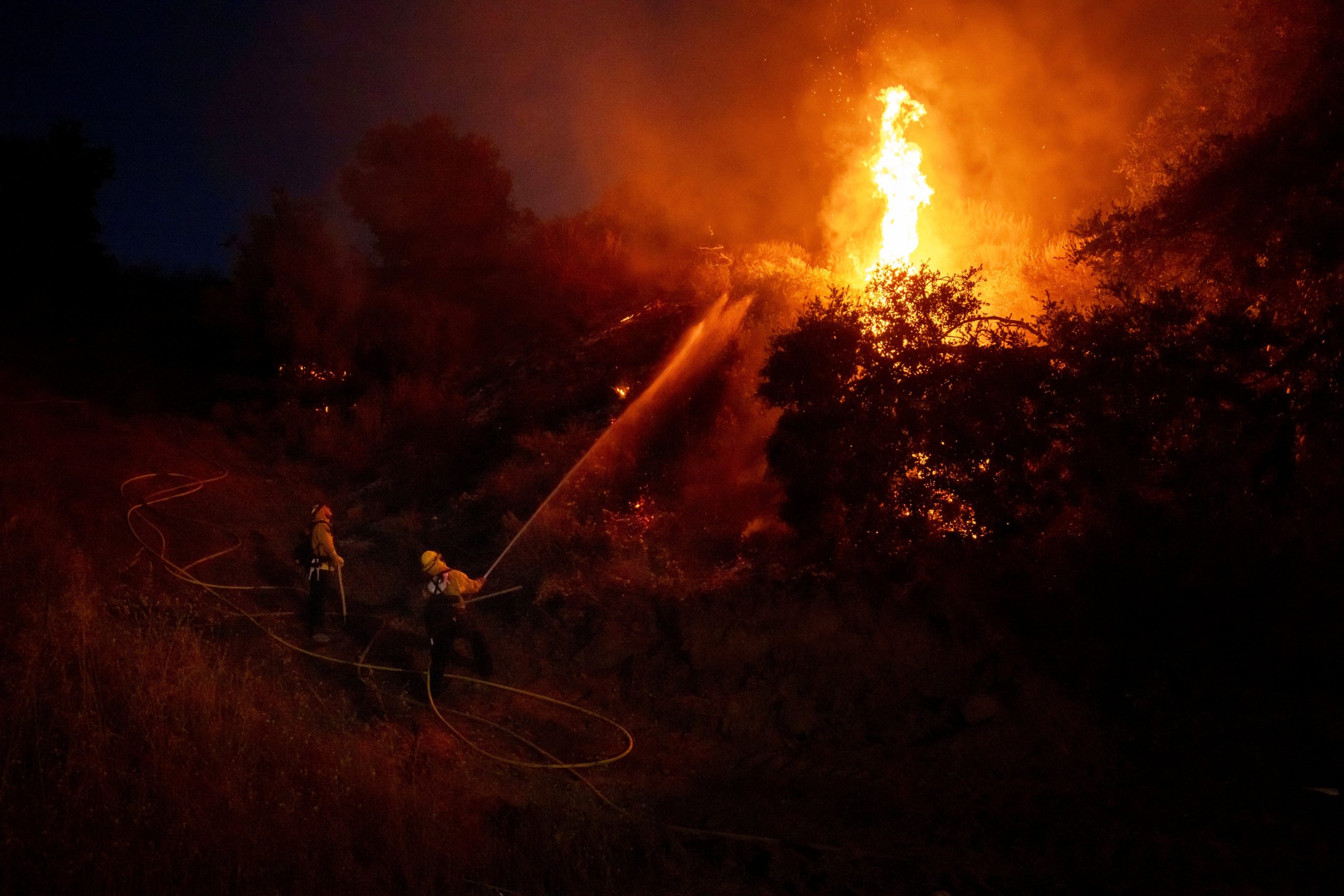
Wildfires fueled by extreme heat, drought, and strong winds have become a recurring emergency that California faces virtually every year. Now, the southern part of the state is grappling with a new wave of fires that has placed thousands of residents under evacuation orders and forced the deployment of emergency resources in several counties. The most critical fire so far is the Sandy Fire, fueled by strong winds, which continues to advance in Simi Valley, northwest of Los Angeles.

The fire began Monday morning in the Sandy Avenue area of Ventura County and quickly spread due to gusty winds and dry vegetation. Within minutes, the flames reached residential areas and destroyed at least one home along with vehicles parked near the property.

By early Wednesday morning, Sandy had consumed nearly 1,700 acres (6.88 square kilometers) and maintained a containment level of between 5% and 15%, according to various official reports released in recent hours.

Authorities noted that more than 17,000 people remained under evacuation orders, although at the height of the crisis the number had exceeded 43,000 residents. Several communities in Ventura County and areas bordering Los Angeles received evacuation orders and warnings.

Winds complicate firefighting efforts

Firefighters and aerial crews worked through the night on Tuesday trying to slow the fire’s advance before weather conditions worsened again. Ventura County Fire Department spokesperson Andrew Dowd explained that crews were able to make headway thanks to a temporary lull in the wind.

However, authorities warned that the change in wind direction continued to pose a significant risk. Cal Fire stated that firefighters remained strategically positioned in anticipation of possible changes in the fire’s behavior.

Furthermore, the mountainous terrain and dry vegetation have complicated the efforts. Andy VanSciver, a public information officer with the fire department, told the media that the steep slopes and dry grasslands are fueling the rapid spread of the flames.

More than 800 firefighters deployed

The operation to combat the Sandy Fire mobilized hundreds of personnel from various agencies. According to official reports, more than 869 firefighters were assigned to containment efforts after a new secondary fire forced the deployment of more than 100 additional personnel.

Efforts included aerial drops of water and retardant, nighttime operations, and the creation of containment lines to prevent the fire from reaching sensitive areas such as the Santa Susana Field Laboratory and the Box, Bell, and Woolsey canyons.

Los Angeles Mayor Karen Bass reported that the city deployed helicopters, crews, and specialized equipment to support Ventura County, though she clarified that, as of now, the fire was not expected to reach the city of Los Angeles.

School closures and poor air quality

The impact of the fire also forced the closure of all campuses in the Simi Valley Unified School District on Wednesday. Only essential staff were called in to work.

In addition, smoke from the Sandy fire and other nearby fires triggered air quality alerts in areas such as Calabasas, Malibu, and Pacific Palisades. Authorities urged residents to avoid outdoor activities and stay tuned for emergency updates.

Other active fires in California

The Sandy Fire isn’t the only one causing concern for authorities. On Santa Rosa Island, off the coast of Ventura and Santa Barbara, another fire has burned nearly 17,000 acres (68.8 square kilometers) and destroyed historic structures. The fire is approximately 26% contained.

Authorities believe the fire may have started after a shipwrecked sailor used flares to signal for help. The man was later rescued by the Coast Guard.

In Riverside County, the Bain and Verona fires also forced the evacuation of entire communities. The Bain fire has burned more than 1,300 acres, while the Verona fire has burned over 400 acres and remains uncontained.

Another fire, identified as the Tusil, spread rapidly in San Diego County and forced the partial closure of Interstate 8.

Critical fire season

Experts have warned that California is entering a particularly dangerous period for wildfires.

Meteorologist Ryan Kittell of the National Weather Service in Oxnard explained to the Los Angeles Times that moisture levels in vegetation are reaching a critical point. “Right now, the latest readings show we’re right on the cusp of when most of the plants are ready to burn,” he said. “It’s still kind of a mixed bag, but we’re getting real close.”

Sign up for our weekly newsletter to get more English-language news coverage from EL PAÍS USA Edition

Continue Reading

AFD

Merkel’s Popularity Endures More Than Four Years After Leaving Office

Published

on

merkel’s-popularity-endures-more-than-four-years-after-leaving-office

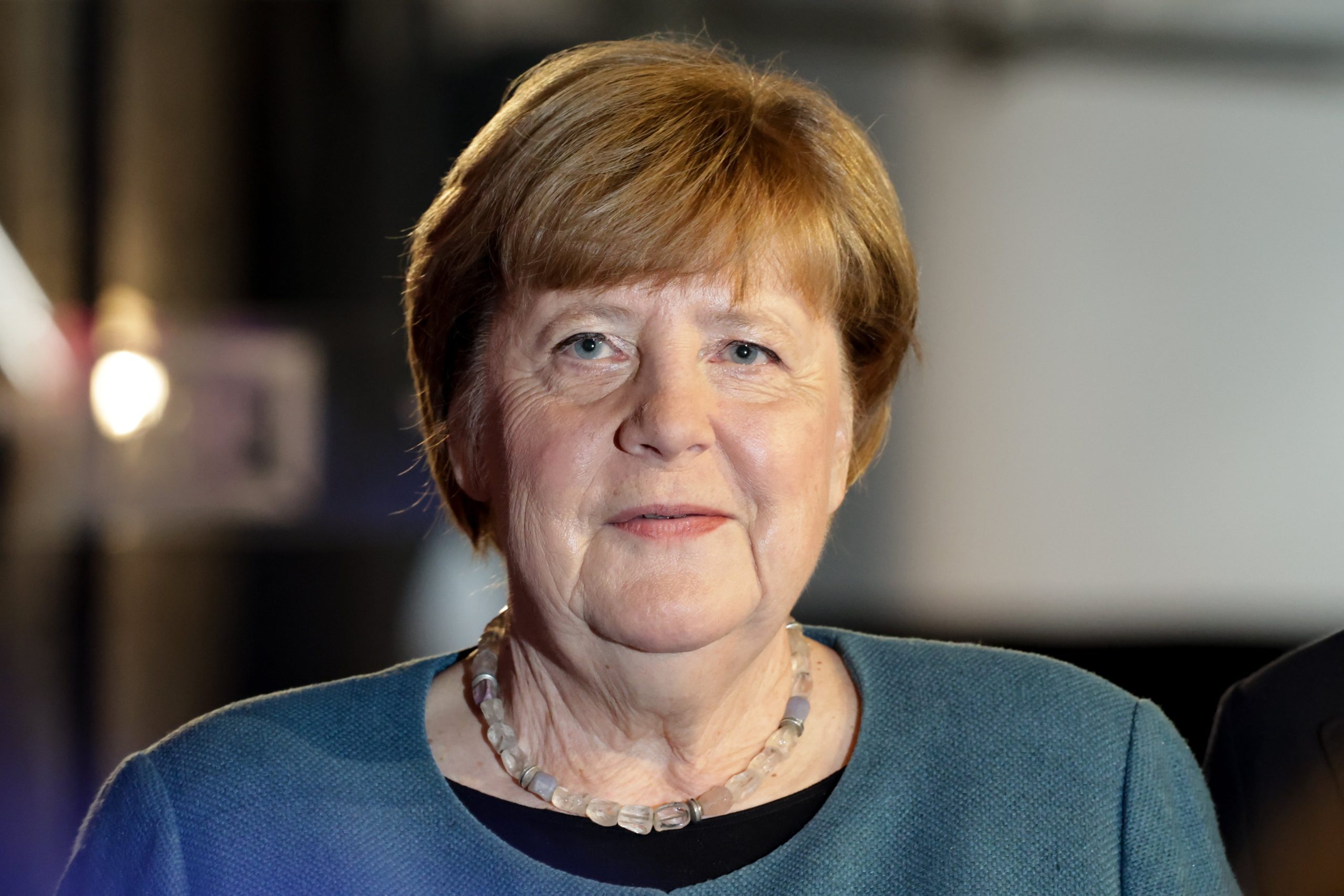
More than four years have passed since Angela Merkel said goodbye to politics in December 2021 after 16 years leading Germany. A period in which, as she promised, she has stayed out of politics except for the book tour for her memoirs and a few public appearances. She vanished so completely from the political scene that her presence last February at the federal congress of her party, the Christian Democratic Union (CDU) — the first time she had attended since leaving office — eclipsed the chancellor, Friedrich Merz, with whom she also does not have a good relationship.

Three months after that appearance — in which she did not even speak — she has resurfaced again, just as the conservative–social democratic coalition government is grappling with a deep internal crisis over its reform package and facing intense tensions with the United States over the war with Iran. First, last week, in an interview with the magazine Focus in which she called for calm. Then, this Monday, as part of the re:publica conferences on society and technology, held in Berlin. Coincidence or not, her return comes at a moment many in the German capital see as highly critical.

“Nothing is coincidental with Merkel,” says Hajo Funke, a political scientist and professor at the Free University of Berlin. “She worries about the state of the party and the republic, so she expresses that concern, and it carries weight,” he explains by phone. “She has no operational power; that is, she can’t impose change. But she is still a strong voice.” In his view, the former chancellor has been present “the whole time” and is simply now speaking “more forcefully.”

Merkel, who this Tuesday was awarded the European Order of Merit of the European Parliament for her “steady and fundamental leadership in advancing the European Union as chancellor of Germany,” as praised by former European Commission president José Manuel Durão Barroso, continues to enjoy high approval ratings. Especially among young people.

“Good reputation,” Merkel joked on Monday about it at the event organized by public broadcaster WDR as part of re:publica. Her visit had generated huge interest: the former conservative leader still fills enormous halls years after leaving politics. Everyone wants to hear her speak. People were crowding at the doors of the hall two hours before the event began. And many were left outside.

Angela Merkel, Ursula von der Leyen

Applause erupted when Merkel took the stage. The audience — packed with young people — raised their phones to take photos and videos. Some even managed a selfie with her in the background. She looked relaxed, and she still knows how to connect with a crowd. First in a more formal setting, and later seated at a wooden table, with an image behind her evoking the kitchen of a shared flat and two young podcasters at her side.

In that atmosphere, there was a palpable sense of nostalgia— for Merkel herself, or perhaps for an earlier political era. Above all, the contrast with Friedrich Merz was striking: a chancellor whose poll numbers have sunk and who now faces a surging far right in the form of Alternative for Germany (AfD), which has led voting‑intention surveys for weeks. The latest INSA poll puts the party at 29%.

Merkel and Merz are two very different politicians. “Merz wants to change the status quo, to implement reforms. And Merkel did the exact opposite: she preserved it,” explains Thomas König, a professor at the University of Mannheim. “Merkel always played a mediating role. She was very reserved; she never stepped outside the script. She was always very hesitant, waiting for the polls to show what was popular and only then reacting, even during the refugee crisis. That is, a different style from Merz’s.”

On top of that, König adds, Merz “is not viewed positively by the media, which sees him as a figure from another era.” Still, he argues, Merz is now pushing reforms that Merkel should have enacted during her time in office. “And reforms always initially cause popularity to fall.”

Merkel, says political scientist Hajo Funke, was defined by a “pragmatic style that was and is calm, that took the mindsets of East Germans very seriously, and that gave the impression of being resilient in crises.” The political scientist believes she is regarded, “in general,” as a “successful chancellor.” “And by comparison, Merz is seen as a grump who does not control himself enough. That’s why he offends everyone, does not unite people, and does not lead in that sense,” he explains.

Has Merkel returned to the political debate, as some voices suggest? “Well, I try to find an appropriate rhythm. I remain a citizen engaged with politics and, of course, I care about these things,” the former chancellor said on Monday. She enjoys spending time at her home in Uckermark, the region north of Berlin near the Polish border, where she grew up. “I go to Uckermark more than before, and it makes me happy, but without withdrawing from public life.”

According to König, it is “normal to step back at first, and perhaps enjoy having time for other things,” but eventually former leaders miss appearing in public. The CDU’s more conservative direction, the expert notes, has meant Merkel has “less influence than expected,” since she symbolizes the political center. “In reality, she has somewhat moved into the background and her achievements are now evaluated with a little more scepticism than they were at the time,” he explains.

Her popularity among young people is due largely to the fact that many fear the future: “What Merkel symbolizes, by preserving the status quo, is security,” says König. But he points out there are also regional differences: “I can’t imagine she is popular in the east of the country, where AfD is very strong and is, in essence, an anti‑Merkel club.”

Angela Merkel

Merkel admits she is happy knowing people still come to hear her speak, but that does not mean she is considering a return to public office — including the idea, floated recently, that she might run for Germany’s presidency. “That is the highest office in our country. I was chancellor for 16 years. Before that, I spent many years in politics. And this role really requires someone with more energy… I can’t do that anymore,” said Merkel.

She also does not understand why her name was mentioned as a possible mediator at the negotiating table with Russian President Vladimir Putin, after he proposed former chancellor Gerhard Schröder, with whom the Kremlin has always had a good relationship. According to Merkel, that role should fall to “those who hold office and have responsibilities.” “To negotiate with Putin and be taken seriously, you need to have your own power,” she concluded.

Although Merkel does not want to return to an active political role, she knows her words resonate. Conscious of that, she urged people not to “underestimate Putin.” During her 16 years as chancellor, she not only had to deal with the Russian leader and with Donald Trump, in his first term, but also with the emergence of AfD, which emerged during the euro crisis and surged again during the refugee crisis, eventually becoming the second‑largest party in the last federal election, ahead of the Social Democratic Party (SPD).

Merkel still has an answer for almost everything — whether it’s a serious question about Russia’s invasion of Ukraine or a lighter one about how much a kebab will cost in 10 years. “When I started eating kebabs, in the early 1990s, they cost €3.50 [$4],” she recalled. “Now we are at €7.50 [$8.70], at least where I go. And in 10 years? We will be above €10 [$11.60]. At least,” the politician says.

She also reminisced about her years in the former East Germany, when she used to pick up discarded furniture from the street, and she laughed when asked about hypothetical jobs she might like to do — such as coaching the German national football team, given her passion for the sport. “So that tomorrow the headlines say: Merkel dares to become national coach? No,” she laughed. “Put that at the end of the list.”

Sign up for our weekly newsletter to get more English-language news coverage from EL PAÍS USA Edition


Continue Reading

bahamas

How Spain Plans To Challenge The Shakira Ruling

Published

on

how-spain-plans-to-challenge-the-shakira-ruling

Two technical concepts — sporadic absences and the idea of a taxpayer with no effective tax residence — have become the Spanish Treasury’s main arguments as it seeks to overturn a court ruling that handed Colombian singer Shakira a major victory on Monday. These terms are little known outside specialist circles, but they increasingly shape multimillion‑dollar disputes. They are especially useful for tax inspectors when they try to challenge residency claims built on dense travel schedules, fragmented stays, or international moves that are hard to substantiate.

Shakira was audited for the period 2011–2014. For the last three of those years, she reached an agreement with prosecutors, acknowledged tax residency in Spain, and paid millions in penalties. The real point of contention, however, was 2011. That year, the singer admitted spending 143 days in Spain, while the Tax Agency documented 163. In any case, both figures fall short of the 183‑day threshold that normally determines tax residency.

So what did the authorities argue to justify their claim? That the alternative she presented — residency in the Bahamas while spending the rest of the time on an international tour — did not demonstrate a genuine, effective stay in another country. According to the agency, those trips were sporadic absences: temporary movements compatible with maintaining Spain as her main residence, a point strengthened by her budding relationship with Spanish footballer Gerard Piqué.

Spain’s High Court, the Audiencia Nacional, adopted a different, far stricter, literal reading of the law. Shakira and Gerard Piqué were not married, they had no children at the time, and she had not reached the well‑known 183‑day threshold for tax residency. What’s more, the companies that channelled Shakira’s income were not Spanish either. Taken together, these elements led the judges to conclude that she had effectively lived on tour, dividing her time across several countries without establishing a clear tax residence anywhere. And this is where the deeper legal debate begins — the one Spain’s State Attorney’s Office is expected to rely on in its appeal to the Supreme Court, which will have the final say.

The Treasury’s position seeks to prevent scenarios that, in practice, come close to creating a taxpayer with no effective tax residence. These would be individuals able to organize their lives around intermittent trips and fragmented stays so that no country can fully claim them as residents. That is why Francisco de la Torre, a senior tax inspector, says the key issue will be how the courts interpret “sporadic absences” — and whether those days should count toward the final residency calculation. In his view, with 163 days documented in Spain and the rest scattered across multiple jurisdictions due to tours and concerts, the outcome might have been different had those days been included.

José María Mollinedo, secretary‑general of the tax‑technicians’ union Gestha, agrees. He stresses that “no one can be a tax stateless person,” and that the core question is whether Shakira should have paid taxes in Spain — or in no country at all.

Reaffirming doctrine

The Spanish Supreme Court only accepts cases that allow it to “reaffirm, refine, expand or, if necessary, correct existing doctrine.” This is the main criterion it cites when deciding whether to hear an appeal, since it generally does not reassess evidence already examined by lower courts.

Lawyers at CMS Albiñana & Suárez de Lezo note that the Supreme Court will only take up the case if the State Attorney’s Office can demonstrate sufficient “casational interest” — it is not enough to allege a legal violation. Antonio Puentes, head of contentious tax litigation at the firm, believes the most promising route is to raise a technical‑legal question, such as “the scope of presumed days or sporadic absences,” whose interpretation is needed in tax and legal practice. Otherwise, he warns, the Supreme Court may refuse to hear the appeal unless it sees a legal question that goes beyond Shakira’s situation.

Other sources consulted say the Supreme Court usually enters these debates simply because they are high-profile cases, as has happened in other matters involving celebrities, artists, and athletes. The timeline is uncertain: although the Administrative Chamber has been clearing backlogs caused by the pandemic and the shortage of magistrates, it is still taking between nine and 12 months to admit appeals for processing, and years to resolve them.

José María Peláez, spokesman for the Association of State Tax Inspectors, also believes the case may have legs at the Supreme Court. He recalls that the so-called sporadic absences play a decisive role in the analysis. Under Spain’s personal income tax law, sporadic absences are temporary movements that do not alter habitual residence, and must therefore be counted toward the annual total. In his view, the High Court’s ruling does not sufficiently address this core issue. “The decision does not really assess tax residence, and that, in my opinion, is one of its weak points,” he says.

Peláez also points out that Spanish tax law imposes a particularly strict burden of proof on those claiming residence in tax havens such as the Bahamas. In such cases, “the taxpayer must prove to the authorities that they spent more than 183 days in that territory, thus reversing the burden of proof.”

Because Spain has no double‑taxation treaty with these jurisdictions, the tax authorities have greater leeway to challenge the declared residence and demand stronger evidence of actual residence outside of Spain. He adds that if Shakira had been able to demonstrate more than 183 days in another country, the dispute with the Spanish authorities would likely never have arisen.

Sign up for our weekly newsletter to get more English-language news coverage from EL PAÍS USA Edition

Continue Reading

Trending

Copyright © 2017 Spanish Property & News