Connect with us

%

Portugal’s Last Circus Elephant Re-Homed

Published

on

portugal’s-last-circus-elephant-re-homed

Pangea prepares to welcome first rescue elephants Credit: Shutterstock, Henk Bogaard

Portugal’s last circus elephant is retiring to a life of luxury. Julie, who has been a part of the Victor Hugo Cardinali circus since 1988, will be one of the first elephants to reside at Pangea, Europe’s first ever elephant sanctuary.

Pangea, Europe’s first elephant sanctuary opens in Europe

Pangea elephant sanctuary spans 1,000 acres in Alenejo, Portugal. Its habitats have been modelled after Asian and African planes, ensuring native wildlife species can thrive, and rescued elephants can comfortably roam in an expansive but protected territory. They will be able to roam, forage, and socialise freely, all the while receiving individualised care from wildlife experts.

The Pangea project is backed by governmental support and has also received endorsements from elephant experts and wildlife biologists around the world, who hail the sanctuary as a saving grace. Establishing Pangea has taken over ten years to turn into a reality. But at least, it is ready to welcome its first two residents.

Julie and Kariba start a new life

Julie, a 40-year-old African elephant, will be the first elephant to explore what Pangea has to offer. For almost her entire life, Julie has been part of the Victor Hugo Cardinali circus. Unbelievably, the Portuguese ban of wild animals in circuses didn’t come into effect until 2025, at which point the circus began considering other arrangements for Julie, who the whole circus had a real affection for.

Julie will be eventually accompanied by another female elephant, Kariba. Kariba has been based in Belgium zoo, one of many elephants across the world who live in almost complete isolation from their species.

Notably, Julie and Kariba’s arrival marks the return of the species to the area straight-tusked elephants roamed some 40,000 years ago.

Why elephant sanctuaries are so important

Pangea recently shared an update on Kariba’s journey to their social media. They explained that her arrival has been delayed following the discovery of an abscess on her foot. This is a common ailment of elephants who have spent their lives captivity. Thankfully it is an easily treatable condition and Kariba has the best veterinary care, it simply means her journey to Pangea will be slightly delayed.

Elephants are incredibly social and active species, walking tens of kilometres each day in the wild as part of a large herd. Yet an estimated 600 elephants are held in captivity around the world. Many are held in poor, isolated conditions, and some are forced to perform tricks on command to paying audiences.

Thankfully legislation is improving and Pangea is ready to give elephants the home they deserve. Pangea is currently able to take in up to 30 elephants, but continued fundraising efforts will hopefully see the sanctuary and its herd grow further.

Crucially, Pangea is not a zoo, it’s a sanctuary, where finally Julie and Kariba will be allowed to roam freely.

%

Spanish Supermarket Giant Fined €30,000 Over Labelling That ‘misled Shoppers’

Published

on

spanish-supermarket-giant-fined-e30,000-over-labelling-that-‘misled-shoppers’

The ministry found that the packaging omitted details identifying the company responsible for marketing the product. Photo credit: Axel Alvarez/Shutterstock

Spain’s Ministry of Consumer Affairs has fined Mercadona €30,000 after concluding that the labelling and presentation of one of its private-label food products could mislead shoppers about its ingredients. The sanction relates to the supermarket chain’s “tortillas de avena 51%”, an ”oat” wrap-style bread product sold under Mercadona’s Hacendado range.

The investigation began following a complaint filed by FACUA-Consumidores en Acción, which argued that the packaging created confusion about the cereal content of the product. According to Spain’s Ministry of Social Rights, Consumer Affairs and Agenda 2030, the retailer committed three separate breaches of food labelling rules. Authorities issued three fines of €10,000 each covering misleading product presentation, incomplete company information and failures linked to mandatory naming requirements.

Authorities say packaging created confusion

Consumer officials stated that the wording and design of the packaging gave the impression that oat flour was the primary or sole cereal ingredient, despite the inclusion of refined flours. Regulators argued that this could influence purchasing decisions among consumers specifically looking for wholegrain or oat-based alternatives. Under Spanish food regulations, bread and wrap products must clearly identify the cereals used in their preparation. Authorities concluded that the presentation of the product did not provide sufficiently clear information about its true composition.

The ministry also found that the packaging omitted details identifying the company responsible for marketing the product. In the case of supermarket own-brand goods, retailers themselves are legally responsible for ensuring labels comply with consumer protection laws, even when products are manufactured by external suppliers. Officials stated that consumers must be able to understand the nature of a product quickly and accurately without needing to closely analyse ingredient lists or nutritional tables. The investigation concluded that the overall presentation of the wraps could lead shoppers to assume they were buying a product with a greater oat content than was actually the case.

Mercadona rejects the sanction

Mercadona has disputed the ministry’s conclusions and is considering an appeal before the High Court of Justice of Madrid.

The company stated that the product already included the legally required ingredient information and maintained that the labelling complied with applicable regulations. Mercadona also defended the standards used across its private-label range, saying its products are designed to provide customers with clear and accurate information.

Reports indicate that the ministry did not initially identify the supermarket publicly because of restrictions surrounding the publication of sanction procedures before they become fully finalised. However, the case quickly became linked to Mercadona following the original FACUA complaint and later reporting by national news outlets.

The ruling formally closes an investigation carried out by the Directorate-General for Consumer Affairs. Alongside the financial penalty, the ministry has ordered the supermarket to correct the issues identified during the inspection process.

Wider implications for supermarkets

Although €30,000 is a relatively small fine for a retailer of Mercadona’s size, the decision is significant because it reinforces the responsibility supermarkets hold over the marketing and labelling of their own-brand products. The case comes with growing scrutiny across Europe over food packaging and the way products marketed as healthier alternatives are presented to consumers. Terms linked to oats, wholegrains and fibre are increasingly used in supermarket branding because they appeal to shoppers seeking healthier diets and less processed foods.

Consumer organisations have repeatedly argued that some packaging creates misleading impressions even when ingredient lists technically comply with regulations. Regulators across several European countries have stepped up monitoring of claims linked to nutrition, natural ingredients and wholegrain content in recent years. The decision may encourage supermarkets to review the wording, branding and imagery used across private-label packaging. Retailers could also place greater pressure on suppliers to ensure products meet both legal requirements and consumer expectations regarding transparency.

What the ruling means for consumers

For consumers, the ruling highlights the importance of carefully checking ingredient lists rather than relying solely on front-of-pack branding or product names.Spanish authorities concluded that the overall appearance and wording of the packaging could lead the average shopper to believe the wraps contained a higher proportion of oat or wholegrain ingredients than they actually did. Consumer groups say this is particularly important for shoppers making purchasing decisions based on health or dietary concerns.

The case may also lead to clearer food labelling standards in supermarkets if retailers take steps to avoid similar investigations. Greater transparency could help consumers compare products more easily and better understand exactly what they are buying. The ruling comes at a time of increasing public attention on food marketing and nutritional claims across Europe. As regulators continue to examine how products are presented to shoppers, supermarkets may face greater pressure to ensure packaging reflects the true nature and composition of the foods they sell.

Continue Reading

%

Spain Launches Its Third Quantum Supercomputer To Revolutionise AI And Medicine

Published

on

spain-launches-its-third-quantum-supercomputer-to-revolutionise-ai-and-medicine

Spain unveils advanced quantum supercomputer to accelerate AI and science. Photo Credit: BSC

Spain has finally revealed its third quantum supercomputer, a machine that is capable of developing far more complicated algorithms than conventional computers can. The supercomputer, located at the Barcelona Supercomputing Centre, or BSC, was designed and built by Barcelona-based company Qilimanjaro Quantum Tech and funded by the European Commission and Spain’s Secretariat of State for Digitalisation and Artificial Intelligence, representing a total investment of €9.8 million. The computer was revealed on Thursday, May 28 at the BSC headquarters.

Conventional computers vs. supercomputers: What is the difference?

What differentiates a supercomputer from a conventional computer is that the latter works with bits, which is short for “binary digits” and is the most basic unit of information in computer science. These bits can only represent the values 0 or 1. Supercomputers, on the other hand, use qubits, which can represent both states at once. This means that supercomputers can easily take on problems that a conventional computer can barely solve.

The newest addition to the MareNostrum 5 supercomputer system: 314 million billion calculations per second

The BSC’s third supercomputer was built to speed up research and the development of artificial intelligence. Unlike the two previous supercomputers built at the centre, the third one is analogue, while the others are digital. The machine has been made to complement the systems that are already in place.

It will be integrated into the MareNostrum 5 system, a large supercomputer already in place at the centre that is capable of performing up to 314 quadrillion calculations per second, combining classical supercomputing, quantum computing, and artificial intelligence.

This incredible machine is a main driver of European research into artificial intelligence, climate modelling, and medicine. It is housed at the chapel of Torre Girona, which was also home to the first four versions of the MareNostrum supercomputer between 2005 and 2023.

Since their launch in February 2025, the first two supercomputers have already clocked up to 4,200 computing hours and have participated in 53 research projects.

How can supercomputers impact daily life?

These machines are capable of furthering research into various sectors, and will therefore have a direct impact on science and advancement in many areas.

To begin with, these computers are capable of simulating complex human organs, leading to faster diagnoses of diseases and tailor-made, individualised medical treatments.

The supercomputers can also generate highly localised and precise meteorological data, allowing for earlier predictions for extreme weather, including storms and droughts.

They can also help with modelling major cities like Barcelona and Madrid, helping officials to plan public infrastructure and optimise traffic flow.

Supercomputers will be integral in the furthering of artificial intelligence technology, which has already taken the world by storm and is a major part of the daily life of many citizens.

They can also simulate renewable energy models, reducing carbon footprints and lowering energy costs, and much more.

Furthering European technological sovereignty and making major scientific advancements

To date, the programme promoting the new quantum computer, the European High Performance Computing Joint Undertaking, has acquired six quantum computers distributed across different European countries, including Poland, the Czech Republic and Germany.

The launch of this new supercomputer represents a significant step forward for not only Spanish computer science, but European technology as a whole. This incredible machine, capable of solving major problems in science today, including medicinal science and climate science, will also help European countries to achieve technological sovereignty and reduce reliance on infrastructure from other countries.

Continue Reading

%

Velez-Malaga Electric Scooter Campaign

Published

on

velez-malaga-electric-scooter-campaign

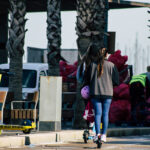
Velez police eying e-scooter users. Credit: José Hernández Camera 51 – Shutterstock

Velez-Malaga police are preparing to launch an extensive control plan involving the mobility councillors from the town hall. The full plan is meant to bring order to electric scooter movements plus similar personal transport devices used daily inside the boundaries of the town. Recent increases in adoption rates of e-scooter transport make such steps essential for maintaining smooth traffic dynamics throughout residential and commercial districts, and especially on the promenade this summer.

Safety considerations guide this decision, especially keeping pedestrians safe physically as well as legally. According to the police, improved relations between those who use electric scooters and those who use their feet promote calmer environments.

Objectives defined by officials

The council joined with police command staff to clarify intentions behind the project. User briefings open the sequence so riders understand full requirements placed upon them by law. Detection procedures activate afterwards to address any instances of improper conduct observed on location.

Rules targeted for compliance

Path selection has received a detailed review whenever scooters appear in traffic. Footpaths are prohibited to maintain clear access for people walking. Road surfaces or marked lanes become the approved options provided conditions allow such travel without disruption.

Required identification and permits will be checked during random stops of e-scooters. All protective gear and vehicle conditions must satisfy exact criteria established for safe performance and legal passage. A new law was introduced at the beginning of the year with strict rules that affect all scooter riders.

Planned phases and activities

Community engagement sessions start the sequence at carefully chosen points spread around Velez-Malaga. Verification efforts gain momentum once awareness spreads. Enforcement actions target specific behaviours known to compromise safety levels for pedestrians crossing or motorists sharing lanes.

Police representatives characterise their involvement as focused on guidance rather than punishment. Community transport habits should develop toward patterns featuring protection for users, systematic arrangement of flows, and consideration extended mutually across diverse groups occupying public domains. For residents, it is hoped this will make things better in the town by making consistent practices during daily commutes.

Continue Reading

Trending

Copyright © 2017 Spanish Property & News