Connect with us

%

Periana Residents Demand More Police After Wave Of Robberies And Assaults

Published

on

periana-residents-demand-more-police-after-wave-of-robberies-and-assaults

Periana comes together to demonstrate. Credit: Ayuntamiento de Alcaucin

Residents in the Malaga village of Periana took to the streets for a major protest this week over worsening safety concerns. Around 1,500 locals, half the population of 3,300, marched through the streets on Monday holding banners that read “No more assaults and threats” and “Yes to peaceful living.”

Protest follows violent family clash

A brutal attack on a woman and her young daughter in a children’s park sparked the demonstration. Witnesses described how the incident quickly escalated into violence, leading to immediate community action. Local authorities later obtained a 500-metre restraining order against the alleged attackers following a court hearing in Velez-Malaga.

Conflictive group leaves town

The family group blamed for repeated problems has now left Periana permanently. Their departure came after sustained pressure from neighbours and local mediation efforts. Reports indicate the clan faced multiple complaints over robberies, illegal occupations, and intimidation spanning several months.

Mayor calls for extra Guardia Civil support

Meritxell Vizuete, mayor of Periana, read a statement during the march calling for stronger Guardia Civil presence in the area. She said that residents had received threats of violence, gone through fights, and suffered property crimes for too long, with many afraid to report incidents due to fear of retaliation. Periana operates with limited local police and relies on a main Guardia Civil post that covers several nearby villages.

Opposition highlights province-wide shortages

Angela Luque, a local politician, joined the event together with provincial politician Sagrario Molina. Luque stressed that Periana’s difficulties reflect broader issues across Malaga province, citing similar protests in places like Pizarra. Union figures estimate the province is short more than 1,200 officers, including roughly 700 national police and 550 civil guards.

Community seeks lasting solutions

This latest protest shows deep frustration in rural Malaga communities where police coverage is still thinner than in many cities. Local leaders from across the political spectrum marched together, united in their call for action from central government.

Eugenio Cabezas from Diario Sur first reported these key developments in this story. Residents now hope increased security resources will restore calm to this traditionally peaceful village in Malaga’s Axarquia region.

%

Beachgoers Face Painful Sting Risk As Venomous Fish Spreads Across Spain

Published

on

beachgoers-face-painful-sting-risk-as-venomous-fish-spreads-across-spain

The sting of a weever fish can be extremely painful. Photo credit: Jesus Cobaleda/Shutterstock

Spanish coastal authorities are warning beachgoers about the seasonal presence of the weever fish (pez araña), a small but venomous species that can cause intense pain if stepped on in shallow water. The alert has recently been highlighted in Huelva, in western Andalucía, but experts say the fish can be found along much of Spain’s coastline, both in the Atlantic and the Mediterranean.

The warning has renewed attention on a risk that often increases during the warmer months, when more people enter shallow waters and the fish move closer to shore to bury themselves in sand.

Huelva alert highlights seasonal beach risk

In Huelva, local beach users were recently advised to be cautious after sightings of weever fish near the shoreline. The species is known to hide just beneath the sand in very shallow water, making it difficult to see and easy to step on accidentally.

Authorities in the area have reminded swimmers and walkers to avoid dragging their feet through the seabed and to be particularly careful in calm, sandy stretches close to the shore, where the fish are more likely to be present.

Although the alert has been reported locally in Huelva, marine specialists stress that this is not an isolated issue. The species is widely distributed along Spanish coasts, and similar warnings are issued periodically in other regions depending on conditions at sea.

Where the fish is found in spain

The weever fish is common in both Atlantic and Mediterranean waters surrounding Spain. On the Atlantic side, it can be found along Galicia, Asturias, Cantabria, the Basque Country and parts of Andalucía. On the Mediterranean coast, sightings are reported in Catalonia, the Valencian Community, Murcia and the Balearic Islands.

It tends to favour shallow sandy seabeds, often in water shallow enough for people to stand or wade in. This habitat preference is what brings it into contact with swimmers, especially during summer when beaches are busiest.

Marine biologists note that the fish buries itself almost completely under the sand, leaving only its eyes and the tips of its dorsal spines exposed. These spines contain venom used for defence, which is released when pressure is applied, such as when someone steps on it.

What makes the sting dangerous

The sting of a weever fish is not usually life-threatening, but it can be extremely painful. The venom causes immediate sharp pain at the site of the injury, which can spread quickly through the affected limb.

Common symptoms include:

  • severe and sudden pain 
  • swelling and redness 
  • dizziness or nausea in some cases 
  • occasional vomiting or fainting due to pain response 

While serious complications are rare, medical attention may be required if the reaction is severe or if the person is vulnerable due to allergies or other health conditions.

The main concern for authorities is not mortality risk but the intensity of the pain and the speed at which symptoms develop, which can cause distress in shallow water environments.

What residents and tourists should do

Beach users are being advised to take simple precautions to reduce the risk of injury. These include avoiding walking barefoot in shallow sandy areas where the fish may be buried and instead wearing protective footwear such as water shoes.

Swimmers are also encouraged to shuffle their feet rather than step normally when entering the sea, as this can disturb fish in the sand and encourage them to move away.

If someone is stung, the recommended first response is to:

  • leave the water safely and avoid further pressure on the affected area 
  • rinse the wound with seawater (not freshwater initially, as this can worsen pain) 
  • apply heat to the affected area, typically by immersing it in hot water as tolerated 
  • seek medical assistance if pain is severe or does not improve 

Heat is commonly advised because the venom is heat-sensitive, and warm water can help reduce its effects.

Wider seasonal pattern across spain

Experts say incidents involving weever fish tend to rise during late spring and summer. Warmer sea temperatures, calmer waters and increased beach activity all contribute to a higher likelihood of encounters.

Local authorities across Spain do not treat the fish as a rare or emerging threat, but rather as a known seasonal hazard. As a result, warnings are often issued when cases are reported in specific areas or when conditions suggest a higher risk.

In tourist-heavy regions, these reminders are considered particularly important, as many visitors may be unaware of the fish or unfamiliar with how to respond to a sting.

Awareness as the key prevention measure

Officials emphasise that the risk can be significantly reduced through awareness and simple behaviour changes. Most injuries occur when people unknowingly step on the fish in shallow, sandy water.

For this reason, coastal safety campaigns often focus on education rather than restriction, encouraging beachgoers to understand where the fish live and how to avoid accidental contact.

While the weever fish remains a small and largely hidden presence beneath Spain’s coastal waters, its sting is a reminder that even familiar beaches can carry seasonal risks that are not immediately visible from the surface.

Continue Reading

%

Residents Evacuated As One Of Spain’s First Serious Wildfires Of The Year Rages Through Murcia Village

Published

on

residents-evacuated-as-one-of-spain’s-first-serious-wildfires-of-the-year-rages-through-murcia-village

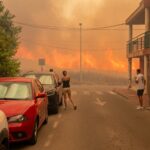
Authorities have confirmed that around 100 homes have been evacuated as a precaution. Photo credit: Servicios de emergencia y protección civil de Lorca on X

A wildfire affecting the village of Los Garres y Lages has forced the precautionary evacuation of around 100 homes and prompted the deployment of Spain’s military emergency unit, the UME. It is among the first significant wildfire incidents of the 2026 season, emerging unusually early amid rising temperatures in south-eastern Spain.

The fire broke out on this afternoon Tuesday 2 around 03:10pm in a mountainous area near the El Valle-Carrascoy regional park, rapidly spreading through dry vegetation and agricultural land. Emergency services in the Region of Murcia escalated the situation to Level 2 of the regional wildfire response plan, allowing the request for national military support.

Large-scale emergency response activated

According to regional emergency coordination updates, more than 200 to 300 personnel have been deployed to the scene, including firefighters, forest fire brigades, environmental agents, Guardia Civil units and Policia Local. Air support has also been mobilised, with helicopters and fixed-wing aircraft carrying out repeated water drops in an effort to slow the advance of the flames. The regional government formally requested the intervention of the Unidad Militar de Emergencias (UME), with units being mobilised from bases in eastern Spain to reinforce containment efforts.

Additional aerial resources, including hydroplanes and coordination aircraft from central government services, have also been dispatched to support operations on the ground. Authorities have confirmed that around 100 homes have been evacuated as a precaution, with residents moved away from the fire perimeter due to concerns over the speed of the fire’s spread and changing wind conditions. Several local roads were closed, and access to hillside areas restricted to emergency services only.

Conditions worsening spread and complexity

Officials have pointed to a combination of factors that have intensified the fire risk, including prolonged dry vegetation, high temperatures nearing 40°C in parts of the Region of Murcia, and gusty winds in exposed hillside areas. The fire has affected areas containing abandoned citrus terraces and scrubland, which provided highly flammable fuel.

Emergency coordinators also reported more than 200 initial emergency calls to the regional 112 service within a short period, reflecting how quickly the fire became visible and widespread across nearby residential zones.

Ante la gravedad del incendio forestal que afecta a la pedanía murciana de Los Garres, desde el Ayuntamiento de Lorca se ha ofrecido a la dirección del Plan Infomur y al Ayuntamiento de Murcia la disponibilidad inmediata de una unidad de extinción forestal compuesta por 9… pic.twitter.com/vSfeJu4WAt

— Serv. Emergencias y Protección Civil de Lorca (@112Lorca) June 2, 2026

No confirmed casualties, but concern remains

At the time of the latest updates, no fatalities or serious injuries had been reported. However, authorities have warned that the situation remains unstable, with fire crews continuing containment efforts into the night and monitoring the fire perimeter to prevent further spread towards residential areas.

Temporary facilities have been set up for displaced residents, while local authorities have suspended access to nearby public facilities and recreational areas as a precaution.

Investigation into the cause underway

The origin of the wildfire has not yet been confirmed and remains under investigation. Officials have not ruled out natural or human causes, but stress that determining the source will only be possible once the fire is fully stabilised.

The incident has drawn attention due to its timing at the very start of the wildfire season, with authorities warning that early-season fires can be particularly difficult to control due to rapidly changing weather conditions and dry ground cover.

Overnight operations and local impact

As night fall, emergency crews are shifting focus towards stabilising the most active sections of the perimeter, where reduced visibility and shifting winds make aerial support more limited. Ground teams continued to create containment lines in an effort to prevent the fire from advancing towards residential zones on the outskirts of the affected pedanías.

Meteorological monitoring has been increased in the area, with officials tracking wind direction and humidity levels closely to anticipate any sudden changes that could accelerate the fire’s spread. Residents in nearby settlements were advised to remain alert and keep access routes clear for emergency vehicles.

The blaze has also affected local agricultural land, particularly abandoned orchards and scrub-covered terraces, contributing to smoke plumes visible across surrounding districts of Murcia. While air quality impacts have not yet been formally quantified, residents in nearby areas reported a noticeable smell of smoke and haze during the afternoon and evening. For now, emergency services continue to prioritise containment and the protection of homes, with operations expected to continue through the night and into the following day depending on fire behaviour and weather conditions.

Continue Reading

%

Michael Jordan Spotted In Costa Del Sol

Published

on

michael-jordan-spotted-in-costa-del-sol

Michael Jordan pops by Leña by Dani García in Marbella.

Global icons choose this Spanish coast every summer for luxury escapes and elite sport. Michael Jordan arrived in Malaga on his private jet this week. Everyone quickly noticed the basketball superstar enjoying the Costa del Sol lifestyle. Many successful figures from business, sport, and entertainment select this region for its combination of world-class golf, fine dining, and relaxed exclusivity.

Jordan counts as a passionate amateur golfer who returns reasonably regularly to the area. Reports confirm his presence ties directly to the upcoming LIV Golf Andalucia tournament. Attendees expect him to watch top professionals compete at one of Europe’s most demanding courses.

LIV Golf Andalucia draws massive talent to Valderrama

The event is planned to take place from June 4 to 7 at Real Club Valderrama in Sotogrande. Golfing greats such as Jon Rahm, Sergio Garcia, Bryson DeChambeau, and Brooks Koepka will feature in the 54-hole individual and team format. Valderrama offers a strategic test with tight fairways and mature trees that challenge even the best golfers.

Fans with the cash have the chance to experience the very best in hospitality options with live entertainment throughout the week. Early bird tickets are still available via official channels. 

Jordan often mixes business interests with personal enjoyment during these visits, dining at the best spots like Dani Garcia’s Leña in Marbella while networking with fellow high achievers.

Costa del Sol attracts worldwide success stories year after year

This latest appearance goes to show the region’s reputation among big global names. Golf serves as a common thread for these visitors who appreciate both competition and the chance to unwind in style. Local businesses benefit from the influx while maintaining the area’s exclusive appeal.

Jordan is said to be planning a brief stay before returning to other commitments. His trip adds further excitement ahead of the LIV Golf action at Valderrama.

Continue Reading

Trending

Copyright © 2017 Spanish Property & News