
Latest
S

















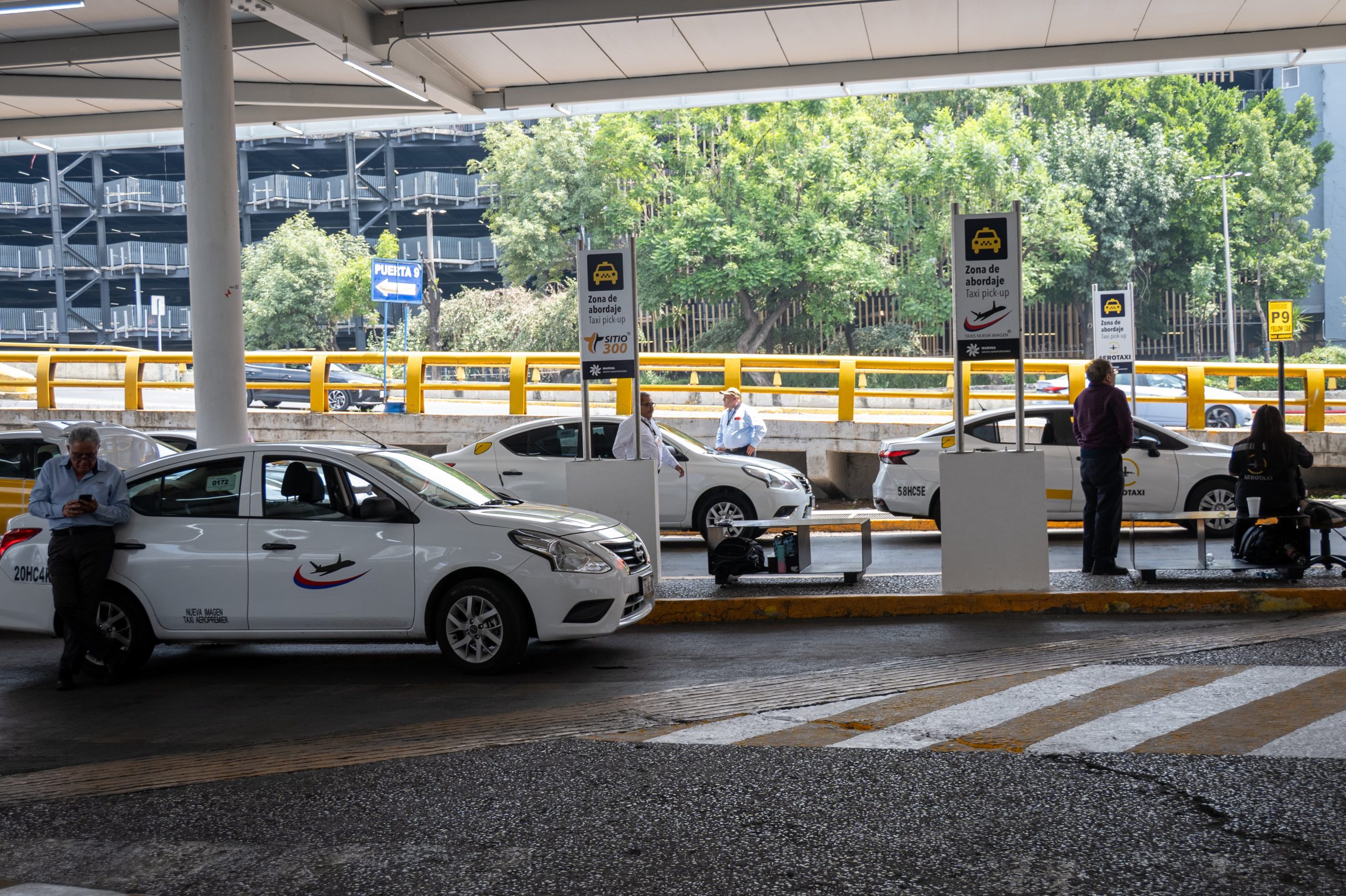
Everything a traveler encounters upon leaving Mexico City International Airport (AICM) illustrates the problems facing the country’s largest terminal. The first thing you see after stepping outside is long lines, cars being towed away, and National Guard officers handing out fines. The standoff between licensed taxi drivers and ride‑hailing apps over control of the airport has been simmering for months, becoming a strange daily routine of enforcement operations and drivers losing their cars at both terminals of the airport. But with only eight days before the World Cup begins in the capital — bringing millions of visitors— the conflict is intensifying.
Three months ago, the yellow taxis blocked access to AICM, throwing traffic into chaos and leaving travelers stranded during a four‑hour protest. Licensed drivers accused platforms like Uber, DiDi, and InDrive of unfair competition, arguing that the apps operate in a federal zone without the permits they themselves must pay for.
The Mexican government responded by promising to keep ride‑hailing vehicles out of airport grounds, meaning users must walk outside the federal area to meet their app‑ordered rides. The problem is that, 90 days later, airport passengers still don’t know these designated pickup areas exist — and they end up risking having their driver fined by the National Guard and the car impounded.
Uber, which claims to have a court injunction allowing it to operate in the zone, has deployed a team of 16 lawyers who assist sanctioned drivers on the spot, negotiate with officers, and challenge the nearly 60,000‑peso ($3,400) fine issued to each detained driver.
The pickup point for Terminal 1 is located on Circuito Interior Avenue next to the Metro station; in Terminal 2, it’s on Fuerza Aérea Mexicana. Both are about a 10‑minute walk away from the airport. Each consists of a small waiting area with covered benches and a bay that fits two or three cars. Vehicles arriving there must maneuver through heavy traffic, the Metrobús, the Trolebús, and a taxi stand that has strategically positioned itself in front of these sites to compete fiercely for passengers in the capital.

Neither terminal has signs pointing travelers toward those designated pickup areas: people don’t know they exist and keep requesting rides right at the entrances. And Uber drivers keep entering anyway. One driver who works the airport strategically told this newspaper that in the past week he has only gotten two rides from the designated pickup points — and more than triple that number inside the terminals. He has a whole routine: taking off his driving gloves, removing his phone from the mount, and doing everything possible not to look like a ride‑hailing driver in front of the National Guard. “I tell the passenger that we’re going to say he or she is an attorney and I’m here to take them to the office,” he explained.
José Sagredo, part of Uber’s legal team stationed daily at AICM, says the issue is that the company doesn’t fit the three characteristics required by law: fixed fares, predetermined routes, and a permanent physical presence. On that basis, Uber says it first obtained two rulings that set jurisprudence and later a court injunction allowing it to operate at the airport and in any federal zone in the country. Under that injunction, the company set up a team of lawyers two months ago who “intervene peacefully to reason with the officer. They remind them of the injunction and the jurisprudence,” Sagredo said. Since this containment team was deployed, he claims, fines have dropped by 60%.


The licensed taxi drivers, for their part, accuse the Ministry of Infrastructure, Communications and Transport and airport authorities of failing to enforce the law. They also point to the Senate and the Chamber of Deputies for “tailor‑made legislation” that favors the ride‑hailing platforms. According to these drivers, since 2015 “thousands of families linked to airport services” have seen their income harmed. “We exhausted every communication channel. We asked for working groups and we were not heard,” they said during the March protests.
Regardless of the dispute, demand is high, and the wait time for an app‑based ride — whether inside the terminals or at the designated pickup areas — ranges from 10 to 20 minutes depending on the time of day. Those who choose the licensed taxis also face long lines, since several minutes pass between one cab and the next. The biggest difference is the price: on some routes, taxis can cost up to twice as much as a ride ordered through an app. Taxi drivers argue that their service is better, point to the fees they must pay to operate there, and note that when they take a long trip, they return to the terminals without a passenger to offset the cost.
Construction work continuing inside and outside AICM as of this Wednesday does nothing to ease the situation. Uber vehicles keep entering areas where tow trucks are waiting, travelers remain confused, and drivers — whether from the terminals, the platforms, or the city — compete to operate in a zone that promises huge demand during the five World Cup matches scheduled in Mexico City.
Sign up for our weekly newsletter to get more English-language news coverage from EL PAÍS USA Edition



E

Ryanair Hints At Dramatic Return To Spanish Regional Airports If Fees Fall

EU To Make Online Purchases Easier To Cancel

Mexico’s Most Controversial Politician, Rubén Rocha, Goes To Ground As Cartel Questions Intensify
Insurance company Mapfre decides to pay out €14 million compensation for 2025 blackout

Who Bought Where In The Second Half Of 2025?


-
 ElPais2 weeks ago
Mexico’s Most Controversial Politician, Rubén Rocha, Goes To Ground As Cartel Questions Intensify
-
blackout April 20254 weeks ago
Insurance company Mapfre decides to pay out €14 million compensation for 2025 blackout
-
 Foreign demand4 weeks ago
Who Bought Where In The Second Half Of 2025?
-
Abelardo de la Espriella1 week ago
In The Final Stretch Of Colombia’s Presidential Campaign, Undecided Voters Are In High Demand
-

 New Developments4 weeks ago
Inside The Most LUXURIOUS Apartment Building In Spain!
-
Costa Blanca South4 weeks ago
Alicante police chief to retire after 17 years of service
-

 New Developments4 weeks ago
🌅 Stunning Penthouse With Panoramic Sea & Mountain Views Benalmádena
-
Costa del Sol4 weeks ago
Starlite Marbella 2026 offers over 1,000 summer jobs: Apply before positions fill fast