ElPais
Jean-Luc Mélenchon: ‘The Right No Longer Has Anything To Offer Except Fear’
Published
12 hours agoon
By
Daniel Verdu
Jean-Luc Mélenchon, 74, electrified the streets on Sunday at the launch of his campaign. It was in Saint-Denis, land of kings, a Paris suburb turned epicenter of immigration and multiculturalism. But also where he gets the narrative material that weaves the idea of the New France that the leader of the far-left party La France Insoumise (LFI, or France Unbowed) has put forward to win over the suburbs in the presidential election of spring 2027. And, incidentally, to capture the roughly 400,000 votes that were missing last time to reach the runoff.
Mélenchon, a devotee of Hispanic culture who speaks perfect Spanish and has praised the policies of the Pedro Sánchez administration in Spain, met EL PAÍS and three other journalists from the Lena group of European newspapers on Tuesday afternoon. He seemed pleased. Everything was going well. Until a few questions startled him. His figure remains extremely divisive. Even on the left. But today he is the only clear candidate in a section of the ideological spectrum where chaos and internecine fights have reigned among several candidates. The center and center-right are in the same situation, vying in the polls for the chance to compete in the first round to stop the far right in the runoff. Mélenchon remains calm. The more chaos, the better. He is confident he will be there in the final battle.
Q. Is the idea of the New France a narrative meant to counter the far right’s Great Replacement theory?
A. De Gaulle, Jospin and Valérie Pécresse had already used this concept. But it became explosive because in 2024, when the far right was favored to win the legislative elections, we observed a reality: today one in three French people has a foreign ancestor. In my time it was one in 10. The New France is that: the real, concrete France. And when I saw that whole crowd on Sunday, I cried. We are the only ones building an inclusive narrative against the far right’s narrative. We talk about women, young people, the elderly, everybody. The New France is the France of today.
Q. This is your fourth presidential campaign. Why would you be able to reach the second round this time?
A. France has been destroyed by 40 years of neoliberalism. I always thought the crisis would end up pitting two principles against each other: each person for themselves or all together. In the end, the dispute will be between the fascists and us. I have organized my entire strategy around that division.
Q. There is more of a left out there than just you.
A. European social democracy, by accepting the Lisbon Treaty and neoliberal rules, gave up on writing a true program of rupture. The socialists, the center-left and the moderates all took that path. Everywhere their coalitions ended up clearing the way for the far right. We saw it in Italy before Meloni and we see it elsewhere in Europe. In Germany it could end particularly badly.
Q. How will you advance from the first to the second round?
A. I don’t believe the forecast that the far right is already installed at 33 or 35%. Polls are working less and less well in a society where social categories no longer correspond to a certain way to vote. In the 2022 presidential election, polls placed me 20 points behind Marine Le Pen at the start of the campaign. In the end there were only 400,000 votes between us. By one point, we would have left her out of the second round. Nothing proves that France has become more racist or more fascist since then, except that anger at Macron’s government is immense.
Q. Do the moderate right and left no longer exist?
A. The world has changed. Even the U.S. has buried neoliberalism, with tariffs and the end of free trade as we knew it. The right no longer has anything to offer except fear of Muslims, Arabs and Black people. That is not a project. De Gaulle invoked France’s greatness. Giscard enacted reforms, like the vote at age 18 and the right to abortion. After that there was nothing, apart from Sarkozy and the bling-bling. When the right empties itself of content, it slides toward the easy option: pointing to scapegoats.
Q. How will you bring the left together?
A. We already did it in the 2022 presidential election. We obtained 22% of the vote and the Socialist Party got 1.67%. In France everyone wants to be a presidential candidate in order to exist. That makes noise at first, but not necessarily in the end. True unity will occur on the ground. I don’t think it is useful to seek agreements with political leaderships that define themselves above all as “anti-Mélenchon.” They have sown hatred and mistrust among the electorates.
Q. But you will need all left-wing voters in a hypothetical second round…
A. Yes, but it will happen by itself. Whoever comes first will organically attract the others. It’s a bet on human beings. I also would never have imagined myself voting for Chirac in 2002.
Q. Your program demands a lot of spending. But paying the debt has become the largest item in the French budget.
A. That must change. Those who should pay will pay. The company Total hasn’t paid taxes in the last four years because we are told it makes no profit in France. They must stop treating us like fools. And then there are those who have become billionaires and escape taxes. It’s the Ancien Régime — we are in 1788. France has a large debt, but those who can pay don’t want to. We are going to reverse that situation.
Q. Do you fear episodes of violence during the presidential campaign?
A. Yes, because far-right actors have become very aggressive and very audacious. But there is also, in my opinion, a risk of foreign interference. French intelligence services have warned us about Israeli interference in Marseille and Toulouse, through an influence campaign organized by an agency linked to Netanyahu’s government.
Q. Do you regret some phrases that have been described as antisemitic?
A. I have been suffering that slander since 2009. Some of my opponents, unable to find another line of attack, began to call me antisemitic and racist, without taking into account my life or all I have done. This does not start with one recent phrase. It is an old political construction meant to discredit me. By repeating it, they end up manufacturing evidence. It is like those who now repeat that I would be “the most hated figure” according to the polls. It is a lie. I am the man with the most support across the entire left.
Q. Your opponents claim that your position and strategy in the banlieue are part of a communitarian electoral strategy. How do you respond to that?
A. That is a racist argument. My worldview is universalist. I am an ultra-traditional left-wing man. I do not divide the people into electoral communities. When we choose Saint-Denis, when we talk about the New France, creolization or mixing, it is not to lock people into an origin. It is to say that France is that as well. The idea that a working-class neighborhood equals Muslim and that Muslim equals antisemitic is odious.
Q. Can the French election become a turning point for Europe and the world?
A. A far-right victory is not inevitable. If the French left can defeat it, then it can also happen elsewhere. Although, of course, the situation remains very volatile.
Q. Can the Trump cycle be closed?
A. Trumpism was born from the end of liberalism and the collapse of social democracy. It is a form of supremacism. A kind of social pseudodarwinism, although Darwin was on the left. But in Europe the rise of Trumpism comes at a particular moment. Elections are going to take place virtually one after another in several countries. If we win, we can reverse the cycle.
Q. If you were president, what would you do in the EU?
A. We have never said we would leave the euro; I don’t see how something like that could be done given the current disorder. What could be said 10 or 15 years ago no longer makes the same sense today. Likewise, we will not leave the EU. But we will say clearly that the economic model is obsolete.
Q. What should be done?
A. Propose something else. And this time we have an opportunity. When we talk to the Germans, perhaps they will take a different tone. When they have crashed with their grand-coalition governments and the fascists are knocking at their door, the Germans will be like any other people. They will not want to find themselves in the middle of a general blaze. Then they will listen to us.
Q. Is Spain a model to follow?
A. People said you had lost your way, but the Spanish government’s curse turned into its blessing. From the moment they approved the first budget, there was no longer a majority to approve another. So each year they have extended the same one: a redistributive budget. Does Spain grow at 3.8% because it grows more tomatoes? Because it has attracted more tourism? No. It is because it has a redistributive budget. I am not saying Spain is a paradise on Earth. But it has shown that this method works, while other countries do not even reach 1% growth. Germany has been in recession for three consecutive years. Where are the model students, the ones who shone and said we should imitate them?
Q. Is Spain a political example for the European left?
A. It is very interesting. First, because there is a social-democratic party that was not afraid to ally itself with the radical left. Sánchez has pushed a redistributive budget, and he also constitutes an example in foreign policy and in rejecting alignment with the United States. If we come to power, we will build a kind of non-aligned pole within Europe.
Q. Could you work with Meloni?
A. Meloni is a far-right leader, there is no doubt about it. But if one begins to choose allies, friends or partners only among those who think exactly the same as you, not much will be left. France must speak with progressive governments in Latin America, but that is not enough. It must also build a front with Latin Europe. That is certain.
Q. What would you do on European defense?
A. Everyone has decided to arm themselves to the teeth. For what? To confront the Russian threat? Who is really convinced that Russia plans to invade Germany, France or Belgium?
Q. The Baltics, the Poles and the Finns do fear that invasion…
A. Fine, let us admit that theory. We are bound by a defense clause in the European Union treaty. Our position is clear: France has been invaded four times by a neighboring country. That is why we have always been against invasion, as in the case of Ukraine. We welcome Russian refugees. But we assert that the only path is negotiation to bring the war to an end.
Q. If elected president, would you resume dialogue with Putin?
A. After four years, maybe Putin will be more willing to talk about peace. Discussion is necessary, but on clear bases. First: any change of borders must be accompanied by consultation of the affected populations. Second: the Russians must offer security guarantees to Ukrainians and to Europeans. And vice versa. Who protects the nuclear plants? Who clears mines from the Black Sea? What guarantees exist regarding borders? What guarantees will there be about medium-range missiles? Those are the bases to resume concrete dialogue.
Q. Do you think you would be better received in Moscow than Macron?
A. My policy is different. It is non-alignment and independence. And it is also more coherent than Macron’s, who even spoke of sending troops. Therefore, they would trust us more, not for romantic reasons, but out of realism. Our common interest is to end the war.
Q. And do you really believe that is in Putin’s interest?
A. His interest is for tension to decrease, not to increase. I could be wrong, but that is my bet.
Sign up for our weekly newsletter to get more English-language news coverage from EL PAÍS USA Edition
You may like
-
Barcelona Goes Into Lockdown With 70,000 Expected To Hit The Streets To Welcome Pope Leo As He Inaugurates Sagrada Familia’s Tallest Tower
-
Recados, Reproches Y Guiños Para Todos En El Discurso Del Papa En El Congreso
-
In Address To Spanish Parliament, Pope Leo Warns Against Global Polarization And Migrant Discrimination
-
El Segundo Día De La Visita Del Papa León XIV A Madrid, En Imágenes
-
Sánchez Viajó A Barcelona El Sábado Para Asistir Al Primavera Sound
-
Zapatero, A Decade On The Edge In Venezuela
America
California Is Suing The Trump Administration To Block A New ICE Facility
Published
11 hours agoon
June 11, 2026
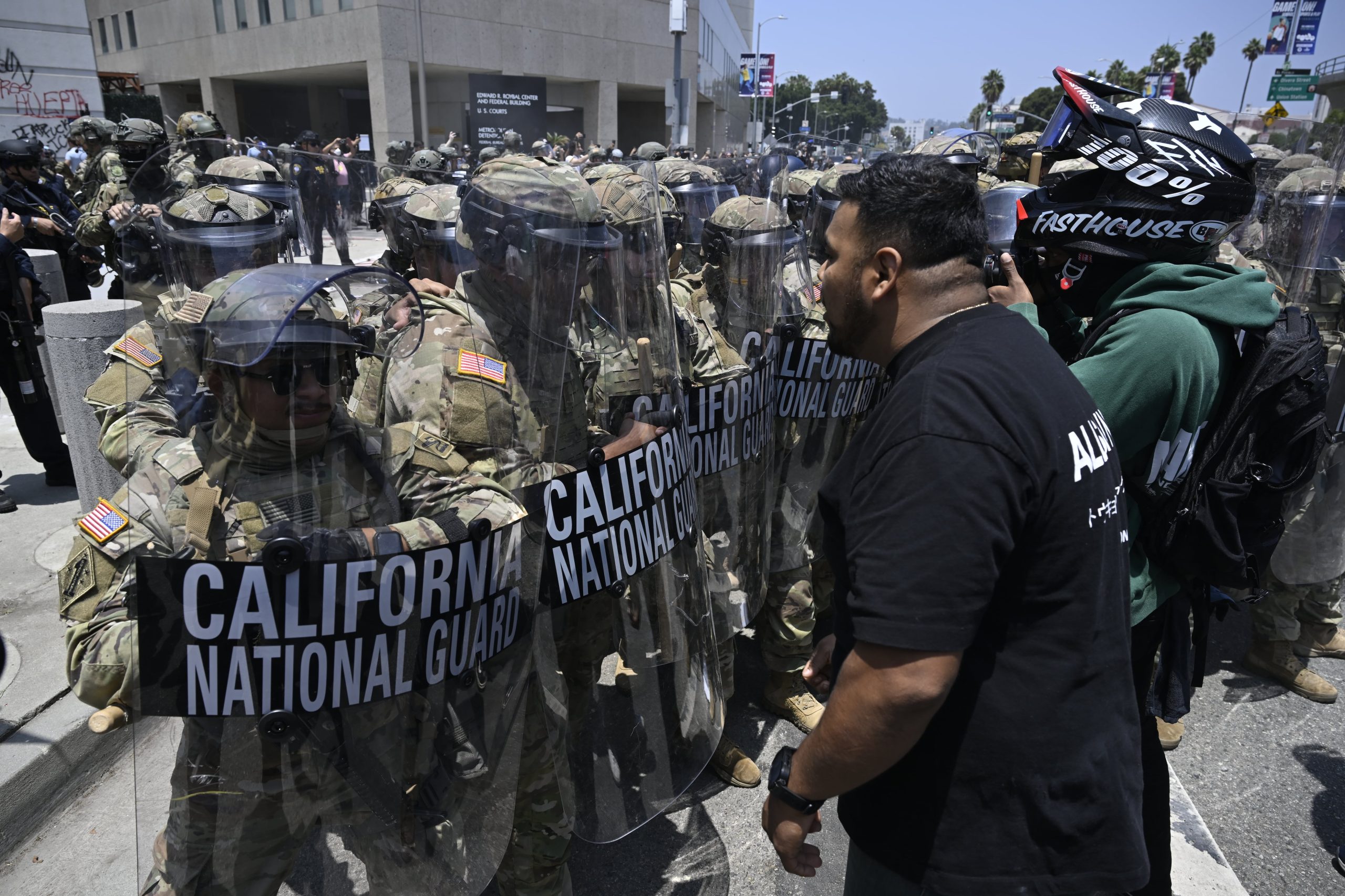
An agricultural property a few miles from Gilroy, just south of the San Francisco Bay Area, has become the latest flashpoint in the ongoing clash between California and the Trump Administration. California Attorney General Rob Bonta and Santa Clara County filed a federal lawsuit on Wednesday seeking to stop the construction of a U.S. Immigration and Customs Enforcement (ICE) facility that local officials say could be used to temporarily detain migrants as part of the federal government’s intensified immigration enforcement efforts.
The lawsuit, filed in the U.S. District Court for the Northern District of California, seeks to permanently block the project on Holsclaw Road, in an unincorporated area southeast of Gilroy. The plaintiffs argue that the federal government moved forward with construction without completing required environmental reviews, adequately consulting state and local authorities, or complying with restrictions designed to preserve agricultural land.
According to public records, the Department of Homeland Security leased nearly 25 acres from a subsidiary of Elmwood Capital Group under a 20-year agreement valued at $26.5 million. The property includes three buildings, greenhouses, and extensive farmland. Although ICE has maintained that the project is intended as an operations office, state and local officials believe the facility could function as a short-term detention center capable of holding up to 150 people.
“Under this Administration, we’ve seen ICE offices have become mini-detention centers, despite being unequipped for long-term holding,” Bonta said in a statement. “That’s unacceptable.”
“President Trump’s mass detention and deportation campaign has led to cruel, inhumane, and unacceptable conditions at immigration holding and detention facilities across California,” he added. “But instead of working to improve conditions at these facilities, instead of enforcing ICE’s own detention standards, the Trump Administration is trying to jam through a new facility on a community that doesn’t want it.”
The lawsuit argues that the project violates several federal and state laws, including the National Environmental Policy Act (NEPA), the Immigration and Nationality Act, the Intergovernmental Cooperation Act, the Administrative Procedure Act, and California’s Williamson Act, which preserves agricultural land through land-use restrictions in exchange for tax benefits.
According to the plaintiffs, the federal government should have completed either an environmental assessment or a full environmental impact statement before signing the lease and beginning construction. They also argue that the property is located in an area that supports threatened and endangered species and is protected for exclusive agricultural use.
The complaint further alleges that the development could damage wildlife habitats, place additional strain on local drinking water, wastewater, and road infrastructure, and result in the permanent loss of protected farmland.
Another central issue in the case is the alleged lack of transparency. Santa Clara County officials contend they were never properly consulted about the project and that the only formal communication they received was a one-paragraph letter sent in June 2023 in which the federal government described its plans as “office and operations space.”
“Part of the problem here is that they are trying to move forward with this project with as little transparency as possible, and hoping that nobody notices, nobody catches on to the details,” Santa Clara County Counsel Tony LoPresti said during a press conference in San Jose. “So, part of what our lawsuit will do is it will force that transparency to occur.”
The lawsuit also raises concerns about environmental safety at the site. According to the plaintiffs, agricultural research companies that previously occupied the property generated hazardous waste that may not have been properly disposed of.
“The federal government’s apparent failure to address —much less mitigate— these risks endanger the construction workers building the site, detainees and employees who will be located at the site, and the environment beneath and surrounding the site,” the complaint states.
Opposition to the project has grown in recent months. Residents and community groups have staged protests since learning of the construction plans, while the neighboring Monterey County Board of Supervisors voted unanimously in late May to oppose the facility.
The lawsuit is the latest in a long series of legal battles between California and the Trump Administration. According to Bonta, it is the 71st lawsuit his office has filed against the federal government since Trump returned to the White House. Santa Clara County, meanwhile, is currently involved in 11 active cases against the administration.
“Since President Trump took office, the County of Santa Clara has made clear that we won’t tolerate a federal government that abuses the law and jeopardizes the rights and well-being of our immigrant communities,” LoPresti said.
Neither ICE nor the Department of Homeland Security has commented on the lawsuit.
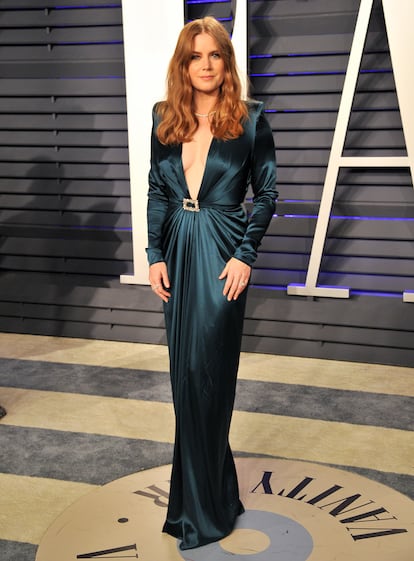
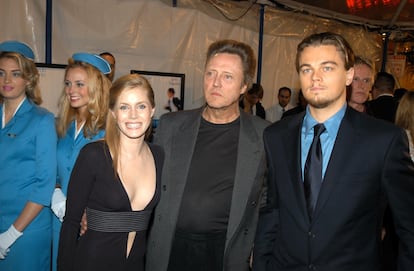
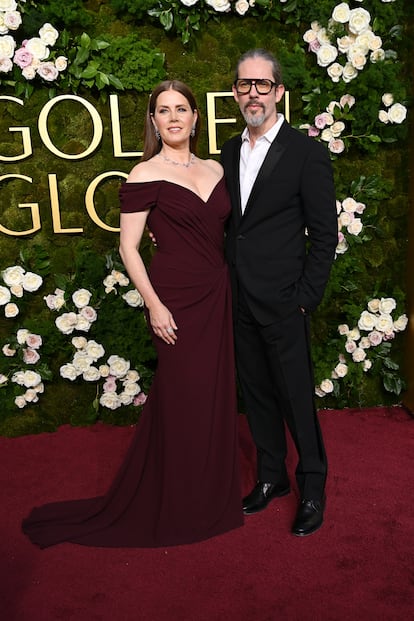
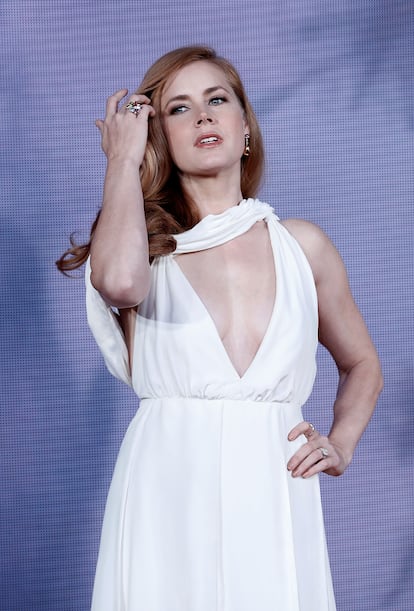
Amy Adams
Amy Adams’s Comeback: How The Perennial Oscar Nominee Is Trying To Escape Her ‘era Of Flops’
Published
12 hours agoon
June 11, 2026By
Carlos Megia

16 fotos
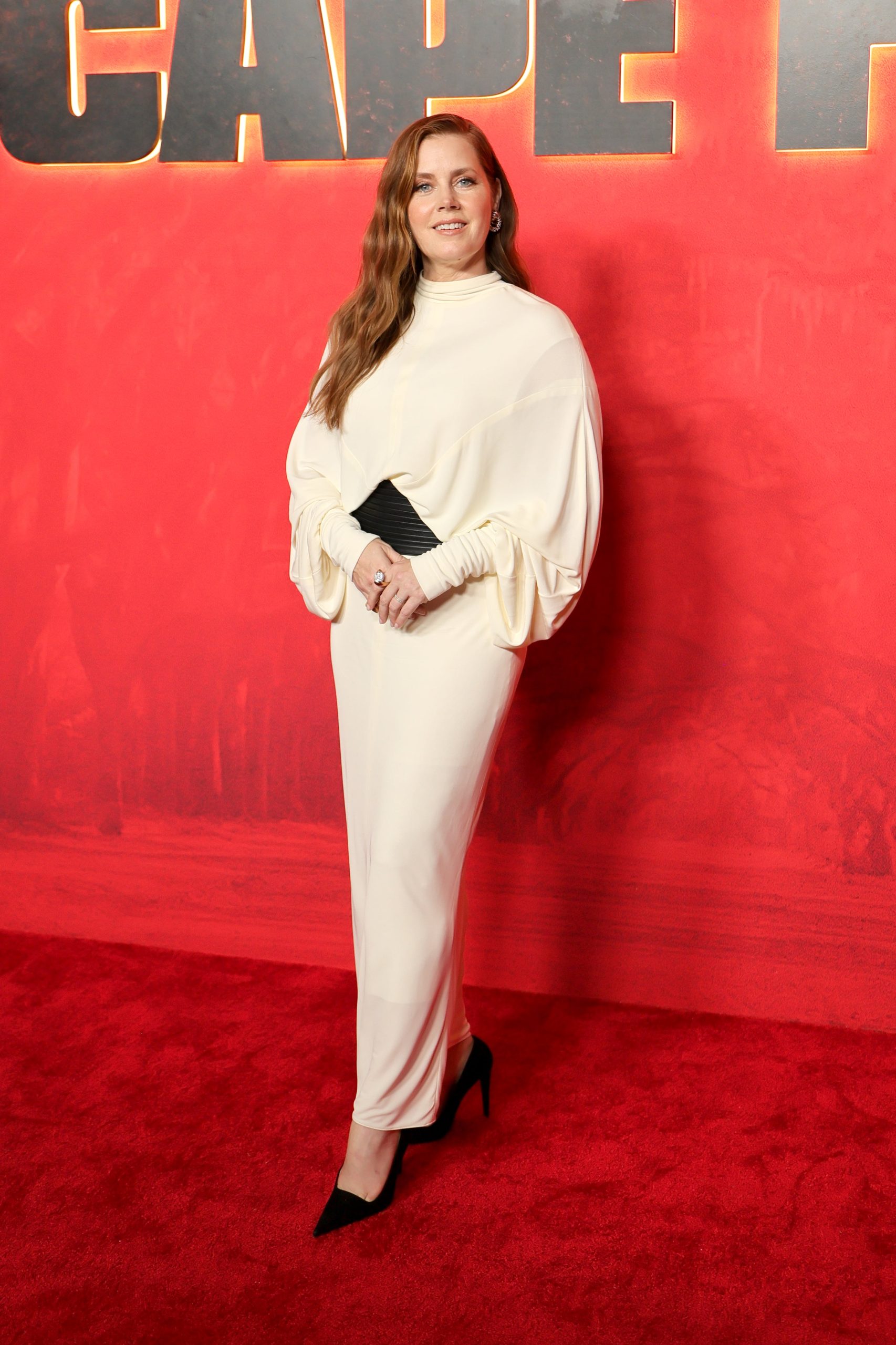
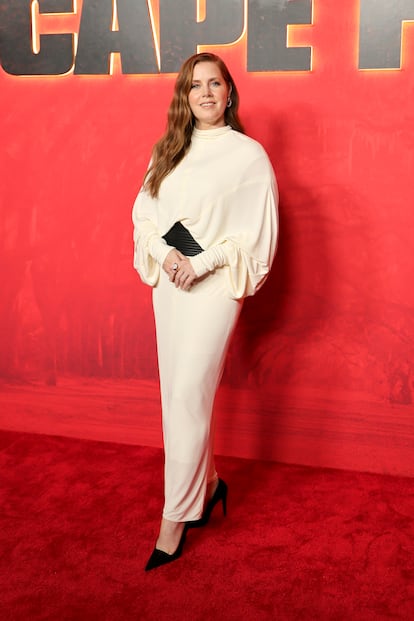
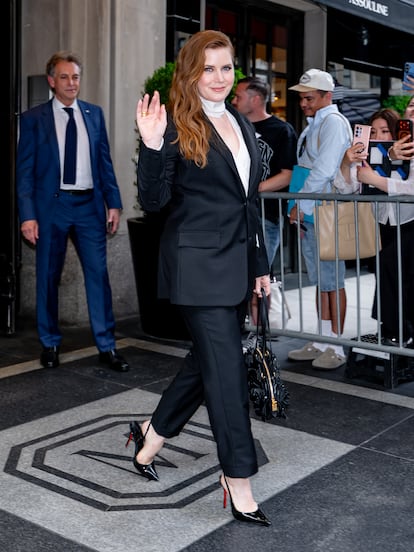
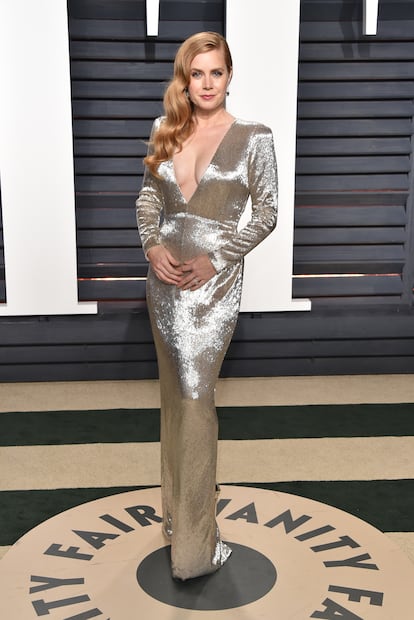
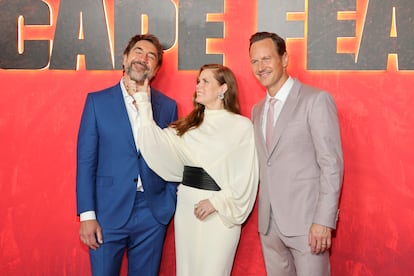
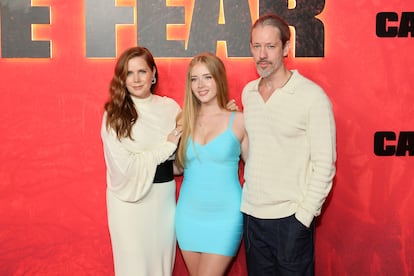
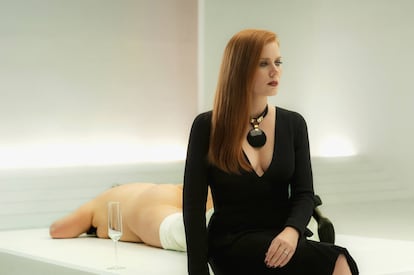
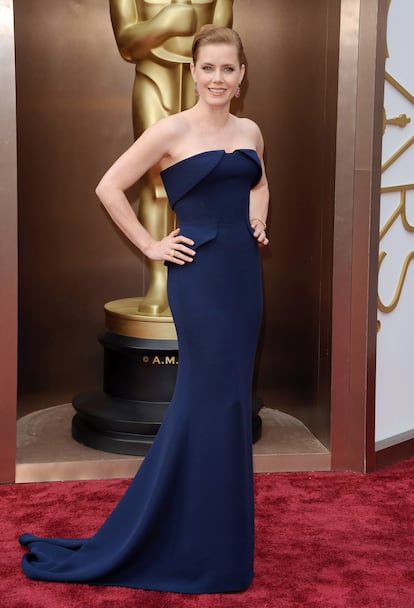
For more than a decade she was one of Hollywood’s most admired performers and a regular presence at awards ceremonies. After several failed projects and a slump that has drawn the attention of cinephiles, Amy Adams returns with ‘Cape Fear’, the series she hopes will rewrite the narrative






Bad Bunny
Andrew Stanton, Director Of ‘Toy Story 5’: Children Should Play At Imagining, Rather Than Have A Screen Explain The World To Them
Published
13 hours agoon
June 11, 2026
A life without imagination is not a life. Without fantasy, without creation, without daydreams or fairy tales. But how are we going to develop our imagination if we do not do so from childhood, playing with our toys, if we are instead dazzled by the bright screens of our phones? Thirty years ago in November 1995, when Toy Story premiered, that question was unthinkable. Today, after three sequels, half a dozen shorts, a handful of mini-shorts, a series and television specials, and with Toy Story 5 about to open in movie theaters, the question is unavoidable.
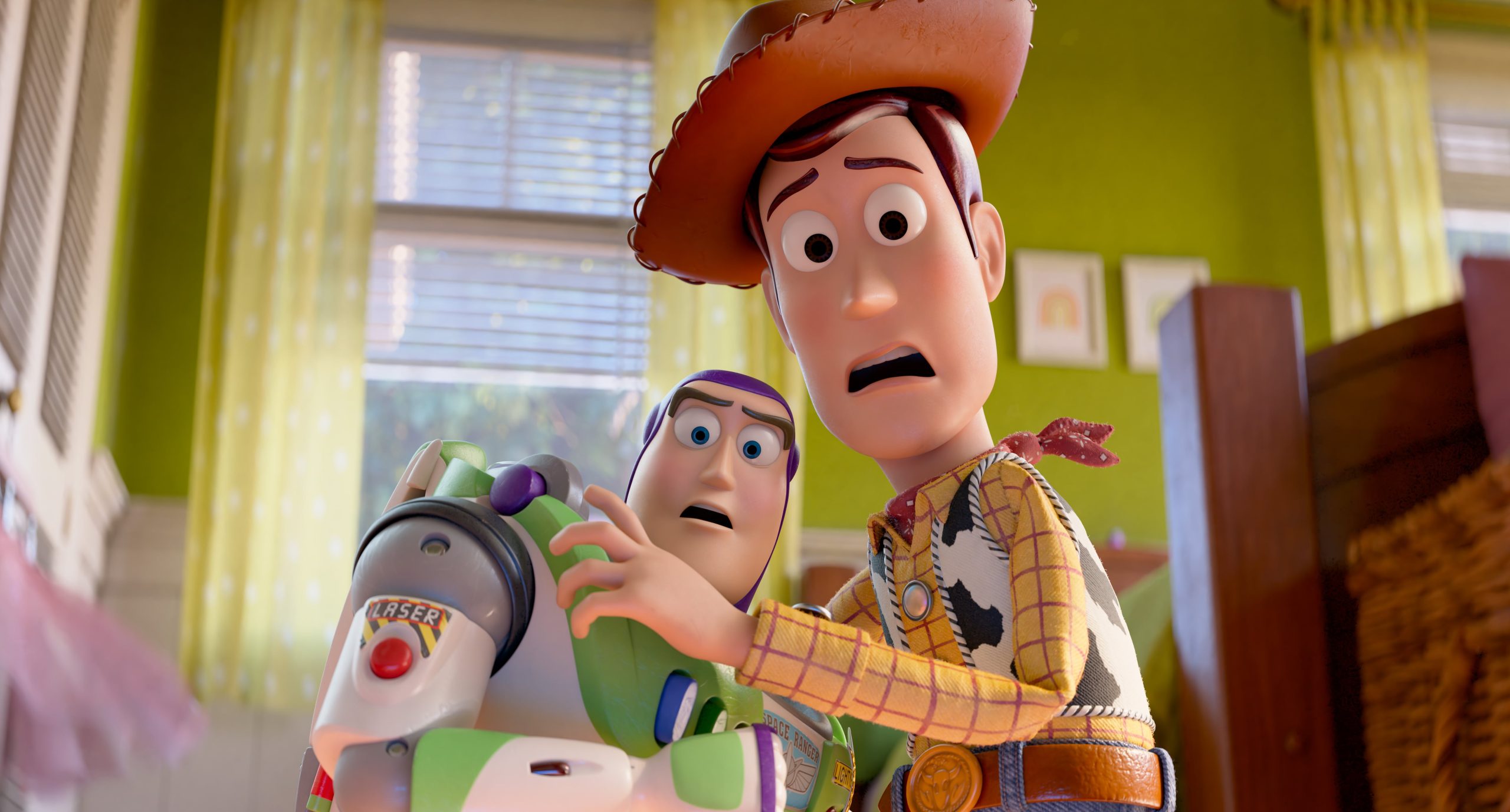
Starting on June 17, Buzz Lightyear, the cowboy Woody, his colleague Jessie, Mr. and Mrs. Potato Head, the tyrannosaur Rex and the whole gang are returning to theaters to accompany not Andy — now all grown up — but, as they have for a few years, Bonnie, who has also kept growing. This time, however, their adventures gain an addition as logical on screen as it is in children’s (and adults’) lives: technology. An arguably malevolent green tablet called Lilypad will become the new antagonist. Or maybe not entirely: ultimately it seeks the same thing as everyone else — to care for and entertain Bonnie, helping her make friends, even if its methods aren’t the best. The question is: will technology make toys disappear?
Not only has Toy Story’s background changed; its form has changed too. The franchise seeks an update for how it presents itself to audiences, and for that, it features Bad Bunny, Penélope Cruz and Bizarrap among its new voice cast. The icing on the cake is its soundtrack, which includes a song composed by superstar (and major fan of the Toy Story franchise Taylor Swift, which the artist performed live at the world premiere in Hollywood on Tuesday. She capped the appearance emotionally with a rendition of “You’ve Got a Friend in Me” alongside its composer, veteran Randy Newman, at the piano.
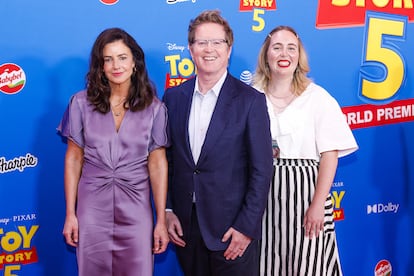
But it will be the contrasts between technology and toys that will attract attention in this fifth film. In fact, the fourth installment, released in 2019, could already have explored this… “I felt like I was worried we might be a little late to talk about it,” admits director Andrew Stanton in a conversation with EL PAÍS in Los Angeles. He has been part of the saga from the start: he was a screenwriter on previous films and now writes and, finally, directs Toy Story 5. Joining him in the conversation were his co-director and co-writer Kenna Harris, who also worked on Hoppers, Elemental and Elio; and producer Lindsey Collins, who has worked on Wall·E and Finding Dory. “But it turns out,” Stanton continues, “that we hit on something everyone is worried about.”
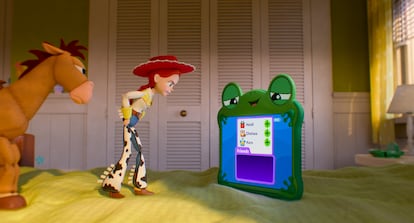
If previous Toy Story films had enemies — real enemies — it was because they were genuinely bad. Here, by contrast, technology is more a counterpart, a firm opponent but not a hateful villain. Lilypad and its kind are not villains per se, but they do captivate Bonnie and her friends in the same way we see technology hooking the youngest today, hindering their socialization and sometimes preventing them from thinking or managing their emotions. “They have a goal that aligns with the toys’. They care; our machines are concerned about the girl,” Stanton reflects. “They just have a very different opinion about how things should be.” In fact, the trio jokes that they realized Lily was “basically an overprotective mother who is also a personal assistant.” “She would say, ‘We’re going to make these friends, we’re going to follow these steps and we’re going to get into Harvard.’ Everything starts with good intentions, but it’s a method and a way of acting very different from how the toys want to support the child. That’s where they clash,” they say. “These battling philosophies is kind of the way we approach this. Which is very real,” Collins adds.
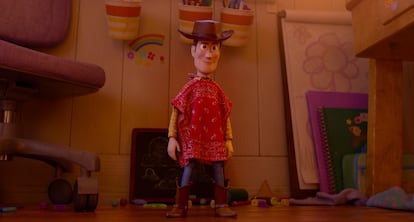
The physical, anti-technology heroine, as real as a toy can be, is Jessie (do not, under any circumstances, call her Jessica). Half a dozen Buzz Lightyears also have their own subplot, and of course Woody does too. Although in the previous installment it seemed he was saying goodbye to the toy world, the fastest cowboy in the West would never leave his friends alone on this adventure. Thirty years have passed, and they have passed for everyone. Woody is now a hippy-looking gentleman wearing a poncho, with a paunch and a thinning pate. Time passes. Changes and replacements arrive. “Jessie was kind of the perfect character to end up taking on this particular battle. And so it’s nice to see how that kind of all worked out together,” says Kenna Harris. After years of Andy, Buzz and Woody, now Bonnie, her friend Blaze, Jessie and Lilypad take the lead.
It seems the girl finally takes the reins, literally and figuratively. Why her? Everyone wants to answer. Andrew Stanton jumps in, and the three laugh at his taking the floor as the only man. “At the end of Four, when Woody gave his badge to Jessie, I knew that if there was a next movie, it had to lead with Jessie now. That was always the hope. I just didn’t know I’d be the one,” admits the two-time Oscar winner (for Wall·E and Finding Nemo), who has about 20 titles to his name and has been at Pixar for nearly 40 years, although he had never directed a Toy Story film before.
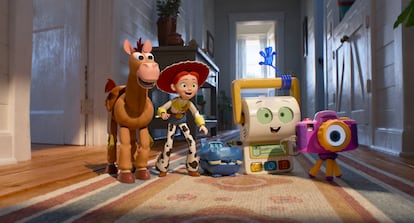
“We all connected on the fact that we felt like there was way more to explore with her and that she’s just so fun because she’s really different from Woody‚” reflects the youngest of the three, co-director McKenna Harris. “It’s not just seeing the same old sheriff in town. Yeah, she thinks totally differently from him. He’s more of the straight man and she’s like, leap before you think and fight before you talk. She’s built to be a hero. Very unhinged, very chaotic,” they laugh. “You want to see the movie just because she’s hilarious.” Indeed: Jessie dominates the most hilarious scenes, alongside old technological glories (a GPS, an old children’s digital camera), but also the most tender and nostalgic, by the tree where she was abandoned.
So, despite the invasion of screens, will there still be toys around? “Depending on what day you ask me, if I’m in a bad mood, I’ll be like, I don’t know. And then on a good day, I’d like to think they always will to some degree,” says Stanton, adding that “when I say toys, what I really worry about is imagination, that the kids are really just pretending instead of having the world all explained to them on a screen and in some pre-planned device.” Producer Collins says there is also a nostalgic tendency to rescue these old playthings, as she sees with her own children. “They talk a lot about what it was like before technology, before phones… There is this curiosity around the pre-tech era and I think that’s an interesting kind of desire that seems to be springing up.”
Her colleague Harris also supports the point, saying that technology, after all, is changeable and “has a shelf life.” “But humans are programmed to play, to be imaginative. So I have to imagine there’s always going to be this holdout of folks who need that and crave that. And that’s why toys will make it.”
If anyone is particularly pro-toy it’s production designer Bob Pauley, who has brought to life the most famous toys of the last 30 years. A Pixar legend, he created Buzz Lightyear (he recalls that in just a couple of months they reached the definitive version), and now new characters like Smarty Pants and Lilypad, which he admits took a bit longer to develop in order to humanize the tablet. “It was a fun process because we wanted to make sure it was a character the audience could connect with,” he tells this newspaper. They wanted its face to be as expressive as possible and paid special attention to details like the eyes, for example.
“Oh toys are gonna be around forever. I believe that so much,” reflects the veteran designer, who believes there is room for everything: educational toys, developmental toys, even the simple wooden ones. “The simpler toys are active play, where you’re thinking about stories and you’re kind of creating little worlds. So I don’t think they’re going to disappear. I hope not. Oh, no.”

Robotaxis In Spain, Who Pays The Price?
California Is Suing The Trump Administration To Block A New ICE Facility
México – Sudáfrica, En Vivo | Comienza La Inauguración Del Mundial 2026 Con Shakira, Maná Y J Balvin
Tags
Trending
-
Uncategorized2 weeks agoMontoya vs Brundle BEEF, Newey
-

%2 weeks agoFake Hacienda Text Targets Taxpayers
-

Africa1 week agoEurope Enters The ‘era Of Deportations’
-
%2 weeks agoTourist Begs Police Not To Fine Her After Swimming In The Trevi Fountain During Heatwave
-

New Developments2 weeks agoLuxury Villas For Sale, Estepona – ProjectL1
-

Foreign demand2 weeks agoGerman Demand For Spanish Property Cools After A Strong Run
-

Alberto Fujimori4 days agoPeru’s Roberto Sánchez And Keiko Fujimori Urge Caution As Vote Count Continues In Very Tight Presidential Election
-

%2 weeks agoPortugal Notifies Of Temporary Suspension Of EU Border Biometric Checks