
Bad Bunny
Andrew Stanton, Director Of ‘Toy Story 5’: Children Should Play At Imagining, Rather Than Have A Screen Explain The World To Them

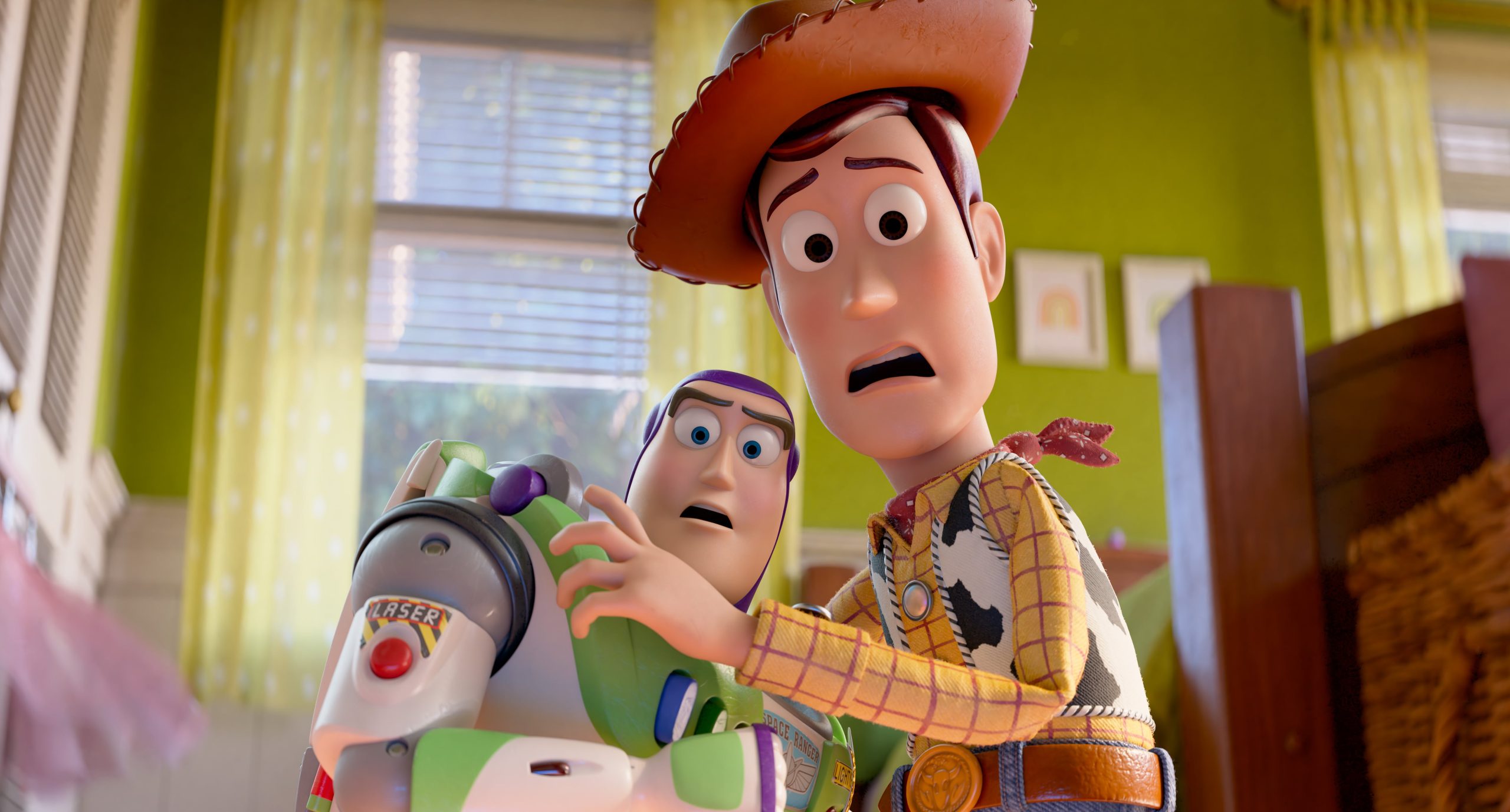
A life without imagination is not a life. Without fantasy, without creation, without daydreams or fairy tales. But how are we going to develop our imagination if we do not do so from childhood, playing with our toys, if we are instead dazzled by the bright screens of our phones? Thirty years ago in November 1995, when Toy Story premiered, that question was unthinkable. Today, after three sequels, half a dozen shorts, a handful of mini-shorts, a series and television specials, and with Toy Story 5 about to open in movie theaters, the question is unavoidable.
Starting on June 17, Buzz Lightyear, the cowboy Woody, his colleague Jessie, Mr. and Mrs. Potato Head, the tyrannosaur Rex and the whole gang are returning to theaters to accompany not Andy — now all grown up — but, as they have for a few years, Bonnie, who has also kept growing. This time, however, their adventures gain an addition as logical on screen as it is in children’s (and adults’) lives: technology. An arguably malevolent green tablet called Lilypad will become the new antagonist. Or maybe not entirely: ultimately it seeks the same thing as everyone else — to care for and entertain Bonnie, helping her make friends, even if its methods aren’t the best. The question is: will technology make toys disappear?
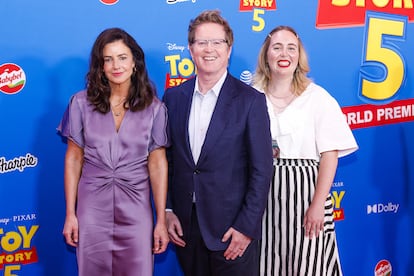
Not only has Toy Story’s background changed; its form has changed too. The franchise seeks an update for how it presents itself to audiences, and for that, it features Bad Bunny, Penélope Cruz and Bizarrap among its new voice cast. The icing on the cake is its soundtrack, which includes a song composed by superstar (and major fan of the Toy Story franchise Taylor Swift, which the artist performed live at the world premiere in Hollywood on Tuesday. She capped the appearance emotionally with a rendition of “You’ve Got a Friend in Me” alongside its composer, veteran Randy Newman, at the piano.
But it will be the contrasts between technology and toys that will attract attention in this fifth film. In fact, the fourth installment, released in 2019, could already have explored this… “I felt like I was worried we might be a little late to talk about it,” admits director Andrew Stanton in a conversation with EL PAÍS in Los Angeles. He has been part of the saga from the start: he was a screenwriter on previous films and now writes and, finally, directs Toy Story 5. Joining him in the conversation were his co-director and co-writer Kenna Harris, who also worked on Hoppers, Elemental and Elio; and producer Lindsey Collins, who has worked on Wall·E and Finding Dory. “But it turns out,” Stanton continues, “that we hit on something everyone is worried about.”
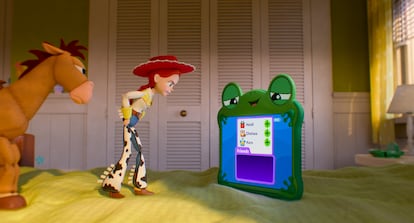
If previous Toy Story films had enemies — real enemies — it was because they were genuinely bad. Here, by contrast, technology is more a counterpart, a firm opponent but not a hateful villain. Lilypad and its kind are not villains per se, but they do captivate Bonnie and her friends in the same way we see technology hooking the youngest today, hindering their socialization and sometimes preventing them from thinking or managing their emotions. “They have a goal that aligns with the toys’. They care; our machines are concerned about the girl,” Stanton reflects. “They just have a very different opinion about how things should be.” In fact, the trio jokes that they realized Lily was “basically an overprotective mother who is also a personal assistant.” “She would say, ‘We’re going to make these friends, we’re going to follow these steps and we’re going to get into Harvard.’ Everything starts with good intentions, but it’s a method and a way of acting very different from how the toys want to support the child. That’s where they clash,” they say. “These battling philosophies is kind of the way we approach this. Which is very real,” Collins adds.
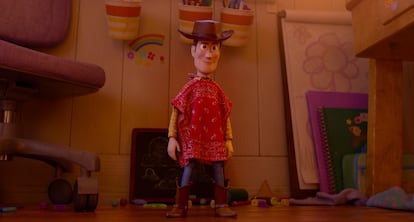
The physical, anti-technology heroine, as real as a toy can be, is Jessie (do not, under any circumstances, call her Jessica). Half a dozen Buzz Lightyears also have their own subplot, and of course Woody does too. Although in the previous installment it seemed he was saying goodbye to the toy world, the fastest cowboy in the West would never leave his friends alone on this adventure. Thirty years have passed, and they have passed for everyone. Woody is now a hippy-looking gentleman wearing a poncho, with a paunch and a thinning pate. Time passes. Changes and replacements arrive. “Jessie was kind of the perfect character to end up taking on this particular battle. And so it’s nice to see how that kind of all worked out together,” says Kenna Harris. After years of Andy, Buzz and Woody, now Bonnie, her friend Blaze, Jessie and Lilypad take the lead.
It seems the girl finally takes the reins, literally and figuratively. Why her? Everyone wants to answer. Andrew Stanton jumps in, and the three laugh at his taking the floor as the only man. “At the end of Four, when Woody gave his badge to Jessie, I knew that if there was a next movie, it had to lead with Jessie now. That was always the hope. I just didn’t know I’d be the one,” admits the two-time Oscar winner (for Wall·E and Finding Nemo), who has about 20 titles to his name and has been at Pixar for nearly 40 years, although he had never directed a Toy Story film before.
“We all connected on the fact that we felt like there was way more to explore with her and that she’s just so fun because she’s really different from Woody‚” reflects the youngest of the three, co-director McKenna Harris. “It’s not just seeing the same old sheriff in town. Yeah, she thinks totally differently from him. He’s more of the straight man and she’s like, leap before you think and fight before you talk. She’s built to be a hero. Very unhinged, very chaotic,” they laugh. “You want to see the movie just because she’s hilarious.” Indeed: Jessie dominates the most hilarious scenes, alongside old technological glories (a GPS, an old children’s digital camera), but also the most tender and nostalgic, by the tree where she was abandoned.
So, despite the invasion of screens, will there still be toys around? “Depending on what day you ask me, if I’m in a bad mood, I’ll be like, I don’t know. And then on a good day, I’d like to think they always will to some degree,” says Stanton, adding that “when I say toys, what I really worry about is imagination, that the kids are really just pretending instead of having the world all explained to them on a screen and in some pre-planned device.” Producer Collins says there is also a nostalgic tendency to rescue these old playthings, as she sees with her own children. “They talk a lot about what it was like before technology, before phones… There is this curiosity around the pre-tech era and I think that’s an interesting kind of desire that seems to be springing up.”
Her colleague Harris also supports the point, saying that technology, after all, is changeable and “has a shelf life.” “But humans are programmed to play, to be imaginative. So I have to imagine there’s always going to be this holdout of folks who need that and crave that. And that’s why toys will make it.”
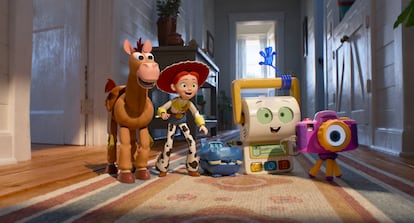
If anyone is particularly pro-toy it’s production designer Bob Pauley, who has brought to life the most famous toys of the last 30 years. A Pixar legend, he created Buzz Lightyear (he recalls that in just a couple of months they reached the definitive version), and now new characters like Smarty Pants and Lilypad, which he admits took a bit longer to develop in order to humanize the tablet. “It was a fun process because we wanted to make sure it was a character the audience could connect with,” he tells this newspaper. They wanted its face to be as expressive as possible and paid special attention to details like the eyes, for example.
“Oh toys are gonna be around forever. I believe that so much,” reflects the veteran designer, who believes there is room for everything: educational toys, developmental toys, even the simple wooden ones. “The simpler toys are active play, where you’re thinking about stories and you’re kind of creating little worlds. So I don’t think they’re going to disappear. I hope not. Oh, no.”








By Lottie Verrier • Updated: 07 Jun 2026 • 10:38 • 2 minutes read
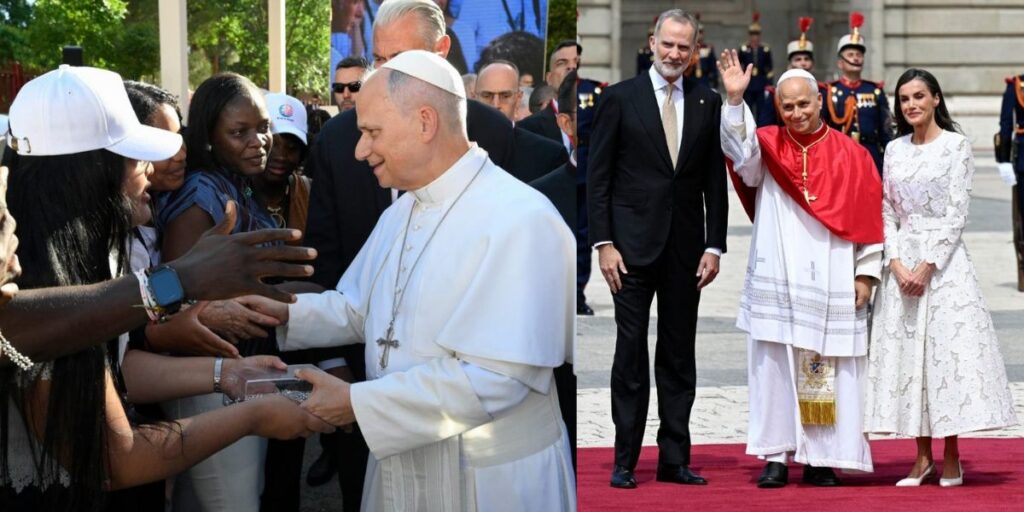
Pope meets crowds and is welcomed to Madrid by King and Queen of Spain
Credit: Vatican Media
Google News
Follow Euro Weekly News on Google News
Get breaking news from Spain, travel updates, and expat stories directly on your Google News feed.
Sign up for personalised news
Subscribe to our Euro Weekly News alerts to get the latest stories into your inbox!
By signing up, you will create a Euro Weekly News account if you don’t already have one. Review our Privacy Policy for more information about our privacy practices.

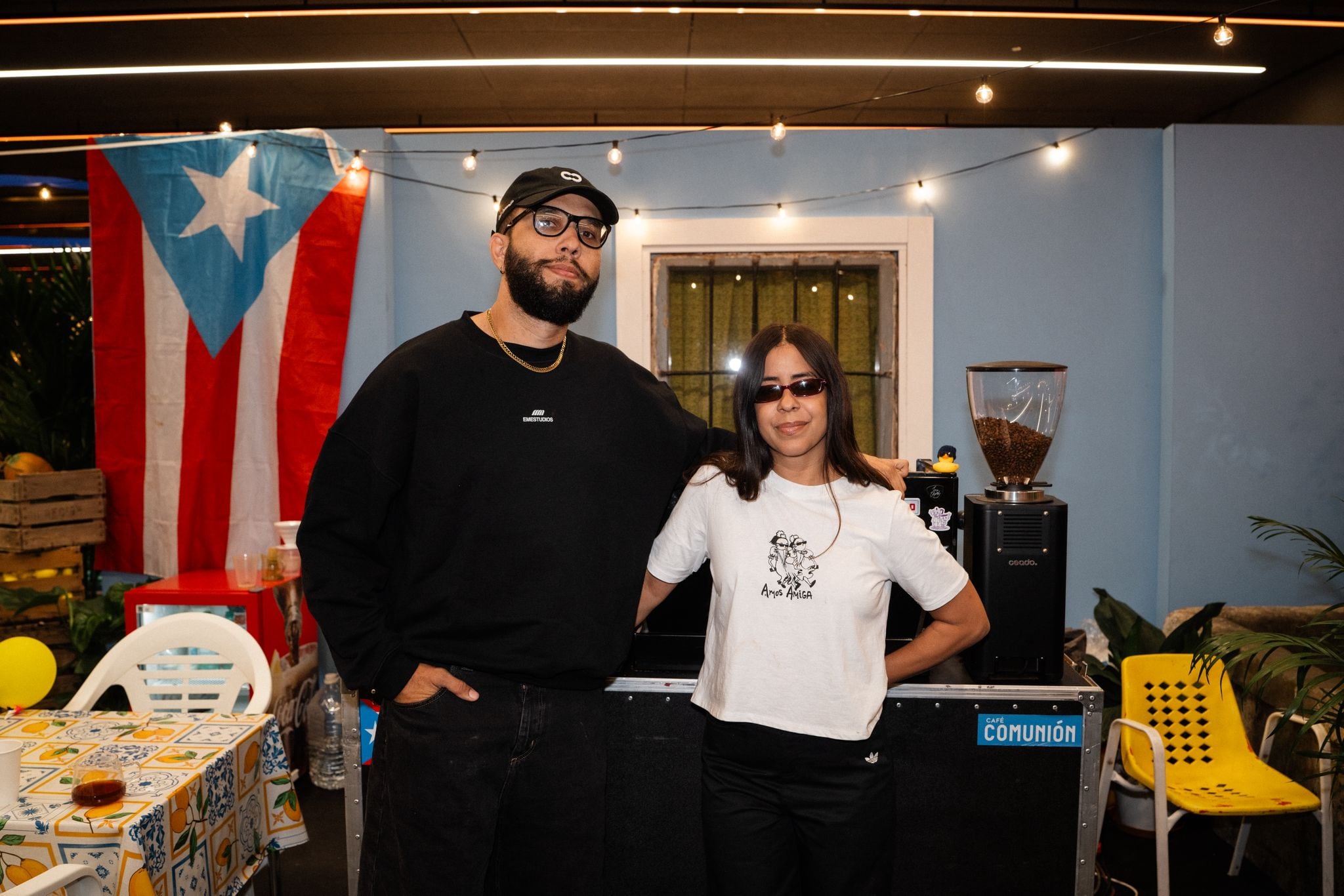
In September 2017, just as Abner Román and Karla Ly Quiñones were about to open the doors of Café Comunión in the Santurce neighborhood of San Juan, Puerto Rico, Hurricane Maria devastated the island.
“It took the entire front of our shop, we had structural damage and there was no electricity,” they remember. Instead of serving coffee from behind a counter, they took to the streets. “I would make it at home in the morning and walk across the street with a thermos, milk and sugar,” Abner recalls. They gave the coffee away for free, and also accepted donations, which they used to rebuild what the devastating storm had destroyed.
Who would have thought that seven years later Bad Bunny would stop in for a coffee at their shop after voting in Puerto Rico’s 2024 gubernatorial election? And that the singer would end up forming such a close relationship with Karla and Abner that he would offer them the chance to join his tour so he could keep drinking his favorite coffee while performing around the world.
“He came with his assistant, sat at the bar and we spent several hours talking about coffee and normal things, like NBA games,” they say. He came back the following week and kept coming back. Abner thinks this is because “they treat him like everyone else. Other customers have caught the vibe and no one asks him for photos. They greet him, yes, but I think that’s part of why he likes coming here.”
The truth is that before Benito Antonio Martínez Ocasio stopped by Café Comunión, several members of his team were already regulars. Through their frequent contact with people working in the music industry, Karla and Abner had toyed with the idea of offering their coffee services at concerts, but they never imagined they would do so on a tour of this scale, catering to all the backstage staff.
First they took part in Bad Bunny’s 30-show residency in Puerto Rico, held between July and September 2025. Then they were invited to join the DeBÍ TiRAR MáS FOToS world tour — and off they went, with their “coffee shop on wheels” and their six‑year‑old son in tow.
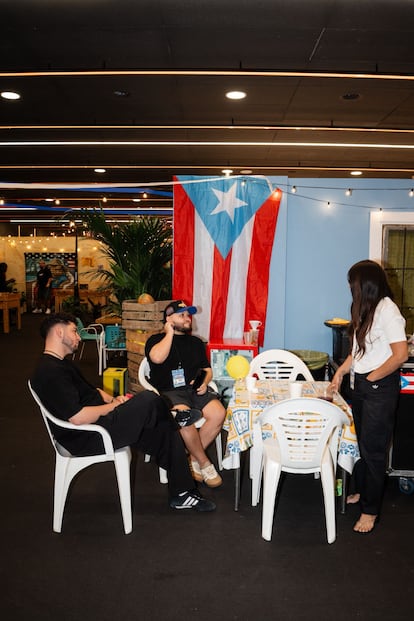
Over the past few months, they have been serving coffee backstage at Bad Bunny’s concerts in the Dominican Republic, Costa Rica, Mexico, Argentina, Brazil, Chile, Peru, Colombia, Australia — and now Spain. Each day, they cater to between 150 and 200 members of the artist’s crew, as well as the show’s guests. Abner admits he himself is still amazed by the situation.
“I had never heard of an artist taking baristas on tour. Concert venues offer catering services that include coffee, but here they wanted an experience — an area where colleagues could come to talk and disconnect,“ he says. ”Like going out for a coffee, but in the backstage area.”
Café Comunión’s distinctive blue cup has even made its way onto the stage on several occasions, with Bad Bunny raising it in front of the crowd.
Despite years of experience running their business, managing a mobile specialty coffee shop comes with its own challenges.
“Before we arrive at each city, we contact local suppliers and try to use that country’s coffee,” they explain. “We speak with roasters and producers, with espresso machine technicians (just in case), with milk distributors and sometimes with baristas in case we need someone to cover a shift.”
While they travel with the tour, their team keeps the two cafés they own in San Juan open (in addition to Santurce, they have another location in Río Piedras) and, in the downtime between shows, they make the most of the opportunity to meet other people in the industry. “We try to build connections in every country we visit.”
On June 4, during their stay in Madrid, they will be at Hola Coffee Roastery (Av. de Pedro Díez, 21Bis) preparing coffee and some of their signature drinks, a collaborative format they previously organized with cafés in Colombia, Mexico and Peru.
“The idea is to bring the Comunión experience to the country we’re in,” they say.
And what does that experience consist of? “We use the word ‘comunión’ in its secular sense. We want people who come to our coffee shop to feel welcomed and be able to disconnect in the company of others, creating a kind of communion between the barista and the rest of the customers.”
Two teachers who fell in love with coffee
Before opening Café Comunión, both Abner, 44, and Karla, 38, were teachers by profession — he taught English and she taught history. Owning a business had always been Abner’s dream, and this drink —which, according to him, “is consumed at all times in Puerto Rico” — had always caught his attention. So in 2008, he asked for a job at one of the cafés he used to frequent.
“Since teachers have the summer off, I asked if they would give me a chance to work those months,” he recalls. “I started washing dishes, then working at the cash register, and I really liked the coffee-shop atmosphere. Little by little, I learned to be a barista, and in 2013, I won a national latte art competition and then went to compete in Australia.”
There was no turning back. That prize confirmed he could make the leap from the classroom to the coffee bar, and he did. Karla joined shortly afterwards, focusing more on importers and the farms that grow the coffee.
“Although really we both do everything, because we’re a small business,” she says.
They gradually built a place for themselves in the coffee industry, and the next logical step was to open their own café. That’s how Comunión was born in 2017. Despite delays caused by Hurricane Maria, they managed to open before the end of the year, in December.
By then, Karla and Abner had been living in Santurce for some time, and he had worked for years in one of the neighborhood’s cafés, so they were already familiar faces in the area — something that helped them build a strong community around the business.
“After the hurricane, when neighbors saw us working hard to get things going, we connected even more. It was a moment when the community really came together, and we formed a very special bond,” Abner recalls.
They continued to take part in neighborhood activities and even opened their café space for community meetings. “We’re always ready to help however we can.”
Recently, Café Comunión was included on the list of the 100 best cafés in North America, Central America and the Caribbean. It ranked 44th, and was the only café from Puerto Rico to make it on the list.
“It made us feel very honoured; it was confirmation that we’re doing things right,” they say.
The couple has earned recognition from their own community in Puerto Rico, from the industry and now Bad Bunny — what will come next?
Sign up for our weekly newsletter to get more English-language news coverage from EL PAÍS USA Edition
Bad Bunny
It’s Been 50 Years Since The ‘most Important Concert Of All Time’… And Everyone Who Saw It Would Fit Inside Bad Bunny’s ‘casita’

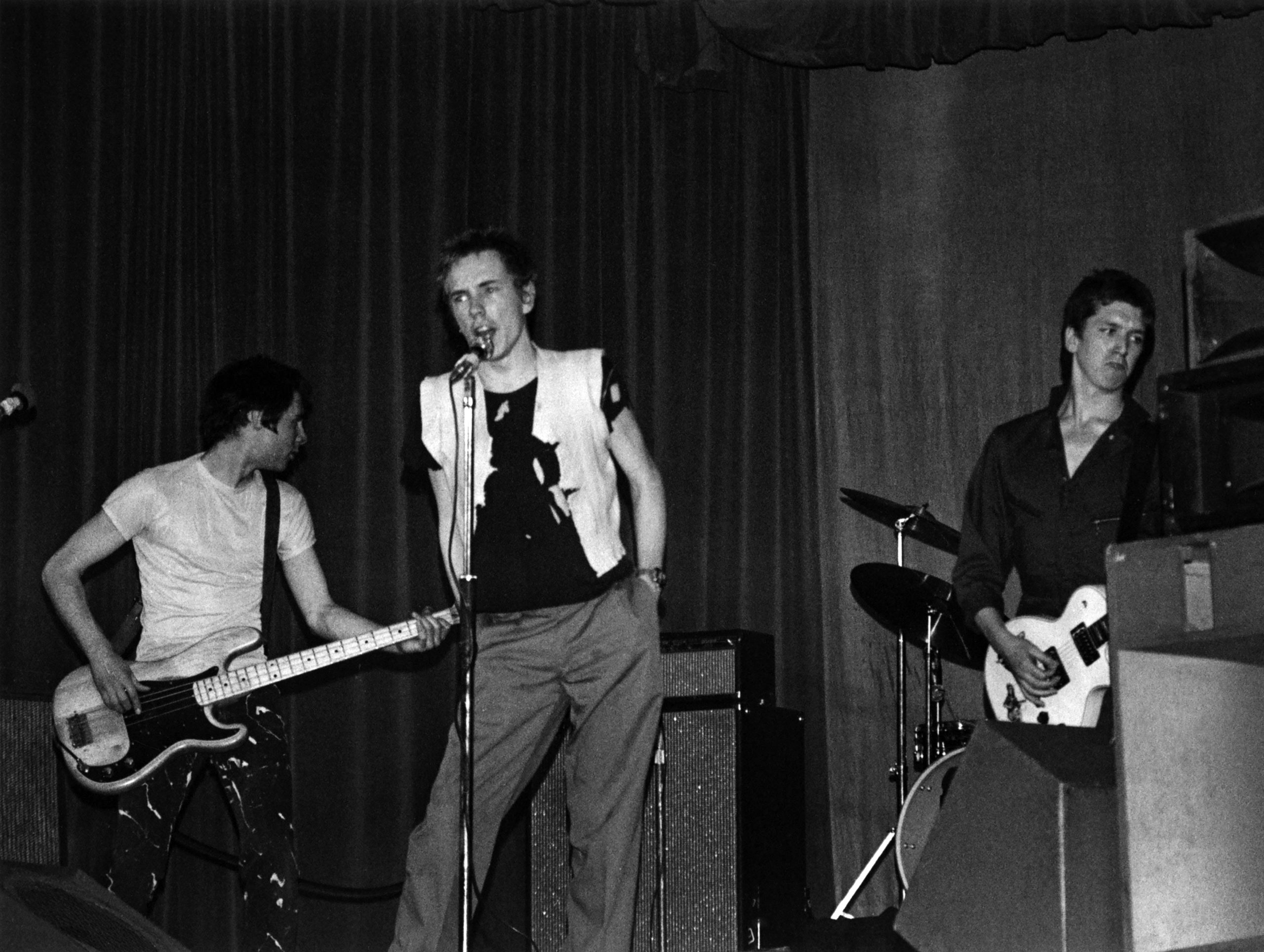
At a time when tens of thousands of people flock each night to see Bad Bunny in Madrid and share millions of videos capturing his every move, it feels strange to think that on this very day, exactly 50 years ago, a concert took place that was likely attended by fewer people than those dancing each night in the Puerto Rican star’s casita — and yet may have changed popular music forever.
A gig recreated in at least two films (24 Hour Party People and Control) and named by NME as “the most important concert of all time.” We are talking about the Sex Pistols’ concert on June 4, 1976, at the Lesser Free Trade Hall in Manchester.
Half the boomer population of that northern English city claims to have attended the seminal punk show. But, as David Nolan notes in I Swear I Was There, the canonical book on the concert, it is relatively easy to clear up one of rock history’s great mysteries: how many people actually went to see a bunch of nearly unknown lads from London that hot Friday night in Manchester?
According to the city’s municipal archives, ticket sales generated a total of £14. At 50 pence a ticket, 28 tickets were sold. The confusion — and the ever-shifting number of supposed attendees — is partly explained by the fact that the Pistols played another show in the city a few weeks later. The select club of spectators that legend has placed in that room — including Bernard Sumner and Peter Hook (Joy Division and New Order), Morrissey (the Smiths), Marc E. Smith (The Fall), and Tony Wilson (Factory Records) — was most likely split between the two dates.
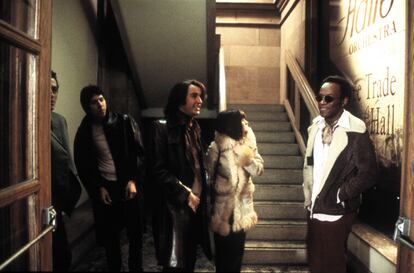
What is known is that the men who brought the Pistols to that venue were Peter McNeish and Howard Trafford, two Manchester lads who were fed up with the glam rock they heard at university. In a northern city like theirs, the way to learn what was happening in London was to read the British music press, which applied Fleet Street’s taste for hyperbole to popular culture.
On February 18, 1976, they read a review in NME, written by Neil Spencer, about a band that had opened for Eddie and the Hot Rods at London’s Marquee club. It said that they had played a cover of The Stooges’ No Fun, and that when someone in the audience complained they couldn’t play, a member of the band replied: “So what?” The article spoke of sex, violence, and anarchy. “We’re not into music, we’re into chaos,” the band said.
That review changed their lives — and their names. They became Pete Shelley and Howard Devoto, and began to sense a path forward for the band they were putting together, The Buzzcocks. They had a friend’s car at their disposal that weekend and drove to London to see the Sex Pistols. They caught them live on February 20 and 21, and, asking around for their manager, were directed to 430 King’s Road, where Vivienne Westwood and Malcolm McLaren ran the boutique Sex, around which the fledgling London punk scene revolved. The rest is history.
On June 4, Johnny Rotten, Steve Jones, Glen Matlock and Paul Cook — the Sex Pistols — played in the small upstairs room of the Lesser Free Trade Hall what may have been the most important of the 124 concerts they performed before imploding on stage on January 14, 1978, at the Winterland Ballroom in San Francisco — an event that symbolized the official death of the original era of punk.
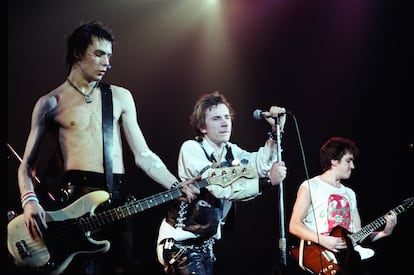
In truth, the epiphany experienced by the members of the four Manchester bands transformed by the Pistols’ shows in the city (The Buzzcocks, Magazine, Joy Division and The Fall) was more aesthetic or philosophical than musical. They did not replicate their sound, but they did adopt their attitude. That night 50 years ago, the Pistols broke the traditional relationship between audience and band. It was no longer about admiring virtuosity or an elaborate stage production. They showed a direct path for anyone who wanted to express their discontent. A new way of understanding rock was born — one that would go on to shape decades of English music and, by extension, music around the world.
But that concert also speaks to how myths are made: layers of truth and fiction that settle over decades. All that remains of the show is a homemade poster, a bit of Super 8 film, a few photographs, and a ticket that, incidentally, mistakenly lists the year as 1076.
Fifty years later — though it feels like 950, as the ticket suggests — pop continues to create myths. From Johnny Rotten to Bad Bunny, from Vivienne Westwood to Marta Ortega. As for journalists, we remain determined to find “the most important concert of all time.” But this time, with far less room for myth, it is witnessed by hundreds of thousands of people live — and tens of millions more through the screens of their phones.
Sign up for our weekly newsletter to get more English-language news coverage from EL PAÍS USA Edition

California Is Suing The Trump Administration To Block A New ICE Facility

México – Sudáfrica, En Vivo | Comienza La Inauguración Del Mundial 2026 Con Shakira, Maná Y J Balvin
Última Hora De La Guerra De Estados Unidos E Israel Contra Irán, En Directo | Irán Desmiente A Trump Y Asegura Que No Ha Aprobado Ningún Acuerdo Con EE UU


-

 Uncategorized2 weeks ago
Montoya vs Brundle BEEF, Newey
-

 %2 weeks ago
Fake Hacienda Text Targets Taxpayers
-

 Africa1 week ago
Europe Enters The ‘era Of Deportations’
-
 %2 weeks ago
Tourist Begs Police Not To Fine Her After Swimming In The Trevi Fountain During Heatwave
-

 New Developments2 weeks ago
Luxury Villas For Sale, Estepona – ProjectL1
-

 Foreign demand2 weeks ago
German Demand For Spanish Property Cools After A Strong Run
-
 %2 weeks ago
Portugal Notifies Of Temporary Suspension Of EU Border Biometric Checks
-

 Alberto Fujimori4 days ago
Peru’s Roberto Sánchez And Keiko Fujimori Urge Caution As Vote Count Continues In Very Tight Presidential Election